Author: hello@wash-o-rama.com

  • How Car Carburetor Works

    How Car Carburetor Works

    You rely on your car’s carburetor to mix air and fuel precisely for ideal combustion. The carburetor plays a crucial role in ensuring the right balance for your engine to run smoothly.

    As air flows through the venturi, pressure drops and draws fuel from jets into the airstream, creating a fine spray. The float chamber maintains fuel levels, while the throttle and choke control airflow and engine speed.

    Proper functioning guarantees efficiency and power, but issues like clogs or leaks can affect performance. Understanding these details helps you master carburetor operation and maintenance.

    Key Takeaways

    • A carburetor mixes air and fuel for combustion by drawing fuel through jets into a venturi-shaped airflow passage.
    • The venturi creates a pressure drop that pulls fuel into the airstream, atomizing it for efficient engine combustion.
    • The throttle valve controls airflow volume, regulating engine speed and power output.
    • The float chamber maintains a consistent fuel level to supply the jets reliably.
    • Proper carburetor tuning affects fuel efficiency, engine performance, and emissions control.

    What a Carburetor Does and Why It’s Important

    Although it may seem like a simple component, the carburetor plays an integral role in your engine’s performance by precisely mixing air and fuel in the correct ratio for combustion.

    Understanding carburetor history reveals its evolution from rudimentary fuel delivery systems to sophisticated mechanical devices, vital before fuel injection became widespread.

    The carburetor evolved from simple fuel delivery to complex mechanical systems before fuel injection dominated.

    You’ll appreciate how proper tuning techniques directly impact efficiency, power output, and emissions control. By adjusting idle mixture screws, float levels, and jet sizes, you guarantee ideal air-fuel ratios under varying engine loads and speeds.

    Without accurate tuning, the carburetor can cause poor fuel economy, rough idling, or engine stalling.

    How a Carburetor Mixes Air and Fuel to Power Your Engine

    You control the airflow through a venturi-shaped passage that precisely regulates the volume entering the carburetor.

    As air speeds up, it creates a pressure drop that draws fuel through jets, atomizing it into fine droplets.

    This controlled mixture of air and fuel then flows into the engine for efficient combustion.

    Airflow Regulation Mechanism

    When air flows through the carburetor’s venturi, it creates a pressure drop that draws fuel from the jet into the airstream, precisely regulating the air-fuel mixture needed to power your engine effectively.

    This process hinges on airflow dynamics, where the venturi’s narrowing accelerates air, lowering pressure according to Bernoulli’s principle.

    The pressure regulation guarantees fuel is metered correctly, preventing rich or lean mixtures that could impair performance. As you adjust the throttle, you alter the venturi’s airflow, which directly influences the pressure differential and consequently the fuel flow.

    This delicate balance between air velocity and pressure drop allows the carburetor to maintain ideal combustion conditions under varying engine loads and speeds, delivering consistent power and responsiveness.

    Fuel Atomization Process

    The precise regulation of airflow and fuel delivery sets the stage for the fuel atomization process, where liquid fuel breaks into fine droplets and mixes thoroughly with incoming air.

    As air passes through the carburetor’s venturi, it creates a low-pressure zone that draws fuel through the jet, initiating fuel droplet formation.

    These droplets disperse into a mist, optimizing the surface area for better vaporization. You rely on this finely atomized mixture to guarantee uniform combustion within the engine cylinders.

    Proper fuel droplet size directly influences combustion efficiency by promoting complete burning and reducing unburned hydrocarbons.

    If droplets are too large, incomplete combustion occurs, wasting fuel and increasing emissions.

    Consequently, the carburetor’s design carefully balances airflow and fuel atomization to maximize engine performance, fuel economy, and emission control.

    The Main Parts of a Carburetor and What They Do

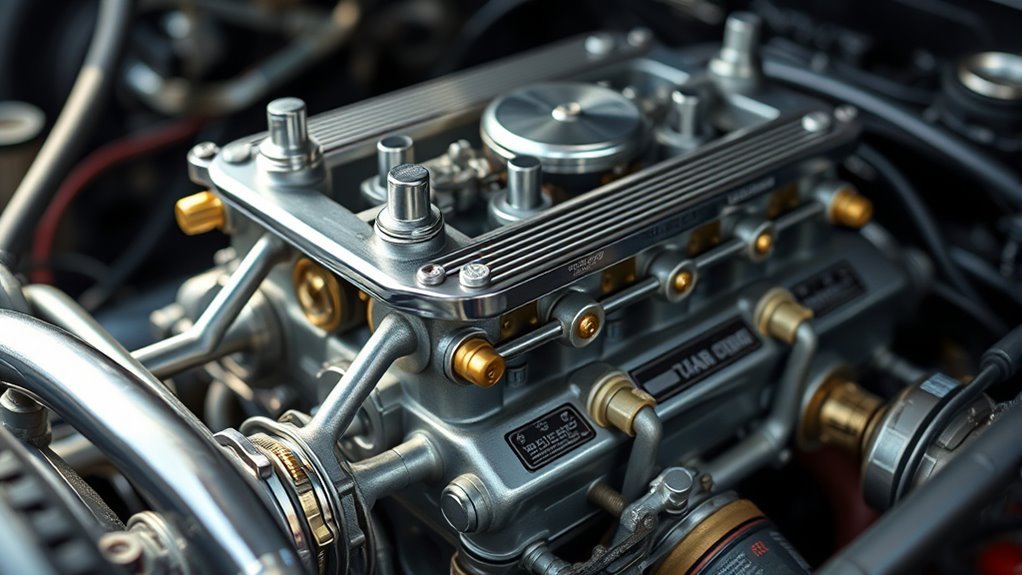
    Understanding a carburetor’s main parts is essential for diagnosing and optimizing engine performance. You’ll find key components like the float chamber, which regulates fuel level, and the venturi, where air velocity increases to draw fuel into the airstream.

    Different carburetor types may vary in design, but these parts are fundamental to precise fuel delivery. The throttle valve controls airflow volume, directly influencing engine speed, while the fuel jets meter the exact amount of fuel entering the venturi.

    Additionally, the fuel inlet allows gasoline into the float chamber, maintaining a consistent supply.

    How the Carburetor Throttle and Choke Control Engine Performance

    You control engine power by adjusting the throttle valve, which regulates airflow into the carburetor.

    The choke mechanism restricts air intake during cold starts, enriching the fuel mixture for smoother ignition.

    Both components directly influence combustion efficiency and overall engine performance.

    Throttle Valve Functionality

    Although it might seem complex at first, mastering how the throttle valve regulates airflow and fuel mixture is essential for controlling engine speed and power output.

    The throttle valve, a butterfly valve located in the carburetor’s venturi, adjusts its position based on your throttle input.

    When you open the throttle valve, it increases airflow, reducing pressure in the venturi, which draws more fuel into the mixture. This precise control of the throttle position directly impacts throttle response, allowing the engine to accelerate smoothly and efficiently.

    By modulating the valve angle, you control the volume of the air-fuel mixture entering the combustion chamber, optimizing combustion and power delivery.

    Understanding this mechanism helps you diagnose performance issues and tune your carburetor for ideal throttle response and engine behavior.

    Choke Mechanism Operation

    Since cold engines require a richer fuel mixture to start and run smoothly, the choke mechanism plays a critical role by restricting airflow into the carburetor’s venturi.

    You’ll find various choke types, such as manual, thermostatic, and electric chokes, each designed to modulate airflow differently based on engine temperature.

    When you engage the choke, it partially closes the choke valve, reducing air intake and increasing fuel concentration.

    Precise choke adjustments are vital; improper settings either flood the engine or cause lean running.

    You adjust the choke by calibrating the choke plate position and timing its opening relative to engine temperature.

    This control guarantees ideal air-fuel ratios during warm-up.

    Impact on Engine Efficiency

    When the throttle and choke work in harmony, they directly influence engine efficiency by regulating the air-fuel mixture entering the combustion chamber. You control the throttle to adjust airflow, while the choke enriches the mixture during startup.

    Proper carburetor tuning guarantees this balance, optimizing combustion and maximizing fuel efficiency. If the choke remains partially engaged too long, it causes a rich mixture, wasting fuel and reducing performance. Conversely, insufficient choke use leads to a lean mixture, risking engine stalls and damage.

    Fine-tuning the throttle response and choke timing helps maintain ideal air-fuel ratios under varying conditions, improving power output and minimizing emissions.

    Common Types of Carburetors and Their Differences

    Carburetors come in several distinct types, each designed to enhance fuel-air mixture delivery under different operating conditions.

    You’ll commonly encounter suction type carburetors, which use engine vacuum to draw fuel through jets, efficiently metering it based on airflow demand. These are prevalent in older vehicle models where simplicity and reliability are key.

    Alternatively, diaphragm type carburetors employ a flexible diaphragm to regulate fuel flow, responding to pressure changes rather than relying solely on suction. This design excels in applications with variable orientations or where gravity feed is impractical, such as in motorcycles or small engines.

    Understanding these differences helps you select or maintain the appropriate carburetor, ensuring precise fuel delivery and efficient engine performance across varying loads and speeds.

    Common Carburetor Problems and How to Identify Them

    Although fuel delivery systems are designed for reliability, you may encounter issues that disrupt peak performance. Identifying common carburetor problems quickly can save you from extensive damage.

    Watch for symptoms like rough idling, stalling, or poor acceleration, which often indicate underlying issues.

    • Carburetor leaks causing fuel odors or puddles beneath your vehicle.
    • Fuel contamination leading to clogging in jets or passages.
    • Improper air-fuel mixture resulting in black smoke or engine hesitation.
    • Float problems causing flooding or fuel starvation.
    • Vacuum leaks producing inconsistent engine speeds or surging.

    How to Maintain and Clean Your Carburetor for Best Results

    To guarantee peak performance and longevity, you should regularly maintain and clean your carburetor following a systematic procedure.

    Regular maintenance and cleaning of your carburetor ensure optimal performance and extend its lifespan.

    Begin carburetor cleaning by removing it from the engine, then disassemble key components like the float bowl, jets, and throttle body.

    Use a carburetor cleaner spray to dissolve varnish and deposits inside passages and orifices. Inspect gaskets and diaphragms for wear, replacing any damaged parts to prevent air leaks.

    Reassemble carefully, making sure all screws and linkages are secure.

    For maintenance tips, routinely check fuel filters and use high-quality fuel to minimize residue buildup.

    Additionally, adjust the idle mixture and throttle settings as specified in your vehicle’s manual.

    Following these steps guarantees precise fuel delivery, improving engine efficiency and reducing emissions.

    Tips for Troubleshooting Carburetor Issues

    Identifying the root cause of carburetor problems often involves checking several key components systematically.

    Start with basic troubleshooting techniques to isolate issues efficiently. Focus on carburetor adjustments to optimize fuel-air mixture and idle speed.

    Here’s what you should inspect:

    Examine the choke for proper operation; a stuck choke affects startup.

    Check the float level to guarantee correct fuel delivery; a misadjusted float causes flooding or starvation.

    Inspect jets and passages for clogs; debris restricts fuel flow.

    Verify throttle linkage movement; binding affects responsiveness.

    Test for vacuum leaks around gaskets and hoses; leaks cause erratic idling.

    When to Repair or Replace Your Carburetor

    When your carburetor consistently exhibits performance issues despite thorough troubleshooting and adjustments, it’s crucial to determine whether a repair will suffice or a full replacement is necessary.

    Understanding the carburetor lifespan and recognizing specific repair signs will guide your decision.

    Repair Signs Replacement Indicators
    Minor fuel leaks Severe corrosion or metal fatigue
    Clogged jets or passages Persistent poor engine performance
    Sticking throttle or choke Cracked or damaged carburetor body

    If you notice repair signs such as minor leaks or clogged jets, a rebuild or cleaning often restores functionality.

    However, if the carburetor shows severe corrosion, cracks, or continuous performance failure, replacement is the most reliable option to guarantee ideal engine operation and longevity.

    Frequently Asked Questions

    Can Modern Cars Use Carburetors Instead of Fuel Injection Systems?

    You can’t easily use carburetors in modern cars due to fuel injection drawbacks like precise fuel control and emissions compliance. Although carburetor advantages include simplicity, modern engines demand injection systems for efficiency, performance, and stricter regulations.

    How Did Carburetors Evolve Historically in Automotive Design?

    You’ll find the carburetor history shows an evolution timeline from early float-type designs to more precise, multi-barrel models. These improvements enhanced fuel-air mixing and efficiency before fuel injection systems gradually replaced carburetors in automotive design.

    Are Carburetors Environmentally Friendly Compared to Fuel Injection?

    You won’t find carburetors environmentally friendly compared to fuel injection because carburetor emissions are higher and fuel efficiency is lower due to less precise air-fuel mixture control. This leads to increased pollutants and wasted fuel.

    What Tools Are Essential for Rebuilding a Carburetor?

    Like a surgeon’s scalpel, your rebuilding tools must be precise: screwdrivers, wrenches, and carburetor kits including gaskets and jets. These essential tools let you carefully disassemble, clean, and reassemble the carburetor for peak performance.

    Can Carburetor Tuning Improve Fuel Economy Significantly?

    Yes, tuning your carburetor can greatly enhance carburetor efficiency by optimizing the fuel mixture. Precise adjustments guarantee the engine runs leaner or richer as needed, improving fuel economy while maintaining performance and reducing emissions.

    Conclusion

    Understanding how your carburetor works is like mastering the conductor of an engine’s orchestra—it precisely blends air and fuel to keep your vehicle running smoothly. By knowing its parts, functions, and common issues, you can spot problems early and maintain peak performance.

    Regular cleaning and timely repairs guarantee your carburetor doesn’t miss a beat, keeping your engine efficient and reliable. Stay proactive, and your carburetor will reward you with consistent power and longevity.

    In conclusion, understanding how car carburetor works is essential to ensure your engine runs at its best and lasts longer.

  • What Are the Spark Plugs

    What Are the Spark Plugs

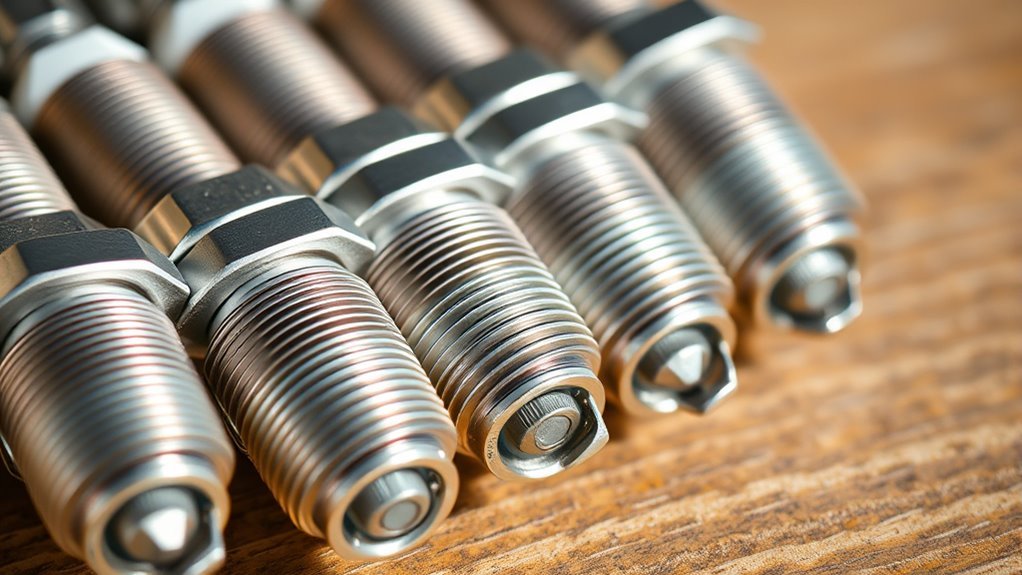
    Spark plugs are essential components that ignite your engine’s air-fuel mixture by creating a high-voltage spark between electrodes. This ignition initiates combustion, which powers your vehicle efficiently.

    There are various types of spark plugs—copper, platinum, and iridium—each offering different levels of conductivity and lifespan. Proper maintenance and timely replacement are critical to avoid misfires and maintain your engine’s performance.

    Selecting the right spark plug type is also important. Understanding how spark plugs work and when to replace them helps keep your engine running smoothly and efficiently.

    Key Takeaways

    • Spark plugs ignite the air-fuel mixture in internal combustion engines to start the power stroke.
    • They produce a high-voltage electrical spark between electrodes for combustion initiation.
    • Spark plugs come in types like copper, platinum, and iridium, affecting durability and performance.
    • Proper spark plug function is vital for engine efficiency, fuel economy, and reduced emissions.
    • Maintenance and timely replacement prevent engine misfires and ensure consistent ignition reliability.

    What Are Spark Plugs and Why Do They Matter

    A spark plug is an essential component in an internal combustion engine that ignites the air-fuel mixture to start the combustion process.

    Understanding spark plug history reveals how its design evolved from simple ignition devices to advanced components using cutting-edge spark plug technology.

    You’ll find that modern spark plugs incorporate materials like iridium and platinum for enhanced durability and improved conductivity.

    This evolution matters because reliable ignition guarantees engine efficiency, performance, and reduced emissions.

    When you maintain or replace spark plugs, you’re directly impacting your engine’s operation and fuel economy.

    Knowing the technical role spark plugs play helps you appreciate their importance beyond just a small part in your engine system.

    The right spark plug technology can optimize your vehicle’s reliability and longevity.

    How Spark Plugs Ignite the Engine’s Air-Fuel Mixture

    You rely on spark plugs to deliver a high-voltage electrical charge that ignites the engine’s air-fuel mixture.

    This ignition process involves creating a precise spark at the right moment, initiating combustion inside the cylinder.

    Understanding these steps reveals how efficient combustion powers your engine’s performance.

    Spark Plug Function

    The spark plug plays an essential role in igniting the engine’s air-fuel mixture by generating a high-voltage electrical spark between its electrodes.

    When you install the spark plug, guarantee proper spark plug installation to maintain peak performance and prevent misfires.

    The materials used in spark plugs, such as iridium or platinum, influence durability and conductivity, affecting spark quality and longevity.

    During operation, the ignition system delivers voltage to the plug’s center electrode, creating a spark that jumps the gap to the ground electrode.

    This spark ignites the compressed air-fuel mixture within the combustion chamber, initiating the power stroke.

    Proper selection and installation of spark plugs with suitable materials guarantee reliable ignition and efficient engine operation, directly impacting fuel efficiency and emissions control.

    Ignition Process Steps

    Although the ignition process involves multiple components, spark plugs play a critical role by generating the precise electrical spark needed to ignite the compressed air-fuel mixture.

    Within the ignition system, the spark plug initiates the combustion process by creating a high-voltage spark at the ideal moment.

    Here’s how it works:

    The ignition coil produces a high voltage.

    Voltage travels through the ignition wires to the spark plug.

    Spark plug electrodes create a spark across the gap.

    The spark ignites the compressed air-fuel mixture.

    Combustion rapidly expands, driving the piston downward.

    Air-Fuel Mixture Combustion

    When the spark plug generates its high-voltage spark, it triggers an immediate ignition of the compressed air-fuel mixture inside the combustion chamber. This spark initiates a rapid chemical reaction between the fuel and oxygen in the air fuel interaction, producing expanding gases.

    These gases increase pressure, driving the piston downward and generating mechanical power.

    You must understand that ideal combustion efficiency depends on precise timing and the spark’s ability to ignite a properly mixed and compressed air-fuel charge.

    Any deviation in spark intensity or mixture quality can reduce combustion efficiency, leading to power loss or increased emissions.

    Consequently, the spark plug plays a critical role in converting chemical energy into mechanical energy by ensuring consistent and complete ignition of the air-fuel mixture.

    Different Types of Spark Plugs Explained

    Since spark plugs play an essential role in engine performance, understanding their different types helps you select the right one for your vehicle’s needs.

    Spark plugs vary primarily in ceramic insulators and electrode materials, affecting durability and efficiency. Here’s a quick overview:

    • Copper Spark Plugs: Offer excellent conductivity but wear faster due to softer electrodes.
    • Platinum Spark Plugs: Feature durable electrodes with a platinum tip for extended life.
    • Iridium Spark Plugs: Use a harder iridium electrode, providing superior longevity and consistent sparks.
    • Double Platinum Spark Plugs: Both center and ground electrodes have platinum, ideal for waste spark ignition systems.
    • Silver Spark Plugs: Provide excellent thermal conductivity but are less common in modern vehicles.

    Choosing the appropriate spark plug depends on engine design, operating temperature, and performance requirements.

    How Often Should You Change Spark Plugs?

    How often should you change your spark plugs to maintain peak engine performance? The spark plug lifespan varies depending on the type and vehicle specifications, but generally, you should consider replacement intervals between 30,000 to 100,000 miles.

    For peak engine performance, change spark plugs every 30,000 to 100,000 miles depending on type and vehicle.

    Conventional copper spark plugs tend to have shorter lifespans, around 20,000 to 30,000 miles, while platinum and iridium plugs offer extended durability, often lasting up to 100,000 miles.

    Sticking to manufacturer-recommended replacement intervals guarantees maximum combustion efficiency and prevents engine misfires. Ignoring these intervals can lead to decreased fuel economy and power loss.

    Always consult your vehicle’s service manual for precise guidance on spark plug lifespan and adhere strictly to the suggested replacement schedule to maintain engine reliability and performance.

    How to Tell When Your Spark Plugs Need Replacing

    Wondering if your spark plugs need replacing? Knowing the typical spark plug lifespan helps you identify replacement indicators early. Worn spark plugs reduce engine efficiency and can cause performance issues.

    Watch for these signs:

    • Engine misfires or rough idling
    • Difficulty starting the engine
    • Decreased fuel economy
    • Visible electrode wear or deposits on plugs
    • Increased exhaust emissions

    Regular inspection aligned with your vehicle’s maintenance schedule is essential. If you notice any of these replacement indicators, it’s time to change the spark plugs to maintain peak engine function.

    Ignoring these signs can lead to inefficient combustion and potential long-term engine damage.

    Always consult your vehicle’s manual for recommended spark plug lifespan and replacement intervals.

    Why Spark Plug Failure Can Halt Your Engine

    When a spark plug fails, it disrupts the ignition process, causing your engine to misfire or stall.

    You’ll notice reduced fuel efficiency, rough idling, or difficulty starting the engine.

    Understanding the causes of spark plug failure helps you identify these signs early and maintain peak engine performance.

    Causes Of Spark Plug Failure

    Although spark plugs seem simple, several factors can cause their failure and stop your engine from running smoothly. You need to understand these causes to maintain peak spark plug lifespan and guarantee proper ignition timing.

    Common causes include:

    • Overheating due to incorrect ignition timing or engine overheating
    • Fouling from oil, carbon deposits, or fuel additives that impair the electrode
    • Wear and erosion diminishing the gap and spark quality over time
    • Mechanical damage from improper installation torque or debris in the combustion chamber
    • Contamination by coolant leaks or excessive fuel mixture affecting spark consistency

    Addressing these issues promptly helps you avoid spark plug failure, which directly interrupts combustion and engine operation.

    Monitoring your spark plug condition is essential for reliable engine performance.

    Impact On Engine Performance

    Spark plug failure directly disrupts the ignition process, which is essential for engine combustion and overall performance.

    When a spark plug’s efficiency declines due to fouling, wear, or improper gap, it fails to generate a consistent spark. This inefficiency leads to incomplete combustion, reducing engine power and causing misfires that can stall your engine.

    As spark plug efficiency deteriorates, your engine struggles to maintain ideal fuel ignition timing, which affects acceleration and fuel economy.

    In severe cases, persistent spark plug failure can halt the engine entirely, as the combustion cycle becomes unreliable.

    Maintaining high spark plug efficiency guarantees stable ignition, maximizing engine power output and performance.

    You must address spark plug issues promptly to avoid compromised engine function and potential failure.

    Signs Of Spark Plug Issues

    Declining ignition efficiency often manifests through specific symptoms that signal underlying spark plug issues. If you notice these signs, your spark plug lifespan might be nearing its end, or it may require immediate spark plug cleaning.

    Watch for:

    • Engine misfires or rough idling indicating inconsistent combustion
    • Difficulty starting the engine due to weak or absent sparks
    • Decreased fuel efficiency caused by incomplete fuel ignition
    • Reduced acceleration performance resulting from poor ignition timing
    • Increased exhaust emissions signaling inefficient combustion processes

    Ignoring these indicators can halt your engine’s operation as faulty spark plugs fail to ignite the air-fuel mixture properly.

    Regular inspections and timely spark plug cleaning or replacement preserve peak engine performance and prevent costly repairs.

    How to Choose the Right Spark Plugs for Your Car?

    How do you determine which spark plugs best suit your vehicle’s engine requirements? Start by consulting your owner’s manual for manufacturer recommendations, as engine design dictates specific spark plug types.

    Evaluate spark plug materials—copper, platinum, or iridium—each offering different conductivity and longevity. Iridium plugs, for example, provide superior durability and performance but cost more.

    Next, compare spark plug brands known for quality and reliability; reputable brands guarantee consistent manufacturing standards and compatibility.

    Consider heat range, which affects combustion efficiency and prevents engine knocking.

    Also, verify the correct size and thread type to fit your engine correctly.

    Essential Tips for Spark Plug Maintenance and Care

    Regularly inspecting and maintaining your vehicle’s spark plugs can significantly enhance engine performance and fuel efficiency.

    Proper spark plug inspection helps you detect wear, fouling, or damage early, preventing engine misfires and poor combustion.

    Incorporate spark plug cleaning when deposits build up, using a wire brush or specialized cleaner to restore conductivity.

    Follow these essential tips for effective spark plug maintenance:

    • Conduct spark plug inspection every 30,000 miles or as recommended by your vehicle’s manufacturer.
    • Check electrode gap and adjust if necessary for ideal spark delivery.
    • Replace spark plugs showing signs of corrosion, cracks, or heavy deposits.
    • Use dielectric grease on spark plug boots to guarantee a secure connection.
    • Tighten spark plugs to the specified torque to avoid damage or loosening.

    Adhering to these steps guarantees reliable ignition and prolongs engine life.

    Frequently Asked Questions

    Can Spark Plugs Affect Fuel Efficiency?

    Yes, poor spark plug maintenance can reduce fuel efficiency by causing incomplete fuel combustion. You should regularly inspect and replace spark plugs to guarantee ideal combustion, improving engine performance and saving fuel over time.

    Are Spark Plugs the Same for Gasoline and LPG Engines?

    No, spark plug types differ between gasoline and LPG engines. You’ll need spark plugs with specific LPG compatibility to handle higher combustion temperatures and prevent fouling.

    This ensures ideal performance and longevity in LPG systems.

    What Tools Are Needed to Replace Spark Plugs?

    You’ll need a spark plug socket, ratchet wrench, extension, and gap gauge. Different spark plug types may require specific sockets.

    Follow the replacement procedure carefully to avoid damage and guarantee proper installation and engine performance.

    Can Faulty Spark Plugs Cause Engine Misfires?

    Yes, faulty spark plugs can cause engine misfires by disrupting ignition timing and reducing combustion efficiency. This directly impacts engine performance, leading to rough idling, decreased power, and increased fuel consumption.

    Check and replace them promptly.

    How Do Weather Conditions Impact Spark Plug Performance?

    You’ll find that temperature effects can reduce spark plug efficiency by up to 20% in cold weather, while humidity influence increases misfire risks. Both factors alter combustion, so monitoring conditions helps maintain ideal spark plug performance.

    Conclusion

    Now that you understand how spark plugs ignite your engine’s air-fuel mixture, it’s clear they’re more than just small parts—they’re essential for performance and efficiency.

    If you think spark plugs only need changing when your car stalls, think again; subtle signs often signal trouble first. By choosing the right type and maintaining them properly, you’ll avoid unexpected failures and keep your engine running smoothly.

    Don’t underestimate these tiny components—they truly power your drive. Remember, spark plugs play a crucial role in keeping your engine efficient and reliable.

  • How to Replace a Carburetor

    How to Replace a Carburetor

    To replace your carburetor, first verify symptoms like rough idling or black smoke, which often indicate carburetor issues. Park your vehicle on a flat surface, disconnect the battery, and gather the necessary tools along with a matching carburetor model.

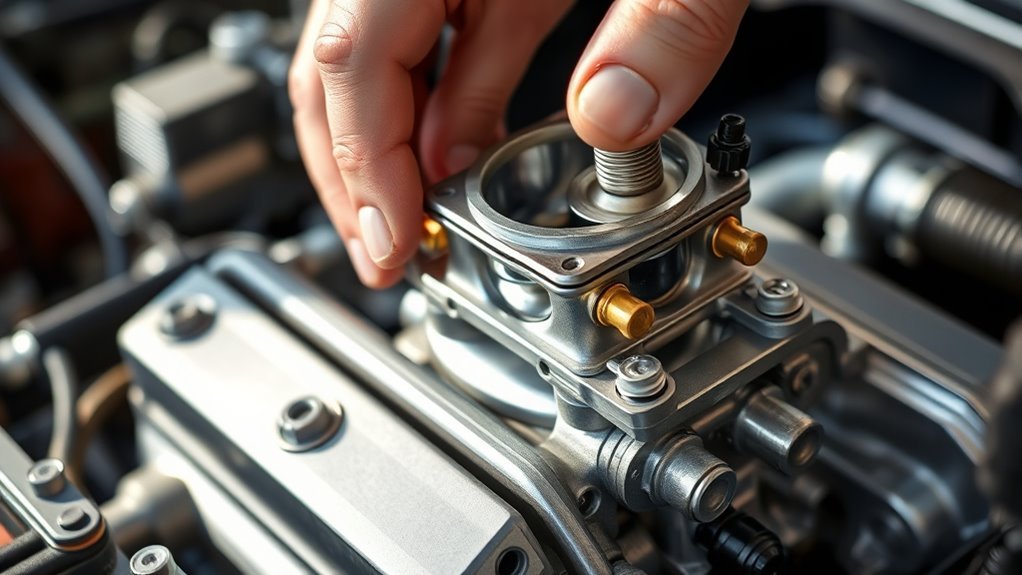
    Carefully detach the fuel lines, linkages, and mounting bolts to remove the old unit. Clean the intake manifold thoroughly to ensure a good seal and prevent contamination. Then, install the new carburetor with proper gasket alignment and secure the bolts evenly.

    Reconnect all components, adjust the idle settings, and test performance to confirm the repair. Following this, you’ll uncover thorough tuning and maintenance insights to guarantee lasting efficiency.

    Key Takeaways

    • Park on a flat surface, disconnect the battery, and engage the parking brake with wheel chocks before starting the carburetor replacement.
    • Carefully disconnect fuel lines and throttle linkages, then remove mounting bolts to detach the old carburetor from the intake manifold.
    • Clean the intake manifold surface thoroughly, removing old gasket material and checking for warping before installing the new carburetor.
    • Align and hand-tighten the new carburetor evenly on the manifold gasket, then reconnect fuel lines, linkages, and vacuum hoses securely.
    • Adjust idle speed and mixture screws, check for leaks, and fine-tune the carburetor for smooth engine performance after installation.

    How to Spot Carburetor Problems That Mean Replacement

    Before you decide to replace the carburetor, you need to identify specific symptoms that indicate severe malfunction. Key carburetor symptoms include rough idling, frequent stalling, and poor acceleration.

    If you notice black smoke from the exhaust, it signals a rich fuel mixture, often due to carburetor failure.

    Additionally, hesitation or surging during acceleration points to inconsistent fuel delivery. Performance issues such as decreased fuel efficiency and engine flooding also confirm carburetor problems.

    You should verify these symptoms by inspecting for visible leaks, damaged gaskets, or warped components.

    If cleaning or minor adjustments don’t resolve the symptoms, replacement is necessary. Recognizing these precise carburetor symptoms guarantees you address performance issues effectively, preventing further engine damage and maintaining peak vehicle function.

    Gathering Tools and Materials for Carburetor Replacement

    To replace a carburetor efficiently, gather a specific set of tools and materials essential for the job. First, identify the carburetor type your vehicle uses, whether it’s a single-barrel, two-barrel, or four-barrel, since this affects the replacement part needed.

    Start by identifying your vehicle’s carburetor type to ensure you select the correct replacement part.

    You’ll require a socket set, screwdrivers, pliers, gasket scraper, and a torque wrench to guarantee proper assembly.

    Also, have carburetor cleaner and replacement gaskets on hand to maintain seal integrity. Using the correct tools prevents damage and maximizes the replacement benefits, such as improved fuel efficiency and engine performance.

    Finally, obtain the exact replacement carburetor model to match your engine specifications. Proper preparation minimizes errors and streamlines the installation process.

    Get Your Vehicle Ready Safely Before You Start

    First, park your vehicle on a flat, stable surface to guarantee safety and stability during the repair.

    Next, disconnect the battery terminals to prevent electrical hazards while working on the carburetor.

    Finally, confirm you have all required tools within reach before beginning the replacement process.

    Park On Level Ground

    Choose a flat, stable surface to park your vehicle, ensuring it won’t roll or shift during the carburetor replacement. Positioning your vehicle on level ground is critical for accurately evaluating and servicing carburetor types, as uneven terrain can disrupt fuel flow readings and adjustment procedures.

    Stability prevents unintended movement, safeguarding both you and the engine components. This step directly impacts fuel efficiency, as proper carburetor installation requires a consistent baseline environment to calibrate fuel-air mixtures accurately.

    Avoid slopes or soft surfaces that could compromise jack placement or tool stability. Engage the parking brake firmly and, if possible, use wheel chocks to eliminate any risk of movement.

    Taking these precautions creates a safe working area and supports precise tuning of the carburetor, optimizing engine performance and fuel economy.

    Disconnect Battery Safely

    Before you begin working on your carburetor, disconnecting the battery is crucial to prevent electrical shorts and accidental startups.

    Start by locating the battery terminals, typically marked positive (+) and negative (–).

    For battery safety, always disconnect the negative terminal first to minimize the risk of electrical shorts. Use a wrench to loosen the terminal clamp and remove the cable carefully, making sure it doesn’t touch any metal surfaces.

    Next, disconnect the positive terminal using the same method. Avoid touching both terminals simultaneously to prevent sparks.

    Once both cables are detached, secure them away from the battery to maintain electrical precautions throughout your work.

    This process guarantees your safety and protects your vehicle’s electrical system while you replace the carburetor.

    Gather Necessary Tools

    With the battery safely disconnected, you’re ready to gather the tools required for replacing the carburetor. Organize your tool storage area to guarantee quick access and prevent misplaced items.

    Focus on assembling the appropriate tool types essential for this task:

    1. Wrenches and socket sets for loosening and tightening bolts.
    2. Screwdrivers, both flathead and Phillips, for hose clamps and screws.
    3. Pliers, needle-nose and regular, for handling clips and fuel lines.

    Confirm each tool’s condition and size before starting. Using the correct tool types reduces the risk of damage and speeds up the process.

    Store tools in an orderly manner, such as a toolbox or magnetic tray, to keep your workspace efficient and safe. This preparation sets a solid foundation for a smooth carburetor replacement.

    How to Remove the Old Carburetor

    Start by disconnecting the fuel line carefully to prevent spills.

    Next, detach all linkage connections that control the throttle and choke.

    Finally, unscrew the mounting bolts securing the carburetor to the intake manifold before lifting it off.

    Disconnect Fuel Line

    Loosen the clamp securing the fuel line to the carburetor using a screwdriver or pliers, then carefully pull the line off to prevent fuel spillage.

    Before disconnecting, observe these safety precautions:

    1. Identify the fuel line type, rubber, braided, or metal, to use the correct removal technique and tools.
    2. Relieve fuel system pressure by turning off the fuel valve or disconnecting the battery to avoid ignition hazards.
    3. Have a container and absorbent cloth ready to catch residual fuel and prevent environmental contamination.

    Disconnecting the fuel line precisely minimizes damage and leakage.

    Avoid twisting or pulling forcefully, which can crack fittings or rupture hoses.

    Always work in a ventilated area and wear safety goggles and gloves to protect against fuel exposure.

    Following these steps guarantees a safe and efficient disconnection process.

    Remove Linkage Connections

    Carefully detach the throttle and choke linkages from the carburetor to prevent bending or breaking the rods and connectors.

    Identify the linkage types, typically ball-and-socket or clip-on connectors, and use appropriate tools like pliers or a screwdriver to release them without damage.

    Note the exact position and orientation of each linkage to guarantee proper reassembly. Pay attention to linkage adjustments, as improper settings can affect engine performance. If necessary, mark the current adjustment settings before removal.

    Gently work each linkage free, avoiding excessive force that could distort the components.

    Once all linkages are disconnected, inspect them for wear or corrosion, addressing any issues before installing the new carburetor.

    Proper handling here guarantees smooth throttle and choke operation after replacement.

    Unscrew Mounting Bolts

    Locate the mounting bolts securing the carburetor to the intake manifold and use the appropriate wrench or socket to unscrew them. Proper selection of carburetor tools is essential to avoid damaging bolts or the manifold.

    Follow these mounting techniques for efficient bolt removal:

    1. Apply penetrating oil to bolts if they appear rusted or stuck to ease unscrewing.
    2. Loosen bolts in a crisscross pattern to evenly relieve pressure and prevent warping the carburetor base.
    3. Keep track of all bolts and washers, as their order and condition affect reinstallation quality.

    Use steady, controlled force with your tools to prevent stripping threads.

    Once bolts are fully removed, carefully lift the carburetor off the intake manifold, preparing for the next replacement step.

    Cleaning the Mounting Area Before Installing Your New Carburetor

    Before installing your new carburetor, thoroughly clean the mounting area to guarantee a proper seal and peak performance.

    Begin by removing any old gasket material with a plastic scraper to avoid damaging the surface.

    Use a solvent or carburetor cleaner to dissolve residual fuel deposits and dirt. Confirm the surface is free of oil, grease, and debris, as contaminants can cause leaks or improper fit.

    Inspect the mounting flange for warping or damage; if present, address it before proceeding.

    After cleaning, dry the area completely using compressed air or a lint-free cloth.

    Proper surface preparation during carburetor cleaning is critical to prevent air leaks and confirm efficient engine operation.

    Taking these steps will help your new carburetor function at its best once installed.

    Installing Your New Carburetor

    With the mounting area clean and inspected, you’re ready to position your new carburetor onto the intake manifold. First, identify the correct carburetor type for your engine to guarantee compatibility.

    Ensure your carburetor matches your engine before placing it on the clean, inspected intake manifold.

    Then, follow these installation tips for a secure fit:

    1. Align the carburetor base evenly with the manifold gasket to prevent air leaks.
    2. Insert and hand-tighten mounting bolts in a crisscross pattern to distribute pressure evenly.
    3. Reconnect fuel lines, linkages, and vacuum hoses, verifying each connection matches your carburetor type specifications.

    Avoid overtightening bolts to prevent warping the carburetor base.

    Double-check all connections for proper seating to guarantee system integrity. With these steps, you’ll have your new carburetor installed correctly and ready for tuning.

    Adjusting and Tuning Your Carburetor for Optimal Performance

    Although installing the carburetor is essential, tuning it correctly guarantees your engine runs efficiently and smoothly.

    Begin carburetor tuning by adjusting the idle speed screw to achieve a stable idle between 600 and 900 RPM, depending on your engine specifications.

    Next, fine-tune the idle mixture screw to verify the air-fuel ratio is balanced; turn it slowly until you reach the highest, steady RPM without roughness.

    For performance enhancement, calibrate the main jet by testing acceleration response. If hesitation occurs, adjust the jet size accordingly.

    Always use a tachometer and, if available, an exhaust gas analyzer to confirm adjustments.

    Complete the process by rechecking all screws for secure positioning.

    Proper tuning prevents fuel wastage and mechanical strain, ensuring your carburetor delivers peak engine performance consistently.

    Troubleshooting Common Problems After Replacement

    Once you’ve replaced and tuned your carburetor, you may encounter issues such as rough idling, poor acceleration, or fuel leaks.

    To troubleshoot these common problems, follow these steps:

    1. Check for carburetor leaks: Inspect all gaskets, fuel lines, and mounting bolts.

    Tighten or replace any components causing leaks to prevent fuel loss and fire hazards.

    2. Address idle issues: Adjust the idle screw precisely.

    If the engine stalls or runs unevenly, verify the choke operation and clean the idle jets to confirm proper fuel flow.

    3. Verify proper linkage and throttle operation: Confirm throttle linkage moves smoothly without binding, which can cause acceleration problems.

    Essential Carburetor Maintenance Tips to Prevent Future Issues

    After addressing common post-replacement issues like leaks and idle problems, maintaining your carburetor regularly will help you avoid these complications altogether. Focus on carburetor cleaning and monitoring fuel quality to guarantee peak performance. Use clean, high-quality fuel to reduce deposits and prevent clogging. Schedule carburetor cleaning every 3,000 miles or as recommended by your vehicle’s manual.

    Maintenance Task Frequency Notes
    Carburetor Cleaning Every 3,000 miles Remove dirt and varnish
    Fuel Filter Check Every 5,000 miles Prevent contaminants
    Fuel Quality Check Before each fill-up Use fresh, clean fuel
    Idle Adjustment Annually Maintain smooth operation
    Linkage Lubrication Every 6 months Guarantee smooth throttle movement

    Following these tips keeps your carburetor efficient and extends its lifespan.

    Frequently Asked Questions

    What Types of Carburetors Are Compatible With My Vehicle Model?

    You’ll find carburetor compatibility by checking your vehicle specifications, including engine size and model year. Use manufacturer guides or OEM part numbers to guarantee the carburetor fits precisely, preventing performance issues or damage.

    How Does a Carburetor Differ From Fuel Injection Systems?

    You’d think fuel delivery’s simple, but carburetors mix air-fuel mechanically, while fuel injection uses precise electronics. This causes noticeable performance differences: injections boost efficiency and responsiveness, whereas carbs offer straightforward, albeit less precise, fuel control.

    Can I Replace a Carburetor Myself Without Prior Mechanical Experience?

    Yes, you can replace a carburetor yourself by utilizing self-teaching resources and beginner tips. Follow detailed guides, watch instructional videos, and gather proper tools to guarantee precise, step-by-step completion without prior mechanical experience.

    What Safety Precautions Should I Take When Handling Fuel?

    Did you know fuel-related fires cause over 5,000 injuries yearly? When handling fuel, always work in a well-ventilated area, avoid sparks, wear gloves, and keep a fire extinguisher nearby to minimize fire hazards effectively.

    How Often Should a Carburetor Be Replaced Under Normal Conditions?

    You should follow the carburetor maintenance frequency recommended in your manual, usually every 20,000-30,000 miles. Replace it if you notice signs of carburetor failure like rough idling, poor acceleration, or fuel leaks.

    Conclusion

    Replacing your carburetor might seem intimidating, but with the right tools and careful steps, you’ll handle it confidently. Don’t worry about messing up—following each instruction precisely guarantees success.

    Remember, taking the time to clean, install, and adjust properly prevents future issues and improves performance. Stick to the guide, and you’ll not only save money but also gain valuable mechanical skills.

    Ready to get your engine running smoothly again? Properly replacing your carburetor is the key to restoring optimal engine function and performance.

  • How to Install a Carburetor

    How to Install a Carburetor

    To install a carburetor, first gather necessary tools such as a socket set, screwdrivers, and a torque wrench. Prepare your workspace with good lighting to ensure safety and precision. Selecting a carburetor that is compatible with your engine size and mounting pattern is essential for proper installation.

    Begin by disconnecting the battery to prevent any electrical hazards. Carefully drain the fuel lines to avoid spills, and label all linkages for easier reassembly. Remove the old carburetor with caution to prevent damage to surrounding components.

    Next, position the new carburetor onto the intake manifold and secure the bolts to the manufacturer’s recommended torque specifications. Reconnect the throttle and fuel lines, ensuring all connections are tight and correctly placed. Finally, tune the idle speed and mixture for smooth engine operation.

    Following these detailed steps will help guarantee peak performance and help you avoid common mistakes during the installation process.

    Key Takeaways

    • Disconnect the battery and wear protective gear before starting to ensure safety during carburetor installation.
    • Remove the old carburetor by draining fuel lines and labeling all linkages and hoses for easy reassembly.
    • Clean the intake manifold surface with a gasket scraper to remove old sealant without causing damage.
    • Position the new carburetor on the manifold, secure it with bolts tightened to manufacturer torque specifications.
    • Attach throttle linkage and fuel lines carefully, then tune the carburetor for optimal idle and throttle response.

    Gather Tools and Prepare Your Workspace

    Before you begin installing the carburetor, gather all necessary tools and clear your workspace to guarantee efficiency and safety.

    Start by organizing your workspace to make certain all essential tools are within reach and free from clutter.

    Begin by arranging your workspace so all necessary tools are easily accessible and the area remains tidy.

    Essential tools include a socket set, screwdrivers, wrenches, pliers, and a torque wrench. Additionally, prepare a clean cloth and a container for small parts to prevent loss.

    Proper workspace organization minimizes errors and accelerates the installation process.

    Make sure lighting is adequate to inspect components clearly. Confirm that you have replacement gaskets and fuel line clamps ready.

    How to Pick the Right Carburetor for Your Engine

    When selecting a carburetor for your engine, you need to evaluate factors like engine size, fuel delivery requirements, and compatibility with existing components. Understanding different carburetor types, such as single-barrel, two-barrel, and four-barrel, is essential to match your engine’s airflow and fuel demands.

    Also, verify engine compatibility by checking mounting patterns and throttle linkage.

    Engine Size (CID) Recommended Carburetor Type Key Compatibility Feature
    100-200 Single-barrel Small mounting flange
    201-300 Two-barrel Standard throttle linkage
    301-400 Four-barrel High flow rate jetting
    401-500 Four-barrel Reinforced baseplate
    500+ Performance 4-barrel Custom mounting adapters

    Use this data to guarantee precise carburetor selection for peak performance.

    Remove the Old Carburetor Safely

    Start by disconnecting the battery to prevent any electrical hazards during the removal process. Next, confirm you understand the specific carburetor types involved, as designs vary and impact removal steps.

    Follow these safety precautions carefully:

    • Wear protective gloves and eyewear to guard against fuel exposure.
    • Work in a well-ventilated area to avoid inhaling fumes.
    • Use proper tools to avoid damaging mounting bolts or linkages.

    Begin by draining the fuel lines connected to the carburetor to prevent spills. Label and disconnect all linkages and hoses systematically to simplify reinstallation.

    Loosen mounting bolts evenly to prevent warping the intake manifold.

    Install the New Carburetor Step by Step

    Before you begin, gather all necessary tools to guarantee a smooth installation process.

    Start by securely attaching the carburetor components according to the manufacturer’s specifications.

    Follow each step carefully to prevent leaks and guarantee peak engine performance.

    Prepare Installation Tools

    Gather five essential tools to prepare for installing the new carburetor: a socket wrench set, screwdrivers (both flathead and Phillips), pliers, a gasket scraper, and a torque wrench.

    Before starting, review your installation checklist to guarantee you have the correct tools for the specific carburetor types you’re working with. Proper tool selection prevents damage and streamlines the process.

    Focus on these key points:

    Use the gasket scraper to remove old sealant without damaging the mounting surface.

    Select the appropriate screwdriver to avoid stripping screws during assembly.

    Apply the torque wrench to tighten bolts to manufacturer specifications, assuring proper sealing and function.

    Completing this preparatory step sets a solid foundation for a successful carburetor installation.

    Attach Carburetor Components

    Position the new carburetor carefully onto the intake manifold, guaranteeing alignment with the mounting holes. Secure it using the appropriate bolts, tightening them evenly to prevent air leaks.

    Next, attach the throttle linkage, making sure it moves freely without binding. Connect the fuel line, verifying component compatibility to avoid leaks or flow restrictions.

    Reattach vacuum hoses to their correct ports, referencing the carburetor diagram to guarantee proper routing. Install the choke mechanism, adjusting it according to manufacturer specifications.

    Once all components are connected, perform initial carburetor adjustments, such as idle speed and mixture settings, to optimize engine performance.

    Double-check all connections for tightness and correct placement before proceeding to further tuning or engine start-up.

    This precise installation guarantees reliable operation and longevity of your carburetor system.

    Tune Your Carburetor for Smooth Running

    Although installing the carburetor is essential, tuning it correctly guarantees your engine runs smoothly and efficiently.

    Begin by making precise carburetor adjustments to enhance fuel-air mixture and idle speed. This fine-tuning directly impacts engine performance and fuel efficiency. Follow these steps:

    Adjust the idle mixture screw slowly until the engine reaches a steady idle without stalling. Set the idle speed screw to the manufacturer’s recommended RPM for consistent engine operation.

    Check for smooth throttle response by gradually opening the throttle and listening for hesitation or bogging.

    Use a tachometer and a vacuum gauge if available to measure RPM and vacuum levels accurately. These tools help confirm your carburetor adjustments maintain peak engine performance under various conditions.

    Proper tuning minimizes emissions and prolongs engine life.

    Test Your Engine and Troubleshoot Carburetor Issues

    After tuning your carburetor for ideal performance, the next step is to test your engine thoroughly and identify any potential issues.

    Start the engine and observe its behavior under various loads and RPMs.

    Pay close attention to common carburetor symptoms such as rough idling, stalling, hesitation, or excessive smoke.

    Use a systematic engine diagnosis approach: check fuel delivery, air-fuel mixture, and throttle response.

    If you notice poor acceleration or backfiring, adjust the mixture screws or inspect for vacuum leaks.

    Employ a spark plug inspection to verify combustion quality.

    Record any irregularities and refine the carburetor settings incrementally.

    This methodical testing guarantees your carburetor operates efficiently and prolongs engine life by addressing issues before they escalate.

    Frequently Asked Questions

    What Are Common Signs of a Failing Carburetor?

    You’ll notice carburetor troubleshooting reveals performance symptoms like rough idling, poor acceleration, black smoke, and stalling.

    These signs indicate fuel-air mixture issues, signaling your carburetor may be failing and needs inspection or repair.

    Can Fuel Additives Improve Carburetor Performance?

    Think of fuel additives as tuning keys for your carburetor. They can improve fuel efficiency and provide performance enhancement by cleaning deposits, ensuring ideal fuel flow, and preventing clogging, ultimately maintaining smooth engine operation.

    How Often Should a Carburetor Be Cleaned?

    You should perform carburetor maintenance and cleaning frequency every 12,000 to 15,000 miles or annually, whichever comes first. Regular cleaning prevents buildup, guarantees ideal fuel flow, and maintains engine performance and efficiency.

    What Are the Environmental Impacts of Carburetor Emissions?

    You’ll find carburetor emissions contribute to air pollution, releasing hydrocarbons and carbon monoxide.

    To minimize impact, you must follow environmental regulations that mandate proper tuning and maintenance, reducing harmful pollutants effectively.

    Are Carburetors Compatible With Modern Fuel Types?

    Carburetor compatibility with modern fuels varies; you’ll need to guarantee the carburetor materials resist ethanol and additives. Adjusting jet sizes and tuning may be necessary to optimize performance and prevent fuel-related damage with modern fuels.

    Conclusion

    Now that you’ve installed and tuned your carburetor, you’re set for maximum engine performance. Did you know that properly adjusted carburetors can improve fuel efficiency by up to 15%? This not only saves fuel but also reduces emissions.

    Remember to regularly check your carburetor’s settings and clean it to maintain smooth operation. Following these technical steps guarantees your engine runs reliably and efficiently every time you start it.

    Proper installation and maintenance are key. By following this guide on how to install a carburetor, you ensure your engine delivers optimal performance and longevity.

  • How to Fix Oil in Spark Plugs

    How to Fix Oil in Spark Plugs

    You can fix oil in spark plugs by first spotting oily residue on the plugs, then carefully removing them with the right tools. Inspect each plug for oil and damage to determine if cleaning or replacement is necessary.

    Clean soaked plugs using a solvent and brush, or replace plugs that are severely fouled. Address underlying causes like worn valve cover gaskets or piston rings to prevent the issue from recurring.

    Proper diagnosis and maintenance guarantee engine reliability. Continue exploring to learn detailed steps for cleaning, replacement, and engine repairs.

    Key Takeaways

    • Inspect and remove oil-contaminated spark plugs carefully, noting the extent and location of oil deposits for diagnosis.
    • Clean spark plugs with solvent and a wire brush, or replace if damage or persistent misfires occur.
    • Check and replace deteriorated valve cover gaskets to stop oil leaks into spark plug wells.
    • Perform compression tests to identify worn piston rings or cylinder issues causing oil intrusion into combustion chambers.
    • Evaluate and maintain PCV valve function to prevent crankcase pressure buildup that pushes oil into spark plug areas.

    How To Spot Oil In Your Spark Plugs

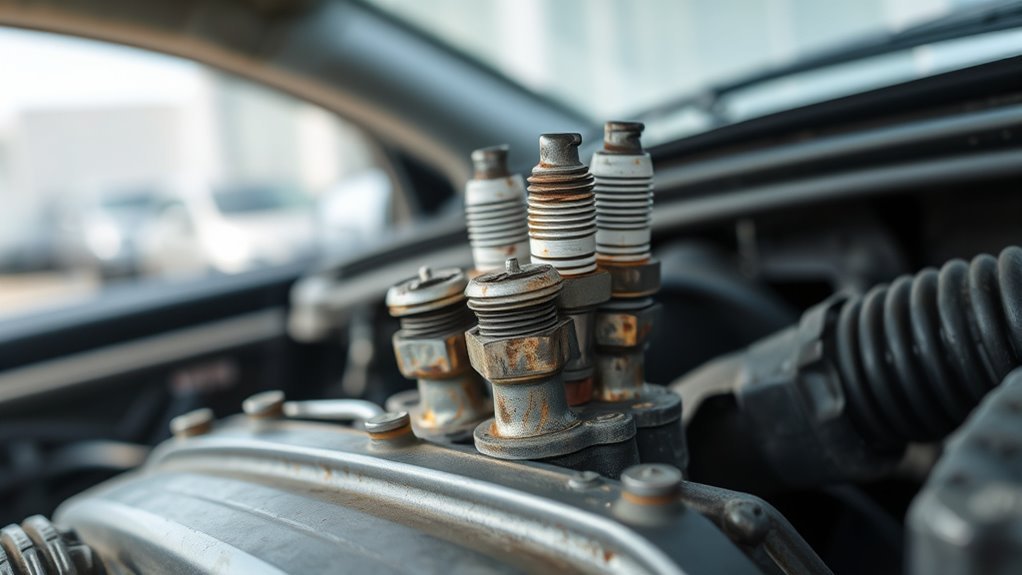
    Although oil contamination in spark plugs can be subtle, you can identify it by carefully inspecting the plug’s tip and electrodes for wet, oily deposits or black, sooty buildup that doesn’t burn off during normal engine operation.

    Different spark plug types, such as copper, platinum, or iridium, will show oil deposits distinctly, but all reveal oil presence through consistent fouling. For effective oil leak detection, examine each plug individually, noting any unusual discoloration or residue.

    Pay close attention to plugs from cylinders suspected of oil intrusion. Consistent oil fouling across multiple plugs often indicates a systemic issue rather than isolated damage.

    How To Remove And Inspect Oil-Contaminated Spark Plugs

    You’ll need a spark plug socket, ratchet, and extension to remove oil-contaminated plugs safely.

    First, disconnect the ignition coil or spark plug wire, then carefully unscrew the plug to avoid damage.

    Once removed, inspect the plug’s electrodes and insulator for oil deposits, wear, and fouling to determine the next steps.

    Tools Needed

    Effective removal and inspection of oil-contaminated spark plugs require specific tools to guarantee accuracy and safety. You’ll need a complete set of spark plug tools, including a spark plug socket wrench with a rubber insert to prevent damage, a ratchet, and an extension bar for hard-to-reach plugs.

    Additionally, a torque wrench is essential to reinstall plugs to manufacturer specifications. For oil leak detection, a clean rag and a flashlight will help you identify oil deposits accurately. A digital multimeter can assist in testing plug functionality if necessary.

    Finally, gloves and safety goggles protect you from oil and debris during the process. Having these tools ready guarantees precise removal, thorough inspection, and effective diagnosis of any oil-related issues in your spark plugs.

    Removal Steps

    Start by disconnecting the negative battery terminal to prevent electrical hazards while working on the spark plugs.

    Next, identify the spark plug types installed in your engine, as this determines the appropriate socket size and tool.

    Remove any engine covers or components obstructing access to the spark plugs.

    Use a spark plug socket with an extension to carefully unscrew each plug, turning counterclockwise.

    Handle each plug gently to avoid damage.

    Once removed, examine the plugs for oil contamination, which often results from oil leak sources such as worn valve cover gaskets or piston ring issues.

    Keep track of each plug’s position to guarantee proper reinstallation.

    Follow these removal steps methodically to prepare for an accurate inspection and effective repair.

    Inspection Criteria

    Three key inspection criteria help you accurately assess oil-contaminated spark plugs: the extent of oil coverage, electrode condition, and porcelain integrity.

    First, examine how much oil coats the spark plug’s surface, noting if it’s localized or widespread, which indicates the severity and source of the oil leak.

    Next, inspect the electrode for wear or carbon buildup, as different spark plug types react distinctly to oil contamination. Look for rounded or eroded electrodes, which impair ignition performance.

    Finally, check the porcelain insulator for cracks or oil saturation; compromised porcelain can cause misfires.

    Document these findings precisely to determine if cleaning suffices or replacement is necessary.

    Understanding these criteria guides you in diagnosing the oil leak’s impact and selecting the appropriate corrective action for your engine’s spark plug types.

    What Causes Oil In Spark Plugs?

    Although oil in spark plugs might seem like a simple issue, it usually indicates underlying mechanical problems. When you find oil on your spark plugs, it often results from oil leaks within the engine.

    These leaks can originate from deteriorated valve cover gaskets or worn piston rings, allowing oil to seep into the combustion chamber. Engine wear exacerbates this condition by reducing the sealing efficiency of internal components, increasing oil intrusion.

    Deteriorated gaskets and worn piston rings let oil enter the combustion chamber, worsened by engine wear.

    Additionally, worn valve guides or seals can cause oil to accumulate on the plugs. If you don’t address these root causes, oil contamination will persist, leading to misfires and reduced engine performance.

    Understanding these precise causes helps you target repairs effectively and prevents recurring oil fouling in your spark plugs.

    How To Clean Oil-Soaked Spark Plugs

    When you notice oil on your spark plugs, you’ll need to remove and clean them carefully to restore proper function.

    Begin by disconnecting the ignition wires and unscrewing each plug with a spark plug socket.

    Use oil removal techniques such as soaking the plugs in a solvent like brake cleaner or carburetor cleaner to dissolve oil residues.

    After soaking for 10-15 minutes, scrub the electrodes gently with a wire brush to remove stubborn deposits.

    Rinse with clean solvent and dry thoroughly using compressed air or a lint-free cloth.

    Inspect the plugs for damage or excessive wear during this process.

    Regular spark plug maintenance, including cleaning and inspection, prolongs engine performance and prevents misfires caused by oil contamination.

    Always handle plugs carefully to avoid damaging the electrode gap or ceramic insulator.

    When And How To Replace Oil-Damaged Spark Plugs

    You’ll know it’s time to replace your spark plugs if you notice persistent misfires, rough idling, or poor acceleration despite cleaning efforts.

    First, disconnect the battery and remove the ignition wires carefully to avoid damage.

    Then, use a spark plug socket to extract the old plugs, inspect the threads, and install new ones with the correct torque specifications.

    Signs Spark Plugs Oil-Damaged

    Oil contamination in spark plugs considerably impairs engine performance and indicates underlying mechanical issues. Recognizing spark plug symptoms caused by oil leakage is critical for timely intervention. You’ll notice:

    1. Engine Misfires and Rough Idle: Oil fouling disrupts the spark, causing incomplete combustion.
    2. Excessive Exhaust Smoke: Blue or gray smoke signals oil burning in the combustion chamber.
    3. Poor Fuel Economy and Acceleration: Inefficient ignition leads to increased fuel consumption and sluggish response.

    Visually inspecting the spark plugs reveals oily deposits or wet, blackened electrodes. These signs confirm oil intrusion, often from worn valve seals or piston rings.

    Addressing these symptoms promptly prevents further engine damage.

    If these indicators are present, you must replace the oil-damaged spark plugs and investigate the source of oil leakage to restore peak engine function.

    Step-by-Step Replacement Guide

    Identifying oil-fouled spark plugs is only the first step; replacing them correctly guarantees your engine runs smoothly again. Begin by disconnecting the battery and removing the ignition coils.

    Use a spark plug socket to carefully extract the oil-damaged plugs. Inspect the cylinder head for residual oil, indicating potential seal or gasket issues. Install new spark plugs compatible with your engine oil types and torque specifications.

    Reattach ignition coils and reconnect the battery. Regular spark plug maintenance guarantees peak performance and prevents recurrence.

    Step Action Tip
    1 Disconnect battery Prevents electrical shocks
    2 Remove ignition coils Label coils for correct reinstallation
    3 Extract old spark plugs Use correct socket size
    4 Inspect cylinder head Check for oil leaks
    5 Install new plugs & reassemble Follow torque specs

    Fixing Engine Problems That Let Oil Reach Your Spark Plugs

    Although spotting oil on your spark plugs is a clear symptom, determining the underlying engine issues causing this contamination requires systematic diagnosis.

    Identifying oil on spark plugs signals deeper engine problems needing thorough diagnosis.

    To fix these problems effectively, focus on these key areas:

    1. Inspect valve cover gaskets: Deteriorated gaskets often cause oil leaks, allowing oil to seep into spark plug wells. Replace any damaged gaskets to restore proper sealing.
    2. Check piston rings and cylinder walls: Worn rings or scored cylinder walls permit oil to enter the combustion chamber, contaminating plugs. Conduct a compression test to assess their condition.
    3. Evaluate PCV valve function: A malfunctioning Positive Crankcase Ventilation (PCV) valve can increase crankcase pressure, pushing oil into spark plug areas. Test and replace the PCV valve if necessary.

    Regular engine maintenance targeting these issues prevents oil leaks and preserves ignition integrity.

    Frequently Asked Questions

    Can Using Synthetic Oil Prevent Oil Contamination in Spark Plugs?

    Yes, using synthetic oil benefits oil contamination prevention by maintaining better viscosity and thermal stability. You’ll reduce buildup on spark plugs, ensuring efficient combustion and prolonging engine life through consistent lubrication and cleaner operation.

    How Often Should Spark Plugs Be Checked for Oil Contamination?

    Schedule spark plug maintenance semiannually to spot signs swiftly. Systematic oil leak detection during these sessions safeguards spark plug performance, preventing potential power problems and preserving peak engine efficiency through precise, proactive inspections and prompt corrective actions.

    Does Oil on Spark Plugs Affect Fuel Efficiency?

    Yes, oil effects on spark plugs reduce fuel efficiency by causing incomplete combustion. When oil fouls the plugs, your engine misfires, wasting fuel and lowering performance.

    Regular checks help maintain peak fuel efficiency and engine health.

    Can Spark Plug Oil Contamination Cause Misfires?

    Yes, oil contamination on spark plugs from an oil leak can cause misfires by disrupting the spark’s ignition process. This directly impairs engine performance, leading to rough idling, reduced power, and increased fuel consumption.

    Are Certain Car Models More Prone to Oil in Spark Plugs?

    Think of your engine as a delicate clock; some car models are more prone to oil leaks, symbolizing worn seals or valve guides. You’ll need precise inspections, as these leaks often cause oil contamination in spark plugs, disrupting performance.

    Conclusion

    Now that you know how to spot, clean, or replace oil-contaminated spark plugs, don’t ignore the root cause. Remember, “a stitch in time saves nine.” Address engine issues like worn valve seals or piston rings promptly to prevent oil from reaching the plugs again.

    By methodically inspecting and fixing these problems, you’ll maintain peak engine performance and avoid costly repairs down the road. Stay vigilant and tackle issues head-on for lasting results.

    Ultimately, fixing oil in spark plugs is not just about cleaning the plugs themselves but also about resolving underlying engine issues to ensure your vehicle runs smoothly for years to come.

  • Can You Drive With Bad Spark Plugs

    Can You Drive With Bad Spark Plugs

    You can drive with bad spark plugs, but it is not advisable. Expect issues like rough idling, engine misfires, and reduced fuel efficiency that will worsen over time. These problems strain ignition components and can lead to more severe engine damage.

    Continuing to use faulty spark plugs increases the risk of sudden power loss, which can compromise your safety while driving. Over time, ignoring spark plug issues can result in costly repairs and unreliable engine performance.

    Understanding the full impact of bad spark plugs helps you make informed maintenance decisions. Taking care of spark plugs promptly protects your engine and ensures your vehicle runs smoothly.

    Key Takeaways

    • Driving with bad spark plugs can cause engine misfires, leading to rough idling and intermittent power loss.
    • Bad spark plugs reduce fuel efficiency and increase emissions due to incomplete combustion.
    • Continued driving risks damaging ignition coils, catalytic converters, and cylinder walls from overheating.
    • Sudden power loss from bad spark plugs increases the chance of accidents on the road.
    • It’s best to replace or repair spark plugs promptly to maintain vehicle safety and engine performance.

    What Do Spark Plugs Do in Your Car’s Engine?

    Spark plugs play an essential role in your car’s engine by igniting the air-fuel mixture inside the combustion chamber. This ignition initiates combustion, generating the power necessary to move your vehicle.

    Different spark plug types such as copper, platinum, and iridium offer varying levels of durability and conductivity, directly impacting engine performance. Choosing the right spark plug type guarantees peak combustion efficiency, fuel economy, and power output.

    Worn or incorrect spark plugs can lead to misfires, reduced acceleration, and increased emissions. By maintaining the proper spark plug type and condition, you help your engine run smoothly and efficiently, preserving performance and preventing potential damage.

    Understanding this fundamental component allows you to make informed decisions about your vehicle’s maintenance.

    How Can You Tell If Your Spark Plugs Are Bad?

    How can you determine if your engine’s spark plugs are failing? Monitoring the spark plug lifespan is essential, as worn plugs can cause symptoms of misfire and reduced engine efficiency.

    You might notice rough idling, difficulty starting, or decreased fuel economy. Visual inspection also helps detect fouling or electrode wear.

    Symptom Description
    Rough Idle Engine shakes or vibrates noticeably
    Difficulty Starting Delayed or failed ignition attempts
    Poor Fuel Economy Increased fuel consumption
    Engine Misfire Intermittent loss of power during acceleration

    If you experience these symptoms, inspecting or replacing your spark plugs promptly can prevent further engine damage and maintain peak performance.

    Can You Drive With Bad Spark Plugs? Here’s What Happens

    Although your vehicle might still run with faulty spark plugs, driving under these conditions can lead to significant engine performance issues and potential damage.

    Bad spark plugs, regardless of spark plug types like copper, platinum, or iridium, cause incomplete combustion. This results in misfires, rough idling, reduced fuel efficiency, and decreased power output. You’ll notice hesitation during acceleration and possibly increased emissions.

    The engine’s ignition system relies on precise spark timing, and worn or fouled plugs disrupt this, impairing combustion efficiency. While you can drive temporarily, prolonged use of bad spark plugs stresses ignition coils and catalytic converters.

    To maintain peak engine performance, inspect and replace spark plugs according to manufacturer recommendations, considering the specific spark plug types best suited for your vehicle’s engine design.

    Can Bad Spark Plugs Cause Engine Damage or Safety Issues?

    When bad spark plugs persist, they can lead to engine damage and safety hazards by causing misfires that strain critical components like ignition coils and catalytic converters.

    You’ll notice a decline in engine performance due to incomplete combustion, which increases stress on the engine’s mechanical parts.

    The spark plug effects extend beyond just rough idling or hesitation; continuous misfiring can cause overheating and damage to the cylinder walls.

    Additionally, faulty spark plugs can trigger sudden power loss, increasing the risk of accidents, especially during acceleration or merging.

    Ignoring these issues compromises both your vehicle’s reliability and your safety.

    To maintain peak engine performance and prevent costly repairs, you should replace worn spark plugs promptly and address any related ignition system faults.

    How Bad Spark Plugs Hurt Gas Mileage and Increase Pollution

    Since spark plugs are essential for igniting the air-fuel mixture in your engine, worn or fouled plugs reduce combustion efficiency, leading your vehicle to consume more fuel.

    When combustion is incomplete or inconsistent, your engine compensates by injecting additional fuel, directly lowering fuel efficiency.

    This inefficiency not only hikes your fuel costs but also increases harmful emissions, such as unburned hydrocarbons and carbon monoxide.

    These pollutants contribute considerably to environmental impact, worsening air quality and increasing your vehicle’s carbon footprint.

    By neglecting spark plug maintenance, you inadvertently cause your engine to emit more pollutants while using fuel inefficiently.

    Maintaining ideal spark plug condition guarantees precise combustion, supporting both improved gas mileage and reduced environmental harm.

    When to Replace Bad Spark Plugs Before They Cause Damage

    You’ll notice signs like rough idling, misfires, or difficulty starting when spark plugs begin to fail.

    Replace them at manufacturer-recommended intervals, typically every 30,000 to 100,000 miles, to maintain peak performance.

    Timely replacement prevents engine damage caused by incomplete combustion and excessive heat buildup.

    Signs Spark Plugs Fail

    A failing spark plug exhibits specific symptoms that signal it’s time for replacement to avoid engine damage.

    Whether you have copper, platinum, or iridium spark plug types, each has a distinct spark plug lifespan, but symptoms of failure remain consistent.

    Watch for these signs:

    1. Engine Misfires: Inconsistent combustion caused by worn electrodes reduces engine efficiency.
    2. Poor Fuel Economy: Deteriorated spark plugs cause incomplete fuel ignition, increasing fuel consumption.
    3. Difficulty Starting: A weak or absent spark leads to slow or failed engine starts.

    Ignoring these indicators risks damage to your catalytic converter and other engine components.

    Checking spark plugs regularly helps maintain peak performance and prevents costly repairs.

    Replace them promptly once these symptoms appear to guarantee your engine runs smoothly and reliably.

    Optimal Replacement Intervals

    Although spark plug lifespan varies by type and vehicle, replacing them at manufacturer-recommended intervals prevents engine performance issues and costly damage.

    For ideal maintenance, consult your owner’s manual to identify specific replacement schedules, typically ranging from 30,000 to 100,000 miles based on plug material—copper, platinum, or iridium.

    Ignoring these intervals risks misfires, reduced fuel efficiency, and increased emissions.

    Monitoring spark plug condition during routine inspections helps determine if earlier replacement is necessary due to wear or fouling.

    Adhering to the ideal maintenance schedule guarantees consistent ignition performance, prolongs engine component life, and maintains overall vehicle reliability.

    Preventing Engine Damage

    When spark plugs degrade beyond their ideal function, they can cause misfires that damage your engine’s internal components. To guarantee preventive maintenance and maximize engine longevity, replace spark plugs before symptoms worsen. Here’s when you should act:

    1. Noticeable engine misfires or rough idling, signaling incomplete combustion.
    2. Decreased fuel efficiency, indicating inefficient spark plug performance.
    3. Difficulty starting the engine or hesitation during acceleration, reflecting spark inconsistencies.

    Addressing these signs promptly prevents carbon buildup, overheating, and potential damage to pistons and catalytic converters.

    By adhering to manufacturer-recommended replacement intervals and monitoring spark plug condition regularly, you safeguard your engine’s health.

    Proactive replacement isn’t just about avoiding breakdowns; it’s a critical step in preserving your vehicle’s performance and extending its operational lifespan.

    How to Replace Spark Plugs Yourself or Choose a Mechanic

    Since spark plugs play a critical role in engine performance, replacing them yourself can save both time and money if you have the right tools and knowledge.

    Replacing spark plugs yourself saves time and money when equipped with the proper tools and knowledge.

    For a successful DIY replacement, make sure you have a spark plug socket, ratchet, torque wrench, and gap gauge. Consult your vehicle’s manual for the correct plug type and gap settings.

    Work methodically, removing and installing plugs one at a time to avoid mixing up wires. If you lack tools or confidence, choosing a mechanic is wise.

    Opt for a professional with certifications and positive reviews to guarantee quality service. A skilled mechanic can detect underlying issues during replacement, providing added value beyond DIY replacement.

    This approach guarantees reliable engine performance without unnecessary risks or expenses.

    How to Maintain Spark Plugs for a Longer-Lasting Engine

    To keep your engine running efficiently, you need to regularly clean your spark plugs to remove carbon deposits and debris.

    Always check and adjust the spark plug gap to the manufacturer’s specifications to guarantee ideal ignition.

    Finally, replace them at recommended intervals to prevent misfires and maintain engine performance.

    Regular Cleaning Techniques

    Regularly cleaning your spark plugs guarantees maximum engine performance and extends their lifespan. Neglected deposits reduce spark efficiency, causing misfires and poor fuel economy.

    To perform effective spark plug cleaning, follow these steps:

    1. Remove the spark plugs carefully using a proper socket wrench to avoid damaging threads.
    2. Use a wire brush or specialized spark plug cleaner to remove carbon buildup and oil residue without harming the electrode.
    3. Inspect for cracks or excessive wear; if present, replacement is necessary instead of cleaning.

    Consistent spark plug cleaning prevents fouling, maintaining ideal combustion and ignition timing. This proactive maintenance enhances engine performance, reduces emissions, and delays the need for costly replacements.

    Proper Gap Adjustment

    Cleaning your spark plugs removes buildup that can disrupt proper ignition, but maintaining the correct gap between the electrodes plays an equally important role in engine efficiency. The spark plug gap measurement guarantees the spark ignites the air-fuel mixture most effectively.

    If the gap is too wide or narrow, misfires and poor fuel economy can occur. Use a feeler gauge to measure and adjust the gap carefully without damaging the electrode.

    Engine Type Recommended Gap (inches)
    Small Gas Engines 0.018 – 0.020
    Passenger Cars 0.028 – 0.032
    Light Trucks 0.030 – 0.035
    Motorcycles 0.025 – 0.029
    Performance Cars 0.035 – 0.040

    Regularly verify gap measurement to maintain peak spark plug performance.

    Timely Replacement Intervals

    Although spark plugs can function for thousands of miles, you should replace them at manufacturer-recommended intervals to prevent performance loss and engine damage.

    Adhering to timely replacement intervals is essential for optimizing spark plug longevity and ensuring smooth engine operation.

    Here are three key maintenance tips to follow:

    1. Check your vehicle’s manual for specific replacement mileage, typically between 30,000 and 100,000 miles depending on the plug type.
    2. Inspect spark plugs during routine maintenance to detect wear, fouling, or electrode erosion that reduces efficiency.
    3. Replace spark plugs proactively, even if they appear functional, to avoid misfires, increased fuel consumption, and potential engine damage.

    Frequently Asked Questions

    What Types of Spark Plugs Are Best for Different Car Models?

    You’ll want iridium spark plugs for modern, high-performance engines due to their durability and efficiency. Copper spark plugs suit older, simpler engines because they conduct heat well but wear out faster, requiring frequent replacement.

    Can Bad Spark Plugs Affect a Car’s Emissions Test Results?

    Bad spark plugs act like a clogged chimney, disrupting your engine’s burn and causing spark plug failure. This leads to incomplete combustion, increasing emissions and making it tough for you to pass strict emissions standards during tests.

    How Do Spark Plug Gaps Influence Engine Performance?

    Spark plug gaps directly affect combustion efficiency; if too wide or narrow, misfires occur. Regular spark plug maintenance guarantees ideal gap settings, enhancing ignition reliability and performance enhancement for smoother engine operation and improved fuel economy.

    Are There Symptoms of Bad Spark Plugs Specific to Cold Weather?

    Notice poor cold engine performance during winter driving issues? You’ll experience rough idling, difficulty starting, and misfires.

    Bad spark plugs struggle in cold conditions, reducing combustion efficiency and causing these specific cold weather symptoms.

    Do Spark Plugs Affect the Starting Time of a Car Engine?

    Yes, bad spark plugs directly cause starting issues by disrupting proper ignition timing. You’ll notice ignition problems, like delayed engine cranking or failure to start, because worn plugs can’t ignite the air-fuel mixture efficiently.

    Conclusion

    Driving with bad spark plugs is like trying to run a marathon with a sprained ankle—it’s possible but inefficient and risky. Ignoring worn spark plugs can lead to poor engine performance, increased fuel consumption, and potential damage.

    To keep your engine running smoothly and safely, replace faulty spark plugs promptly. Regular maintenance guarantees peak combustion, better mileage, and reduced emissions, protecting both your vehicle and the environment.

    Don’t wait—act before problems escalate. Ultimately, driving with bad spark plugs can cause more harm than good, so it’s best to address the issue as soon as possible.

  • How to Change Oil Filter Without Tool

    How to Change Oil Filter Without Tool

    To change your oil filter without a tool, first park on a flat surface with a cool engine and engage the parking brake. Using gloves and a clean rag, grip the filter firmly and twist it counterclockwise by hand. Household items like a rubber strap or a heavy-duty belt can provide extra leverage if needed.

    Once the old filter is removed, clean the mounting surface thoroughly. Then, hand-tighten the new filter, turning it slightly past gasket contact to ensure a proper seal.

    If the filter is stuck or you feel unsure, it’s important to know when to seek tools or professional help. Exploring effective methods and taking necessary precautions will help guarantee a successful oil filter change without a tool.

    Key Takeaways

    • Use a sturdy rubber strap or clean rag wrapped around the filter to improve grip for manual twisting counterclockwise.
    • Apply penetrating oil at the filter base and wait 10-15 minutes to loosen a stuck filter before attempting removal by hand.
    • Wear gloves and safety glasses to protect hands and eyes while removing the filter without specialized tools.
    • Hand-tighten the new oil filter by rotating clockwise until gasket contacts, then turn 3/4 to 1 full turn for proper sealing.
    • If the filter is severely stuck or damaged, seek professional help to avoid injury or damage to the vehicle.

    Preparing Your Car Before Changing the Oil Filter

    Before you start changing the oil filter, make certain your car is parked on a flat, stable surface and the engine is cool to avoid burns.

    Proper oil change preparation begins with securing the vehicle by engaging the parking brake and placing wheel chocks behind the tires. This vehicle setup prevents any movement during the procedure.

    Next, gather necessary materials: a drain pan, gloves, and rags for potential spills. Locate the oil filter and oil drain plug under the car, ensuring you have clear access.

    If you plan to change the oil simultaneously, position the drain pan accordingly. Confirm you have the correct replacement filter on hand.

    Completing these steps in your oil change preparation guarantees a safe, efficient process, minimizing risks and potential complications before you proceed to removing the oil filter.

    How to Remove an Oil Filter Without a Tool

    You can remove an oil filter manually by gripping it firmly and twisting counterclockwise, even without specialized tools.

    Household items like a rubber strap, oil filter wrench made from a chain, or a screwdriver can provide extra leverage.

    Always wear gloves and protect your eyes to prevent injury from slipping tools or hot oil.

    Manual Removal Techniques

    A firm grip and steady pressure can often loosen an oil filter without specialized tools. First, identify the oil filter type; spin-on filters are most common and require a twisting motion. Confirm the engine is cool to avoid burns.

    Place a clean rag around the filter to improve grip and protect your hand from oil residue. Turn the filter counterclockwise with steady, even force. If it resists, shift your grip and apply controlled pressure rather than sudden jerks to prevent damage.

    Maintaining your filter regularly reduces tightness caused by grime buildup. After removal, inspect the filter mounting surface for old gasket remnants, which can cause leaks.

    Proper filter maintenance and using the correct removal technique guarantee a smooth process without tools.

    Using Household Items

    Three common household items can effectively substitute for specialized oil filter removal tools, allowing you to loosen and remove the filter with minimal effort.

    These household hacks provide grip and leverage, essential when dealing with a tight oil filter.

    1. Rubber gloves or a rubber band: Wrap around the oil filter to increase friction and grip, enabling you to turn the filter counterclockwise with your hand.
    2. Oil filter wrench strap substitute: Use a sturdy nylon strap or belt looped tightly around the filter; pull to rotate and loosen it.
    3. Spoon or butter knife: Carefully insert the edge under the filter’s lip to pry it loose. Apply gentle, controlled force to avoid damage.

    These methods give you practical options to remove an oil filter without specialized tools.

    Safety Precautions Explained

    While household items can help grip and loosen an oil filter, handling the filter without the proper tools requires careful attention to safety.

    Prioritize oil filter safety by wearing personal protective equipment such as gloves and safety glasses to prevent contact with hot oil and sharp edges.

    Ascertain the engine is cool before starting to avoid burns from residual heat. Work in a well-ventilated area to prevent inhaling fumes. Use rags or absorbent pads to contain any oil spills promptly.

    Avoid excessive force to prevent slipping or injury. Dispose of used oil and filters according to local regulations.

    Installing a New Oil Filter Without Special Tools

    Start by selecting an oil filter that matches your vehicle’s specifications to guarantee proper fit and function.

    Clean the filter mounting surface thoroughly to remove old gasket residue and debris before installation.

    Then, install the new filter by hand-tightening it securely, using controlled force to avoid over-tightening without special tools.

    Choosing Compatible Oil Filters

    Before you install a new oil filter without special tools, make sure you select one that matches your vehicle’s specifications precisely.

    Filter compatibility guarantees the filter seals properly and functions effectively, preventing leaks and engine damage.

    Also, consider the oil type recommended for your engine, as some filters are optimized for synthetic or conventional oils.

    Follow these steps to choose the right oil filter:

    1. Consult your vehicle’s owner manual to identify the exact filter model number and oil type compatibility.
    2. Verify the filter’s thread size and gasket dimensions match the original to ensure a secure fit.
    3. Opt for reputable brands that meet or exceed industry standards for filtration efficiency.

    Choosing the correct oil filter enhances engine performance and longevity without requiring special tools.

    Preparing the Filter Area

    A clean and accessible filter mounting area guarantees a proper seal and prevents contamination when installing a new oil filter without special tools.

    First, identify the filter location by consulting your vehicle’s manual or inspecting the engine bay.

    Once located, inspect the surrounding area for dirt, grime, or old oil residues. Use a clean rag or lint-free cloth to thoroughly clean the area, making sure no debris remains that could interfere with the new filter’s seal.

    Pay special attention to the filter mounting surface, removing any old gasket remnants.

    This cleaning area step is critical to avoid leaks and guarantee the new filter seats correctly.

    Proper preparation of the filter location sets the foundation for a secure and leak-free oil filter installation.

    Hand-Tightening Techniques

    When installing a new oil filter without special tools, you’ll rely on hand-tightening techniques to confirm a secure fit. Proper hand grip and controlled filter rotation confirm the filter seals correctly without overtightening.

    Follow these steps:

    1. Position the filter with your hand grip firmly around its body.
    2. Rotate the filter clockwise until the gasket contacts the mounting surface.
    3. Continue filter rotation an additional 3/4 to 1 full turn to compress the gasket and secure the seal.

    This method uses tactile feedback to prevent damage and leaks. Avoid using excessive force; the hand grip should maintain steady pressure.

    Proper hand-tightening confirms the oil filter stays in place, maintaining engine protection without needing special tools.

    Common Mistakes to Avoid When Changing an Oil Filter Without a Tool

    Although changing an oil filter without a tool might seem straightforward, you’ll encounter common pitfalls that can compromise the process. One frequent mistake is overtightening the filter by hand, which can cause filter damage or seal deformation, leading to leaks.

    Avoid using excessive force when reinstalling the filter; instead, tighten it firmly but gently.

    Another common pitfall is neglecting to clean the mounting surface, which can prevent a proper seal. Be certain to remove old gasket residues thoroughly.

    Cleaning the mounting surface is crucial to ensure a proper seal; remove all old gasket residues carefully.

    Also, don’t forget to lubricate the new filter’s gasket with fresh oil to guarantee smooth installation and a tight seal.

    Finally, avoid rushing the removal process, as improper grip or speed can damage the filter housing or cause spills.

    Stay methodical to maintain system integrity.

    When to Get a Tool or Professional Help

    If you struggle to loosen a stubborn oil filter by hand or notice signs of damage on the filter housing, it’s time to use a proper tool or seek professional assistance.

    Proper tool selection guarantees you avoid further damage and efficiently complete the task. Consider these scenarios:

    1. The filter is tightly sealed or over-torqued, making manual removal ineffective.
    2. The filter housing shows deformation or cracks, requiring expert evaluation.
    3. You lack experience or confidence in handling oil filter removal safely.

    In these cases, acquiring a specialized oil filter wrench or contacting professional assistance is advisable.

    Avoid forcing the filter, which risks damage or injury. Prioritize tool selection based on your vehicle’s specifications to guarantee a secure grip and effective removal.

    When in doubt, professional help assures a safe, reliable solution.

    Tips for Loosening a Stuck Oil Filter Using Household Items

    Since specialized tools may not always be available, you can use common household items to loosen a stuck oil filter effectively.

    First, wrap a sturdy rubber glove or a clean rag around the oil filter to improve grip. Then, use a pair of adjustable pliers or a large wrench, if available, to turn the filter counterclockwise.

    If you lack these, a strong belt or a piece of heavy-duty rubber can serve as a makeshift strap wrench. Secure it tightly around the oil filter and twist.

    Applying penetrating oil around the filter’s base can also help break the seal. Allow it to sit for 10-15 minutes before attempting removal with household items.

    These methods minimize damage and leverage common materials to free the oil filter safely.

    Frequently Asked Questions

    Can I Reuse an Old Oil Filter if It Looks Clean?

    You shouldn’t reuse an old oil filter, even if it looks clean. Oil filter longevity affects engine wear, and reusing it risks contaminants damaging your engine.

    Always replace the filter to guarantee maximum protection and performance.

    How Often Should I Change My Oil Filter?

    You should change your oil filter every time you perform an oil change. Typically, oil change frequency ranges from 3,000 to 7,500 miles, ensuring your filter lifespan matches to maintain peak engine performance and cleanliness.

    What Type of Oil Filter Is Best for My Car Model?

    Which oil filter type suits your car compatibility best? You’ll want to check your owner’s manual for recommended oil filter types, usually cartridge or spin-on, ensuring the filter matches your engine’s specifications for ideal performance and protection.

    Will Changing the Oil Filter Improve Engine Performance?

    Yes, changing the oil filter improves oil quality, preventing contaminants from circulating and enhancing engine longevity.

    Regular replacement guarantees ideal lubrication, reducing wear and maintaining consistent engine performance over time.

    How Do I Dispose of Used Oil Filters Safely?

    Think of used oil filters as sponges soaked with toxic fluid. You must drain them fully, then take them to an oil recycling center for proper filter disposal.

    This prevents environmental harm and ensures safe, compliant waste management.

    Conclusion

    Changing your oil filter without a specialized tool might seem like trying to move a mountain with your bare hands, but it’s totally doable with the right approach.

    By prepping your car, using household items wisely, and avoiding common pitfalls, you can get the job done efficiently.

    Just remember, if the filter won’t budge or you’re unsure, don’t hesitate to grab the proper tool or call a pro to avoid damage.

    With patience and care, changing your oil filter without a tool is achievable and can save you time and money.

  • How to Tighten Oil Filter

    How to Tighten Oil Filter

    To tighten your oil filter correctly, start by cleaning the mounting surface thoroughly. Lubricate the gasket with fresh oil to ensure a good seal. This preparation is essential when you want to tighten an oil filter properly.

    Hand-tighten the filter until the gasket contacts the base. Then, use a torque wrench to apply the manufacturer’s specified torque—usually about 3/4 to 1 turn past contact. Avoid over-tightening to prevent damage.

    Never under-tighten the oil filter, as this risks leaks that can harm your engine. After installation, start the engine and inspect for any leaks around the filter base. Proper technique guarantees secure sealing and engine protection; keep exploring to master this process fully.

    Key Takeaways

    • Hand-tighten the oil filter until the gasket contacts the mounting surface to ensure proper alignment and avoid cross-threading.
    • Apply a thin layer of fresh oil to the gasket before installation to improve sealing and prevent leaks.
    • Use a torque wrench to tighten the oil filter according to the manufacturer’s specified torque to avoid over-tightening or under-tightening.
    • Inspect the oil filter and mounting surface for cleanliness and remove debris before installation to ensure a proper seal.
    • After starting the engine, check for leaks around the filter base and retighten if necessary to maintain engine oil pressure.

    Why Tightening Your Oil Filter the Right Way Matters

    Although it may seem simple, tightening your oil filter correctly is essential to maintaining engine performance and preventing leaks. When you tighten the oil filter to the manufacturer’s specified torque, you guarantee a proper seal that stops oil from escaping, which protects your engine from damage.

    Over-tightening can damage the filter gasket or housing, reducing the oil filter lifespan and complicating future maintenance. Under-tightening risks leaks that lead to low oil pressure and potential engine failure.

    Over-tightening harms the gasket; under-tightening causes leaks—both threaten engine health and filter longevity.

    Recognizing the importance of maintenance, you must follow precise tightening procedures every time you replace or service the oil filter. Properly tightened filters maintain consistent oil flow and pressure, preserving engine efficiency and longevity.

    Neglecting this step compromises the oil filter’s function and your vehicle’s health.

    Tools You’ll Need to Tighten an Oil Filter

    To tighten an oil filter correctly, you’ll need a few essential tools that guarantee proper torque and accessibility.

    Start with identifying the right filter wrench type for your oil filter. Options include band wrenches, cap wrenches, and claw wrenches. Each offers different grip styles suited for varying filter sizes and spaces.

    A torque wrench is critical to apply the correct force, preventing over-tightening or leaks. Additionally, have a clean rag to wipe the filter base and your hands.

    Use proper tightening techniques: hand-tighten the filter until the gasket contacts the mounting surface, then use the wrench for an additional specified fraction of a turn.

    Selecting the appropriate tools and applying precise tightening techniques assures a secure, leak-free installation every time.

    How to Tighten Your Oil Filter in 4 Simple Steps

    Before you start tightening, make certain the oil filter is properly prepared by lubricating its gasket with fresh oil to guarantee a secure seal.

    You’ll then use the correct technique to tighten the filter by hand until the gasket contacts the mounting surface, followed by an additional quarter to half turn.

    This method prevents leaks and avoids over-tightening, promoting ideal filter performance.

    Preparing The Oil Filter

    Start by confirming the oil filter mounting surface is clean and free of old gasket material or debris. This step is critical for a proper seal during filter installation.

    Next, select the correct oil filter type specified for your engine to guarantee compatibility. Before mounting, apply a thin layer of fresh oil to the new filter’s rubber gasket; this lubrication aids in sealing and future removal.

    Finally, align the filter threads carefully to avoid cross-threading, which can cause leaks or damage.

    • Verify oil filter types compatible with your vehicle.
    • Clean mounting surface thoroughly.
    • Lubricate gasket with fresh engine oil.
    • Hand-thread filter to guarantee proper alignment.

    Following these precise steps prepares the oil filter for secure and efficient installation.

    Proper Tightening Techniques

    Although it’s tempting to overtighten the oil filter for security, applying the correct torque guarantees a proper seal without risking damage to the filter or mounting threads. Use these tightening techniques to secure peak performance: first, lubricate the gasket with clean oil; second, screw the filter by hand until the gasket contacts the base; third, tighten it according to manufacturer torque specs; finally, verify no leaks after startup.

    Step Action Notes
    1 Lubricate gasket Use clean engine oil
    2 Hand-tighten filter Until gasket contacts
    3 Apply torque Follow specifications
    4 Inspect for leaks After engine start

    Following these tightening techniques secures a safe, leak-free oil filter installation.

    How Much Should You Tighten Your Oil Filter? (Torque Tips)

    When tightening your oil filter, applying the correct torque is essential to guarantee a secure seal without damaging the filter or engine components.

    Using the proper torque prevents leaks and avoids over-tightening, which can strip threads or crush the filter.

    Generally, manufacturers recommend tightening the oil filter by hand until the gasket contacts the mounting surface, then turning it an additional 3/4 to 1 full turn. Some filters specify a torque value, often between 15-25 ft-lbs.

    Keep these oil filter torque tips in mind:

    • Hand-tighten until gasket contact is felt
    • Apply an additional 3/4 to 1 turn by hand or wrench
    • Use a torque wrench if a specific torque is provided
    • Avoid excessive force that risks damage or leaks

    Following these steps guarantees proper torque and ideal engine protection.

    Common Mistakes When Tightening Oil Filters (And How to Avoid Them)

    You’ll want to avoid overtightening your oil filter, as it can damage the gasket and cause leaks.

    Always inspect the gasket for wear or debris before installation to guarantee a proper seal.

    Use the correct tools to prevent stripping or uneven torque during tightening.

    Overtightening Risks

    Since applying too much torque can damage the oil filter or the mounting surface, you need to tighten it carefully. Overtightening consequences include filter damage, compromised sealing, and potential leaks.

    To avoid these issues, follow these guidelines:

    • Tighten the filter by hand until the gasket contacts the mounting surface.
    • Then, apply an additional 3/4 to 1 turn only. Avoid using tools unless specified.
    • Never force the filter beyond resistance; excessive torque risks cracking or deforming.
    • Inspect the mounting surface for damage before installation to guarantee proper sealing.

    Ignoring Gasket Condition

    Although it might seem minor, neglecting the condition of the oil filter gasket can lead to improper sealing and oil leaks. Before installing the oil filter, always inspect the gasket for signs of deterioration such as cracks, hardening, or deformation.

    A compromised gasket won’t maintain an effective oil seal, increasing the risk of leaks under pressure. If the gasket shows any damage, replace the entire oil filter rather than reusing it.

    When fitting the new filter, lightly lubricate the gasket with fresh oil to verify it seats properly and prevents tearing. Proper attention to the gasket condition guarantees a reliable oil seal and prevents engine damage caused by oil loss.

    Don’t skip this step. It’s essential for a secure, leak-free oil filter installation.

    Using Incorrect Tools

    Guaranteeing the oil filter gasket is in good condition sets the foundation for a proper seal, but using the wrong tools can still compromise the installation.

    Incorrect tool selection often leads to uneven tightening or damage to the filter housing.

    Avoid these pitfalls by following best practices:

    • Use a proper oil filter wrench sized specifically for your filter.
    • Avoid impact wrench misuse; excessive torque can crush the filter or strip threads.
    • Choose hand tools over power tools for final tightening to control torque precisely.
    • Inspect tools for wear or damage before use to guarantee accurate fit and force application.

    How to Check Your Oil Filter for Leaks After Installation

    After you install the oil filter, start the engine and let it run for a few minutes to build pressure. Perform a leak detection by visually inspecting the filter area for any signs of oil seepage. Use a clean rag to wipe around the filter base and fittings, then recheck after a few minutes. A systematic filter inspection guarantees safety and engine integrity.

    Step Action Purpose
    1 Start engine, run 3-5 minutes Build oil pressure
    2 Inspect filter base & seals Detect leaks
    3 Wipe & re-inspect Confirm no oil seepage

    If leaks appear, immediately shut off the engine and retighten the filter to manufacturer torque specs.

    Quick Tips for Removing an Old Oil Filter Safely

    Removing an old oil filter requires careful technique to prevent spills and damage. Proper oil filter removal techniques guarantee a clean process and protect engine components.

    First, position a drain pan beneath the filter to catch residual oil. Then, use an appropriate oil filter wrench for a secure grip.

    Follow these quick tips for safe removal:

    • Loosen the oil filter slowly to control oil flow.
    • Avoid using excessive force to prevent damaging the mounting surface.
    • Keep rags handy to wipe any oil drips immediately.
    • Inspect the old filter’s rubber gasket to verify it’s not stuck to the engine.

    Frequently Asked Questions

    Can I Reuse an Old Oil Filter Gasket?

    You shouldn’t reuse an old oil filter gasket because it compromises gasket integrity and risks leaks. Always use a new gasket to guarantee proper filter compatibility.

    This helps maintain a secure, reliable oil seal during installation.

    How Often Should I Replace the Oil Filter?

    You should replace the oil filter every 3,000 to 7,500 miles, depending on your vehicle’s oil filter lifespan and replacement schedule. Always follow manufacturer guidelines to maintain peak engine performance and prevent contamination buildup.

    What Type of Oil Filter Is Best for My Car?

    Like using a floppy disk, choosing oil filter types requires care. You should pick one ensuring filter compatibility with your car’s make and model, prioritizing synthetic media for superior filtration and longer service intervals.

    Can Over-Tightening Damage the Oil Filter Housing?

    Yes, over-tightening during oil filter installation can compromise the filter housing integrity, causing cracks or warping. You should tighten only to the manufacturer’s specified torque to guarantee a secure fit without damaging components.

    Is It Safe to Tighten an Oil Filter by Hand Only?

    Think of hand tightening an oil filter like securing a lid on a jar. It’s safe and effective when snug.

    You should hand tighten the oil filter until it’s firmly seated, then give it a slight additional turn to seal properly.

    Conclusion

    Think of tightening your oil filter like securing a ship’s hatch before a storm—it must be snug enough to keep water out but never so tight that it damages the seal.

    By using the right tools and torque, you guarantee your engine stays protected from leaks and damage. Follow the steps carefully, avoid common mistakes, and always double-check your work.

    This precision keeps your vehicle running smoothly, just like a well-locked hatch keeps the ship safe at sea. Properly tightening your oil filter is essential to maintaining your engine’s health and preventing leaks.

  • How to Set Chainsaw Carburetor

    How to Set Chainsaw Carburetor

    To set your chainsaw carburetor, start by turning the L and H screws clockwise until they’re lightly seated, then back them out 1 to 1.5 turns. This initial adjustment helps establish a baseline for fine-tuning.

    Next, warm up the engine to operating temperature. Adjust the L screw to achieve smooth idling, which ensures the engine runs steadily without sputtering.

    After that, tweak the H screw to reach maximum RPM without causing strain or overheating. Finally, set the T screw so the chain remains stationary when idling.

    This precise adjustment improves performance and prevents stalling. Exploring proper maintenance guarantees your saw runs efficiently.

    Key Takeaways

    • Turn L and H screws clockwise until seated, then back out 1 to 1.5 turns before starting the engine.
    • Warm up the chainsaw engine for about five minutes before making carburetor adjustments.
    • Adjust the L screw for smooth idle and the H screw for maximum RPM without engine strain.
    • Set the T screw so the chain remains stationary when idling.
    • Use a tachometer to ensure RPMs stay within manufacturer specifications during fine-tuning.

    How to Tell If Your Chainsaw Carburetor Needs Adjusting

    How can you tell if your chainsaw carburetor needs adjusting? You’ll notice specific signs of malfunction that directly affect the engine’s performance.

    Key performance indicators include difficulty starting the saw, inconsistent idling, or stalling under load.

    Difficulty starting, inconsistent idling, and stalling under load are key signs your chainsaw carburetor needs adjustment

    If the throttle response feels sluggish or the engine races uncontrollably at idle, these are clear signs the carburetor settings are off.

    Additionally, excessive smoke from the exhaust suggests a rich fuel mixture, while a weak engine sound can indicate a lean mixture.

    Monitoring fuel consumption can also help; unusually high usage signals inefficiency.

    Essential Tools for Adjusting Your Chainsaw Carburetor

    When you notice signs like inconsistent idling or excessive smoke, adjusting the carburetor becomes necessary to restore ideal performance.

    To do this effectively, you’ll need specific tools tailored to the carburetor types on your chainsaw.

    First, a small flathead or Phillips screwdriver is essential for turning the high-speed (H), low-speed (L), and idle (T) adjustment screws.

    A tachometer helps measure engine RPM accurately, guaranteeing your tuning techniques meet manufacturer specs.

    Additionally, a spark plug wrench aids in access and inspection during the tuning process.

    For some carburetor types, a carburetor cleaner spray is useful to remove deposits before adjustment.

    Having these tools ready guarantees precise, safe adjustments, allowing you to optimize fuel-air mixtures and maintain your chainsaw’s peak efficiency.

    Step-by-Step Guide to Adjust Your Chainsaw Carburetor

    Before adjusting your chainsaw carburetor, gather the necessary tools like a screwdriver and tachometer.

    You’ll follow a precise sequence of steps to fine-tune the idle, low-speed, and high-speed screws.

    This method guarantees peak engine performance and fuel efficiency.

    Necessary Tools Preparation

    Preparing the right tools guarantees a smooth and accurate adjustment of your chainsaw carburetor. Proper tool selection is essential for effective carburetor maintenance, ensuring you avoid damaging delicate components.

    Gather precision screwdrivers, a tachometer, and a clean workspace before starting. Using the correct tools reduces errors and improves adjustment accuracy.

    Tool Purpose
    Flathead screwdriver Adjusts carburetor screws
    Phillips screwdriver Removes carburetor casing screws
    Tachometer Measures engine RPM
    Clean cloth Wipes off dirt and debris

    Make sure your tools are in good condition and calibrated if necessary. This preparation prevents mechanical errors and streamlines the adjustment process, setting a foundation for precise carburetor tuning.

    Adjustment Procedure Steps

    Although adjusting your chainsaw carburetor requires attention to detail, following a systematic procedure guarantees peak engine performance.

    Proper carburetor tuning optimizes fuel-air mixture, securing reliable starts and smooth operation. Here’s how to proceed:

    1. Set Idle Screws: Turn the L (low-speed) and H (high-speed) screws clockwise until they lightly seat, then back them out 1 to 1.5 turns. This baseline prevents over-tightening.
    2. Start and Warm Up Engine: Run the chainsaw until it reaches operating temperature. This step stabilizes engine performance and allows accurate adjustments.
    3. Fine-Tune Screws: Adjust the L screw for smooth idling, then the H screw for maximum RPM without engine strain. Finally, set the T (idle speed) screw so the chain doesn’t move at idle.

    Following these steps secures precise carburetor tuning and maximizes engine performance.

    Fine-Tune Your Chainsaw Carburetor for Peak Performance

    Once you’ve completed the initial adjustments, you’ll need to fine-tune your chainsaw carburetor to guarantee it runs at peak performance.

    Start by warming up the engine for five minutes to stabilize operating conditions.

    Adjust the low-speed screw slowly; turn it clockwise to lean the mixture and counterclockwise to enrich it until the engine idles smoothly without stalling.

    Carefully adjust the low-speed screw to achieve a smooth idle without stalling by leaning or enriching the mixture.

    Next, tweak the high-speed screw to enhance top-end power. Turn it in small increments while testing throttle response.

    Always monitor the RPMs with a tachometer to verify you stay within the manufacturer’s recommended range. This precise carburetor tuning maximizes fuel efficiency and power output, ensuring ideal performance.

    Finalize by adjusting the idle speed screw so the chain doesn’t move at idle but the engine runs steadily.

    This systematic process ensures effective performance enhancement.

    Common Chainsaw Carburetor Problems and How to Fix Them

    If your chainsaw engine hesitates, stalls, or runs unevenly, the carburetor is likely the culprit. Address these common problems to restore performance:

    1. Carburetor Leaks: Inspect for fuel seepage around gaskets and diaphragms. Replace damaged seals promptly to prevent air-fuel mixture inconsistencies.
    2. Clogged Fuel Filter: A dirty fuel filter restricts fuel flow, causing sputtering or stalling. Clean or replace the filter regularly to maintain proper fuel delivery.
    3. Improper Idle Adjustment: If the engine stalls at idle, adjust the idle screw according to the manufacturer’s specs for stable running.

    Simple Tips to Keep Your Chainsaw Carburetor Running Smoothly

    You’ll keep your chainsaw carburetor running smoothly by sticking to a regular cleaning routine and using the proper fuel mixture.

    Clean the carburetor components to prevent buildup that can clog jets and passages.

    Always mix fuel and oil at the manufacturer’s recommended ratio to guarantee peak engine performance.

    Regular Cleaning Routine

    Performing a regular cleaning routine on your chainsaw carburetor guarantees peak performance and extends the tool’s lifespan.

    Consistent carburetor maintenance prevents buildup that affects fuel flow and engine efficiency. Use appropriate cleaning supplies like carburetor cleaner, compressed air, and small brushes.

    Follow these steps for effective cleaning:

    1. Disassemble Carefully: Remove the carburetor from the chainsaw, noting the position of all parts to avoid misassembly.
    2. Clean Thoroughly: Spray carburetor cleaner on all components, focusing on jets and passages. Use compressed air to clear debris.
    3. Inspect and Reassemble: Check for worn or damaged parts. Replace if necessary, then reassemble and reinstall the carburetor securely.

    Adhere to this routine regularly to maintain smooth operation and prevent costly repairs.

    Proper Fuel Mixture

    Maintaining a clean carburetor sets the foundation for ideal fuel delivery, but achieving smooth operation also depends on using the proper fuel mixture. Start by selecting high-quality fuel with minimal ethanol content, as poor fuel quality can cause deposits and clog jets.

    Use fresh gasoline and avoid storage over 30 days to prevent degradation. Follow precise mixing techniques: measure oil and fuel accurately, typically at a 50:1 ratio unless your chainsaw’s manual specifies otherwise.

    Mix thoroughly in a clean container before filling the tank, guaranteeing uniform distribution of oil to lubricate the engine properly. Avoid over-oiling, which can foul the spark plug and carburetor.

    Correct fuel mixture guarantees peak combustion, reduces engine wear, and maintains carburetor performance, ultimately extending your chainsaw’s lifespan and reliability.

    Frequently Asked Questions

    Can I Use a Universal Carburetor for Different Chainsaw Models?

    You can use a universal carburetor, but universal compatibility isn’t guaranteed. Expect performance differences due to variations in engine specs.

    Always check fitment and tune adjustments for ideal chainsaw operation and efficiency.

    How Often Should I Replace My Chainsaw Carburetor?

    You should replace your chainsaw carburetor every 1-3 years, depending on usage and maintenance. Monitor carburetor lifespan closely, and adjust replacement frequency if you notice performance issues, fuel leaks, or difficulty starting the saw.

    Does Altitude Affect Chainsaw Carburetor Performance?

    Yes, altitude affects chainsaw carburetor performance. You’ll need altitude adjustments to maintain ideal carburetor tuning, ensuring correct air-fuel mixture.

    Adjust screws carefully to prevent engine flooding or stalling during high-altitude use.

    Can Bad Fuel Damage the Carburetor?

    Yes, poor fuel quality can clog and corrode your carburetor, leading to performance issues. You should always use fresh, clean fuel and perform regular carburetor maintenance to prevent damage and guarantee efficient operation.

    Is Professional Servicing Necessary for Carburetor Issues?

    Think of your carburetor as your chainsaw’s heart; without professional diagnostics, hidden issues can persist. You should seek expert carburetor maintenance to guarantee peak performance, prevent damage, and extend your tool’s lifespan effectively.

    Conclusion

    Think of your chainsaw carburetor as the heart of your tool—when it’s finely tuned, everything runs smoothly. By following the steps to adjust it, you’ll guarantee ideal fuel and air flow, boosting performance and longevity. Regular maintenance and quick fixes prevent common issues from slowing you down.

    Keep your carburetor in top shape, and your chainsaw will respond like a well-oiled machine, ready for any cutting task you throw its way. Properly setting the chainsaw carburetor ensures optimal engine efficiency and reliability, making your work easier and more effective.

  • Why Are My Spark Plugs Black

    Why Are My Spark Plugs Black

    Your spark plugs turn black because your engine is running too rich, meaning there’s excess fuel causing incomplete combustion and dry carbon deposits. This blackening is a common sign that your spark plugs are not firing efficiently.

    Alternatively, oily blackness on the plugs may indicate oil leaking into the combustion chamber from worn rings or seals. These deposits reduce ignition efficiency, leading to misfires and poor engine performance.

    Common causes include fuel injector issues, faulty oxygen sensors, or an improper air-fuel mixture. Understanding these factors will help you identify underlying engine problems and maintain peak performance.

    Key Takeaways

    • Black spark plugs indicate a rich fuel mixture causing incomplete combustion and carbon buildup on the electrodes.
    • Oily black deposits suggest oil leakage from worn piston rings or valve seals contaminating the spark plug.
    • Symptoms of rich running include rough idle, increased fuel consumption, and misfires due to excess fuel in the combustion chamber.
    • Faulty fuel injectors, oxygen sensors, or air intake issues often cause blackened spark plugs by disrupting the air-fuel ratio.
    • Regular spark plug inspection and cleaning, along with proper engine tuning, can prevent and correct black carbon deposits.

    What Black Spark Plugs Mean for Your Engine

    When you notice black deposits on your spark plugs, it indicates your engine is running rich, meaning there’s an excess of fuel in the air-fuel mixture. This condition affects spark plug colors, typically resulting in a dry, black soot on the electrode and insulator tip.

    Such deposits signal incomplete combustion, which can degrade engine performance by causing misfires, reduced power, and increased fuel consumption. Monitoring spark plug colors provides a diagnostic window into your engine’s operational status. Black, sooty plugs contrast with the ideal light tan or grayish color that signifies optimal combustion.

    Addressing the underlying cause, such as a faulty fuel injector, incorrect carburetor adjustment, or a clogged air filter, is essential to restore proper air-fuel balance and maintain efficient engine performance.

    Why Spark Plugs Turn Black: Fuel and Oil Deposits Explained

    You’ll find black deposits on your spark plugs mainly due to an overly rich fuel mixture or oil leaking into the combustion chamber.

    When fuel doesn’t burn completely, carbon builds up, causing those dark, sooty deposits.

    Similarly, oil contamination leaves a thick, oily residue that fouls the plugs and disrupts engine performance.

    Causes Of Black Deposits

    Although black deposits on spark plugs can indicate several issues, they primarily result from fuel and oil residues accumulating on the electrode and insulator. Excessive fuel causes carbon buildup, creating a dry, sooty black coating that hinders proper spark generation.

    Likewise, oil leaks into the combustion chamber, often from worn piston rings or valve seals, leave oily, wet black deposits. Both conditions degrade engine performance by disrupting efficient combustion and increasing misfire risk.

    Regular spark plug maintenance helps identify these deposits early, preventing further engine damage. Diagnosing the exact cause involves inspecting deposit texture and considering engine operation parameters.

    Addressing these deposits promptly guarantees peak engine performance and fuel efficiency, maintaining your vehicle’s reliability and longevity.

    Fuel Mixture Issues

    Since an improper fuel mixture directly affects combustion quality, it often leads to black deposits on spark plugs. When the air-fuel ratio is too rich, meaning excess fuel enters the combustion chamber, incomplete combustion occurs.

    This incomplete burning leaves carbon and soot residues on your spark plugs, visibly blackening them. Poor combustion quality not only reduces fuel efficiency but also impairs engine performance.

    You may notice rough idling, reduced power, or increased emissions alongside these black deposits. Diagnosing fuel mixture issues involves checking components like fuel injectors, oxygen sensors, and the air intake system for faults or blockages.

    Correcting these guarantees ideal combustion quality, restoring fuel efficiency and preventing further carbon buildup on your spark plugs, which is essential for maintaining engine health.

    Oil Leakage Effects

    When oil leaks into the combustion chamber, it contaminates the spark plugs with thick, black deposits that differ from those caused by fuel mixture problems. Oil leakage results from worn piston rings, valve seals, or cylinder walls, causing the spark plug to foul with oily residue.

    This residue disrupts the spark plug’s ability to ignite the fuel-air mixture efficiently, leading to misfires and reduced engine performance. You can identify oil leakage effects by inspecting the spark plug’s appearance and comparing it to typical fuel-related fouling.

    Condition Spark Plug Appearance Diagnostic Indicator
    Oil Leakage Wet, shiny black deposits Oily residue on insulator tip
    Fuel Mixture Dry, sooty black deposits Powdery black coating
    Normal Light tan Clean insulator tip

    Check for oil leakage promptly to avoid engine damage.

    Signs Your Engine Is Running Too Rich and Blackening Spark Plugs

    If your engine runs too rich, it means the fuel mixture has too much fuel and not enough air, leading to incomplete combustion.

    You might notice rough idling, poor fuel economy, and black carbon deposits on your spark plugs.

    These symptoms signal that your engine isn’t burning fuel efficiently, causing the spark plugs to blacken prematurely.

    Fuel Mixture Imbalance

    Although modern engines use advanced sensors to regulate fuel delivery, an imbalance in the air-fuel mixture can still occur, causing your engine to run too rich. This excess fuel leads to incomplete combustion, depositing carbon on your spark plugs and blackening them.

    Improper fuel adjustment or restricted air intake often triggers this condition.

    Cause Effect on Spark Plug
    Faulty fuel injectors Excess fuel spray
    Clogged air filters Reduced air intake
    Malfunctioning sensors Incorrect fuel adjustment
    Leaking fuel pressure regulator Rich mixture
    Poor carburetor tuning Imbalanced air-fuel ratio

    Diagnose by inspecting air intake components and verifying fuel adjustment parameters. Correcting these issues restores proper combustion and prevents plug fouling.

    Symptoms Of Rich Running

    Excessive fuel in the combustion chamber creates specific symptoms that indicate your engine is running too rich and causing spark plug fouling.

    You’ll notice black, sooty deposits on the plugs, which degrade spark plug performance by inhibiting proper ignition.

    Additionally, your engine may experience rough idling, reduced acceleration, and increased fuel consumption, all signs of compromised engine efficiency.

    Misfires can occur as the overly rich mixture dilutes the air-fuel ratio, preventing complete combustion.

    Monitoring exhaust emissions can also reveal elevated hydrocarbons, confirming rich running conditions.

    If you detect these symptoms, inspect the spark plugs for carbon buildup and address fuel system components like injectors or sensors.

    Timely correction restores spark plug performance and enhances engine efficiency, preventing long-term damage and maintaining peak combustion.

    Common Engine Problems That Cause Black Spark Plugs

    When your spark plugs turn black, it signals specific engine issues that you need to address promptly. Common causes include engine misfires, which lead to incomplete combustion and carbon buildup on the plugs.

    Excessive idling also contributes by preventing the engine from reaching ideal temperature, causing fuel to burn inefficiently and leaving deposits.

    Additionally, a malfunctioning fuel injector or a faulty oxygen sensor can enrich the air-fuel mixture, resulting in blackened spark plugs.

    Worn-out piston rings or valve seals may introduce oil into the combustion chamber, further fouling the plugs.

    Addressing these problems quickly can restore engine efficiency and prevent further damage.

    Monitoring these conditions allows you to diagnose the root cause of black spark plugs accurately and maintain ideal engine performance.

    How to Clean and Inspect Blackened Spark Plugs

    Understanding the causes behind black spark plugs helps you determine whether cleaning is a viable solution or if replacement is necessary.

    Begin spark plug maintenance by removing the plug and inspecting the electrode and insulator for heavy carbon deposits, oil fouling, or physical damage.

    Start spark plug care by removing and examining for carbon buildup, oil fouling, or damage.

    Use a wire brush or specialized spark plug cleaner to carefully remove carbon buildup without damaging the electrode.

    Avoid abrasive methods that could alter the spark gap.

    After cleaning, check the spark gap with a feeler gauge and adjust it to manufacturer specifications.

    If the plug shows excessive wear, cracks, or persistent fouling, replacement is advised.

    Proper cleaning techniques restore spark efficiency, improving combustion and engine performance, but thorough inspection guarantees you don’t overlook underlying issues that cleaning alone won’t fix.

    How to Stop Spark Plugs From Getting Black Again

    To prevent spark plugs from blackening again, you need to address the root causes of carbon buildup and fouling.

    Start with regular spark plug maintenance, inspecting for deposits and wear every 10,000 to 15,000 miles. Replace plugs showing persistent carbon fouling despite cleaning.

    Next, focus on engine tuning: guarantee the air-fuel mixture is correctly balanced to avoid running rich, which causes excessive carbon deposits.

    Check the fuel injectors and ignition timing for proper operation.

    Additionally, verify that the engine’s sensors, especially the oxygen sensor, are functioning correctly to maintain peak combustion.

    Avoid excessive idling and short trips that prevent the engine from reaching full operating temperature.

    Frequently Asked Questions

    How Often Should Spark Plugs Be Replaced?

    You should replace spark plugs every 30,000 to 100,000 miles, depending on their type and vehicle. Monitor spark plug lifespan and follow the manufacturer’s recommended replacement frequency to maintain peak engine performance and efficiency.

    Can Black Spark Plugs Cause Engine Misfires?

    Yes, black spark plugs can cause engine misfires. During spark plug inspection, carbon deposits indicate incomplete combustion, reducing engine performance.

    Addressing this promptly restores ignition efficiency and prevents further misfire-related issues.

    Are Black Spark Plugs Harmful to Fuel Efficiency?

    Yes, black spark plugs indicate excessive spark plug wear, which can increase fuel consumption by reducing combustion efficiency.

    You should inspect and replace them promptly to maintain ideal fuel economy and prevent further engine issues.

    Do Different Engines Require Specific Spark Plug Types?

    You might think any spark plug fits all engines, but spark plug materials must match engine compatibility for best performance. Using incorrect plugs risks misfires, poor combustion, and damage. Always consult specs for your engine’s precise spark plug requirements.

    Can Using the Wrong Spark Plug Gap Cause Blackening?

    Yes, using the wrong spark plug gap can cause blackening by disrupting the air-fuel mixture and combustion process. This misalignment reduces engine performance, leading to incomplete combustion and carbon deposits on the spark plugs.

    Conclusion

    Now that you know black spark plugs often signal a rich fuel mixture or oil contamination, don’t ignore them. Could overlooking this issue lead to bigger engine problems down the line? Regular inspection and cleaning are key to maintaining peak performance.

    Adjust your fuel system, check for leaks, and keep an eye on your engine’s condition to prevent recurrence. Staying proactive guarantees your engine runs efficiently and avoids costly repairs.

    In conclusion, understanding why your spark plugs are black helps you address the root cause promptly. Proper maintenance ensures your engine stays in top shape and prevents black spark plugs from becoming a recurring problem.