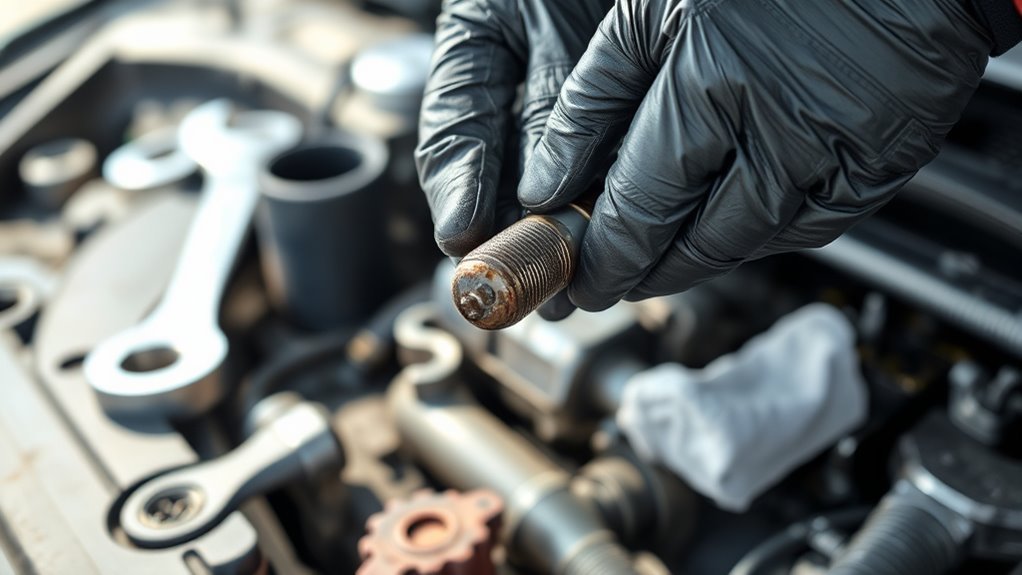

You can fix oil in spark plugs by first spotting oily residue on the plugs, then carefully removing them with the right tools. Inspect each plug for oil and damage to determine if cleaning or replacement is necessary.
Clean soaked plugs using a solvent and brush, or replace plugs that are severely fouled. Address underlying causes like worn valve cover gaskets or piston rings to prevent the issue from recurring.
Proper diagnosis and maintenance guarantee engine reliability. Continue exploring to learn detailed steps for cleaning, replacement, and engine repairs.
Key Takeaways
- Inspect and remove oil-contaminated spark plugs carefully, noting the extent and location of oil deposits for diagnosis.
- Clean spark plugs with solvent and a wire brush, or replace if damage or persistent misfires occur.
- Check and replace deteriorated valve cover gaskets to stop oil leaks into spark plug wells.
- Perform compression tests to identify worn piston rings or cylinder issues causing oil intrusion into combustion chambers.
- Evaluate and maintain PCV valve function to prevent crankcase pressure buildup that pushes oil into spark plug areas.
How To Spot Oil In Your Spark Plugs
Although oil contamination in spark plugs can be subtle, you can identify it by carefully inspecting the plug’s tip and electrodes for wet, oily deposits or black, sooty buildup that doesn’t burn off during normal engine operation.
Different spark plug types, such as copper, platinum, or iridium, will show oil deposits distinctly, but all reveal oil presence through consistent fouling. For effective oil leak detection, examine each plug individually, noting any unusual discoloration or residue.
Pay close attention to plugs from cylinders suspected of oil intrusion. Consistent oil fouling across multiple plugs often indicates a systemic issue rather than isolated damage.
How To Remove And Inspect Oil-Contaminated Spark Plugs
You’ll need a spark plug socket, ratchet, and extension to remove oil-contaminated plugs safely.
First, disconnect the ignition coil or spark plug wire, then carefully unscrew the plug to avoid damage.
Once removed, inspect the plug’s electrodes and insulator for oil deposits, wear, and fouling to determine the next steps.
Tools Needed
Effective removal and inspection of oil-contaminated spark plugs require specific tools to guarantee accuracy and safety. You’ll need a complete set of spark plug tools, including a spark plug socket wrench with a rubber insert to prevent damage, a ratchet, and an extension bar for hard-to-reach plugs.
Additionally, a torque wrench is essential to reinstall plugs to manufacturer specifications. For oil leak detection, a clean rag and a flashlight will help you identify oil deposits accurately. A digital multimeter can assist in testing plug functionality if necessary.
Finally, gloves and safety goggles protect you from oil and debris during the process. Having these tools ready guarantees precise removal, thorough inspection, and effective diagnosis of any oil-related issues in your spark plugs.
Removal Steps
Start by disconnecting the negative battery terminal to prevent electrical hazards while working on the spark plugs.
Next, identify the spark plug types installed in your engine, as this determines the appropriate socket size and tool.
Remove any engine covers or components obstructing access to the spark plugs.
Use a spark plug socket with an extension to carefully unscrew each plug, turning counterclockwise.
Handle each plug gently to avoid damage.
Once removed, examine the plugs for oil contamination, which often results from oil leak sources such as worn valve cover gaskets or piston ring issues.
Keep track of each plug’s position to guarantee proper reinstallation.
Follow these removal steps methodically to prepare for an accurate inspection and effective repair.
Inspection Criteria
Three key inspection criteria help you accurately assess oil-contaminated spark plugs: the extent of oil coverage, electrode condition, and porcelain integrity.
First, examine how much oil coats the spark plug’s surface, noting if it’s localized or widespread, which indicates the severity and source of the oil leak.
Next, inspect the electrode for wear or carbon buildup, as different spark plug types react distinctly to oil contamination. Look for rounded or eroded electrodes, which impair ignition performance.
Finally, check the porcelain insulator for cracks or oil saturation; compromised porcelain can cause misfires.
Document these findings precisely to determine if cleaning suffices or replacement is necessary.
Understanding these criteria guides you in diagnosing the oil leak’s impact and selecting the appropriate corrective action for your engine’s spark plug types.
What Causes Oil In Spark Plugs?
Although oil in spark plugs might seem like a simple issue, it usually indicates underlying mechanical problems. When you find oil on your spark plugs, it often results from oil leaks within the engine.
These leaks can originate from deteriorated valve cover gaskets or worn piston rings, allowing oil to seep into the combustion chamber. Engine wear exacerbates this condition by reducing the sealing efficiency of internal components, increasing oil intrusion.
Deteriorated gaskets and worn piston rings let oil enter the combustion chamber, worsened by engine wear.
Additionally, worn valve guides or seals can cause oil to accumulate on the plugs. If you don’t address these root causes, oil contamination will persist, leading to misfires and reduced engine performance.
Understanding these precise causes helps you target repairs effectively and prevents recurring oil fouling in your spark plugs.
How To Clean Oil-Soaked Spark Plugs
When you notice oil on your spark plugs, you’ll need to remove and clean them carefully to restore proper function.
Begin by disconnecting the ignition wires and unscrewing each plug with a spark plug socket.
Use oil removal techniques such as soaking the plugs in a solvent like brake cleaner or carburetor cleaner to dissolve oil residues.
After soaking for 10-15 minutes, scrub the electrodes gently with a wire brush to remove stubborn deposits.
Rinse with clean solvent and dry thoroughly using compressed air or a lint-free cloth.
Inspect the plugs for damage or excessive wear during this process.
Regular spark plug maintenance, including cleaning and inspection, prolongs engine performance and prevents misfires caused by oil contamination.
Always handle plugs carefully to avoid damaging the electrode gap or ceramic insulator.
When And How To Replace Oil-Damaged Spark Plugs
You’ll know it’s time to replace your spark plugs if you notice persistent misfires, rough idling, or poor acceleration despite cleaning efforts.
First, disconnect the battery and remove the ignition wires carefully to avoid damage.
Then, use a spark plug socket to extract the old plugs, inspect the threads, and install new ones with the correct torque specifications.
Signs Spark Plugs Oil-Damaged
Oil contamination in spark plugs considerably impairs engine performance and indicates underlying mechanical issues. Recognizing spark plug symptoms caused by oil leakage is critical for timely intervention. You’ll notice:
- Engine Misfires and Rough Idle: Oil fouling disrupts the spark, causing incomplete combustion.
- Excessive Exhaust Smoke: Blue or gray smoke signals oil burning in the combustion chamber.
- Poor Fuel Economy and Acceleration: Inefficient ignition leads to increased fuel consumption and sluggish response.
Visually inspecting the spark plugs reveals oily deposits or wet, blackened electrodes. These signs confirm oil intrusion, often from worn valve seals or piston rings.
Addressing these symptoms promptly prevents further engine damage.
If these indicators are present, you must replace the oil-damaged spark plugs and investigate the source of oil leakage to restore peak engine function.
Step-by-Step Replacement Guide
Identifying oil-fouled spark plugs is only the first step; replacing them correctly guarantees your engine runs smoothly again. Begin by disconnecting the battery and removing the ignition coils.
Use a spark plug socket to carefully extract the oil-damaged plugs. Inspect the cylinder head for residual oil, indicating potential seal or gasket issues. Install new spark plugs compatible with your engine oil types and torque specifications.
Reattach ignition coils and reconnect the battery. Regular spark plug maintenance guarantees peak performance and prevents recurrence.
| Step | Action | Tip |
|---|---|---|
| 1 | Disconnect battery | Prevents electrical shocks |
| 2 | Remove ignition coils | Label coils for correct reinstallation |
| 3 | Extract old spark plugs | Use correct socket size |
| 4 | Inspect cylinder head | Check for oil leaks |
| 5 | Install new plugs & reassemble | Follow torque specs |
Fixing Engine Problems That Let Oil Reach Your Spark Plugs
Although spotting oil on your spark plugs is a clear symptom, determining the underlying engine issues causing this contamination requires systematic diagnosis.
Identifying oil on spark plugs signals deeper engine problems needing thorough diagnosis.
To fix these problems effectively, focus on these key areas:
- Inspect valve cover gaskets: Deteriorated gaskets often cause oil leaks, allowing oil to seep into spark plug wells. Replace any damaged gaskets to restore proper sealing.
- Check piston rings and cylinder walls: Worn rings or scored cylinder walls permit oil to enter the combustion chamber, contaminating plugs. Conduct a compression test to assess their condition.
- Evaluate PCV valve function: A malfunctioning Positive Crankcase Ventilation (PCV) valve can increase crankcase pressure, pushing oil into spark plug areas. Test and replace the PCV valve if necessary.
Regular engine maintenance targeting these issues prevents oil leaks and preserves ignition integrity.
Frequently Asked Questions
Can Using Synthetic Oil Prevent Oil Contamination in Spark Plugs?
Yes, using synthetic oil benefits oil contamination prevention by maintaining better viscosity and thermal stability. You’ll reduce buildup on spark plugs, ensuring efficient combustion and prolonging engine life through consistent lubrication and cleaner operation.
How Often Should Spark Plugs Be Checked for Oil Contamination?
Schedule spark plug maintenance semiannually to spot signs swiftly. Systematic oil leak detection during these sessions safeguards spark plug performance, preventing potential power problems and preserving peak engine efficiency through precise, proactive inspections and prompt corrective actions.
Does Oil on Spark Plugs Affect Fuel Efficiency?
Yes, oil effects on spark plugs reduce fuel efficiency by causing incomplete combustion. When oil fouls the plugs, your engine misfires, wasting fuel and lowering performance.
Regular checks help maintain peak fuel efficiency and engine health.
Can Spark Plug Oil Contamination Cause Misfires?
Yes, oil contamination on spark plugs from an oil leak can cause misfires by disrupting the spark’s ignition process. This directly impairs engine performance, leading to rough idling, reduced power, and increased fuel consumption.
Are Certain Car Models More Prone to Oil in Spark Plugs?
Think of your engine as a delicate clock; some car models are more prone to oil leaks, symbolizing worn seals or valve guides. You’ll need precise inspections, as these leaks often cause oil contamination in spark plugs, disrupting performance.
Conclusion
Now that you know how to spot, clean, or replace oil-contaminated spark plugs, don’t ignore the root cause. Remember, “a stitch in time saves nine.” Address engine issues like worn valve seals or piston rings promptly to prevent oil from reaching the plugs again.
By methodically inspecting and fixing these problems, you’ll maintain peak engine performance and avoid costly repairs down the road. Stay vigilant and tackle issues head-on for lasting results.
Ultimately, fixing oil in spark plugs is not just about cleaning the plugs themselves but also about resolving underlying engine issues to ensure your vehicle runs smoothly for years to come.