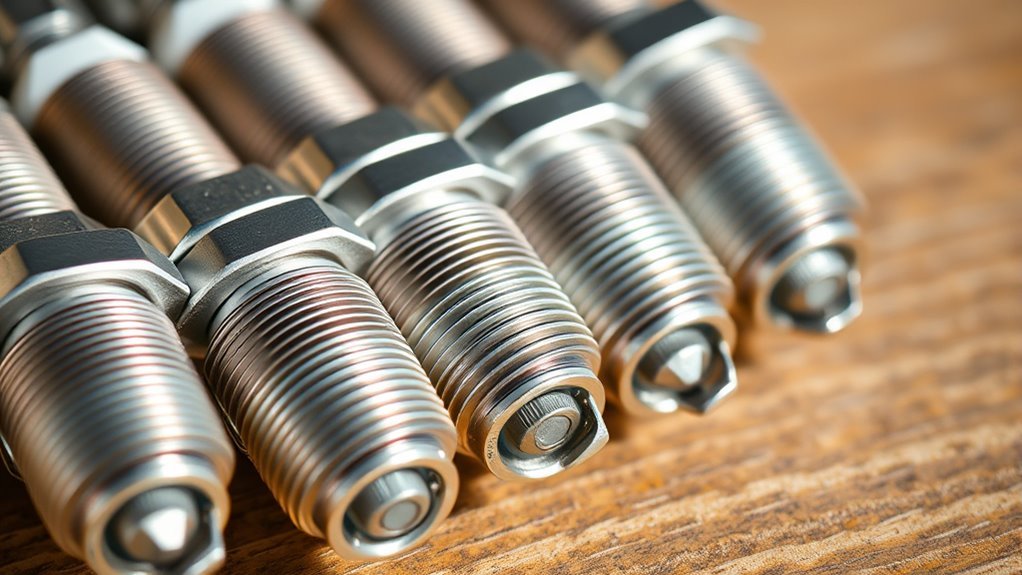

Spark plugs are essential components that ignite your engine’s air-fuel mixture by creating a high-voltage spark between electrodes. This ignition initiates combustion, which powers your vehicle efficiently.
There are various types of spark plugs—copper, platinum, and iridium—each offering different levels of conductivity and lifespan. Proper maintenance and timely replacement are critical to avoid misfires and maintain your engine’s performance.
Selecting the right spark plug type is also important. Understanding how spark plugs work and when to replace them helps keep your engine running smoothly and efficiently.
Key Takeaways
- Spark plugs ignite the air-fuel mixture in internal combustion engines to start the power stroke.
- They produce a high-voltage electrical spark between electrodes for combustion initiation.
- Spark plugs come in types like copper, platinum, and iridium, affecting durability and performance.
- Proper spark plug function is vital for engine efficiency, fuel economy, and reduced emissions.
- Maintenance and timely replacement prevent engine misfires and ensure consistent ignition reliability.
What Are Spark Plugs and Why Do They Matter
A spark plug is an essential component in an internal combustion engine that ignites the air-fuel mixture to start the combustion process.
Understanding spark plug history reveals how its design evolved from simple ignition devices to advanced components using cutting-edge spark plug technology.
You’ll find that modern spark plugs incorporate materials like iridium and platinum for enhanced durability and improved conductivity.
This evolution matters because reliable ignition guarantees engine efficiency, performance, and reduced emissions.
When you maintain or replace spark plugs, you’re directly impacting your engine’s operation and fuel economy.
Knowing the technical role spark plugs play helps you appreciate their importance beyond just a small part in your engine system.
The right spark plug technology can optimize your vehicle’s reliability and longevity.
How Spark Plugs Ignite the Engine’s Air-Fuel Mixture
You rely on spark plugs to deliver a high-voltage electrical charge that ignites the engine’s air-fuel mixture.
This ignition process involves creating a precise spark at the right moment, initiating combustion inside the cylinder.
Understanding these steps reveals how efficient combustion powers your engine’s performance.
Spark Plug Function
The spark plug plays an essential role in igniting the engine’s air-fuel mixture by generating a high-voltage electrical spark between its electrodes.
When you install the spark plug, guarantee proper spark plug installation to maintain peak performance and prevent misfires.
The materials used in spark plugs, such as iridium or platinum, influence durability and conductivity, affecting spark quality and longevity.
During operation, the ignition system delivers voltage to the plug’s center electrode, creating a spark that jumps the gap to the ground electrode.
This spark ignites the compressed air-fuel mixture within the combustion chamber, initiating the power stroke.
Proper selection and installation of spark plugs with suitable materials guarantee reliable ignition and efficient engine operation, directly impacting fuel efficiency and emissions control.
Ignition Process Steps
Although the ignition process involves multiple components, spark plugs play a critical role by generating the precise electrical spark needed to ignite the compressed air-fuel mixture.
Within the ignition system, the spark plug initiates the combustion process by creating a high-voltage spark at the ideal moment.
Here’s how it works:
The ignition coil produces a high voltage.
Voltage travels through the ignition wires to the spark plug.
Spark plug electrodes create a spark across the gap.
The spark ignites the compressed air-fuel mixture.
Combustion rapidly expands, driving the piston downward.
Air-Fuel Mixture Combustion
When the spark plug generates its high-voltage spark, it triggers an immediate ignition of the compressed air-fuel mixture inside the combustion chamber. This spark initiates a rapid chemical reaction between the fuel and oxygen in the air fuel interaction, producing expanding gases.
These gases increase pressure, driving the piston downward and generating mechanical power.
You must understand that ideal combustion efficiency depends on precise timing and the spark’s ability to ignite a properly mixed and compressed air-fuel charge.
Any deviation in spark intensity or mixture quality can reduce combustion efficiency, leading to power loss or increased emissions.
Consequently, the spark plug plays a critical role in converting chemical energy into mechanical energy by ensuring consistent and complete ignition of the air-fuel mixture.
Different Types of Spark Plugs Explained
Since spark plugs play an essential role in engine performance, understanding their different types helps you select the right one for your vehicle’s needs.
Spark plugs vary primarily in ceramic insulators and electrode materials, affecting durability and efficiency. Here’s a quick overview:
- Copper Spark Plugs: Offer excellent conductivity but wear faster due to softer electrodes.
- Platinum Spark Plugs: Feature durable electrodes with a platinum tip for extended life.
- Iridium Spark Plugs: Use a harder iridium electrode, providing superior longevity and consistent sparks.
- Double Platinum Spark Plugs: Both center and ground electrodes have platinum, ideal for waste spark ignition systems.
- Silver Spark Plugs: Provide excellent thermal conductivity but are less common in modern vehicles.
Choosing the appropriate spark plug depends on engine design, operating temperature, and performance requirements.
How Often Should You Change Spark Plugs?
How often should you change your spark plugs to maintain peak engine performance? The spark plug lifespan varies depending on the type and vehicle specifications, but generally, you should consider replacement intervals between 30,000 to 100,000 miles.
For peak engine performance, change spark plugs every 30,000 to 100,000 miles depending on type and vehicle.
Conventional copper spark plugs tend to have shorter lifespans, around 20,000 to 30,000 miles, while platinum and iridium plugs offer extended durability, often lasting up to 100,000 miles.
Sticking to manufacturer-recommended replacement intervals guarantees maximum combustion efficiency and prevents engine misfires. Ignoring these intervals can lead to decreased fuel economy and power loss.
Always consult your vehicle’s service manual for precise guidance on spark plug lifespan and adhere strictly to the suggested replacement schedule to maintain engine reliability and performance.
How to Tell When Your Spark Plugs Need Replacing
Wondering if your spark plugs need replacing? Knowing the typical spark plug lifespan helps you identify replacement indicators early. Worn spark plugs reduce engine efficiency and can cause performance issues.
Watch for these signs:
- Engine misfires or rough idling
- Difficulty starting the engine
- Decreased fuel economy
- Visible electrode wear or deposits on plugs
- Increased exhaust emissions
Regular inspection aligned with your vehicle’s maintenance schedule is essential. If you notice any of these replacement indicators, it’s time to change the spark plugs to maintain peak engine function.
Ignoring these signs can lead to inefficient combustion and potential long-term engine damage.
Always consult your vehicle’s manual for recommended spark plug lifespan and replacement intervals.
Why Spark Plug Failure Can Halt Your Engine
When a spark plug fails, it disrupts the ignition process, causing your engine to misfire or stall.
You’ll notice reduced fuel efficiency, rough idling, or difficulty starting the engine.
Understanding the causes of spark plug failure helps you identify these signs early and maintain peak engine performance.
Causes Of Spark Plug Failure
Although spark plugs seem simple, several factors can cause their failure and stop your engine from running smoothly. You need to understand these causes to maintain peak spark plug lifespan and guarantee proper ignition timing.
Common causes include:
- Overheating due to incorrect ignition timing or engine overheating
- Fouling from oil, carbon deposits, or fuel additives that impair the electrode
- Wear and erosion diminishing the gap and spark quality over time
- Mechanical damage from improper installation torque or debris in the combustion chamber
- Contamination by coolant leaks or excessive fuel mixture affecting spark consistency
Addressing these issues promptly helps you avoid spark plug failure, which directly interrupts combustion and engine operation.
Monitoring your spark plug condition is essential for reliable engine performance.
Impact On Engine Performance
Spark plug failure directly disrupts the ignition process, which is essential for engine combustion and overall performance.
When a spark plug’s efficiency declines due to fouling, wear, or improper gap, it fails to generate a consistent spark. This inefficiency leads to incomplete combustion, reducing engine power and causing misfires that can stall your engine.
As spark plug efficiency deteriorates, your engine struggles to maintain ideal fuel ignition timing, which affects acceleration and fuel economy.
In severe cases, persistent spark plug failure can halt the engine entirely, as the combustion cycle becomes unreliable.
Maintaining high spark plug efficiency guarantees stable ignition, maximizing engine power output and performance.
You must address spark plug issues promptly to avoid compromised engine function and potential failure.
Signs Of Spark Plug Issues
Declining ignition efficiency often manifests through specific symptoms that signal underlying spark plug issues. If you notice these signs, your spark plug lifespan might be nearing its end, or it may require immediate spark plug cleaning.
Watch for:
- Engine misfires or rough idling indicating inconsistent combustion
- Difficulty starting the engine due to weak or absent sparks
- Decreased fuel efficiency caused by incomplete fuel ignition
- Reduced acceleration performance resulting from poor ignition timing
- Increased exhaust emissions signaling inefficient combustion processes
Ignoring these indicators can halt your engine’s operation as faulty spark plugs fail to ignite the air-fuel mixture properly.
Regular inspections and timely spark plug cleaning or replacement preserve peak engine performance and prevent costly repairs.
How to Choose the Right Spark Plugs for Your Car?
How do you determine which spark plugs best suit your vehicle’s engine requirements? Start by consulting your owner’s manual for manufacturer recommendations, as engine design dictates specific spark plug types.
Evaluate spark plug materials—copper, platinum, or iridium—each offering different conductivity and longevity. Iridium plugs, for example, provide superior durability and performance but cost more.
Next, compare spark plug brands known for quality and reliability; reputable brands guarantee consistent manufacturing standards and compatibility.
Consider heat range, which affects combustion efficiency and prevents engine knocking.
Also, verify the correct size and thread type to fit your engine correctly.
Essential Tips for Spark Plug Maintenance and Care
Regularly inspecting and maintaining your vehicle’s spark plugs can significantly enhance engine performance and fuel efficiency.
Proper spark plug inspection helps you detect wear, fouling, or damage early, preventing engine misfires and poor combustion.
Incorporate spark plug cleaning when deposits build up, using a wire brush or specialized cleaner to restore conductivity.
Follow these essential tips for effective spark plug maintenance:
- Conduct spark plug inspection every 30,000 miles or as recommended by your vehicle’s manufacturer.
- Check electrode gap and adjust if necessary for ideal spark delivery.
- Replace spark plugs showing signs of corrosion, cracks, or heavy deposits.
- Use dielectric grease on spark plug boots to guarantee a secure connection.
- Tighten spark plugs to the specified torque to avoid damage or loosening.
Adhering to these steps guarantees reliable ignition and prolongs engine life.
Frequently Asked Questions
Can Spark Plugs Affect Fuel Efficiency?
Yes, poor spark plug maintenance can reduce fuel efficiency by causing incomplete fuel combustion. You should regularly inspect and replace spark plugs to guarantee ideal combustion, improving engine performance and saving fuel over time.
Are Spark Plugs the Same for Gasoline and LPG Engines?
No, spark plug types differ between gasoline and LPG engines. You’ll need spark plugs with specific LPG compatibility to handle higher combustion temperatures and prevent fouling.
This ensures ideal performance and longevity in LPG systems.
What Tools Are Needed to Replace Spark Plugs?
You’ll need a spark plug socket, ratchet wrench, extension, and gap gauge. Different spark plug types may require specific sockets.
Follow the replacement procedure carefully to avoid damage and guarantee proper installation and engine performance.
Can Faulty Spark Plugs Cause Engine Misfires?
Yes, faulty spark plugs can cause engine misfires by disrupting ignition timing and reducing combustion efficiency. This directly impacts engine performance, leading to rough idling, decreased power, and increased fuel consumption.
Check and replace them promptly.
How Do Weather Conditions Impact Spark Plug Performance?
You’ll find that temperature effects can reduce spark plug efficiency by up to 20% in cold weather, while humidity influence increases misfire risks. Both factors alter combustion, so monitoring conditions helps maintain ideal spark plug performance.
Conclusion
Now that you understand how spark plugs ignite your engine’s air-fuel mixture, it’s clear they’re more than just small parts—they’re essential for performance and efficiency.
If you think spark plugs only need changing when your car stalls, think again; subtle signs often signal trouble first. By choosing the right type and maintaining them properly, you’ll avoid unexpected failures and keep your engine running smoothly.
Don’t underestimate these tiny components—they truly power your drive. Remember, spark plugs play a crucial role in keeping your engine efficient and reliable.