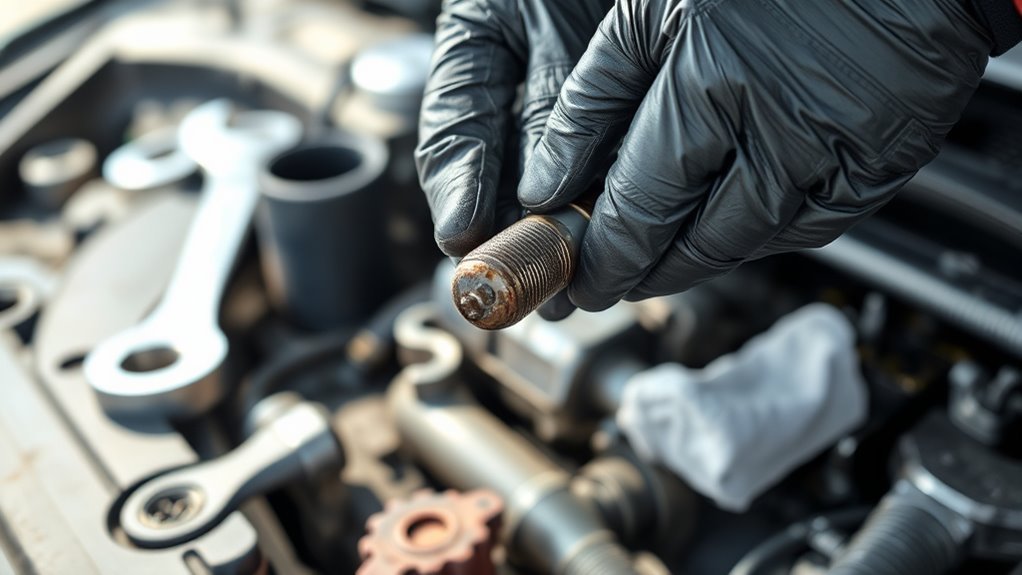
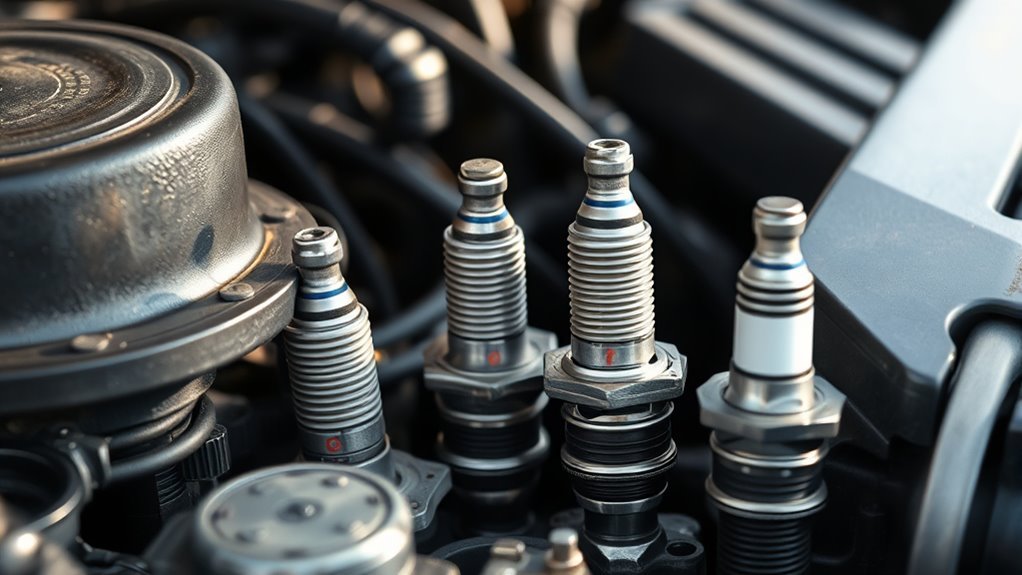
You’ll know you need spark plugs when your engine misfires, idles roughly, or hesitates during acceleration. Difficulty starting your vehicle or reduced fuel economy also signals worn or fouled plugs. Inspect for visible electrode wear, carbon buildup, or cracks, and check the gap if you can.
These symptoms occur because spark plugs ignite your air-fuel mixture, so degraded plugs hurt combustion efficiency and performance. Understanding these signs helps you maintain engine reliability and optimize replacements. Regularly checking your spark plugs can prevent more serious engine issues down the road.
Key Takeaways
- Notice rough idling, engine misfires, or hesitation during acceleration as signs spark plugs may need replacement.
- Difficulty starting the engine often indicates worn or degraded spark plugs affecting spark consistency.
- Reduced fuel economy or increased exhaust emissions can signal inefficient combustion from bad spark plugs.
- Inspect spark plugs visually for electrode erosion, carbon buildup, cracks, or deposits indicating wear.
- Follow the manufacturer’s recommended replacement interval, typically every 30,000 to 100,000 miles, based on plug type.
What Spark Plugs Do in Your Engine
Although often overlooked, spark plugs play a critical role in your engine’s combustion process by igniting the air-fuel mixture inside the cylinders.
The spark plug function centers on delivering a precise electrical spark at the right moment during the ignition process.
Spark plugs deliver a precise electrical spark exactly when needed to ignite the fuel-air mixture.
When your engine’s control unit sends voltage to the spark plug, it generates a high-voltage spark that jumps the gap between the electrodes. This spark ignites the compressed air-fuel mixture, causing combustion that drives the piston down and powers your vehicle.
Without properly functioning spark plugs, the ignition process becomes inefficient or fails, leading to misfires, reduced power, and increased emissions.
Understanding this function helps you appreciate why maintaining spark plugs is essential for peak engine performance and fuel efficiency.
How Often Should You Replace Spark Plugs
Most manufacturers recommend replacing spark plugs every 30,000 to 100,000 miles, depending on the type of spark plug and driving conditions. The spark plug lifespan varies considerably between copper, platinum, and iridium plugs, with iridium offering the longest durability.
To maintain peak engine performance, adhere to the recommended replacement intervals outlined in your vehicle’s manual. These intervals take into account factors like engine design and fuel efficiency requirements.
Neglecting timely spark plug replacement can reduce combustion efficiency, impacting fuel economy and emissions. You should also consider your driving habits; frequent short trips or stop-and-go traffic may shorten spark plug lifespan.
Regular maintenance based on precise replacement intervals guarantees your engine runs smoothly and prolongs the overall health of your ignition system.
Signs Your Spark Plugs Are Failing
Several key indicators can alert you that your spark plugs are failing and need attention. As your spark plug lifespan approaches its end, you might notice rough idling or engine misfires. These symptoms occur because worn spark plugs struggle to ignite the air-fuel mixture efficiently.
Reduced fuel economy is another sign; failing plugs cause incomplete combustion, wasting fuel.
Additionally, difficulty starting your engine often signals degraded spark plug performance. Pay attention if your engine hesitates or stumbles during acceleration, as this can indicate inconsistent spark delivery.
Monitoring these signs helps you maintain peak engine performance and prevents further damage. If you observe multiple symptoms, it’s time to inspect and potentially replace your spark plugs to guarantee reliable operation and preserve the spark plug lifespan.
How Bad Spark Plugs Affect Car Performance
When your spark plugs degrade, they directly impair your engine’s combustion efficiency, leading to noticeable drops in power and responsiveness. Worn or fouled spark plugs cause incomplete combustion, which reduces fuel economy and increases emissions.
Different spark plug types, such as copper, platinum, or iridium, have varying lifespans, affecting how long they maintain peak performance. As spark plugs age past their recommended lifespan, misfires become more frequent, causing rough idling and hesitation during acceleration.
You’ll also notice increased engine vibrations and difficulty starting the vehicle. Maintaining properly functioning spark plugs guarantees consistent ignition timing and peak combustion, which preserves engine power and fuel efficiency.
Ignoring degraded spark plugs compromises your car’s performance and may lead to costly engine repairs over time.
How to Inspect Your Spark Plugs for Wear
To inspect your spark plugs for wear, start by checking for visible signs like erosion, deposits, or cracks on the electrode and insulator.
Pay attention to performance indicators such as misfires, rough idling, or difficulty starting, which can signal plug issues.
Regular cleaning and maintenance can extend their lifespan, but significant wear means replacement is necessary.
Visual Signs of Damage
A worn spark plug can cause your engine to misfire, reduce fuel efficiency, and increase emissions.
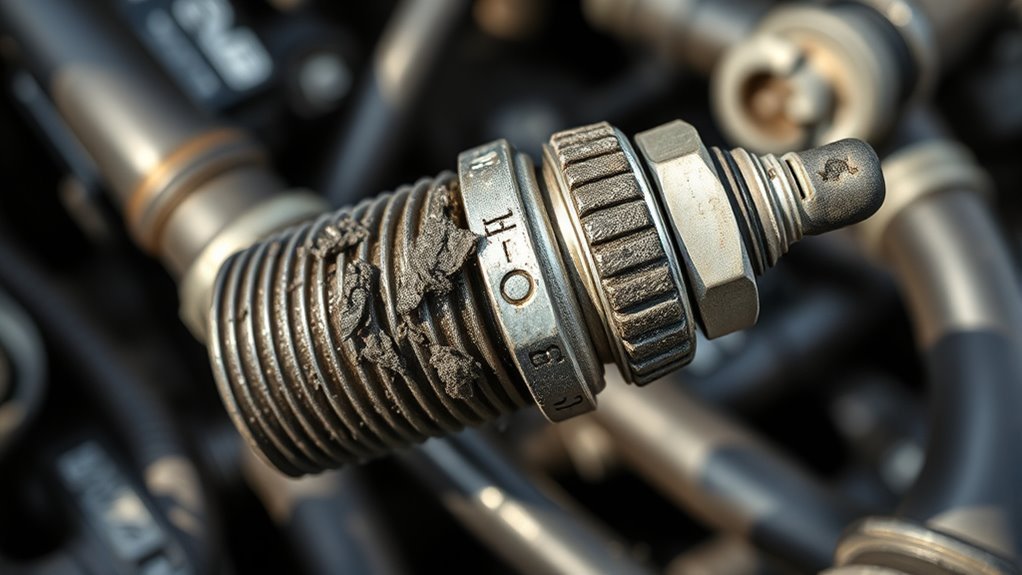
During a spark plug inspection, focus on visual deterioration such as electrode erosion, buildup of carbon deposits, or cracked insulators.
If you notice the center electrode is rounded or markedly worn down, it indicates the plug can no longer produce a strong spark.
Heavy black soot suggests incomplete combustion or a rich fuel mixture, while oily deposits point to oil leakage into the combustion chamber.
Additionally, inspect the ceramic insulator for cracks or chips, as damage here compromises spark delivery.
Identifying these visual signs of damage helps you determine if replacing the spark plugs is necessary to restore ideal engine performance and prevent further mechanical issues.
Performance Indicators
Visual damage offers clear clues, but gauging how your spark plugs perform under operating conditions provides a more thorough evaluation of their wear.
Monitor engine performance closely; symptoms like misfires, rough idling, or difficulty starting often indicate spark plug degradation.
A decline in fuel efficiency can also suggest your spark plugs are nearing the end of their lifespan.
You might notice reduced acceleration or uneven power delivery, which points to inefficient combustion caused by worn electrodes or carbon buildup.
If your vehicle’s engine warning light activates, it could be related to spark plug issues.
Regularly evaluating these performance indicators helps you determine if your spark plugs require replacement, ensuring peak engine performance and preventing further mechanical complications.
Cleaning and Maintenance
Spark plugs require regular cleaning and maintenance to guarantee peak engine function and longevity.
When inspecting your spark plugs for wear, focus on these critical steps to ascertain effective spark plug cleaning and spark plug maintenance:
Remove the spark plug carefully to avoid damaging the threads.
Examine the electrode for erosion or buildup that impedes spark efficiency.
Check the insulator for cracks or deposits indicating overheating or fouling.
Use a wire brush or specialized spark plug cleaner to remove carbon deposits.
Measure the electrode gap with a feeler gauge and adjust to manufacturer specifications.
Consistent spark plug maintenance prevents misfires, improves fuel efficiency, and extends engine life.
What Spark Plug Damage Looks Like
How can you identify damage on your spark plugs before it affects engine performance?
Start by inspecting the electrodes and insulator. Look for worn or rounded electrodes, which indicate erosion common across spark plug types, including copper, platinum, and iridium.
Cracks or chips in the ceramic insulator suggest mechanical damage or overheating. Excessive carbon deposits or oil fouling on the plug surface signal combustion issues that can impair ignition.
Different spark plug brands may have unique wear patterns, but all show similar signs when damaged.
Also, check for corrosion on the terminals, which can disrupt electrical flow.
Identifying these specific signs early helps you choose the right replacement plug matching your vehicle’s specifications and guarantees maximum engine efficiency.
Can Bad Spark Plugs Cause Starting Problems?
If your engine struggles to start or misfires during ignition, faulty spark plugs could be the culprit.
These symptoms often indicate worn or damaged plugs that fail to deliver a strong spark.
To confirm, you’ll need to inspect the plugs and test their performance systematically.
Symptoms Of Spark Plug Failure
Why does your engine hesitate or struggle to start? It often signals that your spark plugs have reached the end of their spark plug lifespan and are compromising engine performance.
Worn or fouled spark plugs fail to generate the necessary spark, leading to inefficient combustion.
Look out for these symptoms of spark plug failure:
- Rough idling or engine misfires during acceleration
- Reduced fuel efficiency despite normal driving habits
- Difficulty starting the engine or prolonged cranking times
- Noticeable loss of power and sluggish acceleration
- Increased exhaust emissions and potential check engine light activation
Recognizing these signs early helps maintain peak engine performance and prevents more severe issues.
Impact On Engine Starting
Experiencing engine hesitation or difficulty starting often points to spark plug issues, which directly affect ignition reliability.
When spark plugs degrade, their ability to generate a consistent spark diminishes, lowering spark efficiency and causing incomplete combustion.
This disrupts the engine ignition process, making it harder for your engine to fire promptly. As a result, you may notice extended cranking times or repeated attempts before the engine starts.
Poor spark efficiency can also cause misfires during startup, further complicating ignition.
Addressing spark plug wear or fouling is essential because subpar plugs compromise the initial combustion event critical for smooth engine start.
Ensuring your spark plugs maintain peak spark efficiency supports reliable engine ignition and prevents starting problems, keeping your vehicle’s performance consistent and dependable.
Diagnosing Spark Plug Issues
Although various factors can cause starting problems, bad spark plugs are a common culprit you should evaluate first. The ignition system relies on spark plugs to ignite the fuel-air mixture, and worn or fouled plugs disrupt this process.
To diagnose spark plug issues effectively, consider these steps:
- Inspect spark plug types compatible with your engine for wear or deposits.
- Check electrode gaps with a feeler gauge to verify proper ignition.
- Examine spark plugs for cracks, carbon buildup, or oil fouling.
- Test ignition coil output to confirm consistent spark delivery.
- Use an OBD-II scanner to detect misfire codes related to spark plugs.
When to Replace Spark Plugs Instead of Other Engine Parts
How can you determine whether your engine issues stem from worn spark plugs rather than other components? Focus on the spark plug lifespan and recent engine maintenance. Spark plugs wear predictably and affect ignition first, unlike sensors or fuel injectors that cause broader symptoms.
Use this table to distinguish replacement needs:
| Symptom | Spark Plug Issue |
|---|---|
| Engine misfires | Worn or fouled plugs |
| Rough idle | Plug gap erosion |
| Difficulty starting | Plug electrode wear |
| Poor fuel economy | Delayed ignition from old plugs |
If your spark plugs exceed their recommended lifespan or exhibit these symptoms post-maintenance, replace them before investigating other parts. This targeted approach improves engine performance and avoids unnecessary repairs.
How to Choose the Right Spark Plugs for Your Car
Selecting the right spark plugs for your car requires considering factors such as engine type, manufacturer specifications, and driving conditions.
Choosing from various spark plug types like copper, platinum, and iridium depends on your engine’s design and performance needs. Additionally, trusted spark plug brands guarantee quality and longevity.
To select the perfect spark plugs, focus on:
- Engine compatibility: Verify plug heat range matches your engine’s requirements.
- Manufacturer recommendations: Always consult your vehicle’s manual.
- Driving habits: High-performance or off-road conditions may need specialized plugs.
- Material durability: Iridium plugs offer longer life but cost more.
- Brand reliability: Opt for reputable brands with proven performance.
Frequently Asked Questions
Can Spark Plugs Affect Fuel Efficiency?
Yes, spark plug wear reduces fuel combustion efficiency, causing your engine to burn more fuel. You’ll notice decreased fuel economy and rough idling.
Replacing worn spark plugs guarantees ideal combustion and better fuel efficiency.
Are Spark Plugs the Same for All Car Models?
Spark plugs aren’t one-size-fits-all; they’re the heartbeat tuned to your engine’s rhythm. You need to match spark plug types with your vehicle specifications precisely to guarantee peak performance, fuel efficiency, and longevity.
What Tools Do I Need to Change Spark Plugs?
You’ll need a socket wrench with a spark plug socket to remove and install plugs, plus a spark plug gapper to check and adjust the gap. These guarantee proper fit and ideal engine performance during replacement.
How Long Does It Take to Replace Spark Plugs?
If you replace spark plugs on a four-cylinder car, it usually takes about 30-45 minutes.
Spark plug lifespan varies, but replacement frequency is often every 30,000-100,000 miles, depending on type and driving conditions.
Can Worn Spark Plugs Damage the Catalytic Converter?
Yes, worn spark plugs can cause catalytic converter issues by misfiring, leading to unburned fuel entering the exhaust. Different spark plug types affect combustion efficiency, so replace them timely to protect your catalytic converter and engine performance.
Conclusion
You might not notice spark plugs until they fail, but ignoring them can turn smooth starts into frustrating stalls. While they’re small, spark plugs play a huge role in engine performance and fuel efficiency. Regular inspection and timely replacement prevent costly repairs and keep your car running reliably.
Don’t wait for obvious symptoms—catching wear early guarantees your engine fires perfectly, avoiding the gap between routine maintenance and unexpected breakdowns. Knowing how to identify when you need spark plugs is key to maintaining your vehicle’s health and ensuring consistent performance.