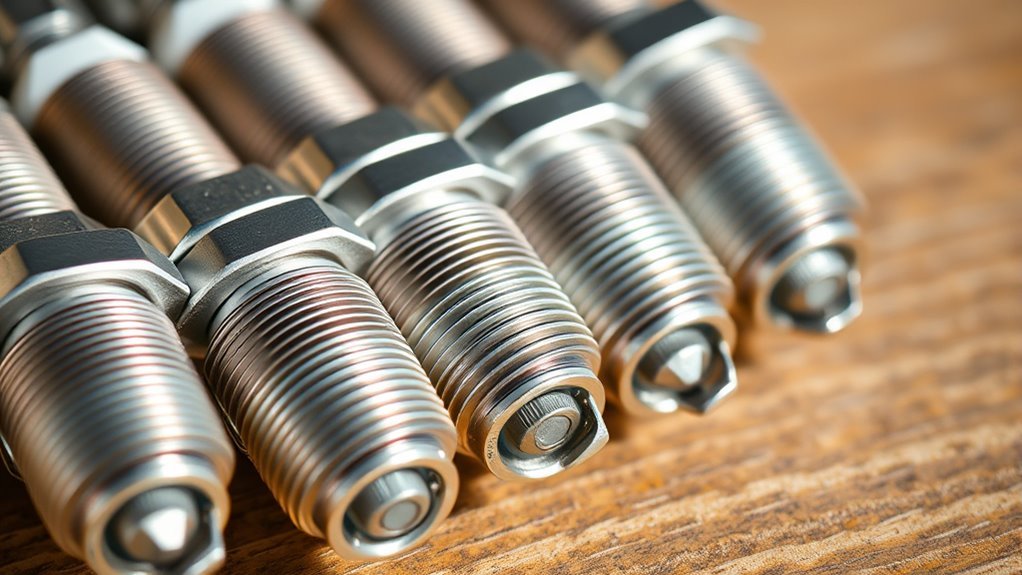
Spark plugs play a crucial role in your vehicle by igniting the compressed air-fuel mixture inside the engine’s cylinders. They deliver a precise, high-voltage spark that starts the combustion process.
This ignition generates the power needed to move your vehicle. The exact timing and strength of the spark ensure peak fuel efficiency and optimal engine performance.
Worn or faulty spark plugs can cause misfires, reduce power, and lower fuel economy. Understanding how spark plugs work and their impact on your engine helps you maintain ideal performance and extend engine life.
Key Takeaways
- Spark plugs generate a high-voltage spark to ignite the compressed air-fuel mixture in engine cylinders.
- They ensure precise ignition timing, critical for efficient combustion and engine performance.
- Spark plugs help maximize power output and fuel efficiency by enabling complete fuel combustion.
- Worn or faulty spark plugs cause engine misfires, rough idling, and reduced fuel economy.
- Different spark plug types (copper, platinum, iridium) offer varying durability and performance benefits.
What Are Spark Plugs and How Do They Work?
Spark plugs are essential components in internal combustion engines that ignite the air-fuel mixture to power your vehicle.
Understanding spark plug anatomy helps you appreciate their role: each plug consists of a central electrode, an insulator, a metal shell, and a ground electrode.
When the ignition system sends a high-voltage current to the central electrode, the voltage jumps the gap to the ground electrode, creating a spark.
This spark initiates the ignition process by combusting the compressed air-fuel mixture inside the cylinder.
The precise timing and strength of this spark are critical for effective combustion.
Why Spark Plugs Matter for Engine Power and Efficiency
You rely on precise ignition timing to guarantee your engine delivers peak power and fuel efficiency.
Spark plugs play a critical role by igniting the air-fuel mixture at the exact moment needed for complete combustion.
When this process is finely tuned, you maximize energy output and minimize wasted fuel.
Ignition Timing Importance
Although ignition timing might seem like a subtle engine parameter, it directly influences how efficiently your engine converts fuel into power.
Precise ignition timing guarantees that the spark plug ignites the air-fuel mixture at the ideal moment, maximizing combustion pressure and enhancing engine performance. If your timing is off, you risk reduced power, increased fuel consumption, or engine knocking.
You’ll notice the impact of ignition timing when you experience:
Smoother acceleration and responsive throttle control
Increased horsepower and torque output
Improved fuel economy without sacrificing power
Reduced engine vibrations and noise
Fuel Combustion Efficiency
Efficient fuel combustion depends heavily on the condition and performance of your spark plugs, which initiate the critical ignition process within the engine cylinders.
When your spark plugs generate a strong, consistent spark, they ignite the air-fuel mixture precisely at the ideal moment, ensuring complete and efficient combustion.
A properly combusted fuel mixture maximizes energy release, translating directly into improved engine power and fuel economy.
Conversely, worn or fouled spark plugs produce weak or inconsistent sparks, leading to incomplete combustion, unburned fuel, and reduced engine efficiency.
By maintaining your spark plugs in peak condition, you enhance the combustion process, reduce emissions, and improve overall engine performance.
Understanding the role spark plugs play in fuel combustion efficiency helps you appreciate why regular inspection and replacement are essential for reliable, powerful engine operation.
Signs Your Spark Plugs Need Replacing
How can you determine when your spark plugs require replacement? Spark plug wear directly impacts engine performance, so recognizing early signs is vital. Worn spark plugs cause incomplete combustion, leading to engine misfire, rough idling, and reduced fuel efficiency.
You might notice difficulty starting your vehicle or a noticeable decrease in acceleration. Additionally, increased exhaust emissions can indicate deteriorated spark plugs.
Watch for these signs:
- Persistent engine misfire despite proper fuel supply
- Noticeable drop in fuel economy and power output
- Rough idling or unusual vibrations during acceleration
- Hard starts or extended cranking time
Addressing spark plug wear promptly guarantees peak combustion efficiency and prevents further engine damage.
Different Types of Spark Plugs and Their Uses
You’ll encounter several common spark plug types, including copper, platinum, and iridium, each designed for specific engine requirements.
Understanding their distinct applications helps you optimize performance and longevity based on your vehicle’s needs.
Let’s examine how these materials influence efficiency, durability, and ignition quality.
Common Spark Plug Types
Although spark plugs may seem similar at first glance, their variations in design and material greatly affect engine performance and durability.
You’ll commonly encounter copper plugs, known for excellent conductivity but shorter lifespan.
Platinum plugs offer improved durability and resist electrode erosion, making them ideal for longer intervals.
Iridium plugs provide superior wear resistance and consistent spark quality, enhancing ignition reliability.
Finally, double platinum plugs combine durability with efficient spark delivery on both electrodes, optimizing combustion in modern engines.
Feel the difference in engine smoothness with the right plug.
Experience fewer misfires and better fuel efficiency.
Trust in plugs designed for your specific vehicle demands.
Enjoy longer intervals between replacements without sacrificing performance.
Choosing the correct spark plug type guarantees your engine runs efficiently and reliably.
Applications and Benefits
Understanding the unique characteristics of copper, platinum, iridium, and double platinum spark plugs helps you select the best option for your engine’s specific demands.
Copper plugs offer excellent conductivity, ideal for older engines requiring high heat dissipation.
Platinum plugs provide longer life and consistent performance in modern vehicles, while iridium plugs deliver superior durability and enhanced ignition efficiency, making them suitable for high-performance engines.
Double platinum plugs feature electrodes on both sides, improving ignition reliability in distributor-less ignition systems.
These spark plug applications maximize engine power, fuel efficiency, and emission control.
By choosing the right type, you gain spark plug benefits such as reduced misfires, longer service intervals, and optimized combustion.
Ultimately, understanding these differences guarantees you enhance your engine’s reliability and performance precisely.
Maintaining Spark Plugs to Improve Engine Efficiency
Because spark plugs play a critical role in igniting the air-fuel mixture inside the engine cylinders, maintaining them directly impacts engine efficiency and performance.
Neglecting spark plug maintenance can cause misfires, reduced fuel economy, and increased emissions. You should regularly inspect and replace worn or fouled spark plugs to guarantee consistent ignition quality.
Proper gap settings are essential; incorrect gaps disrupt spark intensity and combustion completeness, diminishing engine performance.
To optimize your engine’s operation, focus on:
- Checking for electrode wear and carbon buildup
- Measuring and adjusting spark plug gaps precisely
- Replacing plugs according to manufacturer specifications
- Using the correct spark plug type for your engine
Consistent spark plug care maximizes combustion efficiency, leading to smoother acceleration and prolonged engine life.
What Happens Inside Your Engine When a Spark Plug Fires?
When a spark plug fires, it generates a high-voltage electrical spark that ignites the compressed air-fuel mixture inside the engine cylinder. This spark ignition initiates rapid combustion, causing the mixture to burn and expand swiftly.
As you observe, the expanding gases exert pressure on the piston, forcing it downward and converting chemical energy into mechanical motion. This precise timing of spark ignition is critical; it guarantees peak engine combustion, maximizing power output and minimizing emissions.
The spark plug’s electrode gap and insulation must withstand extreme conditions to maintain consistent firing. When the spark jumps across the gap, it breaks down the air-fuel mixture’s resistance, triggering a controlled explosion.
This process repeats thousands of times per minute, driving your engine efficiently and reliably.
Frequently Asked Questions
How Do Spark Plugs Affect Fuel Economy?
You’ll improve fuel economy by performing regular spark plug maintenance, ensuring ideal engine performance. Clean, properly gapped plugs promote efficient combustion, reducing fuel waste and helping your engine run smoothly with maximum power and minimal fuel consumption.
Can Bad Spark Plugs Cause Engine Misfires?
Yes, bad spark plugs can cause engine misfires by disrupting combustion timing, reducing engine performance. You’ll notice rough idling or poor acceleration.
Timely spark plug replacement restores efficient ignition and smooth engine operation.
What Is the Typical Lifespan of a Spark Plug?
You’d think spark plugs last forever, but typically, they endure 30,000 to 100,000 miles depending on spark plug materials like iridium or platinum.
Regular spark plug maintenance guarantees peak engine performance and prevents costly misfires.
Are Spark Plugs the Same for All Car Models?
No, spark plug compatibility varies by vehicle specifications. You need to match the exact type, size, heat range, and gap recommended for your car to guarantee peak performance.
This ensures you avoid engine damage or misfires.
How Do Cold Weather Conditions Impact Spark Plug Performance?
Cold weather effects can delay ignition timing by thickening fuel and air mixtures, making spark plugs work harder to ignite. You’ll notice harder starts and potential misfires without proper plug heat range and maintenance in freezing conditions.
Conclusion
Understanding spark plugs is essential since they ignite the air-fuel mixture, directly affecting engine power and efficiency. Did you know that a single misfiring spark plug can reduce your engine’s fuel efficiency by up to 30%?
By regularly inspecting and maintaining your spark plugs, you guarantee peak combustion, smoother performance, and lower emissions. Don’t underestimate their role—keeping your spark plugs in top condition means maximizing your engine’s longevity and reliability.
In conclusion, knowing what spark plugs do helps you appreciate their critical function in maintaining your vehicle’s performance and efficiency.