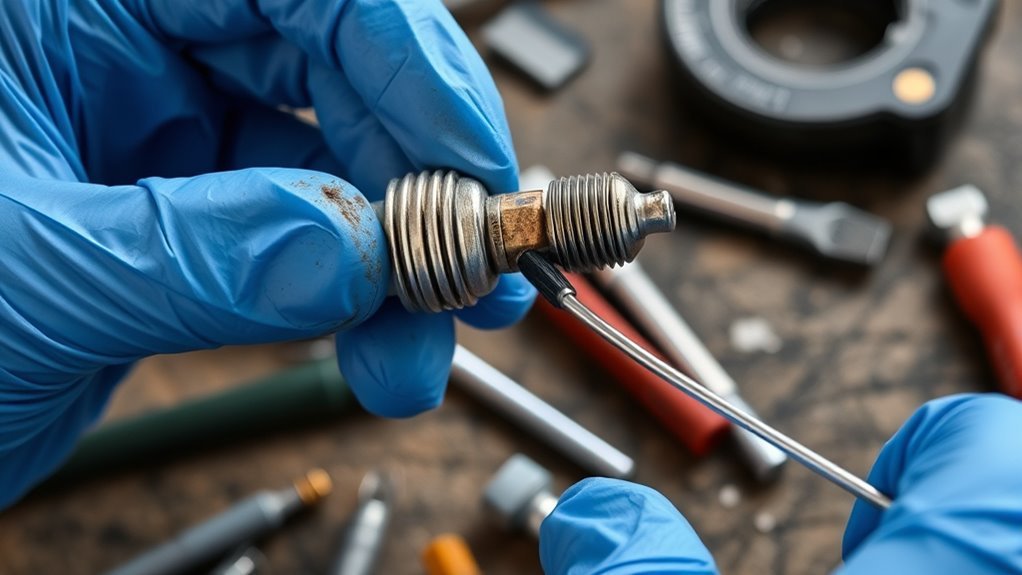

To clean your spark plugs effectively, start by safely removing them using a spark plug socket and disconnecting any ignition components. This careful removal helps prevent damage to the plugs and engine parts.
Next, inspect the spark plugs for cracks or heavy deposits. If they appear clear, soak them in a specialized cleaner for 10–15 minutes to loosen any buildup.
After soaking, gently scrub the electrodes with a non-metallic brush. Then, rinse and dry the plugs thoroughly using compressed air to ensure no moisture remains.
Finally, reinstall the spark plugs by hand-threading them first, then torqueing to the manufacturer’s specifications to avoid damage. Proper cleaning improves engine performance, but knowing when to replace plugs is equally important for lasting efficiency.
Explore more detailed steps to master this process and keep your engine running smoothly.
Key Takeaways
- Remove spark plugs carefully using a spark plug socket and inspect for cracks, corrosion, or heavy deposits before cleaning.
- Soak spark plugs in a specialized cleaning solution for 10-15 minutes to loosen carbon deposits.
- Use a wire brush or spark plug brush to scrub electrodes and insulator areas gently for thorough cleaning.
- Rinse plugs with clean water, dry with compressed air, and ensure no moisture or debris remains before reinstalling.
- Hand-thread spark plugs and tighten with a torque wrench to manufacturer specifications to avoid damage during reinstallation.
How To Tell When Spark Plugs Need Cleaning
How can you determine when your spark plugs need cleaning? Start by monitoring key spark plug indicators such as engine misfires, rough idling, and decreased fuel efficiency. These symptoms often signal buildup on the spark plug electrodes, which hampers peak performance.
Watch for engine misfires, rough idling, and lower fuel efficiency to know when spark plugs need cleaning.
Additionally, follow the recommended cleaning frequency outlined in your vehicle’s maintenance manual, typically every 30,000 to 50,000 miles.
Visually inspect the spark plugs for carbon deposits, oil fouling, or worn electrodes during routine maintenance.
If you notice excessive buildup or damage, it’s time for cleaning or replacement. Using these indicators and adhering to the cleaning frequency will help maintain engine efficiency and prevent ignition issues.
Always prioritize inspection to guarantee timely spark plug maintenance.
Essential Tools And Materials For Cleaning Spark Plugs
A proper set of tools and materials is essential for effectively cleaning spark plugs and restoring their performance. You’ll need specialized cleaning solutions to dissolve carbon deposits without damaging the electrodes.
Spark plug brushes are critical for scrubbing away stubborn grime and guaranteeing a thorough clean. Additionally, a wire brush and a small pick can help remove debris from tight spaces. Use a clean cloth to wipe off residue after brushing.
| Tool/Material | Purpose |
|---|---|
| Cleaning Solutions | Dissolve carbon buildup |
| Spark Plug Brushes | Scrub electrodes and insulator |
| Wire Brush | Remove external dirt |
| Clean Cloth | Wipe residual debris |
Gather these items before you begin to guarantee a precise and efficient cleaning process.
How To Safely Remove Spark Plugs
Once you have gathered the necessary cleaning tools, the next step involves carefully removing the spark plugs to prevent damage to the threads or surrounding engine components.
Begin by disconnecting the ignition wires or coils, noting the spark plug types used in your engine to guarantee correct reinstallation.
Apply safety precautions: wear gloves and safety glasses to protect against debris and electrical hazards.
Always wear gloves and safety glasses to shield yourself from debris and electrical risks during spark plug removal.
Use a proper spark plug socket with a rubber insert to grip the plug securely.
Turn counterclockwise gently to loosen; avoid excessive force to prevent thread stripping.
If plugs are stuck, apply a penetrating lubricant and let it sit before retrying.
Once loose, remove the plugs steadily, ensuring no debris falls into the combustion chamber.
Store them safely for inspection and cleaning.
How To Check Spark Plugs For Damage Before Cleaning
Before you start cleaning, carefully inspect each spark plug for visible damage like cracks, corrosion, or heavy deposits using a magnifying glass and a flashlight.
Check for common issues such as worn electrodes, burnt insulators, or oil fouling that can affect performance.
Use a gap gauge to measure the electrode spacing and verify it meets the manufacturer’s specifications.
Visual Inspection Techniques
Carefully examining your spark plugs for visible signs of wear or damage is essential before proceeding with cleaning.
Start by gathering an inspection checklist that includes checking for cracks, corrosion, and electrode erosion.
Use a magnifying glass to inspect the ceramic insulator for hairline fractures or discoloration, which are critical visual cues indicating potential failure.
Examine the metal shell for rust or damage to the threads, as these can affect reinstallation and performance.
Assess the electrode gap for consistency and signs of uneven wear, which may require adjustment or replacement.
Document any irregularities on your checklist to decide if cleaning is sufficient or if replacement is necessary.
Following this systematic visual inspection guarantees you address all potential issues before investing time in cleaning your spark plugs.
Identifying Common Spark Plug Issues
After visually inspecting your spark plugs, focus on identifying specific signs of damage that affect their performance. Different spark plug types have varying tolerances, so understanding these helps in proper evaluation.
Check for:
- Electrode Wear: Excessive erosion shortens spark plug lifespan and reduces ignition efficiency.
- Deposits and Fouling: Carbon, oil, or ash buildup can indicate engine issues and impair spark delivery.
- Cracks or Physical Damage: Cracked insulators or bent electrodes compromise spark generation.
Spotting these issues early prevents engine misfires and maintains peak performance.
Tools For Damage Assessment
Accurate damage assessment relies on specific tools designed to evaluate spark plug condition effectively.
Begin your spark plug inspection with a magnifying glass to detect wear, cracks, or heavy deposits on the electrode and insulator.
Use a spark plug gap gauge to measure the electrode gap precisely; an incorrect gap is a key damage indicator affecting performance.
A digital multimeter helps test spark plug resistance, identifying internal faults invisible to the eye.
Additionally, a wire brush or specialized cleaning tools assist in removing carbon buildup without damaging the electrode.
Employing these tools systematically guarantees you detect all relevant damage indicators before cleaning, preventing further engine issues and maintaining peak combustion efficiency.
Following this methodical approach assures accurate diagnostics and effective maintenance.
Top Techniques To Clean Spark Plugs At Home
To clean your spark plugs effectively at home, start by removing carbon deposits with a specialized cleaner or carburetor spray.
Next, use a wire brush to gently scrub the electrodes and insulator, ensuring all residue is eliminated without damaging the components.
These techniques restore peak spark plug performance and improve engine efficiency.
Removing Carbon Deposits
Although carbon deposits can severely affect your spark plugs’ performance, you can effectively remove them using simple techniques at home. Carbon buildup results from incomplete combustion and can impair ignition.
To address this, follow these steps:
- Soak the spark plug in a specialized cleaning solution or carburetor cleaner to loosen carbon buildup. Let it sit for 10-15 minutes.
- Use a non-metallic scraper or a toothbrush to gently remove softened deposits without damaging the electrode.
- Rinse the spark plug with clean water and dry thoroughly with compressed air or a lint-free cloth.
Maintaining proper cleaning frequency, typically every 20,000 to 30,000 miles, prevents excessive carbon buildup and guarantees peak spark plug function.
Regular inspection and timely removal of deposits will improve engine efficiency and prolong spark plug life.
Using Wire Brush Technique
One effective way to clean spark plugs at home is by using a wire brush, which efficiently removes stubborn deposits without damaging essential components.
Start by securing the spark plug in a vise or holding it firmly.
Use a wire brush with stiff bristles to gently scrub the electrode and insulator areas, focusing on removing carbon buildup and oxidation.
Apply consistent pressure but avoid aggressive scrubbing that could erode metal surfaces.
Wire brush techniques require precision to maintain the spark plug’s integrity for peak performance.
After brushing, inspect the plug for cracks or excessive wear as part of routine spark plug maintenance.
Finally, wipe the spark plug clean with a dry cloth to remove any residual debris before reinstalling.
This method enhances conductivity and engine efficiency effectively.
How To Dry And Prep Spark Plugs After Cleaning
Once you’ve thoroughly cleaned the spark plugs, you need to confirm they’re completely dry before reinstalling them.
Proper drying techniques are critical to prevent moisture-related misfires or corrosion. Follow these prepping methods:
- Use compressed air to blow out any remaining moisture from the spark plug’s insulator and electrode gaps. This fast, effective method guarantees internal drying without damage.
- Allow the plugs to air dry for at least 30 minutes in a dust-free environment. Avoid using heat sources that could overheat and damage the ceramic.
- Inspect the spark plug for any residual debris or moisture. Wipe the threads and electrode gently with a clean, lint-free cloth to prep the surface for peak conductivity.
These steps confirm your spark plugs are dry, clean, and ready for reliable performance.
How To Properly Reinstall Spark Plugs With Correct Torque
You need to reinstall spark plugs with the correct torque to guarantee proper engine performance and avoid damage.
Start by hand-threading the plug to prevent cross-threading, then use a torque wrench to tighten it to the manufacturer’s specified value.
Following these steps precisely will secure the spark plug without over-tightening or under-tightening.
Importance Of Correct Torque
Although it might seem simple, applying the correct torque when reinstalling spark plugs is essential to guarantee proper engine performance and prevent damage.
Using a torque wrench to meet the manufacturer’s torque specifications confirms that you:
- Avoid overtightening, which can strip threads or crack the spark plug insulator.
- Prevent undertightening, which may cause poor heat transfer or spark plug loosening.
- Maintain consistent compression and ideal ignition by securing the spark plug firmly.
Always consult your vehicle’s service manual for exact torque specifications.
Relying on a torque wrench provides precise control, confirming you neither over- nor under-tighten the spark plugs. This precision safeguards engine reliability and efficiency after cleaning or replacing your spark plugs.
Step-By-Step Reinstallation Guide
Applying the correct torque guarantees the spark plug seats properly without damage or loosening. First, hand-thread the spark plug to avoid cross-threading. Then, use a torque wrench to tighten it to the manufacturer’s specified torque.
Over-tightening can damage threads; under-tightening risks loosening and misfires. Proper torque assures spark plug longevity and influences cleaning frequency by preventing premature wear or fouling.
| Step | Action | Torque Range (ft-lbs) |
|---|---|---|
| 1 | Hand-thread spark plug | N/A |
| 2 | Tighten with torque wrench | 10–15 |
| 3 | Final check for snug fit | Confirm torque |
Follow this guide precisely to maintain engine efficiency and maximize spark plug lifespan.
How To Prevent Spark Plug Fouling In The Future
Since spark plug fouling can impair engine performance, taking proactive measures is essential to maintain peak function. To prevent fouling, focus on consistent spark plug maintenance and proper engine tuning.
Follow these steps:
- Schedule regular inspections to detect early signs of fouling and wear, ensuring timely cleaning or replacement.
- Optimize your engine tuning by calibrating air-fuel mixtures and ignition timing, which reduces carbon buildup on the spark plugs.
- Use high-quality fuel and oils recommended by your vehicle manufacturer to minimize deposit formation.
Adhering to these guidelines enhances combustion efficiency, prolongs spark plug life, and maintains overall engine reliability.
Consistent attention to spark plug maintenance and engine tuning keeps your vehicle running smoothly and prevents costly performance issues caused by fouled plugs.
When Should You Replace Instead Of Clean Spark Plugs?
How do you know when it’s time to replace spark plugs instead of just cleaning them? First, consider the spark plug lifespan specified by your vehicle’s manufacturer, usually between 30,000 to 100,000 miles. If your plugs have exceeded this range, replacement is necessary.
Next, examine signs of wear: electrode erosion, cracked insulators, or heavy deposits that won’t come off with cleaning indicate irreversible damage.
Signs like electrode erosion or cracked insulators signal damage that cleaning can’t fix.
Additionally, if you notice persistent engine misfires or poor acceleration despite cleaning, it’s a clear signal to replace.
Cleaning only restores plugs with minimal wear or light fouling; beyond that, replacement guarantees ideal combustion and engine efficiency.
Always prioritize replacement over cleaning when signs of wear compromise spark plug function, as this maintains reliable engine performance.
How Regular Spark Plug Maintenance Boosts Engine Performance
Although spark plugs are small components, maintaining them regularly directly improves your engine’s combustion efficiency. Sticking to a strict maintenance schedule guarantees peak engine efficiency and performance.
Here’s how regular spark plug upkeep boosts your engine:
- Prevents Misfires: Clean spark plugs deliver consistent sparks, reducing engine misfires that lower power output.
- Enhances Fuel Efficiency: Properly maintained plugs maximize combustion, improving fuel economy and lowering emissions.
- Prolongs Engine Life: Regular cleaning prevents carbon buildup that can cause engine knocking and premature wear.
To maximize your engine’s performance, inspect and clean your spark plugs according to the manufacturer’s maintenance schedule.
Use appropriate tools and cleaning methods to avoid damaging the electrode or insulator. Consistent spark plug care guarantees reliable ignition, smoother acceleration, and sustained engine efficiency.
Frequently Asked Questions
Can Using the Wrong Spark Plug Gap Affect Engine Performance?
Yes, using the wrong spark plug gap disrupts engine tuning and reduces efficiency. Different spark plug types require specific gaps to guarantee ideal combustion and prevent misfires.
Always match the gap to your engine’s specifications.
How Does Spark Plug Heat Range Impact Engine Efficiency?
You’d think spark plug heat range doesn’t matter, but it’s vital; choosing the right spark plug materials guarantees ideal heat dissipation. This prevents overheating or fouling, which directly boosts your engine’s efficiency and overall performance.
Are Iridium Spark Plugs Better Than Platinum Ones?
You’ll find iridium benefits include superior ignition and longevity, while platinum durability offers cost-effective, consistent performance. Choose iridium for enhanced efficiency; select platinum if you prioritize durability and budget without sacrificing reliability.
What Causes Spark Plugs to Foul Quickly?
Think of your engine as a garden; excess oil, fuel residue, or carbon buildup act like weeds causing fouling.
You’ll prevent fouling causes by performing regular spark plug maintenance, ensuring ideal ignition and engine performance.
Can Spark Plug Issues Trigger the Check Engine Light?
Yes, spark plug issues can trigger the check engine light. You’ll use spark plug diagnostics to identify engine misfire symptoms, which often cause error codes.
Addressing these promptly prevents performance loss and potential engine damage.
Conclusion
Keeping your spark plugs clean is like tuning a finely crafted instrument—it guarantees your engine performs at its best. By regularly inspecting, cleaning, and reinstalling them with the correct torque, you prevent fouling and maintain peak combustion.
Remember, when damage or wear is evident, replacement is the smarter choice. Follow these steps diligently, and you’ll keep your engine firing smoothly, saving you time, money, and frustration on the road.
Proper maintenance and cleaning of spark plugs ensure your vehicle runs efficiently and reliably. Make spark plug cleaning a regular part of your routine to enjoy optimal engine performance.