
To clean spark plugs with WD-40, start by removing the spark plugs using a spark plug socket. Inspect each plug for any deposits or buildup.
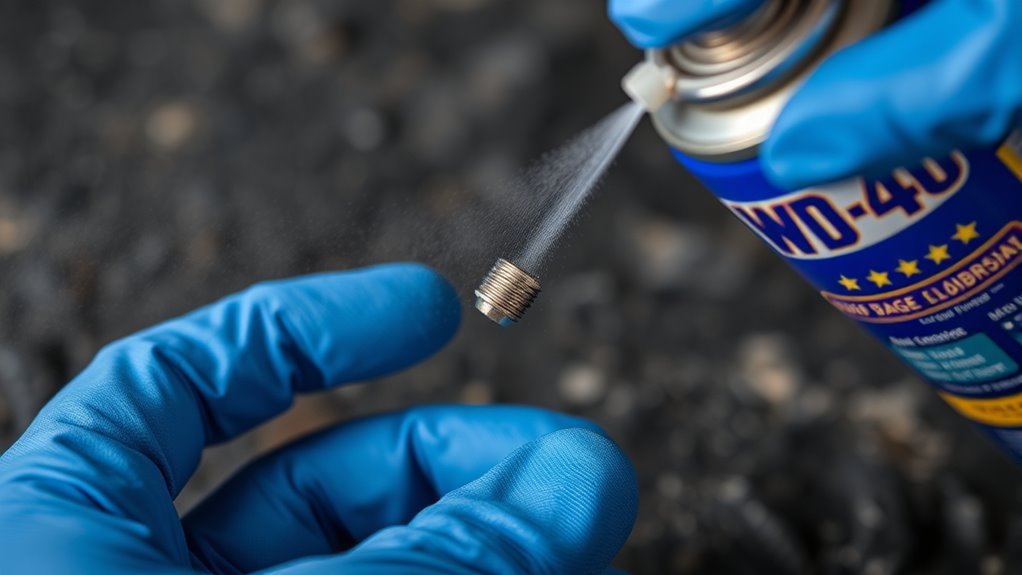
Next, spray WD-40 directly on the electrode and insulator. Let it sit for a few minutes to help loosen grime and carbon deposits.
After soaking, use a wire brush or a clean cloth to carefully scrub off the buildup. Be gentle to avoid damaging the spark plug components.
Make sure the spark plugs dry completely before reinstalling them to prevent engine misfires. Always check for signs of wear or damage, as some spark plugs may need to be replaced rather than cleaned.
Continue following proper procedures for removal, drying, and assessment to ensure your engine runs smoothly.
Key Takeaways
- Remove spark plugs carefully using a spark plug socket and inspect for carbon or oil deposits.
- Spray WD-40 generously on the electrode and insulator to loosen grime and deposits.
- Let the WD-40 soak for a few minutes to effectively break down residue.
- Scrub the spark plug with a wire brush or clean cloth to remove loosened dirt.
- Dry plugs completely before reinstalling to prevent misfires and ensure proper function.
How To Clean Spark Plugs With WD-40
To clean spark plugs with WD-40, start by removing the plugs from the engine using a spark plug socket.
Once removed, inspect each plug for carbon deposits and oil fouling, common indicators requiring spark plug maintenance.
Spray WD-40 directly onto the electrode and insulator, allowing it to penetrate stubborn grime.
Apply WD-40 to the electrode and insulator to break down tough grime effectively.
Let it sit for a few minutes to loosen deposits. Then, use a wire brush or a clean cloth to scrub away residues carefully.
Avoid abrasive tools that might damage the ceramic insulator or electrode.
After cleaning, wipe the plug dry and check the gap with a feeler gauge, adjusting if necessary.
These cleaning techniques improve spark plug efficiency and engine performance, extending the plug’s service life before replacement becomes necessary.
Tools You’ll Need To Clean Spark Plugs With WD-40
Although cleaning spark plugs with WD-40 is straightforward, having the right tools guarantees efficiency and safety.
You’ll need a wire brush or a spark plug cleaner brush to remove carbon deposits effectively. Use a clean rag or microfiber cloth to wipe away loosened debris after applying WD-40.
A spark plug socket wrench allows you to handle the plugs without damaging their threads, essential for proper maintenance. Additionally, wear protective gloves to safeguard your hands from chemicals and sharp edges.
A small container or tray helps keep parts organized during cleaning. These tools complement proper cleaning techniques, allowing you to maintain spark plugs at their best.
Following these maintenance tips guarantees you clean spark plugs thoroughly without causing damage or compromising engine performance.
How To Safely Remove Spark Plugs For Cleaning
After gathering the right tools for cleaning spark plugs with WD-40, you’ll need to remove the spark plugs carefully to avoid damage.
First, locate the spark plugs by identifying your engine’s spark plug types, usually copper, platinum, or iridium.
Disconnect the spark plug wire by gripping the boot, not the wire, to prevent internal damage. Use a correctly sized spark plug socket attached to a ratchet wrench for loosening. Turn counterclockwise gently; avoid applying excessive force to prevent thread stripping.
Follow maintenance tips such as cleaning debris around the plug area before removal to keep contaminants out of the combustion chamber.
Work on one spark plug at a time, making sure each is fully loosened before extraction. Proper removal guarantees a smooth cleaning process and prolongs spark plug life.
How To Dry And Reinstall Spark Plugs After Cleaning
One essential step before reinstalling spark plugs is ensuring they’re completely dry to prevent misfires or damage. After cleaning with WD-40, use compressed air or a clean, dry cloth to remove all moisture from the spark plug surface and electrode.
Avoid heat sources that could cause thermal shock or damage. Effective drying techniques are critical in spark plug maintenance to maintain ideal performance and longevity.
Once dry, inspect the spark plug for cracks or excessive wear before reinstalling. Apply a small amount of anti-seize compound on the threads to ease future removal but avoid getting any on the electrode.
Finally, carefully thread the spark plug into the cylinder head by hand to prevent cross-threading, then tighten it to the manufacturer’s specified torque using a torque wrench.
When To Replace Spark Plugs Instead Of Cleaning Them
If your spark plugs show signs of severe wear, damage, or persistent fouling despite cleaning, it’s time to replace them rather than attempt further cleaning.
The average spark plug lifespan varies by type and engine but typically ranges between 30,000 to 100,000 miles.
Performance indicators such as misfires, rough idling, reduced fuel efficiency, or difficulty starting signal that your spark plugs may no longer function effectively.
Cracked insulators, eroded electrodes, or heavy carbon deposits are physical signs that cleaning won’t restore.
Continuing to use worn spark plugs can cause engine damage or inefficient combustion.
To maintain engine performance and reliability, replace spark plugs when these indicators appear or when they exceed their recommended lifespan, ensuring you follow the manufacturer’s specifications for your vehicle.
Frequently Asked Questions
Can WD-40 Damage Spark Plug Electrodes?
WD-40 generally won’t damage spark plug materials if used sparingly, but its solvents can degrade electrode coatings over time.
Opt for specialized cleaning methods to preserve electrode integrity and guarantee peak spark plug performance.
How Often Should Spark Plugs Be Cleaned With WD-40?
You should clean spark plugs with WD-40 only when they beg for mercy, typically every 30,000 miles. Proper spark plug maintenance demands precise cleaning frequency to avoid overuse, ensuring peak performance without turning them into rusty relics.
Is WD-40 Safe for Use on All Types of Spark Plugs?
WD-40 is generally safe for most spark plug types, but you shouldn’t rely on it as the sole cleaning method. Use it cautiously and combine with proper mechanical cleaning to avoid residue that might affect performance.
Can WD-40 Improve Spark Plug Performance?
You won’t find WD-40 as a magic elixir for spark plug efficiency, but it helps remove grime. For lasting performance, combine it with regular maintenance tips like gap checks and proper torque settings.
Are There Alternatives to WD-40 for Cleaning Spark Plugs?
Yes, you can use alternatives to cleaning spark plugs like carburetor cleaner, brake cleaner, or specialized spark plug cleaners. These options support effective spark plug maintenance by removing carbon deposits and improving ignition performance safely.
Conclusion
Cleaning your spark plugs with WD-40 is like giving your engine’s heartbeat a fresh spark. By following precise steps to remove, clean, dry, and reinstall them, you’ll restore efficiency and performance without unnecessary expense.
Remember, when wear or damage clouds their glow, replacing them is the smarter choice.
Keep your spark plugs sharp, and your engine will purr like a well-oiled machine, ready to hit the road with renewed power. Using WD-40 to clean spark plugs can be an effective way to maintain engine performance and extend the life of your plugs.