Tag: vehicle maintenance

  • How to Remove Oil Filter

    How to Remove Oil Filter

    To remove your oil filter, first park your vehicle on a level surface with the engine cool. Engage the parking brake for safety before starting the process.

    Use an oil filter wrench to loosen the filter by turning it counterclockwise. Be sure to catch any oil dripping with a drain pan to avoid spills.

    If the filter is stuck, apply penetrating oil and try using a strap wrench for extra leverage. Remove the filter by hand once it’s loosened.

    Clean the mounting surface thoroughly and inspect the gasket to ensure it’s in good condition. Follow these steps carefully to avoid damage.

    There’s more to learn about handling common challenges and proper disposal of your oil filter.

    Key Takeaways

    • Park the vehicle on a level surface, engage the parking brake, and ensure the engine is cool before starting.
    • Locate the oil filter on the engine block and prepare an oil catch pan underneath.
    • Use an oil filter wrench to turn the filter counterclockwise to loosen it.
    • Remove the filter carefully by hand to avoid oil spills, checking the gasket isn’t stuck to the engine.
    • Wipe the mounting surface clean before installing a new filter or finishing the removal.

    How To Prepare Your Vehicle For Oil Filter Removal

    Before you begin removing the oil filter, make sure your vehicle is securely parked on a level surface and the engine is cool to prevent burns. Engage the parking brake to enhance vehicle stability during the procedure.

    Position wheel chocks behind the tires if necessary to prevent any movement.

    Locate the oil drain plug and place a suitable container beneath it to catch the old oil during the oil drain process. Slowly loosen the drain plug to allow oil to flow out completely, ensuring minimal spills.

    This step reduces pressure in the system, making filter removal easier and safer.

    Verifying stability and proper drainage setup minimizes risks and prepares your vehicle for efficient oil filter removal.

    Essential Tools For Removing An Oil Filter Safely

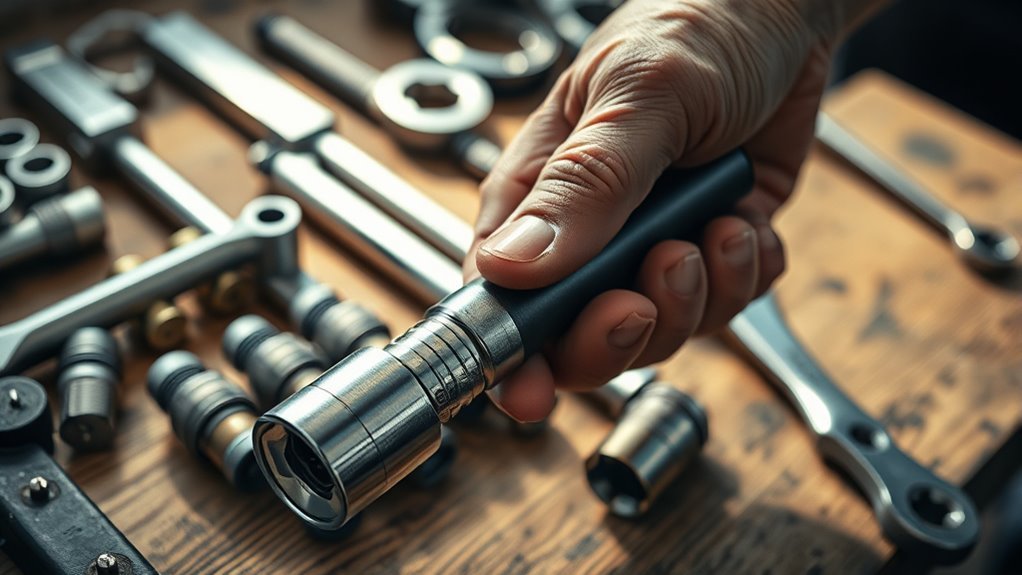
    You’ll need specific tools like an oil filter wrench or strap wrench to loosen the filter without damaging it.

    Don’t forget safety equipment such as gloves and eye protection to prevent injury from hot oil or debris.

    Preparing these tools guarantees you remove the filter efficiently and safely.

    Common Removal Tools

    Several essential tools make removing an oil filter safer and more efficient. First, filter wrenches are indispensable; they provide the grip and leverage needed to loosen stubborn filters without damaging the housing. Different types, such as strap, cap, or plier-style wrenches, suit various filter designs. Choose one that matches your filter’s size and shape.

    Next, an oil catchment container is vital to collect draining oil, preventing spills and environmental contamination. Position it directly under the filter before removal to capture residual oil effectively.

    Additionally, having a sturdy ratchet or socket set can assist if the filter wrench requires additional torque. Using these tools correctly guarantees a smooth removal process, minimizes mess, and prepares you for a safe, efficient oil filter change.

    Safety Equipment Needed

    Personal protective equipment (PPE) plays an essential role in guaranteeing your safety during oil filter removal. Proper PPE minimizes exposure to hot oil, sharp edges, and debris.

    Prioritize gloves usage to protect your hands from burns and chemical irritation. Equally important is eye protection to prevent oil splashes from causing injury.

    Before starting, equip yourself with the following:

    1. Nitrile or latex gloves for chemical and heat resistance
    2. Safety goggles or glasses to shield your eyes from splashes
    3. Long-sleeve clothing to protect your arms from hot oil contact
    4. A mechanic’s creeper or mat to provide stable positioning and reduce strain

    Using these safety tools guarantees a safer, more efficient oil filter removal process.

    Step-By-Step Guide To Removing Your Oil Filter

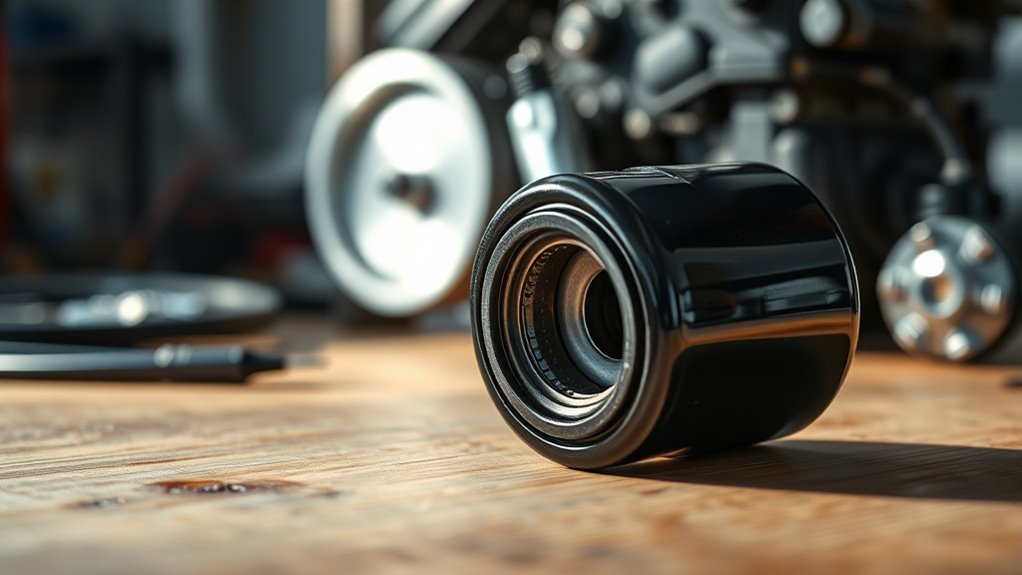
    Begin by locating the oil filter, which is typically found on the engine block. Identify your oil filter type, spin-on or cartridge, as maintenance tips vary accordingly. Prepare your tools and a drain pan. Loosen the filter using an oil filter wrench, turning counterclockwise. Once loose, carefully remove it by hand, avoiding oil spills.

    Step Action
    1. Locate Find the oil filter on engine
    2. Identify Check oil filter types
    3. Loosen Use wrench to turn filter CCW
    4. Remove Unscrew filter by hand

    After removal, inspect the rubber gasket to verify it’s not stuck to the engine. Proper removal prevents damage, verifying effective oil filter maintenance and prolonging engine life.

    What To Do When Your Oil Filter Won’t Budge

    If your oil filter won’t budge, it’s often due to corrosion, overtightening, or old gasket buildup.

    You’ll need to use specific removal techniques like applying penetrating oil, using a strap wrench, or tapping the filter gently to break the seal.

    Addressing these common causes methodically will help you safely free the stuck filter without damaging components.

    Common Causes Of Stuck Filters

    Although oil filters are designed for easy removal, several factors can cause them to become stuck, making the process challenging. Understanding these causes is vital for effective oil filter maintenance and proper filter installation.

    1. Over-tightening during installation: Applying excessive torque can deform the filter gasket, causing it to bind.
    2. Accumulated dirt and grime: Dirt buildup around the filter base can create resistance.
    3. Heat expansion: Engine heat can cause metal components to expand, seizing the filter.
    4. Corrosion or rust: Exposure to moisture leads to corrosion, fusing the filter to the mounting surface.

    Addressing these issues during filter installation and regular oil filter maintenance helps prevent stuck filters and guarantees smoother removal next time.

    Effective Removal Techniques

    Three proven techniques can help you loosen a stubborn oil filter when it refuses to budge. First, use a strap wrench for standard canister filters; it grips without damage.

    Second, for cartridge-type filters, apply pliers carefully to avoid deforming the housing. Third, apply penetrating oil around the filter base to break corrosion bonds, letting it soak before attempting removal.

    Technique Suitable Oil Filter Types Key Advantage
    Strap Wrench Canister Non-damaging grip
    Pliers Cartridge Precise application
    Penetrating Oil All Types Loosens corrosion and grime

    Next Steps After Removing The Oil Filter

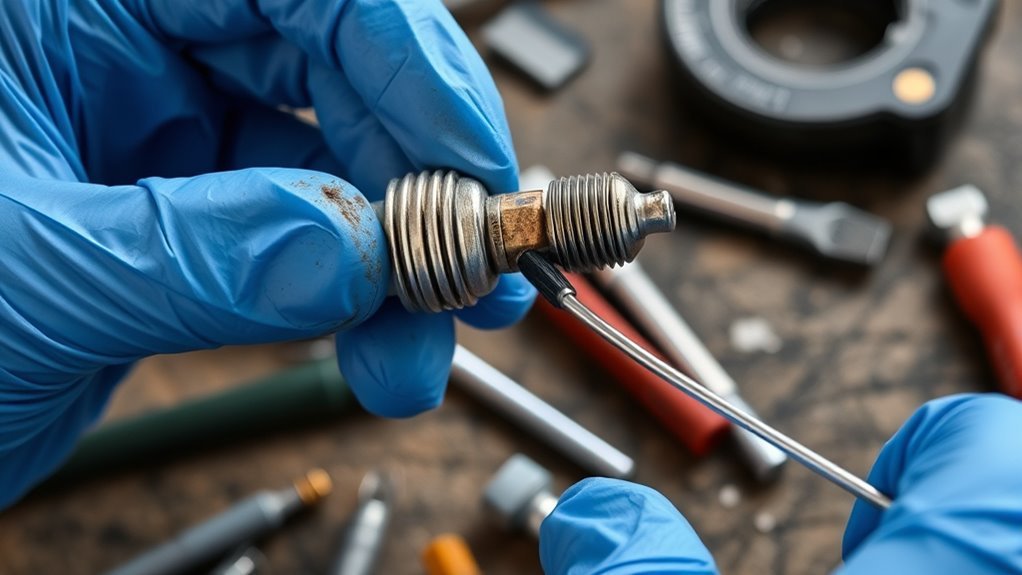
    Once you’ve removed the oil filter, immediately inspect the mounting surface for any remaining gasket material or debris. This step is critical for a proper oil filter replacement and preventing leaks.

    Follow these next steps precisely:

    1. Perform a thorough oil filter inspection on the mounting surface to guarantee it’s clean and smooth.
    2. Check the old oil filter to confirm its gasket came off with it; if not, remove the stuck gasket manually.
    3. Apply a thin layer of fresh engine oil to the new filter’s gasket to improve the seal during installation.
    4. Align and hand-tighten the new oil filter according to manufacturer torque specifications to avoid over-tightening or leaks.

    These steps guarantee a successful oil filter replacement and maintain engine integrity.

    Common Oil Filter Removal Mistakes To Avoid

    After properly inspecting the mounting surface and preparing the new oil filter, you need to be aware of common mistakes that can compromise the removal process.

    One frequent oil filter mistake is using excessive force, which can damage the filter housing or cause leaks. Avoid applying uneven pressure or twisting at odd angles.

    Using too much force risks damaging the filter housing and causing leaks; apply even pressure carefully.

    Another misconception is neglecting to drain the oil before removal; this leads to spills and messes.

    Don’t reuse old gaskets or fail to check for a stuck gasket on the mounting surface, as this causes sealing issues.

    Also, avoid using the wrong size tool—this can strip the filter casing.

    How To Dispose Of Your Old Oil Filter Properly

    Anyone handling an old oil filter must dispose of it according to local environmental regulations to prevent contamination.

    Improper disposal risks hazardous waste leakage, harming the environment.

    Follow these steps to dispose of your oil filter properly:

    1. Drain the oil filter thoroughly to remove residual oil, facilitating recycling oil processes.
    2. Store the drained filter in a sealed container to prevent leaks during transport.
    3. Locate a certified recycling or hazardous waste facility that accepts used oil filters.
    4. Deliver the oil filter to the facility, ensuring it undergoes proper recycling oil recovery or hazardous waste treatment.

    Frequently Asked Questions

    How Often Should I Replace My Oil Filter?

    You should replace your oil filter every oil change frequency interval, typically every 3,000 to 7,500 miles. Monitor your vehicle’s manual for specific filter lifespan recommendations to guarantee peak engine performance and longevity.

    Can I Use Any Oil Filter for My Car Model?

    You can’t use any oil filter; always verify oil filter compatibility with your vehicle specifications. Check your owner’s manual or manufacturer guidelines to confirm the filter fits correctly and meets performance requirements for maximum engine protection.

    What Are Signs of a Clogged Oil Filter?

    If your oil pressure gauge drops like it’s on vacation and engine performance feels like a snail’s race, your oil filter’s probably clogged.

    That’s your cue: clogged filters choke flow, harming pressure and performance. Time for a change.

    Is It Necessary to Change the Oil Filter Every Oil Change?

    Yes, you should change the oil filter every oil change to maintain peak engine performance. The oil filter lifespan aligns with your maintenance schedule, ensuring contaminants don’t reduce oil effectiveness or damage engine components.

    Can a Dirty Oil Filter Cause Engine Damage?

    Yes, a dirty oil filter can cause engine damage by restricting oil flow and contaminant removal. Proper oil filter maintenance guarantees peak engine performance, preventing wear and overheating caused by insufficient lubrication and debris accumulation.

    Conclusion

    Now that you’ve mastered oil filter removal, imagine avoiding a stuck filter like Jake, who used the right tools and technique to prevent damage and save time.

    By preparing properly, following each step carefully, and disposing of your old filter responsibly, you’ll keep your vehicle running smoothly and protect the environment.

    Remember, precision and patience are key—skip these, and you risk costly repairs or contamination. Stay diligent for a safe, efficient oil change every time.

    In conclusion, mastering how to remove oil filter correctly ensures a hassle-free maintenance process and extends your vehicle’s life.

  • How Long Does It Take to Change Spark Plugs

    How Long Does It Take to Change Spark Plugs

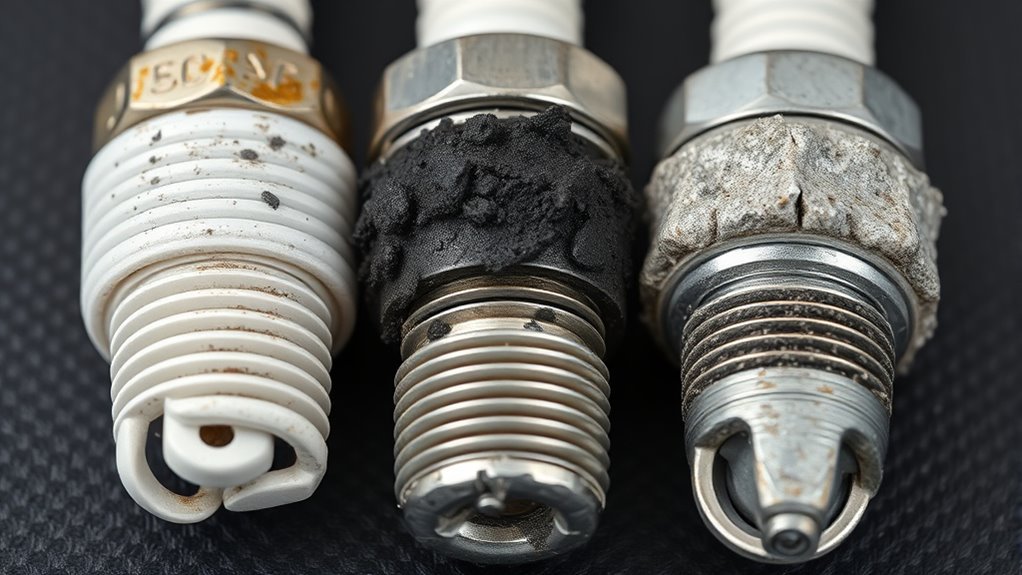
    Changing your spark plugs usually takes 30 to 60 minutes, depending on your vehicle’s engine type and accessibility. Spark plug replacement is generally quicker on inline engines with easily accessible plugs.

    V6 or V8 engines and direct-injection setups can take longer due to tighter spaces. Having the right tools and some experience can speed up the process considerably.

    If you want to understand exactly what affects timing and how to prepare for faster spark plug replacement, keep exploring these key factors.

    Key Takeaways

    • Spark plug replacement usually takes between 30 minutes to 1 hour depending on engine complexity and spark plug type.
    • Inline engines generally allow faster replacement than V-type engines due to easier plug accessibility.
    • Removal of additional components on luxury or performance cars can significantly increase the time needed.
    • Having the right tools like a spark plug socket and torque wrench speeds up the process and prevents damage.
    • Experienced mechanics typically complete replacements faster, while DIY beginners may take longer due to unfamiliarity with engine layout.

    How Long Does It Usually Take to Change Spark Plugs?

    How long does it usually take to change spark plugs? Generally, replacing spark plugs takes between 30 minutes and 1 hour, depending on your vehicle’s engine design and the spark plug types used.

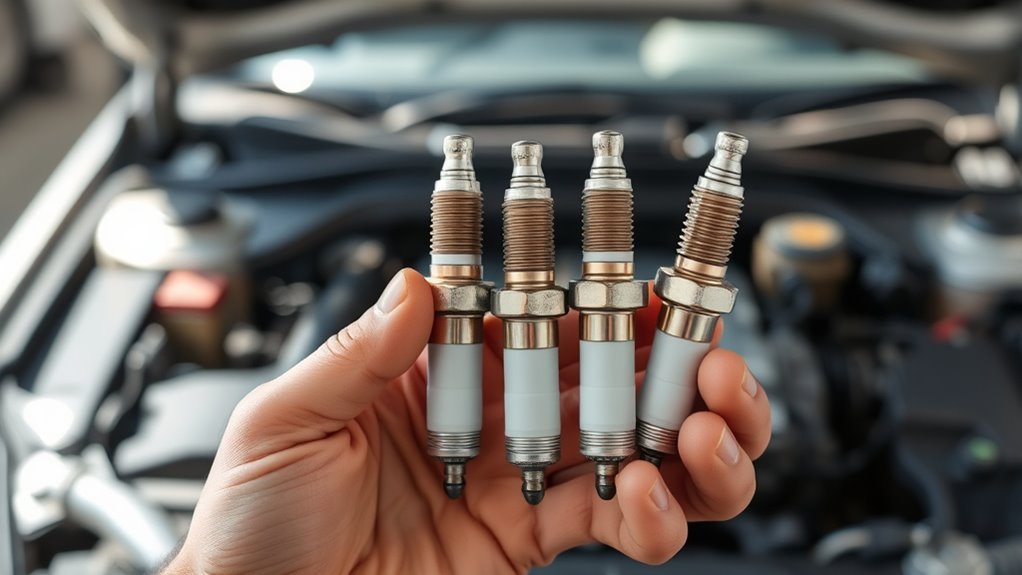
    Iridium or platinum plugs, often found in modern cars, tend to last longer but may require more careful handling during replacement. Your maintenance schedule will specify the recommended interval, typically every 30,000 to 100,000 miles.

    Factors affecting time include accessibility of plugs and whether additional components must be removed. If you’re working on a straightforward inline engine with standard copper plugs, expect faster completion.

    Conversely, V6 or V8 engines with recessed plugs or coil-on-plug systems might extend the process. Staying aligned with the maintenance schedule guarantees ideal engine performance and prevents premature wear.

    Step-by-Step Timing for Changing Spark Plugs

    The overall time to change spark plugs depends on the specific steps involved in your vehicle’s setup.

    Begin by disconnecting the battery and removing engine covers. Then, carefully disconnect ignition coils or wires, depending on your spark plug types.

    Use a socket wrench with an extension to loosen and extract old plugs, which typically takes 3–5 minutes per plug. Inspect and gap new plugs according to the maintenance schedule, guaranteeing compatibility with your engine.

    Thread the new plugs by hand to avoid cross-threading, then torque them to manufacturer specifications. Reattach ignition coils or wires, replace engine covers, and reconnect the battery.

    Following these precise steps guarantees efficiency; expect 30 to 60 minutes total, varying with spark plug types and engine accessibility.

    Adhering to the maintenance schedule optimizes both timing and performance.

    Which Car Models Take Longer to Change Spark Plugs?

    You’ll find that car models with complex engine designs and limited access to spark plugs take longer to service.

    If the plugs sit beneath components or require specialty tools, expect added time and effort.

    Understanding these factors helps you anticipate the labor involved for different vehicles.

    Engine Design Complexity

    Although spark plug replacement might seem straightforward, engine design complexity often dictates the time required. Modern engines prioritize engine efficiency, which influences spark plug types and their placement.

    For instance, direct-injection engines often have spark plugs buried deep within the combustion chamber, making access more challenging. Additionally, engines with V6 or V8 configurations tend to have tighter spaces around spark plugs compared to inline-four engines, increasing replacement difficulty.

    Advanced ignition systems may use iridium or platinum spark plugs, which require careful handling and precise torque settings. The complexity of engine layouts, such as turbocharged or hybrid systems, further affects the time you’ll spend changing spark plugs.

    Understanding these design elements helps set realistic expectations for the labor involved in spark plug replacement across different vehicles.

    Access to Spark Plugs

    Engine design complexity directly impacts how easily you can access spark plugs, which varies considerably across car models. Some vehicles feature spark plug locations that are straightforward, positioned near the engine’s surface, allowing quick removal and replacement.

    Others, especially V6 or V8 engines with deep-set spark plugs or those obstructed by components like intake manifolds, present significant accessibility challenges. For example, some luxury or performance models require removing additional parts to reach the plugs, increasing labor time.

    You’ll find that inline engines typically offer better accessibility compared to tightly packed engine bays in compact or turbocharged cars.

    Understanding your specific vehicle’s spark plug locations helps anticipate the effort involved, as harder-to-reach plugs inherently extend the time needed for a spark plug change.

    Required Tools and Equipment

    Changing spark plugs requires specific tools and equipment that vary depending on your car model. For example, vehicles with deep-set spark plugs demand longer spark plug sockets and flexible extensions, increasing the time needed.

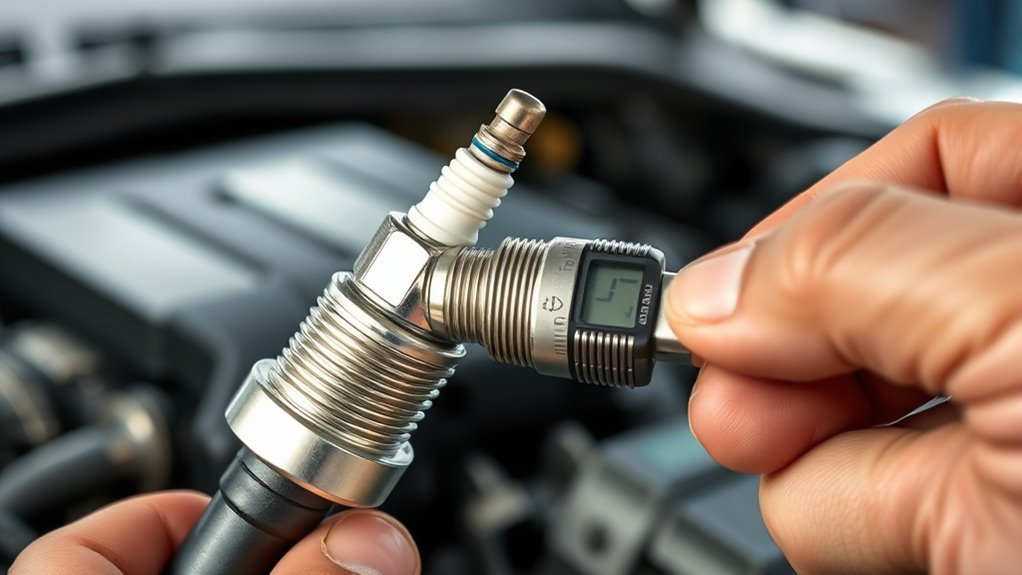
    Some models use iridium or platinum spark plugs, requiring careful torque application to avoid damage. You’ll typically need a ratchet, torque wrench, spark plug socket, and sometimes a gap gauge if your spark plug types aren’t pre-gapped.

    Following the manufacturer’s maintenance schedule guarantees you use the correct tools and intervals, avoiding premature wear or improper installation.

    High-performance or turbocharged engines might have more complex access, extending the replacement time.

    Understanding your vehicle’s specific requirements streamlines the process, so prepare tools accordingly for efficient spark plug replacement.

    How Engine Type Affects Spark Plug Replacement Time

    You’ll notice that inline engines generally offer easier access to spark plugs since they’re arranged in a single row, reducing replacement time.

    In contrast, V-type engines have plugs positioned on both banks, which can complicate access and extend the process.

    Understanding your engine’s layout helps you anticipate the effort needed for spark plug changes.

    Inline vs V-Type Engines

    Two common engine configurations, inline and V-type, significantly impact how long it takes to replace spark plugs.

    Inline engines offer advantages due to their simpler, more accessible design; spark plugs typically align in a single row, making removal and installation quicker. This layout reduces the time needed for spark plug replacement, especially if you have standard hand tools.

    Conversely, V-type engines present disadvantages. Their spark plugs are arranged in two banks at an angle, often requiring you to reach into tighter spaces or remove additional components. This complexity increases replacement time and demands more effort or specialized tools.

    Understanding these inline engine advantages and V-type disadvantages helps you anticipate the time commitment and tools needed for spark plug maintenance in each engine type.

    Access and Layout Impact

    The engine’s access points and spark plug layout directly influence how quickly you can complete a replacement. Spark plug accessibility varies considerably depending on the engine compartment layout, affecting the time and effort required.

    For example, inline engines often provide better accessibility with spark plugs aligned in a single row, while V-type engines may have plugs positioned deeper and harder to reach.

    Engine Type Spark Plug Accessibility
    Inline High – Straightforward access
    V-Type Moderate – Requires maneuvering
    Boxer Low – Limited space, tight layout

    Understanding your engine layout helps you anticipate challenges and prepare the right tools. Less accessible plugs increase replacement time due to additional disassembly and careful maneuvering.

    Essential Tools to Speed Up Changing Spark Plugs

    Several key tools can markedly reduce the time it takes to change spark plugs. First, a quality spark plug socket is vital; it securely grips the plug, preventing damage during removal and installation. Using a socket with a rubber insert or magnetic feature guarantees a firm hold, speeding up handling.

    Next, a torque wrench is essential to tighten the plugs to manufacturer specifications, avoiding over- or under-tightening that could cause engine issues. Additionally, an extension bar helps reach deep or recessed spark plugs efficiently. Pair these with a ratchet handle for quick rotation.

    Having these tools ready minimizes fumbling and increases precision, allowing you to complete the spark plug replacement quickly and safely.

    Using the correct tools is key to optimizing your workflow and cutting down total service time.

    Common Issues That Can Slow Down Spark Plug Replacement

    Although having the right tools speeds up spark plug replacement, unexpected issues can still slow you down. A common problem involves spark plugs that have exceeded their recommended lifespan, causing them to seize tightly in the cylinder head. Corrosion or carbon buildup might cause this, increasing removal difficulty.

    You may also encounter stripped threads or cross-threaded plugs, which complicate extraction and risk damaging the cylinder head. Additionally, common symptoms like engine misfires or rough idling can signal underlying issues, requiring further diagnostics before replacement.

    If the ignition coils or spark plug wires are worn or stuck, removing them can be tricky and time-consuming. Recognizing these challenges early helps you prepare, but these technical setbacks inevitably extend the overall replacement time.

    How Your Experience Affects Spark Plug Replacement Time

    Your experience level directly influences how quickly you replace spark plugs, with experts typically finishing faster than novices.

    Having the right tools on hand streamlines the process and reduces delays.

    Plus, knowing your vehicle’s layout helps you avoid common pitfalls and speeds up the job.

    Novice Versus Expert Timing

    When you’re new to changing spark plugs, the process takes longer because you need to carefully navigate unfamiliar components and avoid mistakes.

    Novice mistakes like overtightening, cross-threading, or failing to properly gap plugs can extend your time and cause damage.

    You’ll spend extra minutes double-checking procedures and handling tools cautiously. In contrast, experts apply refined techniques, efficiently removing and installing plugs with the correct torque and gap settings, minimizing risk of damage.

    They quickly identify plug locations and leverage muscle memory to accelerate each step. Their confidence reduces hesitation, allowing a full replacement in roughly half the time a novice requires.

    Understanding this timing gap helps set realistic expectations and motivates refining your skills to approach expert efficiency.

    Tools Impact Efficiency

    Mastering spark plug replacement speed isn’t just about skill; it also depends heavily on the tools you use. Your tool selection directly influences your efficiency gains during the process.

    Using a proper spark plug socket with a rubber insert prevents damage and accelerates extraction. A ratchet with an extension grants better access to recessed plugs, reducing time spent maneuvering.

    Additionally, torque wrenches guarantee plugs are tightened to manufacturer specifications, avoiding rework. Investing in quality, purpose-built tools minimizes interruptions and frustration, allowing you to maintain a steady workflow.

    Conversely, makeshift or improper tools increase the risk of stripped threads and repeated attempts, extending overall time.

    Familiarity With Vehicle

    Although tool quality plays an essential role, familiarity with your vehicle greatly impacts how quickly you can change spark plugs. If you’ve developed spark plug familiarity through regular vehicle maintenance, you’ll navigate the engine bay more efficiently, recognize component locations, and avoid common pitfalls, cutting replacement time noticeably.

    Conversely, unfamiliarity often leads to delays caused by locating parts or consulting manuals.

    Experience Level Typical Time (minutes)
    Expert (high familiarity) 20-30
    Intermediate 30-45
    Beginner 45-60
    No experience 60+
    Professional mechanic 15-25

    Your experience directly correlates to speed and precision. Building spark plug familiarity through repeated vehicle maintenance optimizes both.

    How to Prepare Your Car to Change Spark Plugs Faster

    Before you start changing your spark plugs, make certain your engine is cool to prevent burns and allow easier access to components.

    Begin car preparation by disconnecting the negative battery terminal to avoid electrical shorts.

    Gather all necessary tools: a spark plug socket, ratchet, extension bar, and a gap gauge.

    Remove any engine covers or air intake components obstructing access to the spark plugs.

    Inspect the spark plug wires or ignition coils closely; label them if needed to maintain proper order during reinstallation.

    Clean around each spark plug area to prevent debris from entering the combustion chamber when plugs are removed.

    Proper car preparation minimizes complications and accelerates the spark plug replacement process, ensuring a smooth and efficient workflow.

    Time-Saving Tips for DIY Spark Plug Replacement

    When you streamline your workspace and keep tools organized within reach, you greatly cut down on the time spent searching for equipment during spark plug replacement.

    Set up an efficient workspace by arranging your ratchets, spark plug sockets, and gap gauges in a logical order.

    Use a magnetic tray to hold removed plugs and small parts, preventing loss and speeding reassembly.

    Before starting, perform basic spark plug maintenance by inspecting and cleaning the spark plug holes with compressed air to avoid debris interference.

    Pre-gapping replacement plugs guarantees you won’t waste time adjusting them later.

    Also, use a torque wrench for precise tightening, avoiding damage or retightening.

    These steps help you complete the job faster and more accurately, optimizing your DIY spark plug replacement process.

    When to Get Professional Help With Spark Plug Replacement

    If you encounter stubborn spark plugs that won’t budge or notice damaged threads in the cylinder head, it’s wise to seek professional help.

    Attempting to force removal can cause costly damage, compromising the cylinder head’s integrity.

    Additionally, if your vehicle uses coil-on-plug systems or has hard-to-reach spark plugs, professional mechanics have the specialized tools and expertise needed for efficient spark plug maintenance.

    You should also consider professional assistance if you experience persistent engine misfires after replacement, as this may indicate improper installation or underlying issues.

    Relying on professional mechanics guarantees precise torque application, correct gap settings, and thorough inspection, preventing future complications.

    When in doubt, entrusting spark plug replacement to experts safeguards your engine’s performance and longevity.

    Frequently Asked Questions

    How Often Should Spark Plugs Be Replaced for Optimal Engine Performance?

    You should replace spark plugs every 30,000 to 100,000 miles, depending on their lifespan. Follow your vehicle’s maintenance schedule precisely to guarantee peak engine performance and prevent misfires or reduced fuel efficiency.

    What Are the Signs of Worn or Faulty Spark Plugs?

    You’ll notice spark plug symptoms like engine misfires, rough idling, poor acceleration, and decreased fuel efficiency. These signs indicate worn or faulty spark plugs that need timely replacement to maintain ideal engine performance.

    Can Using the Wrong Spark Plug Type Damage My Engine?

    Using the wrong spark plug type is like fitting a square peg in a round hole. It can harm spark plug compatibility and degrade engine performance, causing misfires, poor fuel efficiency, and potential long-term engine damage if ignored.

    How Much Do Spark Plugs Typically Cost for Replacement?

    Spark plugs typically cost $5 to $15 each, depending on brands like NGK or Bosch.

    For replacement tips, always match your vehicle’s specifications and torque settings to avoid engine issues or misfires.

    Are There Eco-Friendly Spark Plug Options Available?

    Yes, you can choose eco-friendly spark plugs made with alternative materials like iridium or platinum, which reduce environmental impact by improving fuel efficiency and longevity. They cut emissions and minimize waste compared to traditional copper plugs.

    Conclusion

    Changing spark plugs usually takes between 30 minutes to an hour, but this varies based on your car model, engine type, and experience.

    While many believe professional service is always faster, skilled DIYers with the right tools can match or beat shop times. However, complex engines or difficult access may extend the process.

    Understanding these factors helps you decide when to tackle the job yourself or seek expert help, optimizing both time and results. Knowing how long does it take to change spark plugs is essential for planning your maintenance effectively.

  • How Often to Replace Shocks

    How Often to Replace Shocks

    How Often to Replace Shocks is an important consideration for maintaining your vehicle’s performance and safety. You should replace your shocks every 50,000 miles or sooner if you notice signs like excessive bouncing, increased body roll, fluid leaks, or uneven tire wear.

    Driving on rough terrain or off-road speeds up wear, so inspect them regularly under harsh conditions. Keeping shocks in good shape guarantees vehicle stability and effective braking.

    If you want to understand how driving habits affect shock lifespan and how to spot issues early, keep exploring these key details.

    Key Takeaways

    • Inspect shocks every 50,000 miles or sooner if driving on rough terrain or experiencing performance issues.
    • Replace shocks promptly if you notice leaking fluid, excessive bouncing, or diminished handling.
    • Off-road and harsh driving conditions accelerate shock wear, requiring more frequent replacements.
    • Regular shock inspections during routine maintenance help detect wear before it affects safety and performance.
    • Delaying replacement worsens ride quality, braking distance, and can cause uneven tire wear and costly repairs.

    When to Replace Your Vehicle’s Shocks

    How do you know when your vehicle’s shocks need replacing? You monitor shock performance regularly through scheduled shock maintenance. Typically, shocks should be inspected every 50,000 miles or sooner if you drive on rough terrain.

    During maintenance, assess for leaks, corrosion, and diminished damping efficiency, as these factors directly reduce shock performance. If the shocks fail to control suspension movement effectively, your vehicle’s stability and braking distance worsen, signaling replacement is necessary.

    Check for leaks, corrosion, and poor damping—if shocks can’t control suspension, stability and braking suffer.

    Additionally, shocks that no longer return smoothly or exhibit unusual noises during compression and rebound cycles compromise ride quality and safety.

    To maintain ideal shock performance, adhere to manufacturer guidelines and replace shocks promptly once they no longer meet performance standards.

    Proper shock maintenance guarantees stability, handling, and overall vehicle control.

    Signs Your Shocks Are Wearing Out

    Although shock absorbers are designed to last, you’ll notice specific signs when they start to wear out. Reduced shock absorber performance often leads to increased vehicle bouncing after bumps and poor absorption of road irregularities.

    You might also experience vehicle handling issues such as excessive body roll during turns, longer braking distances, or a loose steering feel. Uneven tire wear can indicate that shocks no longer maintain proper tire contact with the road.

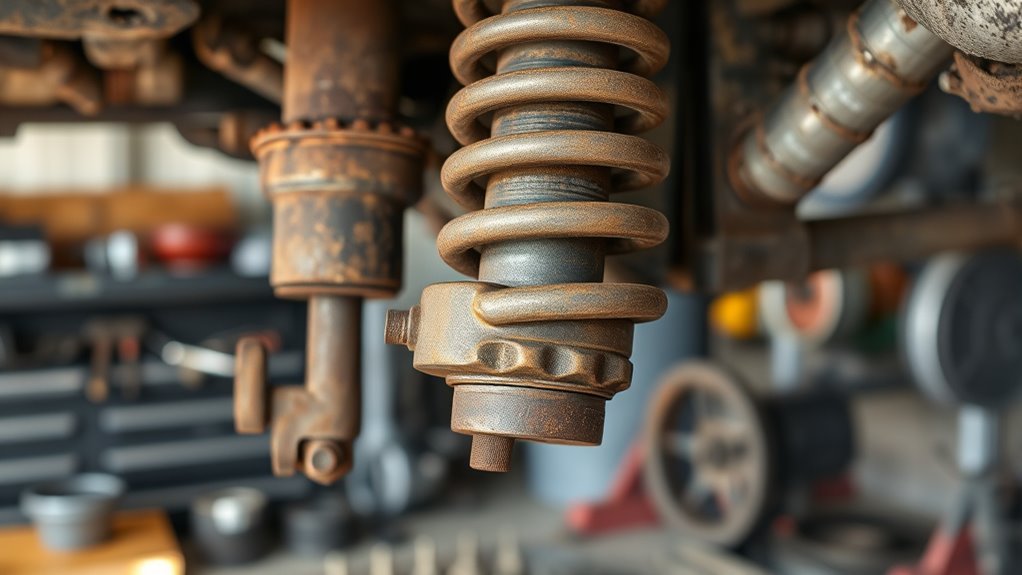
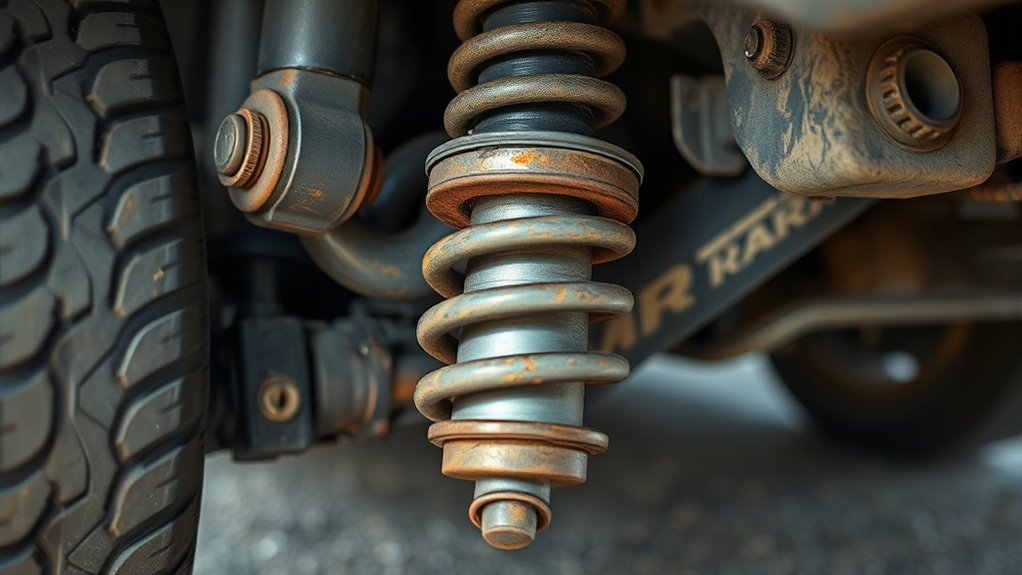
    Additionally, visible fluid leaks around the shock housing signal internal seal failure, degrading performance. If you detect any of these symptoms, it’s essential to inspect or replace your shocks promptly to maintain safe handling and ride quality.

    Ignoring worn shocks compromises both comfort and control, increasing risk during driving.

    How Driving Conditions Affect Shock Replacement

    Since driving conditions vary widely, they greatly influence when you’ll need to replace your shocks. If you frequently encounter off-road impact, your shocks endure more stress, accelerating wear and compromising performance sooner.

    Rough terrains cause repeated jarring forces, which degrade shock absorbers faster than smooth surfaces do. Conversely, urban driving typically involves stop-and-go traffic and occasional potholes, which also strain your shocks but less intensely than off-road conditions.

    Rough terrain rapidly wears shocks, while urban driving causes milder but still noticeable strain.

    However, constant braking and acceleration can still reduce shock lifespan. To maintain ideal suspension function, assess your driving environment carefully. Regularly inspect shocks if you face harsh conditions.

    Understanding how your routes affect shock wear helps you schedule timely replacements, ensuring safety and ride quality without unnecessary expense.

    Tips to Extend the Life of Your Shocks

    To maximize the lifespan of your shocks, you should regularly perform maintenance that reduces unnecessary stress on the suspension system.

    Begin with routine inspections to identify leaks, dents, or corrosion, as these issues accelerate wear.

    Follow shock maintenance tips like keeping your tires properly inflated and aligned, which decreases uneven forces on your shock absorbers.

    Avoid aggressive driving over rough terrain when possible, as repeated impacts degrade shock absorber seals and internal components.

    Additionally, clean the shocks and surrounding areas to prevent dirt buildup that can compromise performance.

    Prioritize timely replacement of other suspension parts, like bushings and mounts, to guarantee your shocks operate under ideal conditions.

    Consistent shock absorber care preserves ride quality, handling, and safety, ultimately extending shock service life effectively.

    What Happens If You Delay Shock Replacement

    When you delay replacing worn shocks, your vehicle’s handling and braking performance deteriorate considerably. Reduced shock performance means your tires lose consistent contact with the road, increasing stopping distances and compromising safety.

    Additionally, your ride quality suffers as worn shocks fail to absorb road impacts effectively, leading to a harsher, less controlled driving experience. Prolonged neglect can cause uneven tire wear and strain suspension components, escalating repair costs.

    You may also experience increased body roll and instability during cornering, making your vehicle harder to control. Addressing shock replacement promptly guarantees peak shock performance, maintains ride quality, and preserves vehicle safety.

    Don’t wait for symptoms to worsen; regular inspections and timely replacements keep your suspension functioning correctly and protect your investment.

    Frequently Asked Questions

    Can I Replace Shocks Myself or Should I Hire a Professional?

    You can replace shocks yourself if you’re comfortable using DIY tools and following shock installation tips precisely. Otherwise, hiring a professional guarantees safety and proper installation, especially if you lack mechanical experience or specialized equipment.

    Are Shock Absorbers the Same for All Vehicle Types?

    Shock types vary considerably, so you can’t use the same shock absorbers for all vehicles. Always check vehicle compatibility, considering weight, suspension design, and intended use. This ensures peak performance and safety tailored to your specific vehicle.

    How Do Different Brands of Shocks Compare in Quality?

    Think of shock brands as musical instruments; quality comparison reveals some play smoother, lasting longer. You’ll find premium brands offer precise damping and durability, while budget options may compromise performance, affecting your vehicle’s ride comfort and safety.

    Do Shock Replacements Affect My Vehicle’s Warranty?

    Replacing shocks typically won’t void your warranty if you use quality parts and follow maintenance tips. Always check your vehicle’s warranty coverage details to guarantee authorized repairs and avoid potential disputes with the manufacturer.

    Can Worn Shocks Impact Fuel Efficiency?

    Think of worn shocks as a weary horse pulling your car; they increase fuel consumption by forcing the engine to work harder. You’ll notice reduced ride comfort and efficiency, so replacing them keeps your drive smooth and economical.

    Conclusion

    You should replace your shocks every 50,000 miles, but signs like excessive bouncing or uneven tire wear mean it’s time sooner. Studies show worn shocks can increase stopping distance by up to 20%, compromising safety.

    Driving on rough roads speeds up wear, so regular inspections matter. By staying proactive and maintaining proper tire pressure, you can extend shock life and avoid costly repairs.

    Don’t delay—your safety depends on it. Regular replacement is essential when considering how often to replace shocks.