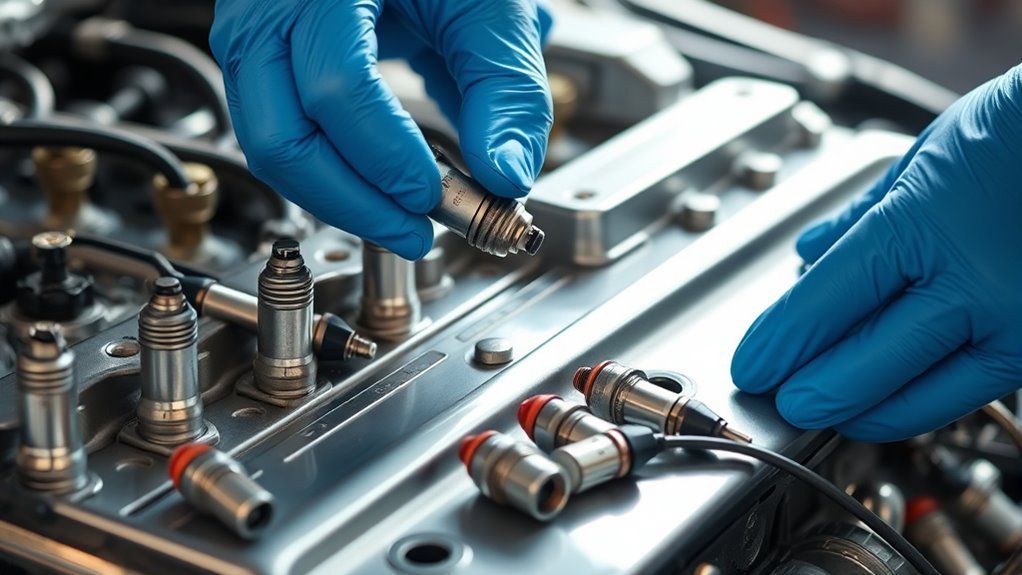

You start by ensuring the engine is cool and gather the necessary tools for how to change wires and spark plugs: spark plug socket, ratchet, torque wrench, gap gauge, and replacement wires matching your vehicle’s specs.
Remove old wires by pulling the boot, not the wire, and unscrew spark plugs with steady torque. Install new plugs hand-threaded then torqued to spec, apply anti-seize on threads, connect wires securely along original paths, and test for proper function.
Following this process carefully restores engine performance and fuel efficiency. Exploring the full method reveals expert tips for longevity and precision.
Key Takeaways
- Ensure the engine is cool, then remove spark plug wires by pulling the boot, not the wire, to avoid damage.
- Use a spark plug socket and ratchet to carefully unscrew each spark plug, inspecting for wear or deposits.
- Apply anti-seize to new spark plug threads, hand-thread plugs to avoid cross-threading, then torque to specifications.
- Replace spark plug wires with correct length and resistance, routing them along the original path for proper connection.
- Test new plugs and wires by checking spark gaps, wire resistance, and ensuring smooth engine performance after installation.
How to Spot When Spark Plugs and Wires Need Changing
Several clear signs indicate when you need to replace spark plugs and wires. Symptoms of misfire, such as engine hesitation, rough idling, or decreased acceleration, often signal worn or faulty ignition components.
Engine hesitation, rough idling, and decreased acceleration often signal the need to replace spark plugs and wires.
When checking the ignition system, inspect the spark plug tips for deposits, erosion, or cracking. Additionally, examine spark plug wires for visible cracks, brittleness, or corrosion on terminals, which can disrupt electrical conductivity.
Use a systematic approach: first, visually inspect wires and plugs; second, perform resistance tests on wires with a multimeter to identify internal breaks; third, observe engine performance during operation.
Addressing these issues promptly prevents further engine damage and restores peak combustion efficiency, ensuring your vehicle runs smoothly and reliably.
Tools and Parts Needed to Change Spark Plugs and Wires
You’ll need a few essential tools and parts to efficiently change spark plugs and wires. Start with a spark plug socket matching the specific spark plug type: iridium, platinum, or copper, ensuring proper fit and torque application.
A ratchet wrench and an extension bar help reach recessed plugs. For wires, select replacements made from high-quality wire materials like silicone or EPDM rubber, which resist heat and electrical interference.
Additionally, use a gap gauge to verify the correct spark plug gap according to manufacturer specifications. Dielectric grease prevents moisture ingress on wire boots.
A torque wrench is vital to tighten plugs to exact specifications, avoiding damage. Finally, have a clean rag and safety gloves on hand to maintain cleanliness and protect yourself during the process.
How to Remove Old Spark Plugs and Wires
Before removing the spark plugs and wires, verify the engine is completely cool to prevent burns and avoid damaging components.
Begin spark plug removal by gently twisting each plug with a socket wrench, guaranteeing you apply steady, controlled torque to avoid thread damage.
When detaching wires, grasp the boot firmly, never pull on the wire itself, to prevent internal conductor damage.
During wire inspection, check for cracks, corrosion, or brittleness on the insulation. Document any signs of wear or damage for replacement.
Key steps to follow:
- Confirm engine coolness before starting
- Use the correct socket size for spark plug removal
- Inspect wires meticulously for physical and electrical integrity
This methodical approach guarantees safe, effective spark plug removal and thorough wire inspection.
How to Install New Spark Plugs and Wires
After removing and inspecting the old spark plugs and wires, you can proceed with installing the new components.
Begin by selecting spark plug types compatible with your engine, considering heat range and electrode design for ideal performance. Apply a small amount of anti-seize compound to the spark plug threads to prevent galling but avoid the electrode area. Carefully thread each spark plug by hand to avoid cross-threading, then torque them to the manufacturer’s specifications using a torque wrench.
Next, match the new wires to the correct wire specifications, ensuring proper resistance and length.
Route each wire along the original path to prevent contact with hot or moving parts. Firmly attach the wires to each spark plug and the distributor or ignition coil terminal, confirming secure connections to maintain reliable ignition.
How to Test and Maintain Your New Spark Plugs and Wires
Regularly testing and maintaining your new spark plugs and wires guarantees peak engine performance and prevents premature wear.
To guarantee ideal spark plug longevity, inspect the electrodes for erosion or deposits every 10,000 miles.
Measure wire resistance using a multimeter; excessive resistance indicates wire degradation that impairs current flow.
Maintain the connections by cleaning terminals and applying dielectric grease to prevent corrosion and moisture intrusion, which can increase resistance.
Check spark plug gap with a feeler gauge to maintain precise ignition timing.
Measure wire resistance; replace wires exceeding manufacturer specifications.
Clean and secure all connections to avoid voltage loss and misfires.
Frequently Asked Questions
Can I Use Any Brand of Spark Plugs and Wires?
You shouldn’t use just any brand; verify spark plug compatibility with your engine specs and prioritize wire quality to prevent misfires or damage.
Matching OEM standards guarantees peak performance and longevity for your ignition system components.
How Often Should Spark Plugs and Wires Be Replaced?
You’ll love waiting for engine trouble. Spark plug lifespan typically hits 30,000 miles, while wire durability lasts around 60,000. Replace them methodically to maintain performance and prevent unexpected breakdowns.
Don’t ignore that timing!
What Happens if Spark Plugs and Wires Are Not Replaced?
If you don’t replace spark plugs and wires, your engine performance will decline, causing ignition issues like misfires and rough idling.
This can lead to decreased fuel efficiency and potential engine damage over time.
Are There Any Safety Precautions to Take When Changing Spark Plugs?
Don’t touch spark plugs like they’re live volcanoes! Always disconnect the battery, wear gloves, and use the correct spark plug types and wire materials to prevent shocks and guarantee precise, safe handling during replacement.
Can Bad Spark Plugs Affect Fuel Efficiency?
Yes, bad spark plugs reduce fuel economy by causing incomplete combustion. You should select the correct spark plug types for your engine to maintain peak fuel efficiency and prevent misfires that degrade overall performance and mileage.
Conclusion
Now that you’ve mastered changing your spark plugs and wires, imagine the power and efficiency your engine can reclaim. Like a heartbeat restored, fresh spark plugs and wires ignite smooth performance and reliable starts every time.
By staying vigilant, using the right tools, and following precise steps, you safeguard your vehicle’s health and your peace of mind. Remember, proper maintenance isn’t just a task—it’s your engine’s lifeline to lasting strength and dependability.
Changing wires and spark plugs regularly ensures your engine runs at its best, making it a crucial part of your vehicle care routine.