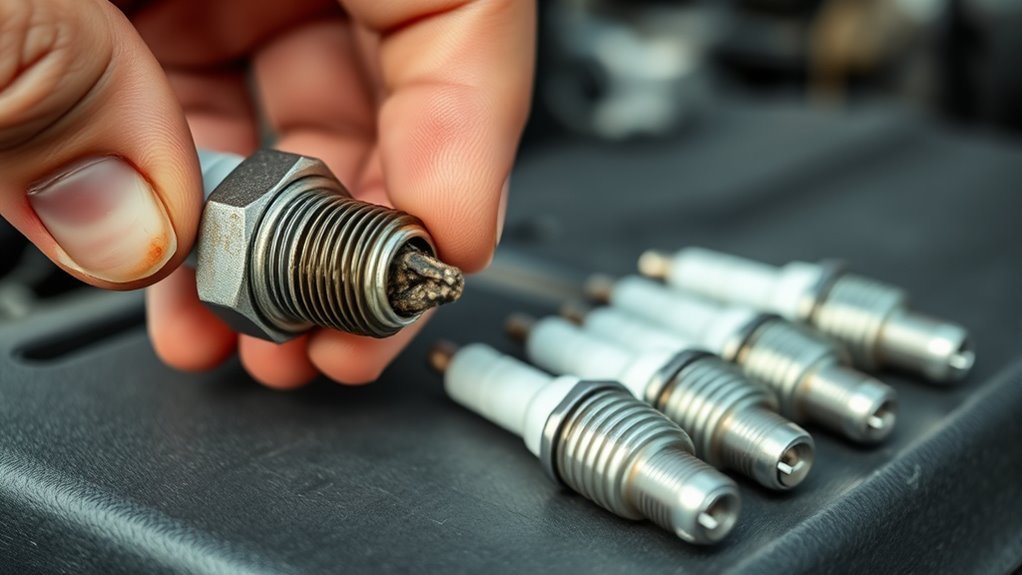

You need to change spark plugs regularly because worn plugs cause misfires, rough idling, and reduced fuel efficiency, which lowers engine power and increases emissions. Fresh spark plugs guarantee strong, consistent ignition, optimizing combustion and improving mileage.
Neglecting spark plug maintenance can lead to costly repairs and engine damage. Replacement intervals vary by plug type and driving conditions, so following manufacturer guidelines is critical.
Understanding spark plug types and maintenance can help you maximize performance and savings. Keeping up with regular spark plug changes ensures your engine runs smoothly and efficiently.
Key Takeaways
- Changing spark plugs ensures efficient ignition for complete combustion, boosting engine performance and power output.
- Worn spark plugs cause misfires, rough idling, and reduced fuel efficiency, negatively affecting drivability and fuel costs.
- Regular replacement prevents ignition system damage and costly repairs related to poor combustion and engine stalls.
- Different spark plug types and materials offer varying longevity, with iridium plugs lasting up to 100,000 miles.
- Properly gapped and installed spark plugs maintain optimal engine timing and reduce harmful exhaust emissions.
How Spark Plugs Impact Engine Power and Efficiency
Because spark plugs ignite the air-fuel mixture in your engine’s combustion chamber, their condition directly affects engine power and efficiency.
When spark plug performance declines due to wear or fouling, the spark weakens, leading to incomplete combustion. This incomplete combustion reduces fuel utilization, causing a drop in engine performance and increased emissions.
You’ll notice your engine struggles to deliver peak power, especially under load or acceleration.
Maintaining high spark plug performance guarantees a consistent, strong spark that promotes thorough combustion, maximizing energy output from each fuel charge.
High-performing spark plugs ensure strong ignition for efficient combustion and optimal engine energy output.
Additionally, efficient spark plugs help sustain stable engine operation, improving fuel economy and reducing misfires.
Signs Your Spark Plugs Need Changing
Although spark plugs are designed to last for thousands of miles, you’ll need to replace them once you notice specific symptoms indicating wear or malfunction. Monitoring your spark plug lifespan is vital to maintaining engine performance.
Common signs include engine misfire, rough idling, and reduced fuel efficiency. An engine misfire occurs when the spark plug fails to ignite the air-fuel mixture properly, causing hesitation or jerking during acceleration. You might also experience difficulty starting the engine or a decrease in overall power output.
Excessive exhaust emissions and poor throttle response further indicate worn spark plugs. Regularly inspecting and replacing spark plugs within their recommended lifespan prevents these issues, ensuring ideal combustion and engine reliability.
Staying attentive to these signs helps you avoid costly repairs and maintain efficient vehicle operation.
What Happens When Your Spark Plugs Wear Out
When your spark plugs wear out, they fail to generate the consistent, strong spark needed to ignite the air-fuel mixture in the combustion chamber. This leads to incomplete combustion, causing misfires and reduced engine efficiency.
Over time, the spark plug lifespan shortens due to electrode erosion and fouling, accelerating performance degradation.
| Symptom | Cause | Effect |
|---|---|---|
| Engine Misfire | Weak/Irregular Spark | Rough idling, loss of power |
| Increased Fuel Use | Incomplete Combustion | Reduced fuel efficiency |
| Hard Starts | Poor Ignition | Delayed engine startup |
Recognizing these outcomes helps you maintain peak engine performance and prevents further mechanical issues related to worn spark plugs.
The Risks of Ignoring Spark Plug Maintenance
Neglecting spark plug maintenance can lead to significant engine problems that compromise both performance and safety. When you ignore recommended maintenance schedules, you risk reduced spark plug longevity, which causes inefficient combustion.
This inefficiency results in poor fuel economy, increased emissions, and rough idling. Over time, worn spark plugs can trigger engine misfires, leading to potential damage in the ignition system and catalytic converter.
Additionally, neglecting maintenance increases the likelihood of starting difficulties and stalls, jeopardizing your safety on the road. By adhering to proper maintenance schedules, you guarantee consistent spark plug function and prevent premature wear.
Staying proactive protects your engine’s health, maximizes spark plug longevity, and maintains peak vehicle performance without costly repairs or unexpected breakdowns.
When to Replace Spark Plugs Based on Mileage and Usage
You should replace spark plugs based on the manufacturer’s recommended mileage intervals, typically between 30,000 and 100,000 miles depending on the type.
Driving conditions like frequent stop-and-go traffic, extreme temperatures, or dusty environments can accelerate wear and require earlier replacement.
Monitoring these factors helps maintain peak engine performance and fuel efficiency.
Mileage-Based Replacement Intervals
Manufacturers typically recommend replacing spark plugs every 30,000 to 100,000 miles, depending on the type and engine usage. This broad range accounts for mileage factors such as spark plug material—copper, platinum, or iridium—and engine design.
You should monitor the replacement frequency based on your vehicle’s specifications, found in the owner’s manual, to maintain peak engine performance. For example, copper plugs require more frequent changes around the 30,000-mile mark, while iridium plugs can last up to 100,000 miles.
Adhering to these intervals guarantees consistent ignition efficiency, fuel economy, and reduced emissions. Tracking mileage factors precisely helps prevent premature wear or misfires, safeguarding engine health.
Regular inspection combined with mileage-based replacement intervals will keep your spark plugs functioning effectively throughout their service life.
Effects of Driving Conditions
Although mileage provides a general guideline for spark plug replacement, driving conditions greatly influence their wear and performance. If you frequently drive in severe conditions, such as stop-and-go traffic, extreme temperatures, or dusty environments, your spark plugs degrade faster.
Weather impacts, including cold starts in winter or high heat in summer, increase electrode erosion and fouling risks. Additionally, short trips prevent plugs from reaching peak operating temperature, causing carbon buildup.
To maintain engine efficiency, inspect spark plugs more frequently under harsh driving conditions and consider replacing them earlier than the standard interval.
Monitoring how you drive and the environment you operate in helps you determine the ideal replacement schedule, ensuring consistent ignition performance and preventing misfires or reduced fuel economy.
How to Check Spark Plugs Yourself
Performing a thorough inspection of your spark plugs requires just a few essential tools and a systematic approach.
Start by gathering the proper spark plug tools, such as a socket wrench with a spark plug socket, a gap gauge, and a wire brush.
Then, carefully remove each spark plug for inspection. Focus on signs of wear, fouling, or damage to assess performance accurately.
Key steps for a precise spark plug inspection include:
Verify the gap using a feeler gauge to guarantee it meets manufacturer specifications.
Examine the electrode and insulator for deposits or erosion.
Check for cracks or carbon buildup on the ceramic insulator.
Inspect the metal shell for corrosion or damage.
Clean or replace spark plugs based on inspection results to maintain engine efficiency.
What to Expect During a Spark Plug Replacement
When you replace spark plugs, you’ll start by carefully inspecting and removing the old ones to avoid damaging the threads.
Next, you’ll install new plugs with the correct gap and torque specifications to guarantee peak performance.
Finally, testing the engine confirms the replacement was successful and the ignition system is functioning properly.
Inspection And Removal
Before removing the spark plugs, you’ll need to carefully inspect their condition to diagnose engine performance issues.
Locate each spark plug using your vehicle’s manual to identify precise spark plug locations. Use specialized spark plug tools, such as a spark plug socket and extension, to access and remove them without causing damage.
During inspection, check for electrode wear or rounding, deposits indicating fuel or oil issues, cracks or physical damage to the ceramic insulator, proper gap measurement, and signs of overheating or fouling.
This thorough inspection helps you determine whether replacement is necessary or if other engine repairs are needed.
Proper removal minimizes the risk of damaging threads or connectors, ensuring a smooth progression to the next maintenance step.
Installation And Testing
Begin by carefully threading each new spark plug into its cylinder by hand to avoid cross-threading and guarantee proper seating. Use a torque wrench to tighten to manufacturer specifications, following precise installation techniques.
After installation, proceed with testing procedures to confirm functionality and engine performance. Testing includes checking ignition timing, resistance, and spark quality.
| Step | Action |
|---|---|
| 1. Threading | Hand-thread spark plug |
| 2. Torque | Tighten to spec with wrench |
| 3. Resistance Test | Measure with multimeter |
| 4. Spark Test | Verify ignition spark quality |
How Changing Spark Plugs Saves Fuel and Money
Spark plugs play a critical role in your vehicle’s combustion process by igniting the air-fuel mixture efficiently. When spark plugs wear out, misfires increase, reducing fuel efficiency and causing incomplete combustion.
Changing spark plugs restores peak ignition timing, improving engine performance and reducing fuel consumption. This leads to tangible cost savings by lowering your fuel expenses and preventing costly repairs caused by engine strain.
Replacing spark plugs boosts engine efficiency, cuts fuel use, and saves money by avoiding expensive repairs.
Benefits of changing spark plugs for fuel efficiency and cost savings include:
- Enhanced combustion efficiency
- Reduced engine misfires
- Improved throttle response
- Lower emissions and fuel waste
- Prolonged engine lifespan
Different Types of Spark Plugs and Their Benefits
Although all spark plugs serve the same fundamental purpose, choosing the right type for your engine can greatly affect performance and longevity. You’ll encounter several spark plug types: copper, platinum, iridium, and double platinum.
Copper plugs offer excellent conductivity but wear faster, making them suitable for older engines. Platinum plugs provide improved durability and consistent performance due to their resistance to electrode erosion.
Iridium plugs, known for superior hardness, deliver the best longevity and stable ignition, boosting fuel efficiency and power output.
Double platinum plugs enhance durability on waste spark ignition systems by having platinum on both electrodes.
Understanding these spark plug types helps you select the ideal plug, ensuring you harness the full performance benefits your engine design offers.
Tips for Choosing the Right Spark Plugs for Your Car
When selecting spark plugs, you need to evaluate the type—copper, platinum, or iridium—each offering different durability and performance.
Pay close attention to material composition, as it affects heat range and longevity.
Also, verify compatibility with your engine’s design and manufacturer specifications to maintain peak function.
Types of Spark Plugs
Choosing the right spark plugs requires understanding the different types available and how they match your engine’s specifications. Automotive plugs vary by material and heat range, impacting performance and durability.
You’ll encounter:
- Copper plugs: Standard plugs with excellent conductivity but shorter lifespan.
- Platinum plugs: Offer better wear resistance and longer service intervals.
- Iridium plugs: High-performance plugs known for durability and consistent spark.
- Cold plugs: Designed for high-performance engines running at high temperatures.
- Hot plugs: Suitable for engines with lower operating temperatures to prevent fouling.
Performance plugs often combine these features for optimized ignition. Selecting the proper type guarantees efficient combustion, prevents misfires, and maintains engine health.
Always consult your vehicle’s manual or a professional to match spark plug type, heat range, and spacing to your engine’s requirements.
Material Differences
Since spark plug materials directly affect ignition efficiency and durability, understanding their differences is essential for making the right choice.
Copper plugs offer excellent electrical conductivity, providing strong sparks and reliable ignition. However, their electrodes wear faster due to copper’s softness, requiring more frequent replacements.
On the other hand, iridium plugs feature a much harder electrode material, greatly enhancing durability and maintaining consistent performance over time. Iridium plugs also operate efficiently at higher temperatures, improving fuel combustion and engine responsiveness.
While copper plugs are generally more affordable and suitable for older engines or standard driving conditions, iridium plugs benefit modern engines demanding longevity and precision.
Compatibility Considerations
Although spark plug materials play an essential role, ensuring compatibility with your vehicle’s engine specifications is equally important for peak performance.
When selecting spark plugs, you must verify spark plug specifications against your vehicle’s requirements to avoid misfires or engine damage.
Vehicle compatibility hinges on precise factors like thread size, heat range, and electrode gap. Ignoring these can reduce efficiency and increase wear.
Consider these key compatibility factors:
- Thread size and reach must match engine design.
- Heat range should suit your engine’s operating temperature.
- Electrode gap affects combustion efficiency.
- Resistor type influences ignition system compatibility.
- Manufacturer recommendations often reflect ideal spark plug specifications.
Frequently Asked Questions
Can Bad Spark Plugs Affect My Car’s Emissions?
Yes, bad spark plugs can impair your emission control system by causing incomplete combustion. This increases harmful emissions and reduces efficiency.
Monitoring spark plug lifespan guarantees peak engine performance and helps maintain strict emission control standards.
How Do Spark Plugs Affect Cold Weather Starting?
Like a clockwork mechanism, your spark plugs guarantee ignition efficiency, essential for cold weather performance. When they’re worn, starting becomes sluggish as weak sparks struggle to ignite the cold, dense air-fuel mixture effectively.
Are Spark Plugs the Same for All Engine Types?
No, spark plug types differ based on engine compatibility. You’ll need to select plugs designed specifically for your engine’s requirements, considering factors like heat range, size, and electrode material.
This ensures peak performance and longevity.
Can I Use Spark Plug Additives Instead of Replacing Them?
You can use spark plug additives for temporary performance enhancement, but they won’t replace the need for spark plug longevity. Over time, deposits and wear require actual spark plug replacement to maintain ideal engine efficiency and reliability.
Do Spark Plugs Need Replacing After Engine Repairs?
You should replace spark plugs after engine repairs if their lifespan is near or engine performance drops. Damaged or worn plugs can impair ignition, so checking and possibly replacing them guarantees peak performance and reliability.
Conclusion
Changing your spark plugs is like giving your engine a fresh set of lungs—boosting power, efficiency, and fuel economy. Ignoring worn plugs can lead to misfires, reduced performance, and costly repairs. By replacing them at the right mileage, you guarantee ideal combustion and prolong engine life.
Choose the right type carefully, and expect a straightforward replacement process. Staying on top of spark plug maintenance saves you money and keeps your engine running at peak precision.
Regularly changing your spark plugs is essential for maintaining optimal engine performance and efficiency.