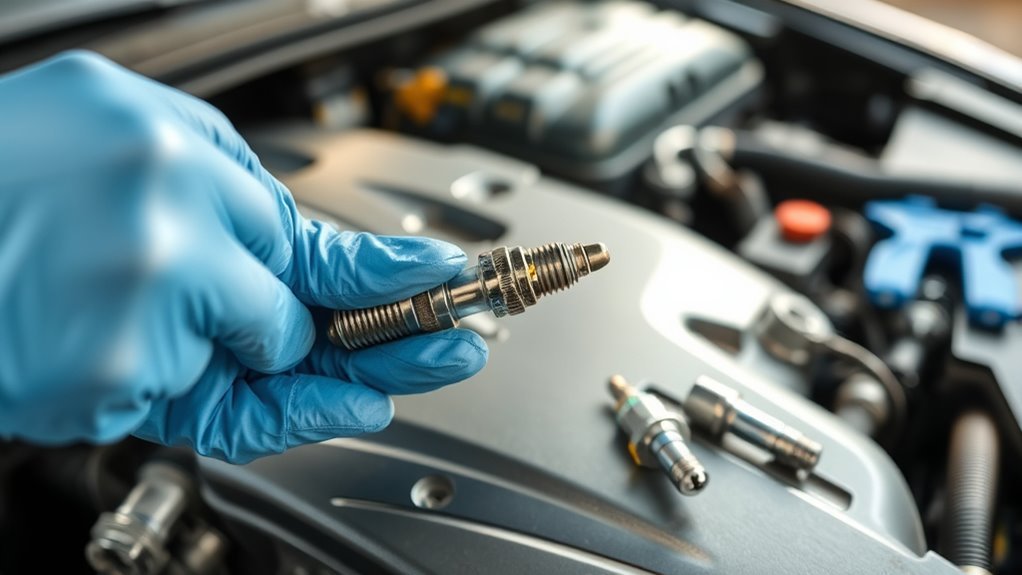

You should change your spark plugs based on the type and manufacturer’s recommendations, usually between 30,000 to 100,000 miles. The frequency depends largely on the spark plug material and vehicle specifications.
Copper plugs require replacement around 20,000-30,000 miles, while platinum and iridium types last longer, up to 100,000 miles. Regular inspection helps detect wear or deposits that affect performance.
Proper replacement enhances fuel efficiency and prevents engine issues. If you want to understand the specific signs and tools for maintenance, keep exploring further details.
Key Takeaways
- Replace spark plugs every 30,000 to 100,000 miles, based on plug type and vehicle manufacturer recommendations.
- Copper plugs typically require replacement every 20,000 to 30,000 miles, while iridium plugs last around 100,000 miles.
- Inspect spark plugs regularly for wear, deposits, and performance issues to determine if earlier replacement is needed.
- Follow the vehicle’s owner manual for precise spark plug replacement intervals specific to your engine model.
- Timely spark plug replacement improves fuel efficiency, engine performance, and reduces misfires and emissions.
When and How Often to Change Spark Plugs
You should change your spark plugs every 30,000 to 100,000 miles, depending on the type and condition of the plugs as well as your vehicle’s manufacturer recommendations.
The spark plug lifespan varies greatly based on materials and engine demands, which influences the ideal replacement frequency.
Regular inspection is vital to monitor electrode wear, deposit buildup, and gap erosion, all of which degrade ignition efficiency.
Neglecting timely replacement can lead to misfires, reduced fuel economy, and engine performance issues.
Always consult your owner’s manual or service guide to determine the precise interval tailored to your vehicle.
Adhering to specified replacement frequency not only guarantees reliable engine operation but also prevents potential damage caused by worn or fouled spark plugs.
Proper timing protects the ignition system and maintains ideal combustion.
Spark Plug Types and Replacement Intervals
Understanding the recommended replacement intervals requires recognizing the different types of spark plugs available.
Knowing spark plug types is key to understanding their recommended replacement intervals.
Spark plug materials and designs directly influence their durability and performance, affecting when you should replace them.
Here’s a concise overview:
- Copper spark plugs: Traditional design with a copper core, typically replaced every 20,000 to 30,000 miles due to faster wear.
- Platinum spark plugs: Feature a platinum tip for longer life, usually lasting 60,000 to 100,000 miles.
- Iridium spark plugs: Utilize a durable iridium alloy, offering the longest lifespan of around 100,000 miles or more.
- Double platinum or multi-electrode designs: Enhanced durability and improved ignition efficiency, often matching iridium plugs in longevity.
Signs Your Spark Plugs Need Replacing
You’ll notice your engine misfiring, rough idling, or reduced fuel efficiency when spark plugs start failing.
A thorough visual inspection can reveal worn electrodes, carbon deposits, or oil fouling.
Recognizing these signs early helps maintain peak engine performance and prevents further damage.
Engine Performance Issues
Engine misfires, rough idling, and reduced acceleration often indicate that your spark plugs are failing. When spark plugs wear out, they ignite the air-fuel mixture less effectively, causing incomplete combustion. This leads to engine misfires, which directly impact fuel efficiency and overall engine performance.
You might also notice increased fuel consumption as your engine compensates for inefficient ignition.
Watch for these performance issues:
- Frequent engine misfires during acceleration or at idle
- Noticeable drop in fuel efficiency without other causes
- Rough or uneven idling, causing vibrations or shaking
- Decreased responsiveness and sluggish acceleration
Addressing spark plug issues promptly helps maintain ideal combustion, preserving fuel economy and preventing further engine damage.
If you observe these signs, it’s time to inspect and possibly replace your spark plugs.
Visual Spark Plug Inspection
Anyone performing vehicle maintenance should regularly inspect spark plugs visually to identify signs of wear or damage. Understanding spark plug anatomy, comprising the center electrode, ground electrode, insulator, and metal shell, helps you pinpoint defects effectively.
Use inspection techniques such as checking for electrode erosion, carbon deposits, oil fouling, or cracks in the ceramic insulator. Excessive electrode wear or rounded edges indicate diminished spark efficiency, signaling replacement.
Black, sooty deposits suggest improper combustion or fuel mixture issues, while oily residue points to engine oil leaks. Cracks or chips in the insulator compromise insulation, causing misfires.
How Spark Plug Replacement Boosts Engine Performance
Although many drivers overlook spark plug maintenance, replacing them regularly plays a critical role in enhancing your engine’s combustion efficiency. Fresh spark plugs guarantee consistent ignition timing, which directly improves combustion quality and overall engine efficiency.
Regular spark plug replacements are crucial for maintaining optimal engine combustion and efficiency.
When you replace worn plugs, you’ll experience:
- Enhanced fuel combustion, reducing unburned fuel and emissions
- Smoother engine idling and acceleration responsiveness
- Improved power output due to efficient spark generation
- Reduced engine misfires and rough starts
These benefits arise because new spark plugs provide a stronger, more reliable spark, promoting complete fuel-air mixture ignition. This precision prevents energy loss and maintains ideal combustion conditions, helping your engine run cleaner and more efficiently.
What Affects Spark Plug Lifespan?
Because various factors influence spark plug durability, understanding what affects their lifespan helps you optimize replacement intervals.
Primarily, spark plug materials greatly impact longevity. Iridium and platinum plugs offer superior wear resistance compared to copper, extending service life.
Additionally, engine conditions play a critical role; frequent short trips increase deposits, accelerating electrode wear, while high engine temperatures can cause overheating and premature failure.
Contaminants from oil leaks or fuel additives also degrade spark plugs faster.
Furthermore, improper ignition timing and lean air-fuel mixtures elevate stress on the plugs, reducing lifespan.
Tools and Tips for Replacing Spark Plugs Yourself
When replacing spark plugs yourself, having the right tools and following precise procedures guarantees a successful job without damaging engine components.
Essential spark plug tools include a spark plug socket with a rubber insert to protect the plug, a torque wrench for accurate tightening, and a gap gauge to ascertain proper electrode spacing.
Follow these replacement tips to optimize performance:
Disconnect the battery to prevent electrical shorts.
Clean the spark plug well area to avoid debris entering the combustion chamber.
Apply anti-seize compound sparingly on the spark plug threads.
Tighten plugs to manufacturer-specified torque settings to prevent overtightening or loosening.
Using the correct tools and adhering to these replacement tips guarantees longevity and engine efficiency after your DIY maintenance.
Mistakes to Avoid When Changing Spark Plugs
Having the right tools and following proper procedures is only part of the process; avoiding common mistakes during spark plug replacement is equally important to guarantee peak engine performance and prevent damage.
One frequent error is over-tightening plugs, which can strip threads or crack the ceramic insulator. Conversely, under-tightening risks poor sealing and misfires. You should always use a torque wrench and adhere to the manufacturer’s specifications for installation techniques.
Over-tightening can damage plugs; under-tightening causes misfires. Always use a torque wrench and follow specs.
Another common error is neglecting to check or adjust the spark plug gap, which affects ignition efficiency. Additionally, avoid contaminating the spark plug tip with oil or debris, as this compromises performance.
Finally, don’t reuse old spark plugs; always replace with new ones to maintain reliability and ideal combustion.
When to Seek Professional Spark Plug Replacement
If your engine misfires persist after a spark plug change or you notice unusual wear patterns, it’s time to seek professional help.
Choosing a qualified technician guarantees accurate diagnosis and proper installation, preventing further engine damage.
Always verify certifications and experience before entrusting your vehicle to a specialist.
Signs You Need Help
Although some spark plug issues can be diagnosed and fixed on your own, certain symptoms indicate you should seek professional replacement. Proper spark plug maintenance requires precise engine troubleshooting, which might exceed your tools or expertise.
Watch for these signs that signal professional help is necessary:
- Persistent engine misfires despite routine spark plug checks
- Difficulty starting the engine or frequent stalling
- Noticeable decrease in fuel efficiency and power output
- Engine warning lights related to ignition or emissions systems
If you experience any of these, a technician can accurately diagnose and replace spark plugs, ensuring peak engine performance and preventing further damage.
Prompt professional intervention saves time and protects your engine’s long-term health.
Choosing Qualified Technicians
Where should you turn when professional spark plug replacement is necessary? Always seek certified technicians who follow expert recommendations to guarantee peak engine performance.
Certified technicians possess the specialized training and tools required to accurately assess spark plug wear and perform replacements without damaging the ignition system. They adhere to manufacturer specifications regarding torque settings and gap measurements, which are critical for maintaining fuel efficiency and preventing misfires.
By choosing qualified professionals, you minimize the risk of installation errors that could lead to costly repairs. Additionally, certified technicians can identify underlying issues contributing to premature spark plug failure, providing extensive diagnostics.
Trusting experts guarantees that your vehicle receives precise, reliable service, extending the lifespan of your spark plugs and supporting overall engine health.
Frequently Asked Questions
Can Bad Spark Plugs Cause Poor Fuel Economy?
Yes, bad spark plugs reduce fuel efficiency by disrupting combustion. If you ignore the spark plug lifespan, your engine misfires, wasting fuel and lowering performance.
Regularly replacing plugs maintains ideal fuel economy and engine function.
How Do Spark Plugs Affect Engine Emissions?
Think of spark plugs as the engine’s heartbeat; worn plugs disrupt combustion, raising emissions. Maintaining your spark plug lifespan guarantees precise ignition timing, optimizing engine performance and reducing harmful pollutants released into the atmosphere effectively.
What Materials Are Spark Plugs Made From?
Spark plugs use ceramic insulators for heat resistance and durability. Their electrode materials commonly include copper, platinum, or iridium, chosen for conductivity and wear resistance.
This combination ensures efficient ignition and long-lasting performance in your engine.
Are Spark Plug Gaps Adjustable or Fixed?
You’ll find spark plug gaps can be either adjustable gaps or fixed gaps. Adjustable gaps let you fine-tune the distance for peak performance, while fixed gaps come pre-set and can’t be altered without risking damage.
Can Old Spark Plugs Damage the Ignition Coil?
Yes, old spark plugs can cause ignition coil wear because as their spark plug lifespan ends, they increase resistance and misfire risk. This forces the ignition coil to work harder, accelerating its deterioration and potential failure.
Conclusion
Now that you know when and how often to change your spark plugs, the real question is—are you ready to take control of your engine’s performance?
Ignoring worn plugs can silently erode efficiency and power, but timely replacement puts you back in the driver’s seat. Don’t wait for obvious signs; staying ahead means smoother starts and better fuel economy.
So, will you act before your spark plugs demand attention, or risk costly damage down the road? Remember, knowing how often to change spark plugs is key to keeping your vehicle running smoothly and efficiently.