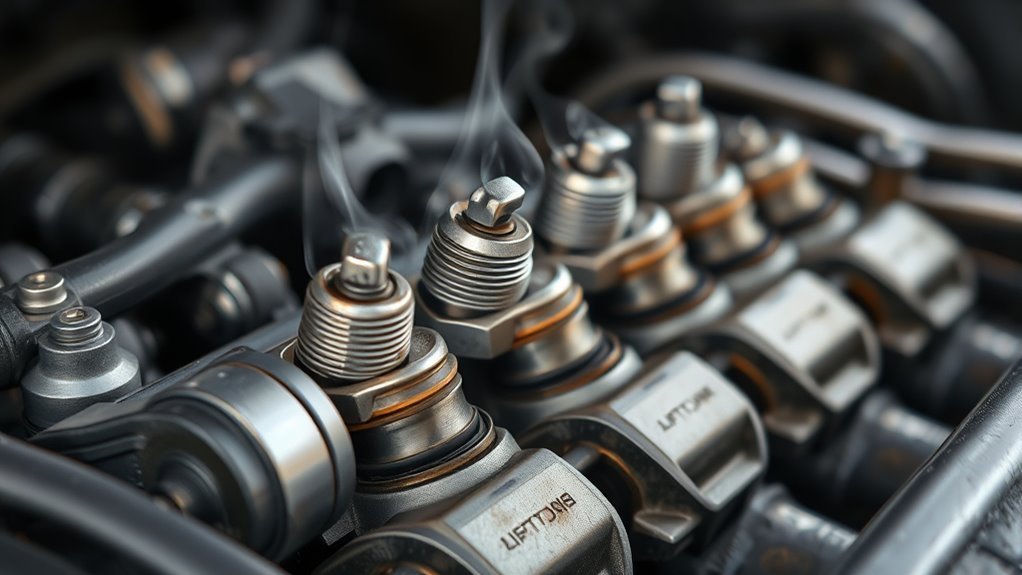

Yes, bad spark plugs can cause overheating in your engine. When spark plugs fail, they disrupt the combustion process by causing misfires and incomplete fuel burning. This inefficiency forces your engine to work harder than normal, which generates excess heat.
As a result, the increased workload and heat put additional strain on the cooling system components. Misfires also create localized hotspots within the engine, further raising temperatures and increasing the risk of damage.
Recognizing the early signs of bad spark plugs and maintaining them properly is essential to prevent overheating and other engine problems. Keep reading to learn how these issues develop and the best ways to address them effectively.
Key Takeaways
- Bad spark plugs cause incomplete fuel burning, leading to engine misfires and increased heat generation.
- Misfires force the engine to work harder, raising its operating temperature and risking overheating.
- Faulty spark plugs disrupt ignition timing, creating localized hotspots that stress the cooling system.
- Persistent misfires and uneven combustion from bad plugs increase exhaust emissions and engine strain.
- Regular spark plug maintenance prevents overheating by ensuring efficient combustion and reducing engine stress.
How Do Bad Spark Plugs Affect Engine Performance?
When your spark plugs malfunction, they disrupt the combustion process by failing to ignite the air-fuel mixture efficiently. This inefficiency directly reduces engine efficiency, leading to poor fuel combustion, misfires, and reduced power output.
You should understand that different spark plug types, such as copper, platinum, and iridium, offer varying durability and conductivity, impacting ignition quality. If your spark plugs wear out or become fouled, the ignition timing and spark intensity suffer, causing incomplete combustion.
As a result, your engine runs rough, wastes fuel, and emits higher pollutants. Maintaining ideal spark plug function guarantees consistent combustion, maximizes engine efficiency, and preserves smooth vehicle operation.
Consequently, timely inspection and replacement of spark plugs according to manufacturer specifications are essential to prevent performance degradation.
Why Can Bad Spark Plugs Cause Engine Overheating?
Although bad spark plugs primarily affect combustion, they can also lead to engine overheating by causing incomplete fuel burning and increased engine strain.
When a spark plug misfire occurs, the air-fuel mixture doesn’t ignite properly, resulting in unburned fuel entering the exhaust system. This incomplete combustion forces the engine to work harder to maintain power output, increasing heat generation within the combustion chamber.
Additionally, misfires disrupt the engine’s timing and efficiency, causing localized hotspots that elevate overall engine temperature.
Over time, this excess heat can stress cooling system components and reduce engine longevity.
What Are the Signs of Spark Plug–Related Overheating?
How can you identify engine overheating caused by faulty spark plugs? Key overheating symptoms often include engine misfires, rough idling, and increased exhaust emissions. These signs suggest improper combustion, which can raise engine temperature.
During a spark plug inspection, you might notice deposits or electrode wear, indicating inefficient ignition. Recognizing these symptoms early helps prevent severe overheating damage.
| Symptom | Explanation |
|---|---|
| Engine Misfires | Uneven combustion raises engine temperature |
| Rough Idling | Inconsistent spark delivery stresses the engine |
| Increased Emissions | Incomplete fuel burn contributes to overheating |
How Can You Check If Your Spark Plugs Are Faulty?
If your engine shows signs of overheating, you’ll want to inspect your spark plugs carefully to determine if they’re the cause.
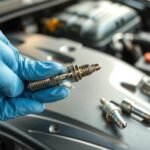
Begin with a thorough spark plug inspection: remove each plug and examine its electrode and insulator for wear, deposits, or damage.
Look for signs like fouling, erosion, or abnormal coloring, which indicate combustion issues.
Conduct a faulty spark analysis by testing each plug’s resistance with a multimeter to detect internal breakdowns.
Additionally, check for consistent spark by using a spark tester while cranking the engine.
Any irregularities in spark intensity or timing suggest faulty plugs.
Document your findings to correlate plug condition with engine performance.
This systematic approach guarantees accurate diagnosis before considering replacements or further engine diagnostics.
How to Replace Spark Plugs to Fix Overheating
Start by gathering the necessary tools: a spark plug socket, ratchet, gap gauge, and anti-seize lubricant.
Begin by disconnecting the battery to guarantee safety.
Remove the ignition coil or spark plug wire carefully, then use the spark plug socket attached to the ratchet to unscrew the old spark plug.
Inspect the removed spark plug for wear or damage.
Before installing the new spark plug, check and adjust the gap with the gap gauge to match manufacturer specifications.
Apply a small amount of anti-seize lubricant to the spark plug threads to prevent seizing.
Screw in the new spark plug by hand initially to avoid cross-threading, then tighten it with the ratchet to the recommended torque.
Reattach the ignition coil or wire, reconnect the battery, and start the engine to confirm the overheating issue is resolved.
How to Prevent Engine Overheating by Maintaining Spark Plugs
Regularly maintaining your spark plugs plays an essential role in preventing engine overheating by ensuring efficient combustion and excellent engine performance.
To perform effective spark plug maintenance, inspect the plugs for wear, carbon buildup, or electrode erosion every 30,000 miles or as specified by your vehicle’s manufacturer.
Clean or replace them promptly to maintain optimal ignition timing and combustion quality. Faulty spark plugs increase combustion chamber heat, straining the engine cooling system.
Additionally, verify the correct spark plug gap to avoid misfires that generate excess heat.
Maintaining ignition system components, including spark plug wires, supports consistent spark delivery, further safeguarding against overheating.
Other Causes of Engine Overheating Besides Spark Plugs
Although faulty spark plugs are a common cause of engine overheating, several other factors can contribute to this issue. One primary cause is coolant leaks, which reduce the coolant level and impair the system’s ability to dissipate heat effectively.
Even minor leaks can lead to significant temperature increases if not addressed promptly. Additionally, radiator issues, such as clogged fins, damaged tubes, or malfunctioning fans, can hinder heat exchange, causing the engine to overheat.
Minor leaks and radiator problems can quickly raise engine temperature and lead to overheating.
A compromised radiator fails to maintain ideal coolant temperature, increasing thermal stress on engine components.
To prevent overheating, you should regularly inspect the cooling system for leaks and verify the radiator is clean and functioning properly.
Addressing these issues early helps maintain engine temperature within safe operating limits.
When Should You See a Mechanic About Overheating?
How do you know when engine overheating requires professional attention? If you notice persistent overheating symptoms like a rising temperature gauge, steam from the hood, or a warning light, you should promptly seek mechanic advice.
Immediate inspection is essential if the engine overheats repeatedly despite basic checks such as coolant level and radiator condition. Avoid driving the vehicle if overheating worsens or is accompanied by unusual noises or loss of power.
A certified mechanic will diagnose underlying issues, whether related to spark plugs, cooling system failures, or thermostat malfunction, using specialized tools.
Timely professional intervention prevents severe engine damage and costly repairs. Don’t delay contacting a mechanic if overheating symptoms persist beyond initial troubleshooting or if you’re uncertain about the cause.
Frequently Asked Questions
Can Bad Spark Plugs Affect Fuel Efficiency?
Yes, bad spark plugs can reduce fuel efficiency by causing incomplete combustion. Regular spark plug maintenance guarantees an ideal fuel mixture, improving engine performance and preventing wasted fuel.
This ultimately saves you money and reduces emissions.
Do Bad Spark Plugs Cause Difficulty Starting the Engine?
Yes, you’ll experience difficulty starting the engine when bad spark plugs disrupt ignition timing, reducing engine performance by up to 30%.
Faulty plugs cause weak sparks, leading to misfires and delayed combustion during startup.
How Often Should Spark Plugs Be Replaced in High-Mileage Vehicles?
You should replace spark plugs every 30,000 to 50,000 miles for ideal spark plug lifespan in high mileage maintenance. Regular inspections guarantee performance, prevent misfires, and maintain fuel efficiency, especially as your vehicle ages.
Are There Different Spark Plugs for Different Engine Types?
Yes, different spark plug types exist to match engine compatibility. You’ll find variations in heat range, material, and size to guarantee peak performance and durability for specific engines.
Always select plugs designed for your vehicle.
Can Using the Wrong Spark Plugs Damage the Engine?
Yes, using the wrong spark plug types can damage your engine. It reduces engine performance, causes misfires, and may increase wear.
Always match spark plugs to your engine specifications for ideal, reliable operation and longevity.
Conclusion
You might not expect tiny spark plugs to cause your engine to overheat like a mini furnace, but they do. Faulty plugs disrupt combustion, forcing your engine to work harder and run hotter—ironically turning a small, simple part into a major heat source.
So, keep those plugs in check to avoid your engine feeling the heat. After all, ignoring spark plugs is the quickest way to turn cool performance into a costly meltdown.
In conclusion, yes, bad spark plugs can cause overheating, making it essential to maintain them for optimal engine health.