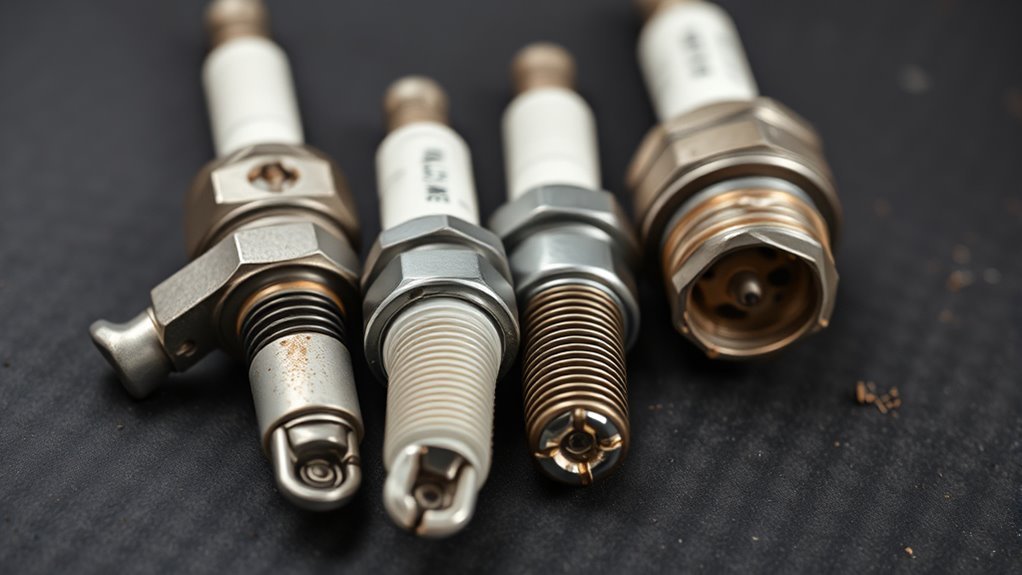

You’ll know spark plugs are bad if your engine misfires, idles roughly, hesitates during acceleration, or struggles to start. These symptoms are clear indicators that your spark plugs may need attention.
You might also notice decreased fuel efficiency and increased fuel consumption. Inspect the plugs for worn electrodes, heavy deposits, or improper gaps. These signs indicate incomplete combustion and can lead to reduced engine power and higher emissions.
Maintaining spark plugs regularly guarantees peak performance. Keep going to understand how to inspect, maintain, and troubleshoot them properly.
Key Takeaways
- Notice engine misfires, rough idling, or hesitation during acceleration as signs of bad spark plugs.
- Check for decreased fuel efficiency and increased fuel consumption indicating incomplete combustion.
- Inspect spark plugs visually for worn electrodes, excessive carbon buildup, or damaged insulators.
- Experience difficulty starting the engine or prolonged cranking times due to ignition misfires.
- Test spark plug gap with a gauge and use a multimeter to verify proper resistance and spark quality.
Common Symptoms of Bad Spark Plugs
Although spark plugs are small components, they play an essential role in your engine’s performance, and when they begin to fail, you’ll notice specific symptoms.
A reduced spark plug lifespan typically results in misfires, rough idling, and decreased fuel efficiency.
You might also experience hesitation during acceleration or difficulty maintaining consistent engine speed. These signs indicate that the plugs are no longer providing maximum spark, which compromises combustion quality.
Paying attention to these symptoms helps you identify when the spark plugs need replacement to restore proper engine function. Ignoring signs of deterioration can lead to further engine damage and reduced overall performance.
Monitoring spark plug lifespan and addressing issues promptly guarantees your engine runs smoothly and efficiently.
Why Your Car Struggles to Start With Bad Spark Plugs
When your spark plugs are bad, ignition misfires cause delays in starting your engine.
You’ll notice reduced spark energy, which disrupts proper fuel combustion.
This inefficiency makes your car struggle to turn over and run smoothly at startup.
Ignition Misfires Cause Delay
Since spark plugs generate the electrical spark needed for combustion, faulty plugs often cause ignition misfires that delay engine startup.
When spark plugs malfunction, the ignition timing can become inconsistent, disrupting the precise moment the spark ignites the air-fuel mixture.
This mistiming leads to incomplete combustion cycles, causing the engine to hesitate or stall during startup. You might notice your engine cranking longer than usual or even stalling shortly after ignition due to repeated misfires.
These irregular sparks prevent the engine from reaching ideal operational speed quickly, increasing wear on your starter motor and battery.
Addressing bad spark plugs promptly restores proper ignition timing, ensuring smooth combustion and eliminating startup delays caused by ignition misfires and engine stalling.
Reduced Spark Energy
A key reason your car struggles to start with bad spark plugs is reduced spark energy.
Spark plugs generate the electrical spark needed to ignite the air-fuel mixture within the combustion chamber. Over time, corrosion, electrode wear, or carbon buildup diminish their ability to produce a strong spark.
Different spark plug types, such as copper, platinum, or iridium, vary in durability and conductivity, affecting spark energy output.
When spark plugs degrade, the ignition system must work harder, often delivering weaker sparks insufficient for consistent ignition.
This weak spark delays engine start, especially in cold conditions or under load.
Diagnosing reduced spark energy involves inspecting spark plug condition and verifying ignition system performance, ensuring your vehicle maintains reliable starting capability and efficient combustion.
Fuel Combustion Issues
Reduced spark energy directly impacts how efficiently fuel combusts within the engine. When your spark plugs are bad, they fail to ignite the fuel mixture at the correct moment, disrupting engine timing.
This incomplete combustion leads to a weak or inconsistent spark, causing your car to struggle during startup. The improper ignition also results in unburned fuel, reducing engine efficiency and increasing emissions.
You’ll notice hesitation or rough idling because the fuel mixture isn’t ignited thoroughly, which compromises power delivery.
Fundamentally, faulty spark plugs prevent the precise spark your engine needs to initiate combustion properly.
Addressing spark plug wear restores ideal fuel mixture ignition and engine timing, ensuring your vehicle starts smoothly and performs reliably.
How to Inspect Spark Plugs for Wear and Damage
Inspecting spark plugs for wear and damage requires a careful visual examination and understanding of key indicators.
Begin your spark plug inspection by removing the plug and checking the electrode and insulator for deposits, erosion, or cracks.
Look for wear indicators such as rounded or worn electrodes, which reduce spark efficiency. Excessive carbon buildup signals incomplete combustion, while oil fouling points to engine oil leaks.
Also, examine the insulator’s color; a light tan or grayish hue indicates normal operation, whereas white or blistered insulators suggest overheating.
Additionally, check the spark plug gap for uniformity; an uneven or widened gap can impair ignition.
When to Replace Spark Plugs Based on Mileage and Condition
You should replace spark plugs according to your vehicle’s recommended mileage intervals, typically between 30,000 and 100,000 miles depending on the type.
Pay close attention to signs of wear such as electrode erosion, deposits, or damage that can impair performance.
Also, consider how driving conditions like frequent short trips or extreme climates may accelerate the need for replacement.
Recommended Replacement Intervals
Most manufacturers recommend replacing spark plugs every 30,000 to 100,000 miles, depending on the type and condition of the plugs.
The replacement frequency largely depends on the spark plug lifespan, which varies by material. Copper plugs typically last around 30,000 miles, while platinum and iridium types can exceed 100,000 miles.
To determine the ideal replacement interval, consult your vehicle’s manual and consider driving conditions. High-performance or older engines may require more frequent changes.
Even if mileage guidelines aren’t reached, inspect plugs regularly for signs of wear or deposits that could reduce efficiency.
Adhering to recommended replacement intervals guarantees consistent engine performance, fuel efficiency, and emission control.
Staying proactive with spark plug maintenance helps prevent misfires and costly repairs down the line.
Signs of Wear
Although spark plugs have recommended replacement intervals, their actual condition often dictates when they need changing. Different spark plug types, such as copper, platinum, and iridium, exhibit distinct wear patterns and lifespans.
You should inspect wear indicators such as electrode erosion, rounded edges, and gap enlargement. When the electrode wears down considerably or the gap increases beyond specifications, misfires and poor engine performance occur.
Carbon deposits or oil fouling on the insulator also signal deterioration. Mileage alone isn’t definitive; instead, assess the physical condition regularly.
If you notice signs like pitting, cracks, or heavy deposits, it’s time to replace the plugs regardless of interval. Monitoring wear indicators guarantees you maintain engine efficiency and avoid damage, tailoring replacement to actual spark plug condition rather than relying solely on mileage.
Impact of Driving Conditions
Wear patterns and physical conditions alone don’t tell the whole story when deciding the right time to replace spark plugs. You must also consider your driving habits and environmental factors. Frequent short trips, stop-and-go traffic, or aggressive acceleration accelerate spark plug wear, reducing their effective lifespan.
Conversely, consistent highway driving at steady speeds generally prolongs spark plug life. Environmental factors such as extreme temperatures, high humidity, or dusty conditions can also contribute to premature degradation.
Manufacturers typically recommend replacement intervals based on mileage, but these guidelines assume average driving conditions. If your driving habits or environment are harsher than average, you should replace spark plugs earlier, even if mileage hasn’t been reached.
Regular inspection combined with monitoring your specific conditions guarantees peak engine performance and prevents misfires caused by deteriorated spark plugs.
Tools Needed to Check and Replace Spark Plugs
Before you begin checking or replacing spark plugs, you’ll need specific tools to guarantee accuracy and safety.
Essential inspection tools include a spark plug socket with a rubber insert to securely grip the spark plug, a ratchet wrench for loosening and tightening, and a torque wrench to ascertain correct spark plug installation torque.
You’ll also want a gap gauge to measure the spark plug electrode gap precisely, as improper gaps can affect engine performance.
Additionally, having dielectric grease can help protect the spark plug boots from moisture and corrosion.
Safety equipment like gloves and safety glasses is vital to prevent injury.
Using the right spark plug inspection tools not only streamlines the process but also protects your engine’s ignition system from damage during maintenance.
How Worn Spark Plugs Affect Engine Performance
When spark plugs degrade, they directly reduce your engine’s efficiency by causing incomplete combustion and misfires.
Worn spark plugs can’t generate a strong, consistent spark, which disrupts ideal ignition timing critical for engine tuning.
Depending on the spark plug types installed—copper, platinum, or iridium—their wear characteristics vary, influencing performance differently.
Key effects of worn spark plugs on engine performance include:
- Reduced power output due to inefficient combustion cycles.
- Increased engine vibrations and rough idling caused by misfires.
- Difficulty in maintaining precise engine timing, leading to less-than-ideal throttle response.
How Faulty Spark Plugs Affect Fuel Efficiency
Although faulty spark plugs may seem like a minor issue, they directly impact your vehicle’s fuel efficiency by causing incomplete combustion.
When spark plugs fail to ignite the fuel-air mixture properly, the engine burns more fuel than necessary, increasing fuel consumption. This inefficiency means your engine has to work harder to produce the same power output, reducing overall engine efficiency.
As a result, your vehicle experiences decreased miles per gallon and higher operating costs.
Additionally, misfires caused by defective spark plugs lead to unburned fuel entering the exhaust system, further lowering fuel economy.
Maintaining ideal spark plug function guarantees precise ignition timing, which maximizes fuel combustion and sustains engine efficiency, ultimately helping you conserve fuel and reduce emissions.
Benefits of Regular Spark Plug Maintenance
Maintaining your spark plugs regularly guarantees peak engine performance and prevents issues such as misfires and rough idling.
Adhering to a strict maintenance schedule extends the spark plug lifespan, ensuring reliable ignition and combustion efficiency.
Neglecting maintenance leads to carbon buildup, electrode wear, and increased gap size, which degrade engine responsiveness.
By committing to routine spark plug care, you achieve:
- Consistent fuel economy through ideal ignition timing
- Reduced emissions due to complete fuel combustion
- Prolonged engine component life by minimizing stress and detonation
Monitoring and replacing spark plugs as per manufacturer recommendations enhances your vehicle’s performance and protects critical engine systems.
Following the maintenance schedule not only avoids unexpected breakdowns but also saves you costly repairs in the long run.
Troubleshooting Spark Plug Issues and Next Steps
If you notice symptoms like engine misfires, poor acceleration, or increased fuel consumption, it’s crucial to troubleshoot your spark plugs promptly.
Start with spark plug testing using a multimeter to check resistance; values outside the manufacturer’s range indicate a faulty plug.
Visually inspect plugs for signs of fouling, wear, or damage. Employ troubleshooting techniques such as swapping suspected bad plugs with known good ones to isolate the issue. Additionally, verify proper spark plug gap and guarantee ignition coils function correctly.
If testing confirms degradation or damage, replace the spark plugs immediately.
After replacement, reset any diagnostic trouble codes and monitor engine performance. Timely, precise troubleshooting and corrective action prevent further engine damage and maintain ideal fuel efficiency and power output.
Frequently Asked Questions
Can Bad Spark Plugs Cause Transmission Problems?
Yes, spark plug failure can indirectly cause transmission issues by disrupting engine performance, leading to misfires and poor combustion. This affects the transmission’s sensors and shifting behavior.
You should inspect spark plugs when diagnosing transmission problems.
Do Spark Plugs Affect the Car’s Emissions?
You’d think bad spark plugs could cause a volcanic eruption with emissions! Poor spark plug performance leads to incomplete combustion, increasing pollutants and causing your car to fail emissions testing.
Keep them sharp for cleaner exhaust and peak efficiency.
How Do Spark Plugs Differ Between Gasoline and Diesel Engines?
You’ll find spark plug types differ: gasoline engines use spark plugs to ignite the fuel-air mix, while diesel engines rely on glow plugs for cold starts. This distinction directly impacts engine performance and combustion efficiency.
Can Spark Plugs Cause the Check Engine Light to Turn On?
Yes, faulty spark plug symptoms can trigger the check engine light. When this happens, you should run check engine diagnostics to identify misfires, poor combustion, or ignition issues caused by worn or damaged spark plugs.
Are Iridium Spark Plugs Better Than Platinum Ones?
You’d think iridium spark plugs last forever with their superior iridium benefits, offering better performance and efficiency, while platinum plugs boast unmatched platinum durability.
Choose iridium for precision, but platinum’s longevity still impresses many drivers.
Conclusion
Now that you know how to spot bad spark plugs, don’t let them quietly sabotage your engine’s performance. Think of spark plugs as the heartbeat of your car’s ignition system—when they falter, everything slows down.
Regular inspection and timely replacement keep your engine running smoothly and efficiently. Stay proactive with maintenance, and you’ll avoid costly repairs while ensuring your vehicle starts strong every time you turn the key.
In conclusion, knowing how to know if spark plugs are bad is essential for maintaining your car’s health and performance. Keep an eye on them to enjoy a reliable and efficient ride.