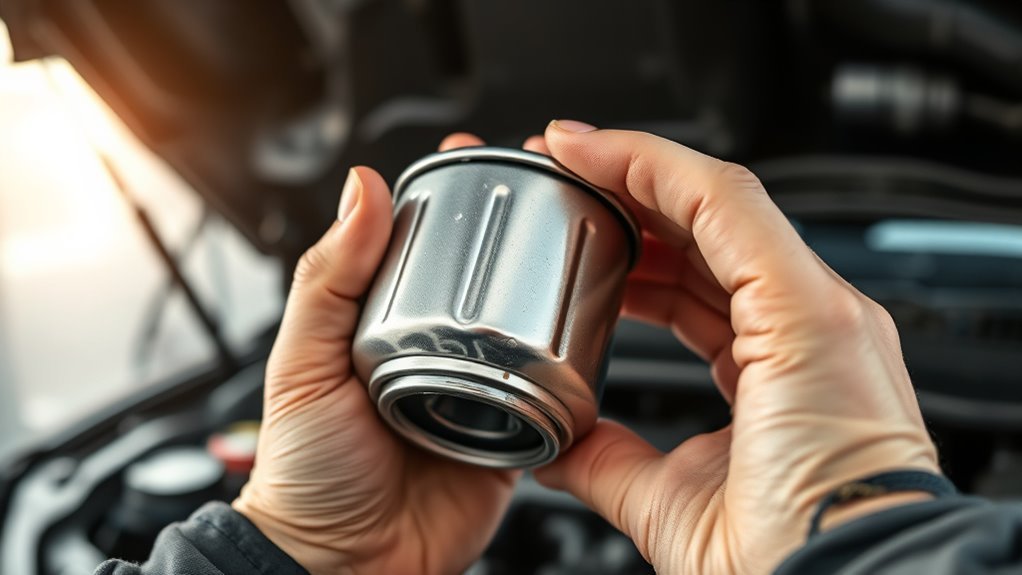

How Often to Change Oil Filter is an important question for maintaining your vehicle’s health. You should change your oil filter every 3,000 to 7,500 miles, depending on your vehicle’s manual and driving habits. Synthetic filters last longer, up to 10,000 miles, while cellulose ones need more frequent changes.
City driving clogs filters faster than highway driving, so adjust accordingly. Regular replacement avoids contaminants damaging your engine and maintains performance. If you want to optimize engine health and avoid common maintenance pitfalls, there’s more useful information coming up.
Key Takeaways
- Change oil filters every 3,000 to 7,500 miles, depending on vehicle manual and oil type recommendations.
- Synthetic oil filters can last longer, up to 7,500 to 10,000 miles, compared to cellulose filters.
- Frequent city driving with stops may require more frequent oil filter changes due to faster clogging.
- Replace oil filters if oil pressure warnings appear or engine performance declines to prevent damage.
- Always follow manufacturer guidelines and use the correct filter type for optimal engine protection.
How Often Should You Change Your Oil Filter?
How often should you change your oil filter to maintain peak engine performance? Typically, the oil filter lifespan ranges between 3,000 to 7,500 miles, depending on driving conditions and oil type.
Regularly replacing your oil filter guarantees contaminants don’t circulate through the engine, preventing wear and maintaining ideal lubrication.
To maximize filter efficiency, follow these filter maintenance tips: inspect for leaks or damage during oil changes, use high-quality filters compatible with your engine, and avoid extended intervals beyond manufacturer recommendations.
Neglecting timely replacement can reduce oil flow, causing engine strain and reduced fuel efficiency. Staying proactive with oil filter changes helps preserve engine health and performance.
Adhering to precise mileage intervals guarantees your vehicle runs smoothly without risking costly repairs.
What Your Vehicle Manual Says About Oil Filter Changes
Your vehicle manual provides specific manufacturer recommendations on when to change the oil filter, often based on mileage or time intervals.
These guidelines consider your engine’s design and operating conditions to optimize performance and longevity.
Following these vehicle-specific maintenance tips guarantees you maintain proper filtration and avoid premature engine wear.
Manufacturer Recommendations Overview
Although oil filter change intervals can vary widely, vehicle manufacturers provide specific guidelines in the owner’s manual that you should follow to maintain peak engine performance.
These recommendations reflect detailed testing of oil filter lifespan and account for manufacturer variations based on engine design and oil type.
To guarantee your engine runs efficiently and avoid premature wear, pay close attention to these key points:
- Follow the exact oil filter change interval specified for your model.
- Consider manufacturer notes on operating conditions affecting filter life.
- Use only approved filter brands or specifications.
- Monitor any updates or recalls related to oil filter performance.
- Adhere to recommended oil types paired with your filter for maximum filtration.
Mileage Guidelines Explained
Most vehicle manuals recommend changing the oil filter every 3,000 to 7,500 miles, depending on the engine type and driving conditions. You should follow these mileage guidelines closely to guarantee ideal oil filter maintenance.
The interval varies because some engines work harder or operate in harsher environments, accelerating filter clogging. Sticking to the recommended mileage guarantees your filter effectively captures contaminants, preventing engine wear.
This maintenance directly translates to performance benefits, such as improved engine efficiency and longevity. Ignoring these guidelines can reduce oil flow, increase friction, and degrade overall engine health.
Always consult your manual to identify the specific mileage interval tailored for your vehicle’s engine. Adhering to these manufacturer-specified intervals is vital for maintaining ideal filtration and sustaining peak engine performance.
Vehicle-Specific Maintenance Tips
Understanding general mileage guidelines provides a foundation, but oil filter maintenance can vary greatly between different vehicles.
Your vehicle manual offers the most precise recommendations tailored to your engine type, especially for diesel engines and hybrid vehicles.
For example, diesel engines often require more frequent oil filter changes due to higher soot levels, while hybrid vehicles might’ve extended intervals thanks to reduced engine load.
When checking your manual, consider these factors:
- Engine type specifics (gasoline, diesel, hybrid)
- Manufacturer’s recommended oil filter change interval
- Driving conditions and operating environment
- Oil type compatibility with your filter
- Warranty requirements and service schedules
Always prioritize your manual’s guidance to guarantee peak engine performance and longevity.
Oil Filter Types And How Long They Last
Since oil filters come in various designs and materials, knowing their types helps you determine how often they need replacement.
Common oil filters include conventional cellulose, synthetic blend, and full synthetic.
Cellulose filters offer basic filtration but have shorter filter longevity, typically requiring changes every 3,000 to 5,000 miles.
Synthetic filters provide enhanced contaminant removal and extended durability, often lasting up to 7,500 to 10,000 miles.
Filter compatibility is essential; you must select a filter that matches your vehicle’s specifications to guarantee proper fit and function.
Selecting the right oil filter ensures proper fit, optimal performance, and maximum engine protection.
Using incompatible filters can compromise filtration efficiency and reduce filter longevity.
Always consult your owner’s manual or manufacturer guidelines to identify the correct filter type and recommended replacement interval for peak engine performance.
Why Changing Your Oil Filter Protects Your Engine
Although your engine oil lubricates vital components, it can quickly become contaminated with dirt, metal particles, and sludge during operation. Changing your oil filter regularly guarantees filter efficiency, which is essential for maintaining clean oil flow.
A clogged or inefficient filter allows contaminants to circulate, accelerating wear and reducing engine longevity. By replacing your oil filter, you:
- Prevent abrasive particles from damaging engine parts
- Maintain ideal oil pressure and flow
- Reduce sludge buildup and corrosion risks
- Support efficient heat dissipation
- Extend your engine’s operational life
Consistently changing your oil filter preserves engine health by filtering out harmful debris, enhancing performance, and preventing premature failure.
Prioritizing filter efficiency directly contributes to maximizing engine longevity and reliability.
How Your Driving Habits Affect Oil Filter Changes
Your driving habits greatly impact how often you should change your oil filter.
City driving with frequent short trips causes more contaminants to accumulate, requiring more frequent filter changes than consistent highway driving.
Understanding these patterns helps you maintain ideal engine performance and longevity.
City vs. Highway Driving
When you drive primarily in the city, frequent stops and idling cause your engine to accumulate more contaminants, which can clog the oil filter faster.
Urban driving subjects your engine oil to higher levels of soot, fuel dilution, and moisture.
Conversely, highway efficiency promotes a more consistent engine temperature and better oil circulation, reducing filter stress.
To enhance oil filter changes based on your driving habits, consider these factors:
- Increased particulate matter from stop-and-go traffic
- Higher engine temperature fluctuations in urban settings
- Reduced contamination during steady highway speeds
- Longer intervals possible with consistent highway driving
- Manufacturer recommendations adjusted for driving environment
Understanding these distinctions helps you tailor your oil filter maintenance schedule for superior engine protection and performance.
Frequent Short Trips
Since frequent short trips prevent your engine from reaching peak operating temperature, contaminants like moisture and fuel residues don’t evaporate fully, accelerating oil filter clogging.
When your short trip frequency is high, the oil filter accumulates debris and sludge faster than during longer drives, reducing its effective lifespan.
This means you’ll need to change your oil filter more often than the standard interval suggests. Failing to adjust for these driving habits can compromise engine protection, as a clogged filter restricts oil flow and increases wear.
To maintain superior engine performance, consider shortening your oil filter lifespan based on how often you take short trips.
Regularly monitoring your driving patterns helps assure timely oil filter changes and prevents premature engine damage.
Warning Signs Your Oil Filter Needs Early Replacement
Although oil filters are designed to last for a specific interval, certain conditions can cause them to clog or degrade prematurely.
Recognizing oil filter symptoms and replacement indicators early helps prevent engine damage. You should watch for these warning signs:
Early recognition of oil filter issues is crucial to avoid serious engine damage.
- Reduced engine performance or power output
- Unusual engine noises, such as knocking or ticking
- Oil pressure warning light activation
- Dark, dirty oil despite recent oil changes
- Increased fuel consumption
These symptoms suggest your oil filter is compromised, restricting oil flow or failing to trap contaminants effectively.
Ignoring these replacement indicators risks accelerated engine wear or failure. If you notice any of these signs, inspect and replace your oil filter immediately to maintain ideal engine health and performance.
How To Change Your Oil Filter
Start by gathering the necessary tools and materials: a new oil filter, an oil filter wrench, a drain pan, and appropriate gloves. Use the oil filter wrench to loosen and remove the old filter carefully, avoiding spills. Drain residual oil into the pan.
Apply a thin layer of fresh oil to the new filter’s gasket to guarantee a proper seal. Follow these filter installation techniques: screw the new filter by hand until the gasket contacts the mounting surface, then tighten it an additional 3/4 turn.
Use the table below for a quick reference:
| Step | Action |
|---|---|
| 1 | Gather oil filter tools |
| 2 | Loosen old filter with wrench |
| 3 | Drain residual oil |
| 4 | Lubricate new filter gasket |
| 5 | Install new filter, tighten |
This method guarantees a secure fit and prevents leaks.
Common Oil Filter Replacement Mistakes
When you replace your oil filter, avoiding common mistakes is essential to maintain engine performance and prevent leaks.
Pay close attention to oil filter compatibility to guarantee the filter matches your engine specifications. Installation errors can cause serious problems, so take care during the process.
Ensure your oil filter matches engine specs and install it carefully to avoid serious issues.
Common mistakes include:
- Using the wrong oil filter model, compromising filtration efficiency
- Failing to lubricate the filter gasket before installation
- Over-tightening or under-tightening the filter, leading to leaks or damage
- Neglecting to clean the mounting surface, causing improper sealing
- Forgetting to replace the oil filter with every oil change
Tips To Extend Your Oil Filter’s Life
To maximize your oil filter’s lifespan, you should focus on proper maintenance and driving habits that reduce contaminants and strain on the filter. Regular oil changes and using high-quality oil minimize debris buildup, directly impacting oil filter maintenance and extending filter lifespan.
Avoid frequent short trips, as cold starts increase engine wear and contaminants. Monitor oil pressure to detect early signs of filter clogging.
| Action | Impact on Filter Lifespan |
|---|---|
| Use high-quality oil | Reduces contaminants |
| Change oil regularly | Prevents filter overload |
| Avoid short trips | Minimizes cold start wear |
| Monitor oil pressure | Detects clogging early |
| Replace filter timely | Maintains peak filtration |
Following these tips guarantees your oil filter performs efficiently and lasts longer.
Frequently Asked Questions
Can You Use Any Brand of Oil Filter for Your Vehicle?
You can’t use just any brand; guarantee oil filter compatibility with your vehicle’s specifications. Aftermarket options exist but always verify quality and fit to maintain engine performance and avoid potential damage or warranty issues.
What Are the Environmental Impacts of Disposing Oil Filters Improperly?
Don’t throw the baby out with the bathwater: disposing oil filters improperly releases hazardous waste into soil and water.
You should prioritize oil filter recycling to prevent environmental contamination and protect ecosystems effectively.
How Does Synthetic Oil Affect Oil Filter Change Frequency?
Using synthetic oil extends your oil filter lifespan due to synthetic oil benefits like better contamination control and thermal stability. This means you can safely increase intervals between oil filter changes, but always follow your vehicle manufacturer’s recommendations.
Are There Reusable or Washable Oil Filters Available?
You can find reusable options like metal mesh filters that demand proper filter maintenance. These washable filters offer longevity but require thorough cleaning and inspection to guarantee ideal engine protection and performance, saving you money over time.
Does Oil Filter Size Vary Between Different Car Models?
Yes, oil filter size varies due to car model differences. You need to confirm oil filter compatibility by checking specific dimensions and specifications for your vehicle to guarantee proper fit and effective filtration.
Always verify before purchase.
Conclusion
You should change your oil filter every 3,000 to 7,500 miles, depending on your vehicle and driving conditions. Curiously, studies show that 80% of engine wear occurs between oil changes due to contaminated oil circulating when the filter is clogged.
By replacing your oil filter regularly, you guarantee your engine runs efficiently and lasts longer. Always follow your vehicle manual and monitor driving habits to optimize oil filter life and protect your engine’s performance.
In conclusion, adhering to the recommended schedule for how often to change oil filter is essential for maintaining your engine’s health and longevity.