Author: hello@wash-o-rama.com

  • What Is the Gap on Spark Plugs

    What Is the Gap on Spark Plugs

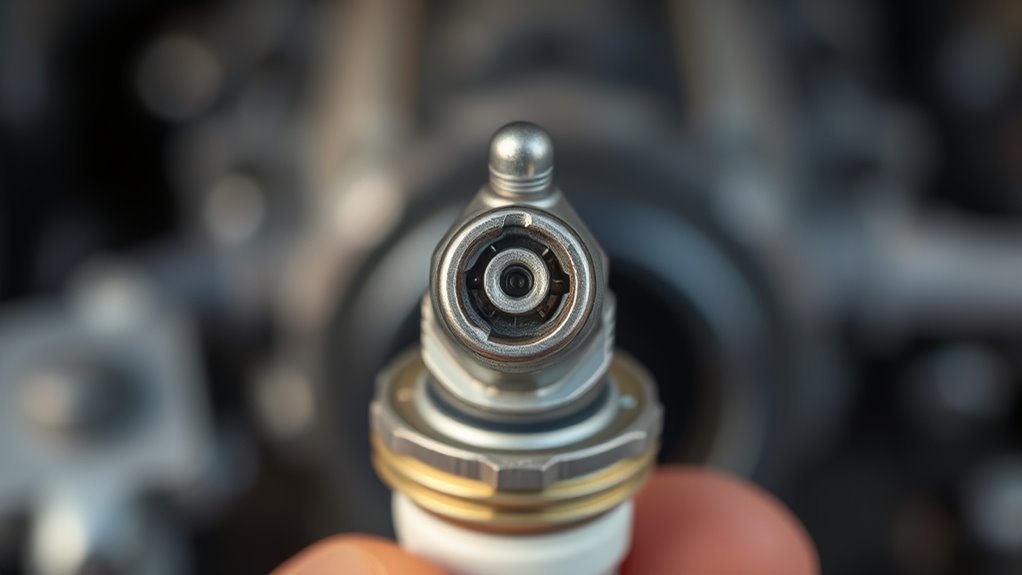
    The gap on spark plugs is the space between the center and ground electrodes, which is crucial for creating a strong spark to ignite the engine’s air-fuel mixture. This gap must be set precisely according to your vehicle’s specifications to ensure optimal performance.

    An incorrect gap can lead to misfires, poor fuel efficiency, and rough engine running. To measure and adjust this gap safely, using a feeler gauge is recommended.

    Understanding the role of the spark plug gap can help you maintain peak engine performance and enhance the longevity of your vehicle. Proper maintenance of this gap is a simple yet effective way to keep your engine running smoothly.

    Key Takeaways

    • The spark plug gap is the space between the center and ground electrodes.
    • It controls the spark needed to ignite the engine’s air-fuel mixture.
    • Gap size varies by engine type and manufacturer specifications.
    • Proper gap ensures efficient combustion and prevents misfires.
    • Measuring and adjusting the gap requires precise tools like feeler gauges.

    What Is the Spark Plug Gap and Why Does It Matter?

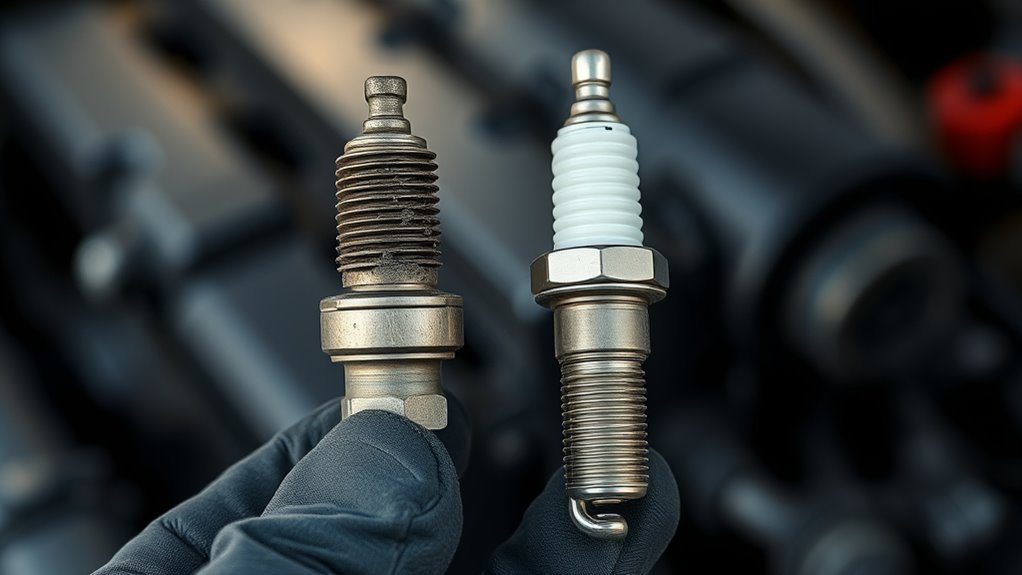
    Although it may seem like a small detail, the spark plug gap plays an important role in your engine’s performance. The gap is the precise distance between the center and ground electrodes, critical for generating a consistent spark to ignite the air-fuel mixture.

    Different spark plug materials, such as copper, platinum, or iridium, influence durability and conductivity, affecting how the spark forms across the gap.

    To guarantee peak function, you need accurate gap measurement tools like feeler gauges or gap gauges, which help verify the electrode spacing meets manufacturer specifications.

    Incorrect gaps can cause misfires, reduced fuel efficiency, and engine hesitation.

    Thus, understanding and maintaining the correct spark plug gap is crucial for reliable ignition and overall engine efficiency.

    What Is the Correct Spark Plug Gap Size?

    You need to set your spark plug gap according to the manufacturer’s specifications, as this varies by engine type.

    Using an incorrect gap can lead to misfires, poor fuel efficiency, and engine performance issues.

    Let’s examine how to identify the precise gap size for your engine and the consequences of improper adjustments.

    Manufacturer Recommendations

    When setting your spark plug gap, following the manufacturer’s specifications guarantees superior engine performance and longevity. Each engine model requires specific gap specifications based on its design, combustion chamber, and ignition system.

    Manufacturers provide precise gap values tailored to different spark plug types, such as copper, platinum, or iridium, accounting for their unique electrode wear rates and conductivity. Ignoring these recommendations can cause misfires, reduced fuel efficiency, and increased emissions.

    To guarantee accuracy, always consult your vehicle’s service manual or the spark plug packaging for the exact gap size. Use a feeler gauge or gap tool to adjust the electrode spacing carefully without damaging the plug.

    Adhering to manufacturer gap specifications preserves prime ignition timing and combustion, maintaining engine reliability and performance over time.

    Engine Type Variations

    Since engine designs vary widely, the correct spark plug gap size depends heavily on the specific engine type and its operating conditions.

    For vintage engines, which typically operate at lower compression ratios and use simpler ignition systems, you’ll often find larger gap sizes, commonly between 0.035 to 0.045 inches. This accommodates the weaker ignition sparks characteristic of older systems.

    In contrast, modern engines utilize advanced ignition technologies like coil-on-plug systems and higher compression ratios, enabling smaller gaps, usually around 0.028 to 0.032 inches. These smaller gaps guarantee reliable spark energy and efficient combustion under higher pressures and faster engine speeds.

    When setting your spark plug gap, always consider whether you’re working with vintage engines or modern engines, as this distinction directly influences the ideal gap size for performance and durability.

    Effects of Incorrect Gap

    Although determining the correct spark plug gap size might seem straightforward, an incorrect gap can greatly impact engine performance and efficiency. If the gap measurement is too wide, the spark may become weak or inconsistent, causing misfires and rough idling.

    Conversely, a gap that’s too narrow can produce a weak spark, leading to incomplete combustion and reduced power output. Both situations negatively affect spark plug performance, increasing fuel consumption and emissions.

    You must carefully check and adjust the gap to your engine manufacturer’s specifications using a precise gap tool. Proper gap measurement guarantees ideal ignition timing and combustion quality, which promotes smoother engine operation and longevity.

    Neglecting this critical adjustment can result in poor acceleration, decreased fuel economy, and potential engine damage over time.

    How to Tell if Your Spark Plug Gap Needs Fixing

    If your engine shows signs such as misfiring, rough idling, or decreased fuel efficiency, you might need to check your spark plug gap.

    Symptom identification is essential because these issues often indicate improper spark plug function linked to an incorrect gap.

    To determine if the gap needs fixing, observe these symptoms alongside performance irregularities. While visual inspection alone isn’t definitive, it helps identify obvious wear or damage.

    The key step involves gap measurement using a precise tool to compare the existing gap to manufacturer specifications. If the measured gap deviates beyond acceptable limits, it requires adjustment.

    Measure the spark plug gap precisely and adjust if it falls outside manufacturer specifications for optimal engine performance.

    Addressing the gap promptly prevents further engine performance decline and guarantees ideal combustion efficiency.

    Recognizing symptoms and confirming with accurate gap measurement guides effective spark plug maintenance.

    How to Check the Spark Plug Gap at Home

    Checking the spark plug gap at home requires just a few specialized tools and careful attention to detail.

    You’ll need proper spark plug tools designed for gap measuring to guarantee accuracy. Follow these steps:

    1. Remove the spark plug using a socket wrench, avoiding damage to the electrode.
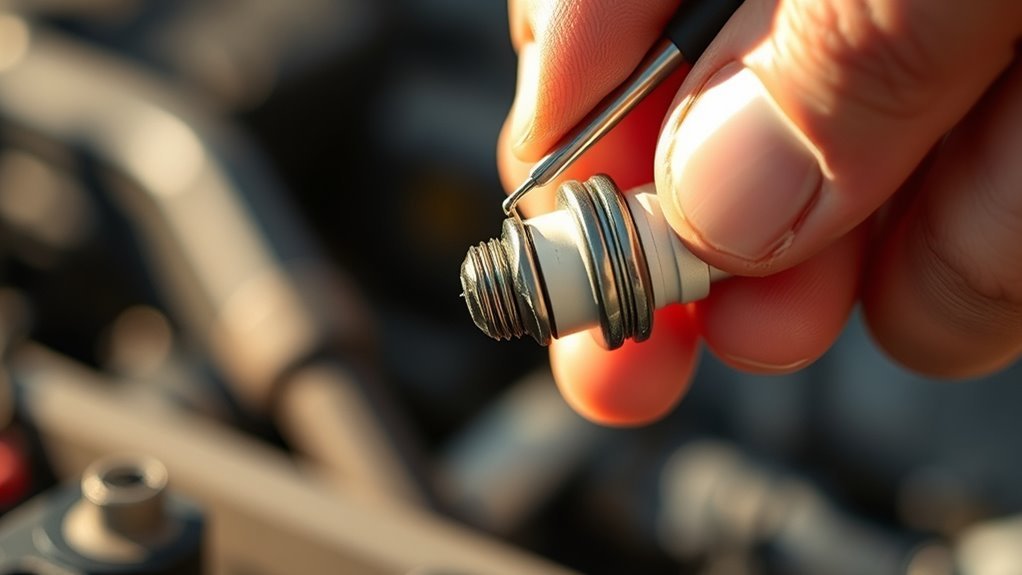
    2. Use a gap measuring tool, either a feeler gauge or a wire gauge, to measure the distance between the center and ground electrodes.
    3. Insert the gauge into the gap, noting if it fits snugly without forcing it.
    4. Compare the measurement to your vehicle’s manufacturer specifications to determine if the gap falls within the recommended range.

    Accurate gap measuring is essential for peak engine performance and fuel efficiency.

    Using the correct spark plug tools guarantees precise results without harming the plug.

    How to Adjust the Spark Plug Gap Safely

    When you find the spark plug gap outside the recommended range, you need to adjust it carefully to avoid damaging the electrodes.

    Start by selecting the right spark plug tools, such as a gap gauge or feeler gauge, specifically designed for gap measuring.

    Begin by choosing the appropriate gap or feeler gauge designed for precise spark plug measurement.

    Place the gauge between the center and ground electrodes to check clearance.

    To widen the gap, gently bend the ground electrode outward using a spark plug gap tool, applying minimal force to prevent distortion.

    To narrow the gap, carefully tap the ground electrode on a hard surface or use the tool’s bending end, ensuring gradual adjustment.

    After each modification, re-measure the gap precisely.

    Repeat this process until the gap matches the manufacturer’s specifications.

    Avoid excessive bending or using inappropriate tools, as this can compromise spark plug performance and durability.

    How the Spark Plug Gap Affects Engine Performance

    Adjusting the spark plug gap precisely guarantees ideal ignition conditions, but understanding how this gap influences engine performance provides deeper insight into why accuracy matters.

    The gap affects the spark’s strength and consistency, which directly impacts combustion efficiency. Here’s how:

    1. Ignition timing precision: A correct gap guarantees the spark fires at the perfect moment, vital for peak engine power.
    2. Spark plug materials compatibility: Different materials require specific gaps to maintain longevity and consistent spark delivery.
    3. Combustion completeness: An improper gap can cause misfires or incomplete combustion, reducing fuel efficiency.
    4. Engine responsiveness: Correct gaps improve throttle response by stabilizing flame propagation within the cylinder.

    Frequently Asked Questions

    Can Spark Plug Gaps Vary Between Different Car Models?

    Yes, spark plug variation exists between car models, impacting engine performance. You should follow manufacturer specs for the correct gap to guarantee ideal combustion, efficiency, and engine longevity, avoiding misfires or reduced power.

    Does Fuel Type Affect the Ideal Spark Plug Gap?

    Yes, fuel type affects the ideal spark plug gap because different fuel combustion properties require specific spark plug materials and gap sizes to optimize ignition efficiency. This ensures proper combustion and prevents misfires in your engine.

    How Often Should Spark Plug Gaps Be Checked or Replaced?

    You probably love surprises, so check your spark plug gaps every 30,000 miles to avoid them. Regular spark plug maintenance prevents spark plug wear, ensuring peak engine performance and avoiding costly repairs down the road.

    You should use precise gap measurement tools like a spark plug feeler gauge for professional gap adjustments. These tools guarantee accurate spacing, preventing misfires and optimizing engine performance by maintaining the correct spark plug gap consistently.

    Can Improper Spark Plug Gaps Cause Emissions Test Failure?

    You know, “a stitch in time saves nine.” Improper spark plug gap effects can cause incomplete combustion, increasing emissions. This often leads to an emissions test failure, so you’ve got to guarantee precise gap settings.

    Conclusion

    Think of the spark plug gap as the tiny, precise bridge where combustion sparks ignite. If it’s too wide or too narrow, your engine’s performance stumbles like a misfiring dancer.

    By checking and adjusting this gap carefully, you guarantee a clean, consistent spark that powers your engine efficiently. Keep this small space in perfect tune, and your vehicle will run smoothly.

    This not only saves fuel but also extends engine life with every controlled burst of energy. Understanding the gap on spark plugs is key to maintaining optimal engine performance.

  • Can Am x3 Shocks

    Can Am x3 Shocks

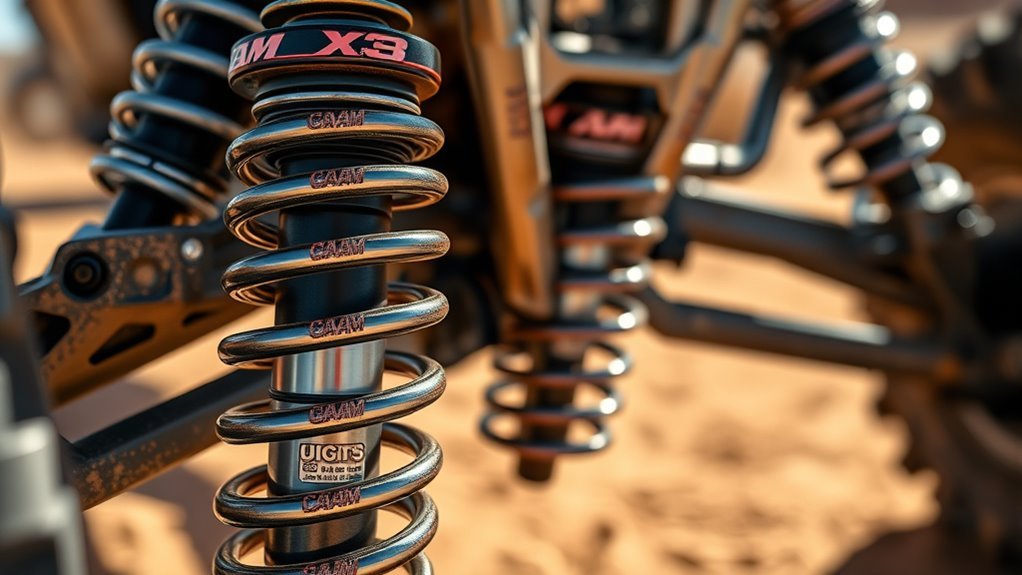
    Can-Am X3 shocks are essential for riders seeking exceptional durability and precise adjustability to tackle diverse terrains and aggressive riding styles. Opt for coil-over or bypass shock designs that feature adjustable compression and rebound damping to customize your ride experience.

    Look for optimized spring rates and remote reservoirs to enhance heat dissipation during extended use. Proper installation with torque-specified mounting hardware ensures reliable performance and longevity.

    Regular maintenance is key to maintaining peak shock performance. By fine-tuning these components, you’ll maximize traction and ride comfort even under demanding conditions. Exploring suspension tuning strategies will help you unlock the full potential of your Can-Am X3.

    Key Takeaways

    • Can-Am X3 shocks feature triple-rate springs and remote reservoirs for enhanced damping and heat management.
    • Adjustable compression and rebound settings allow precise tuning for varied terrain and riding styles.
    • High-strength, lightweight materials reduce unsprung weight, improving traction and ride comfort.
    • Upgraded shocks offer reinforced shafts and improved valving for durability in racing and trail conditions.
    • Regular maintenance includes leak inspections, cleaning, and proper torque on mounting bolts to ensure optimal performance.

    Why Can-Am X3 Shocks Stand Out?

    Anyone looking to enhance their Can-Am X3’s performance will find that its shocks deliver exceptional control and durability.

    You benefit from advanced design features like triple-rate springs and remote reservoirs, which optimize damping and heat dissipation. These elements provide superior responsiveness and consistent performance across varied terrains.

    The shocks’ construction uses lightweight, high-strength materials, reducing unsprung weight and improving handling precision.

    You’ll notice performance advantages such as increased traction, minimized body roll, and enhanced ride comfort, enabling you to push the vehicle harder without sacrificing stability.

    By integrating adjustable compression and rebound settings, these shocks allow you to fine-tune suspension characteristics to match your specific driving style and terrain challenges.

    This technical sophistication makes Can-Am X3 shocks a standout choice for serious off-road enthusiasts.

    How to Choose the Right Can-Am X3 Shocks

    Building on the advanced features that make Can-Am X3 shocks perform exceptionally, selecting the right shocks requires evaluating your specific riding conditions and performance goals.

    Start by analyzing shock types. Coil-over shocks offer consistent damping and durability for aggressive terrains, while bypass shocks provide adjustable damping curves for fine-tuned control.

    Analyze shock types: coil-over for durability, bypass for adjustable, fine-tuned control.

    Assess performance factors such as travel length, damping adjustability, and spring rates to match your riding style. Consider terrain roughness, riding speed, and payload to determine ideal shock stiffness and responsiveness.

    Prioritize shocks with tunable compression and rebound settings to maximize traction and comfort.

    Can-Am X3 Shock Upgrades for Trail Riding & Racing

    When upgrading Can-Am X3 shocks for trail riding and racing, you must prioritize enhancements that improve responsiveness and durability under high-stress conditions.

    Focus on shock performance by selecting components with adjustable compression and rebound damping to tailor suspension tuning precisely to your terrain and riding style.

    Consider shocks with high-quality valving systems and reinforced shafts to withstand aggressive impacts and maintain consistent performance. Upgraded reservoirs can improve heat dissipation, reducing fade during extended runs.

    Additionally, optimizing spring rates and preload settings guarantees the suspension remains balanced, enhancing traction and control.

    Installing and Maintaining Can-Am X3 Shocks

    Upgrading your Can-Am X3 shocks sets the foundation for improved performance, but proper installation and maintenance guarantee those enhancements deliver consistent results.

    During shock installation, verify mounting points are clean and free of debris to prevent premature wear. Use a torque wrench to tighten bolts to manufacturer specifications, avoiding overtightening that can damage components.

    For maintenance, regularly inspect shock bodies for leaks and check fluid levels if serviceable.

    Follow these maintenance tips to extend shock life and optimize performance:

    • Clean shocks after each ride to remove dirt and debris
    • Check for unusual noises or resistance during compression
    • Lubricate bushings and pivot points periodically
    • Schedule professional servicing based on usage intensity and conditions

    Adhering to these practices ensures your Can-Am X3 shocks perform reliably across diverse terrains.

    Troubleshooting Common Can-Am X3 Shock Issues

    Although Can-Am X3 shocks are engineered for durability, you may occasionally encounter issues that affect performance or ride quality.

    Start troubleshooting by performing a thorough leak inspection; oil seeping from seals compromises damping efficiency and requires immediate attention.

    Check for physical damage, like bent shafts or worn bushings, which can cause inconsistent rebound or compression.

    If you notice a harsh or overly soft ride, recalibrate your performance tuning settings to match terrain and driving style.

    Adjusting spring preload and damping rates often resolves handling irregularities.

    Regularly inspect mounting hardware to prevent misalignment-induced stress.

    By systematically addressing leaks, mechanical wear, and improper tuning, you can restore peak shock function and prolong their service life.

    Staying proactive guarantees your Can-Am X3 maintains prime performance under demanding conditions.

    Frequently Asked Questions

    What Is the Average Lifespan of Can-Am X3 Shocks?

    You can expect Can-Am X3 shocks to last around 30,000 miles, but shock performance factors like terrain and riding style impact lifespan.

    Regular shock maintenance tips, including cleaning and inspecting seals, help maximize durability and performance.

    Are Can-Am X3 Shocks Compatible With Other UTV Models?

    You’ll find shock compatibility varies; Can-Am X3 shocks often fit specific UTV models but rarely universal. Ensuring precise fitment boosts UTV performance, handling, and durability.

    Always verify dimensions and mount types before swapping shocks.

    Can Can-Am X3 Shocks Be Used in Extreme Weather Conditions?

    You can rely on Can-Am X3 shocks for extreme weather conditions; their weather performance maintains consistent damping. Shock durability resists corrosion and temperature fluctuations, ensuring ideal suspension response and longevity during harsh environmental challenges.

    Do Can-Am X3 Shocks Require Special Tools for Adjustment?

    You don’t need a steam engine to adjust Can-Am X3 shocks, but precise shocks maintenance demands specific tools. Mastering adjustment techniques guarantees peak performance and longevity, so equip yourself properly and follow technical guidelines meticulously for best results.

    Are Aftermarket Can-Am X3 Shocks Covered by Warranty?

    Aftermarket Can-Am X3 shocks often offer performance benefits, but you should know they typically aren’t covered under the original warranty.

    Manufacturers impose warranty limitations, so installing them may void your factory shock warranty protection.

    Conclusion

    Choosing the right Can-Am X3 shocks isn’t just about upgrading—it’s about enhancing your ride’s heartbeat. When you fine-tune these components, you’re not just fixing bumps; you’re mastering control and comfort on every trail.

    Keep your shocks well-tuned and maintained, and minor hiccups won’t slow you down. In the end, your Can-Am X3 shocks help your vehicle perform not just as a machine, but as an extension of your skill and precision on rugged terrain.

  • Where Are Ngk Spark Plugs Made

    Where Are Ngk Spark Plugs Made

    Where Are Ngk Spark Plugs Made

    NGK spark plugs are primarily made in Japan, where meticulous craftsmanship and stringent quality controls guarantee top performance. They also produce plugs in other global factories that follow strict standards, assuring consistent reliability and material quality worldwide.

    Advanced materials like iridium and precise manufacturing techniques maintain durability across all plants. Knowing where NGK spark plugs come from helps you understand quality differences and performance factors. There’s much more to explore about their manufacturing and technology nuances.

    Key Takeaways

    • NGK spark plugs are primarily manufactured in Japan using advanced production technologies.
    • Additional NGK manufacturing facilities exist worldwide to meet local regulations and market needs.
    • All NGK factories follow standardized processes ensuring consistent spark plug performance globally.
    • Japanese-made NGK plugs feature superior material quality and meticulous electrode design.
    • Final product quality checks guarantee reliability and consistent performance across all manufacturing sites.

    NGK Spark Plug Manufacturing Locations

    Although NGK is a global brand, it manufactures its spark plugs primarily in Japan, leveraging advanced production technologies and strict quality controls.

    You’ll find that NGK’s manufacturing processes emphasize precise electrode placement, ceramic insulator integrity, and metal shell durability. These steps guarantee peak ignition performance across various engine types.

    While Japan remains the central hub, NGK also operates facilities in other regions, adapting certain manufacturing aspects to regional differences in regulatory standards and market requirements.

    However, the core technology and quality benchmarks stay consistent worldwide.

    When you examine NGK spark plugs, you can trust that their manufacturing locations uphold stringent processes designed to meet both global and localized demands, ensuring reliability irrespective of where the spark plug is assembled.

    How NGK’s Factory Locations Affect Quality and Availability

    You benefit from NGK’s global manufacturing footprint, which guarantees consistent quality through standardized control protocols across all factories.

    Their strict quality control standards maintain performance regardless of production site.

    Plus, strategically placed plants optimize distribution, reducing supply chain delays and improving availability.

    Global Manufacturing Footprint

    NGK operates multiple manufacturing facilities across several continents, strategically positioning its production to optimize both quality control and supply chain efficiency. By distributing manufacturing sites in Japan, Asia, Europe, and North America, NGK leverages regional expertise and resources, enhancing responsiveness to market demands.

    This global manufacturing footprint fosters manufacturing innovation through cross-site technology sharing and process standardization, ensuring consistent product performance worldwide. You benefit from this global collaboration as it minimizes lead times and mitigates risks associated with localized disruptions.

    Additionally, NGK’s strategic location choices enable efficient logistics and inventory management, maintaining steady availability of spark plugs. This networked approach not only supports production scalability but also integrates advanced manufacturing techniques, helping NGK sustain its reputation for reliability and technical excellence across diverse automotive markets.

    Quality Control Standards

    Each NGK factory adheres to stringent quality control standards that directly impact both product reliability and availability.

    When you examine NGK’s manufacturing processes, you’ll notice rigorous quality assurance protocols embedded at every production stage. These protocols guarantee that every spark plug meets exacting specifications, regardless of the factory’s location.

    NGK employs advanced inspection technologies and continuous monitoring systems to detect defects early, minimizing variability and enhancing consistency.

    This approach means you can trust NGK spark plugs to perform reliably in various applications worldwide.

    By maintaining uniform quality assurance across all facilities, NGK ensures that geographic differences don’t compromise product integrity or availability.

    Distribution and Supply Chain

    Although manufacturing locations vary globally, the strategic placement of NGK’s factories plays an essential role in optimizing distribution and supply chain efficiency. By situating facilities near key markets and transportation hubs, NGK reduces lead times and guarantees consistent product availability. This robust distribution network supports just-in-time inventory management, minimizing delays and maintaining quality.

    Factory Location Proximity to Markets Impact on Supply Chain
    Japan Asia-Pacific High quality control, fast regional delivery
    United States North America Streamlined distribution, reduced transit times
    Europe European Union Efficient logistics, responsive supply chain

    You can rely on NGK’s well-integrated supply chain and distribution network to receive spark plugs promptly, without compromising quality.

    Materials and Technologies Used in NGK Factories

    You’ll find NGK spark plugs use advanced ceramic insulators that offer exceptional heat resistance and electrical insulation.

    Their factories employ precision electrode engineering to guarantee peak ignition performance and durability.

    These materials and technologies work together to maximize efficiency and reliability in every spark plug.

    Advanced Ceramic Insulators

    Because spark plugs must withstand extreme temperatures and pressures, NGK employs advanced ceramic insulators made from high-purity alumina oxide. This material’s exceptional ceramic properties, such as high dielectric strength, thermal conductivity, and mechanical toughness, ensure reliable electrical insulation and heat dissipation.

    You’ll notice NGK’s insulator design optimizes these properties by incorporating precise geometries to prevent flashover and withstand thermal shock. The insulator’s shape and composition work together to maintain structural integrity under combustion stresses, improving spark plug durability and performance.

    By controlling ceramic microstructure and purity, NGK guarantees consistent insulation resistance and minimizes contamination risks.

    When you use NGK spark plugs, you benefit from these engineered ceramic insulators that deliver consistent ignition reliability in demanding engine environments.

    Precision Electrode Engineering

    When crafting NGK spark plugs, engineers employ precision electrode engineering to optimize ignition performance and longevity. You’ll find that the electrode design is meticulously calculated to guarantee consistent spark delivery and minimal wear.

    NGK utilizes advanced materials like iridium and platinum, which withstand extreme temperatures and corrosion, enhancing durability.

    Manufacturing precision is vital; automated laser welding and computer-controlled machining guarantee exact electrode dimensions and alignment. This tight control reduces energy loss and promotes efficient combustion.

    By focusing on electrode geometry and surface finish, NGK achieves superior ignition reliability.

    When you use NGK spark plugs, you benefit from their cutting-edge electrode design and the manufacturing precision that underpins each component’s consistent quality and performance in demanding engine conditions.

    Differences Between NGK Spark Plugs Made in Japan and Elsewhere

    How do NGK spark plugs made in Japan differ from those produced in other countries?

    You’ll find that Japanese craftsmanship and advanced manufacturing techniques set these plugs apart. Japan’s factories emphasize meticulous electrode design and material purity, enhancing performance and longevity.

    Key differences include:

    • Superior material quality due to stringent sourcing standards
    • Advanced manufacturing techniques ensuring tighter tolerances
    • Enhanced precision in electrode construction for optimal spark efficiency
    • Rigorous inspection processes unique to Japanese production lines

    While NGK maintains high standards globally, the Japanese-made spark plugs often feature subtle refinements born from decades of innovation and expertise.

    When you choose a plug made in Japan, you’re opting for the pinnacle of precision engineering rooted in tradition and cutting-edge technology.

    How NGK Maintains Quality Consistency Across Its Factories

    Although Japanese-made NGK spark plugs showcase exceptional craftsmanship, the company assures that all its manufacturing facilities worldwide adhere to strict quality standards. NGK implements uniform quality assurance protocols and standardized manufacturing processes across each factory. This approach guarantees consistent spark plug performance regardless of origin.

    Quality Assurance Step Manufacturing Process Focus
    Raw Material Inspection Precision Electrode Assembly
    Automated Testing Controlled Firing Techniques
    Final Product Evaluation Environmental Stability Checks

    Why NGK Spark Plug Origin Matters for Performance and Reliability

    Because spark plug performance directly impacts engine efficiency and longevity, knowing their origin helps you make informed decisions about reliability.

    NGK spark plugs produced in different factories may vary slightly due to local manufacturing processes, materials, and quality control standards.

    These reliability factors influence combustion consistency, electrode wear, and resistance to fouling.

    When evaluating NGK spark plugs, consider:

    • Manufacturing standards adherence at each factory
    • Material sourcing and purity
    • Precision in electrode gap and design
    • Quality control protocols for defect minimization

    Understanding where your NGK spark plugs come from guarantees ideal spark plug performance tailored to your engine’s demands.

    It also helps you anticipate maintenance intervals and avoid premature failures, enhancing your vehicle’s overall reliability.

    Frequently Asked Questions

    How Often Should NGK Spark Plugs Be Replaced?

    You should replace NGK spark plugs every 30,000 to 60,000 miles, depending on the spark plug lifespan and your vehicle’s specifications.

    Follow replacement intervals in your manual to guarantee peak engine performance and fuel efficiency.

    Can NGK Spark Plugs Improve Fuel Efficiency?

    Think of spark plug technology as the conductor of an orchestra; when NGK spark plugs optimize fuel combustion, you’ll see improved fuel efficiency, smoother engine performance, and reduced emissions. This makes your vehicle run cleaner and more economically.

    Are NGK Spark Plugs Compatible With All Car Models?

    Ngk spark plugs aren’t compatible with all car models; you need to match spark plug types to your vehicle compatibility requirements.

    Always consult your owner’s manual or NGK’s catalog to select the precise spark plug for peak performance.

    What Is the Warranty Period for NGK Spark Plugs?

    Like a reliable engine hum, NGK Spark Plugs come with warranty coverage typically lasting 12 months or 12,000 miles. You can trust their durability, ensuring peak performance under various driving conditions without worry.

    How Do I Identify a Genuine NGK Spark Plug?

    You can verify spark plug authenticity by checking NGK’s hologram, barcode, and packaging details. Use counterfeit detection tools like UV light or NGK’s online verification to guarantee you’re getting genuine, high-quality spark plugs.

    Conclusion

    Whether NGK spark plugs come from Japan’s precision-driven plants or their advanced facilities abroad, you can expect consistent quality and cutting-edge materials. These manufacturing sites maintain rigorous standards to ensure every spark plug performs reliably under various conditions. This global approach combines expertise and innovation seamlessly.

    While some may prefer the heritage of Japanese-made plugs, NGK’s worldwide production guarantees that reliability does not waver. The subtle differences highlight how origin influences performance, but NGK’s stringent quality controls bridge any gap. This commitment ensures customers receive dependable products regardless of where they are made.

    Ultimately, knowing where your spark plug is made helps you appreciate the balance between tradition and innovation powering your engine. For those curious about the answer to “Where are NGK spark plugs made,” it is clear they are produced in multiple facilities globally, all upholding NGK’s high standards.

  • How to Gap Spark Plugs

    How to Gap Spark Plugs

    To gap spark plugs properly, first check your vehicle’s manual for the exact specification. Use a feeler or gap gauge to measure the distance between the center and ground electrode.

    If the gap’s off, gently bend the ground electrode with a gapping tool until it matches the recommended width. Always measure carefully without forcing the gauge to avoid damage.

    Re-measure to confirm accuracy before installing. Mastering these steps guarantees smooth engine performance and fuel efficiency, with further insights available ahead.

    Key Takeaways

    • Check the vehicle’s owner manual for the correct spark plug gap specification before starting.
    • Use a spark plug gap gauge or feeler gauge to measure the existing gap accurately.
    • Adjust the gap by gently bending the ground electrode with a proper spark plug gap tool.
    • Re-measure the gap after adjustment to ensure it matches the manufacturer’s recommended size.
    • Inspect the plug for electrode damage or deposits and replace if necessary for consistent spark performance.

    Why Proper Spark Plug Gapping Matters

    Although it may seem minor, proper spark plug gapping directly affects your engine’s performance and efficiency. When you set the correct gap, you guarantee the spark plug generates a strong, consistent spark, critical for maximum combustion.

    If the gap is too wide, the spark may weaken or misfire, reducing spark plug performance and causing incomplete fuel burning. Conversely, a gap too narrow can limit the spark’s reach, leading to inefficient combustion and decreased engine efficiency.

    Maintaining the precise gap allows the ignition system to operate within designed parameters, promoting better fuel economy and reduced emissions.

    How to Find the Right Spark Plug Gap for Your Car

    Establishing the correct spark plug gap starts with identifying the specification designed for your vehicle. Consult your owner’s manual or manufacturer’s service guide to find the recommended spark plug specifications, including the precise gap measurement.

    This gap directly influences engine performance by affecting the spark’s strength and consistency during ignition. Using a gap that’s too wide or too narrow can cause misfires, poor fuel economy, and reduced power output.

    Spark plug gap impacts ignition quality, affecting fuel efficiency, power, and preventing engine misfires.

    If you’re installing new plugs, verify that the gap matches the stated value before installation. Remember, different engines and models require varying gap sizes, so never assume a universal measurement.

    Adhering strictly to these specifications guarantees peak combustion, maximizing efficiency and prolonging engine life.

    Accurate gap measurement is a foundational step in maintaining your vehicle’s performance and reliability.

    Tools You’ll Need for Spark Plug Gapping at Home

    To gap spark plugs accurately at home, you’ll need specific tools designed for precision.

    Essential items include a spark plug gap gauge or feeler gauge to measure the electrode gap precisely.

    Additionally, a spark plug gap tool or gauge adjustment tool will help you adjust the gap to your vehicle’s specifications without damaging the plug.

    Essential Spark Plug Tools

    Before you begin gapping your spark plugs, gather the essential tools that facilitate accuracy and efficiency. Different spark plug types require specific gapping techniques, so having the right equipment is vital for precise adjustments.

    Here’s a concise list of tools you’ll need:

    Tool Purpose Notes
    Feeler Gauge Measures gap size Use for precise gap settings
    Spark Plug Gap Tool Adjusts electrode gap Suitable for various plug types
    Wire Gauge Alternative gap measurement Flexible, easy to use
    Gapper Tool Fine-tunes gap Ideal for delicate adjustments

    These tools guarantee you can methodically set the correct gap, optimizing engine performance and longevity. Proper use of each tool supports the specific gapping techniques required for your spark plug types.

    Measuring Instruments Needed

    Accurate measurement is critical when gapping spark plugs, and selecting the right instruments will make this task straightforward and reliable.

    To guarantee precise gapping techniques, you’ll need high-quality spark plug gauges designed specifically for this purpose. These gauges come in several types, including wire, coin, and feeler gauges, each offering distinct advantages depending on your preference and the required gap specification.

    A wire gauge provides quick measurement by sliding the wire between electrodes, while a feeler gauge offers exact thickness readings, allowing you to adjust the gap with confidence.

    For best results, choose a spark plug gauge calibrated to standard thickness increments. Using these tools methodically guarantees consistent electrode spacing, essential for ideal engine performance and longevity during your spark plug maintenance.

    How to Handle Spark Plugs Without Damaging Them

    Although spark plugs may seem sturdy, handling them with care is essential to avoid damaging their delicate electrodes or insulating ceramic. Proper handling techniques are vital for effective spark plug care and ensuring accurate gap adjustments.

    When working with spark plugs, follow these guidelines:

    • Always hold the spark plug by the metal shell, avoiding direct contact with the electrode or ceramic insulator.
    • Use a clean, soft cloth to handle and clean spark plugs, preventing contamination or scratching.
    • Avoid dropping spark plugs, as impact can deform electrodes or crack the insulator.
    • Store spark plugs in a secure container to protect them from dust, moisture, and mechanical damage.

    Implementing these handling techniques preserves spark plug integrity and guarantees reliable performance during installation and use.

    How to Measure and Adjust Your Spark Plug Gap

    You’ll start by measuring the spark plug gap using a feeler gauge, ensuring it matches the manufacturer’s specifications.

    If the gap is incorrect, gently adjust it by bending the ground electrode with a proper tool to avoid damage.

    Accurate measurement and careful adjustment are critical for peak engine performance.

    Measuring Spark Plug Gap

    Measuring the spark plug gap requires a feeler gauge or a specialized gap tool to confirm the electrode spacing matches the manufacturer’s specifications.

    First, identify your spark plug type, as gapping techniques vary slightly between conventional, platinum, and iridium plugs.

    Next, select the correct tool: wire gauges for precision or a tapered gauge for quick checks. Insert the gauge between the center and ground electrodes, confirming a slight drag without forcing it. If the gap differs from the recommended value, note the measurement for adjustment.

    Remember to:

    • Verify the manufacturer’s gap specification for your engine.
    • Use the appropriate gauge thickness corresponding to the desired gap.
    • Measure at multiple points along the electrode to check for uniformity.
    • Handle electrodes carefully to avoid bending or damaging them.

    These steps confirm accurate measurement before adjustment.

    Adjusting Spark Plug Gap

    Once you’ve confirmed the current gap with your feeler or tapered gauge, it’s time to make precise adjustments to achieve the manufacturer’s specified spacing.

    Begin by identifying your spark plug type, as different designs require distinct handling.

    For standard or copper plugs, gently bend the ground electrode outward with a spark plug gap tool to increase spacing.

    For iridium or platinum types, exercise extra caution to avoid damaging the delicate electrode tips.

    Avoid excessive force; incremental adjustments facilitate accuracy. After each tweak, remeasure the gap measurement with your gauge until you hit the exact specification.

    Remember, maintaining the correct gap optimizes ignition efficiency and engine performance.

    Proper technique in adjusting spark plug gap guarantees your vehicle runs smoothly and reliably.

    How to Double-Check Your Spark Plug Gap Before Installing

    Before installing your spark plugs, confirm the gap with a reliable feeler gauge to guarantee peak engine performance.

    Accurate spark plug inspection and gap verification are critical to avoid misfires and inefficient combustion. Follow these steps methodically:

    Proper spark plug inspection and gap checking are essential to ensure efficient combustion and prevent engine misfires.

    Clean the spark plug electrode to remove deposits that may affect measurement accuracy.

    Select the feeler gauge corresponding to the manufacturer’s specified gap. Gently slide the gauge between the center and ground electrodes; it should fit snugly without forcing.

    Repeat the measurement at multiple points to verify uniform gap width around the electrode.

    If the gauge doesn’t fit properly, adjust the gap carefully with a gap tool, then recheck.

    This precise verification process prevents installation errors and promotes maximum engine function.

    Troubleshooting Common Spark Plug Gap Problems

    Even with careful gap verification, you may encounter issues such as inconsistent measurements, difficulty adjusting the gap, or deviations from manufacturer specifications.

    Common issues include worn or damaged electrodes causing gap irregularities and inaccurate readings.

    To troubleshoot, start by inspecting the plug for electrode erosion or deposits; replace the plug if damaged.

    Use a high-quality feeler gauge or gap tool to guarantee precise measurement.

    If the gap is too tight or wide, carefully bend the ground electrode using the tool’s adjusting feature, avoiding excessive force that could deform the electrode.

    Re-measure after adjustment to confirm compliance with specifications.

    Consistently check multiple plugs to detect manufacturing variations.

    Addressing these common issues methodically guarantees ideal spark plug performance and engine efficiency.

    Frequently Asked Questions

    Can Incorrect Spark Plug Gaps Cause Engine Misfires?

    Yes, incorrect spark plug gaps disrupt spark plug performance, causing weak or inconsistent sparks. This leads to engine misfires.

    You can detect these misfires through engine diagnostics tools, ensuring ideal ignition and combustion efficiency.

    How Often Should Spark Plug Gaps Be Checked or Adjusted?

    Wondering when to check your spark plug gaps? You should perform gap measurement during every spark plug maintenance, typically every 30,000 miles or per your vehicle’s manual, to guarantee peak engine performance and prevent misfires.

    Are Gapped Spark Plugs Different for Gasoline and Diesel Engines?

    You won’t find gapped spark plugs for diesel engines since they use glow plugs or compression ignition. Spark plug types and gap settings are specific to gasoline engines, directly impacting engine performance and combustion efficiency.

    Can Spark Plug Gaps Affect Fuel Efficiency?

    Oh sure, neglecting spark plug gaps magically improves your car’s mileage! In reality, improper gaps degrade spark plug performance, disrupt ideal fuel combustion, and reduce fuel efficiency.

    You must maintain precise gaps for peak engine function.

    Is It Necessary to Gap New Spark Plugs Before Installation?

    Yes, you should always gap new spark plugs using spark plug tools to guarantee precise gap measurement. Proper gap measurement optimizes ignition performance and prevents misfires, so don’t skip this essential installation step.

    Conclusion

    By gapping your spark plugs correctly, you guarantee peak engine performance, improve fuel efficiency, and prevent misfires. You’ll need the right tools, a steady hand, and careful measurement to achieve precise gaps. Always handle plugs gently, adjust gaps methodically, and double-check your work before installation.

    With attention to detail and consistent technique, you’ll maintain your vehicle’s reliability and extend spark plug life—keeping your engine running smoothly, efficiently, and reliably every time. Properly gapping spark plugs is essential to ensure your engine operates at its best and lasts longer.

  • How Long Does an Oil Filter Last

    How Long Does an Oil Filter Last

    Your oil filter generally lasts between 3,000 and 7,500 miles, depending on your vehicle, driving conditions, and the filter type. How long does an oil filter last? Typically, you’ll want to replace it every time you change the engine oil to maintain proper filtration and oil flow.

    Delaying replacement risks clogging, reduced engine efficiency, and potential damage. How you drive and the filter quality also affect lifespan. Understanding these factors helps you keep your engine well-protected and running smoothly.

    Key Takeaways

    • Oil filters generally last between 3,000 and 7,500 miles, depending on vehicle type and driving conditions.
    • It is recommended to replace the oil filter during every engine oil change to ensure optimal filtration.
    • Severe driving conditions like dusty environments or frequent short trips can shorten oil filter lifespan.
    • Delaying oil filter replacement risks engine damage due to clogged filters restricting oil flow and lubrication.
    • Always follow the vehicle manufacturer’s guidelines for specific oil filter replacement intervals and maintenance.

    How Long Does an Oil Filter Last?

    How long does an oil filter last depends on several factors, including the type of filter, your vehicle’s make and model, and driving conditions.

    Different oil filter types such as spin-on and cartridge filters have varying capacities and filtration efficiencies that influence their lifespan.

    Oil filter types like spin-on and cartridge differ in capacity and efficiency, affecting their lifespan.

    Additionally, the quality of filter installation plays an essential role; improper filter installation can lead to leaks or reduced filtration performance, shortening the filter’s effective life.

    Your vehicle’s engine design may also dictate specific filter requirements, impacting durability.

    Driving conditions like frequent short trips, dusty environments, or extreme temperatures accelerate filter clogging.

    Understanding these variables helps you assess how long your oil filter can function effectively before requiring replacement, ensuring engine protection and performance remain uncompromised.

    How Often Should You Replace Your Oil Filter?

    Determining the right interval for replacing your oil filter depends on the factors affecting its lifespan, including filter type, vehicle specifications, and driving conditions. Typically, manufacturers recommend a replacement frequency between 3,000 to 7,500 miles, but you should consult your vehicle’s manual for exact guidelines.

    For ideal filter maintenance, replace the oil filter every time you change your engine oil to guarantee contaminants don’t compromise engine performance. If you drive under severe conditions such as frequent short trips, extreme temperatures, or dusty environments, you may need to shorten the replacement frequency.

    Staying consistent with timely oil filter changes protects your engine by maintaining efficient filtration, preventing clogging, and guaranteeing proper oil flow.

    Regularly scheduled replacement is essential to prolong engine life and sustain vehicle reliability.

    What Happens If You Wait Too Long to Change Your Oil Filter?

    If you wait too long to change your oil filter, contaminants can accumulate and circulate, increasing the risk of engine damage.

    This buildup also reduces fuel efficiency by forcing your engine to work harder.

    Additionally, a clogged filter can lead to higher emissions, negatively impacting both performance and the environment.

    Engine Damage Risks

    Although oil filters are designed to trap contaminants effectively, waiting too long to change them can lead to severe engine damage.

    Over time, a clogged filter restricts oil flow, causing inadequate lubrication to essential engine components. This increases friction and wear, accelerating the deterioration of parts like bearings and camshafts.

    Contaminants trapped in an old filter may bypass the filter media, circulating abrasive particles that compromise engine surfaces.

    Neglecting timely filter maintenance undermines engine longevity, potentially resulting in costly repairs or engine failure.

    To preserve peak performance and extend your engine’s lifespan, adhere strictly to manufacturer-recommended intervals for oil filter replacement.

    Regular filter maintenance guarantees efficient contaminant removal and consistent oil flow, safeguarding your engine against premature damage.

    Don’t risk your engine’s health by delaying this important service.

    Reduced Fuel Efficiency

    Beyond the risk of engine damage, delaying oil filter changes directly impacts your vehicle’s fuel efficiency. A clogged oil filter restricts oil flow, increasing engine friction and forcing your engine to work harder.

    This inefficiency translates to higher fuel consumption. Fuel quality and driving conditions further influence this effect; poor fuel or harsh driving accelerates filter clogging, compounding fuel inefficiency.

    Factor Impact on Fuel Efficiency
    Clogged Filter Increases engine friction
    Poor Fuel Quality Accelerates filter contamination
    Harsh Driving Intensifies oil degradation rate

    Increased Emissions Output

    When you delay changing your oil filter, your vehicle’s emissions output increases considerably. A clogged or dirty oil filter reduces the engine’s ability to circulate clean oil, leading to incomplete combustion and higher pollutant release.

    This inefficiency causes your vehicle to emit more hydrocarbons, carbon monoxide, and nitrogen oxides, which can exceed regulatory emission standards. Consistently running with a compromised oil filter not only degrades engine performance but also amplifies your vehicle’s environmental impact.

    Modern emission controls rely on peak engine operation, and a neglected oil filter disrupts this balance. To comply with emission standards and minimize harmful output, you must replace your oil filter at recommended intervals.

    Doing so guarantees efficient combustion, lowers emissions, and supports environmental sustainability.

    How Driving Habits Affect Oil Filter Lifespan

    Your driving habits directly influence how quickly your oil filter clogs and wears out.

    Frequent short trips prevent the engine from reaching ideal temperature, causing contaminants to accumulate faster in the oil.

    Additionally, aggressive driving and prolonged idling increase stress on the filter, reducing its effective lifespan.

    Frequent Short Trips

    How do frequent short trips impact the lifespan of your oil filter? When you take frequent short trips, the engine doesn’t reach ideal operating temperature. This incomplete warming prevents the oil from fully circulating and effectively carrying contaminants to the filter.

    As a result, your oil filter traps more moisture, fuel residues, and combustion byproducts over a shorter period. These conditions accelerate clogging and reduce the filter lifespan compared to longer, sustained drives.

    Additionally, repeated cold starts increase the presence of sludge, which further burdens the filter.

    To maintain ideal filter performance, you should consider more frequent oil and filter changes if your driving consists primarily of frequent short trips.

    Monitoring these habits helps guarantee your engine stays protected and your oil filter functions efficiently.

    Aggressive Driving Impact

    Frequent short trips increase the strain on your oil filter, but driving habits like aggressive acceleration and hard braking can have an even greater impact.

    Aggressive acceleration causes rapid changes in engine load and temperature, which accelerates oil contamination and increases the volume of particulates the filter must capture.

    Similarly, harsh braking often accompanies stop-and-go driving that generates more metal and carbon debris in the oil. These particles clog the filter media faster, reducing filtration efficiency and shortening oil filter lifespan.

    Over time, this leads to increased engine wear if the filter can’t maintain proper oil flow.

    To prolong your oil filter’s effectiveness, moderate your throttle inputs and avoid sudden stops whenever possible, as this helps maintain cleaner oil and extends the interval between filter replacements.

    Idling and Filter Wear

    Although idling might seem harmless, it greatly affects oil filter wear by allowing contaminants to accumulate without the engine operating at ideal temperature.

    When you let your engine idle for extended periods, the idle duration increases the likelihood of incomplete combustion, resulting in higher soot and sludge buildup.

    This accelerates filter degradation because the oil filter traps more impurities, reducing its efficiency.

    Furthermore, prolonged idling prevents the oil from reaching optimal viscosity, impairing its ability to carry contaminants to the filter effectively.

    Consequently, the filter clogs faster, shortening its lifespan.

    To minimize filter degradation, you should limit unnecessary idling and maintain consistent driving patterns that allow the engine to reach proper operating temperatures.

    This approach helps preserve your oil filter’s functionality and overall engine health.

    Comparing Standard and High-Performance Oil Filters: Which Lasts Longer?

    When choosing between standard and high-performance oil filters, you need to evaluate their construction and filtration capabilities, as these factors directly impact their lifespan.

    Standard filters typically use cellulose or synthetic-blend media designed for general use, providing adequate filtration for typical driving conditions.

    Standard oil filters use cellulose or synthetic-blend media for reliable filtration in everyday driving conditions.

    High performance filters, however, utilize advanced synthetic media with higher micron retention rates and increased dirt-holding capacity. This means they can last longer under strenuous conditions, such as aggressive driving or extended oil change intervals.

    Additionally, high performance filters often feature reinforced end caps and stronger adhesives to prevent bypass and structural failure.

    While standard filters may suffice for everyday use, high performance filters offer superior durability and filtration efficiency, enabling them to maintain engine protection over a longer service interval.

    Your choice should align with your vehicle’s operating demands and maintenance schedule.

    How Engine Oil Type Affects Oil Filter Life

    Since different engine oils vary in composition and additive packages, they directly influence how quickly contaminants accumulate in your oil filter. Synthetic oils, for example, often contain advanced detergents that reduce sludge formation, prolonging filter life.

    However, not all filters are compatible with every oil type, so filter compatibility is essential to guarantee peak performance and longevity.

    Engine Oil Type Additive Strength Contaminant Load Filter Compatibility Expected Filter Life
    Conventional Moderate Higher Standard filters 3,000 to 5,000 miles
    Synthetic Blend Enhanced Moderate Most filters 5,000 to 7,500 miles
    Full Synthetic Advanced Lower High-performance filters 7,500 to 10,000 miles
    Racing Oils Specialized Variable Specific filters Varies

    Choosing the right oil and filter combination maximizes your oil filter’s lifespan.

    Signs Your Oil Filter Needs Immediate Replacement

    You’ll notice engine performance issues like reduced power or rough idling when your oil filter clogs.

    If you see visible oil contamination or sludge, that’s a clear sign the filter isn’t functioning properly.

    Additionally, a warning light on your dashboard often signals the need for immediate oil filter replacement.

    Engine Performance Issues

    Although a clogged oil filter mightn’t always trigger immediate engine failure, it can cause noticeable performance issues that signal the need for prompt replacement.

    When your oil filter becomes saturated with contaminants, it restricts oil flow, reducing lubrication efficiency. This leads to accelerated engine wear as moving parts experience increased friction.

    You may notice decreased engine responsiveness, rough idling, or unusual noises, clear indicators that oil degradation is impairing engine function.

    Additionally, insufficient oil circulation can cause overheating and reduced fuel efficiency. Ignoring these symptoms risks exacerbating internal damage and costly repairs.

    To maintain peak engine performance, monitor for these signs and replace your oil filter according to manufacturer recommendations.

    Timely replacement guarantees clean oil flow, minimizes engine wear, and prevents oil degradation from compromising your vehicle’s reliability.

    Visible Oil Contamination

    How can you tell if your oil filter needs immediate replacement? One clear sign is visible oil contamination.

    When inspecting the filter, look for visible sludge, a thick, dark residue that accumulates due to trapped contaminants. This sludge indicates the filter is overwhelmed by oil contamination sources such as dirt, metal particles, and combustion byproducts.

    If you notice this buildup, it means the filter’s capacity has been exceeded, impairing its ability to clean the oil effectively. Continuing to use a contaminated filter risks circulating debris through your engine, accelerating wear and potential damage.

    Regular visual checks for sludge and other signs of contamination help you determine when replacement is urgent, ensuring your engine maintains ideal lubrication and protection.

    Don’t delay; visible contamination demands prompt filter change.

    Warning Light Activation

    Visible oil contamination signals that your filter has reached its limit, but sometimes the need for replacement becomes apparent through your vehicle’s dashboard.

    The oil pressure warning light is a critical indicator that your oil filter may be clogged or failing, disrupting proper oil flow. Ignoring this light compromises engine lubrication and performance.

    Watch for these warning light activations that demand immediate filter maintenance:

    1. Oil Pressure Warning Light: Illuminates when oil pressure drops below safe levels due to restricted flow through a dirty filter.
    2. Check Engine Light: Sometimes triggered by sensor readings linked to oil circulation problems.
    3. Oil Change Light: Signals scheduled maintenance, including oil and filter replacement.

    Respond promptly to these alerts to maintain ideal oil pressure and protect your engine.

    How to Check Your Oil Filter’s Condition Yourself

    Before you can determine when to replace your oil filter, you need to know how to assess its condition accurately. Start by locating the oil filter and visually inspecting it for external damage, such as dents, corrosion, or leaks.

    Next, check for oil contamination around the filter housing, which may indicate a compromised seal. Employ filter inspection techniques like monitoring oil pressure and flow rates; a clogged filter often causes pressure drops or engine performance issues.

    During oil changes, examine the filter media for metal particles or debris trapped inside, signaling excessive engine wear or filter saturation.

    Consistent oil filter maintenance involves following manufacturer guidelines and using proper tools for removal and installation to avoid damage.

    Accurate assessment helps you prevent engine damage and maintain peak performance.

    Can You Change Your Oil Filter Without Changing the Oil?

    Is it advisable to change your oil filter without replacing the oil itself? Generally, it’s not recommended.

    Oil filter maintenance is most effective when performed alongside an oil change, as the filter traps contaminants from the oil.

    Replacing only the filter can introduce fresh oil to previously used oil, reducing lubrication efficiency.

    Consider these points:

    1. Mixing new filter with old oil can decrease oil effectiveness and accelerate engine wear.
    2. Oil change frequency is designed to match filter lifespan, ensuring maximum engine protection.
    3. Skipping oil replacement while changing the filter may cause debris buildup, defeating the filter’s purpose.

    For precise engine care, synchronize oil filter replacement with your oil change schedule rather than changing the filter alone.

    How Regular Oil Filter Changes Protect Your Engine

    Changing your oil filter without replacing the oil can compromise engine protection, which highlights the significance of regular oil filter maintenance.

    The oil filter traps contaminants, metal particles, and sludge that accumulate over time, preventing them from circulating through your engine.

    The oil filter captures harmful debris, stopping it from damaging your engine’s internal components.

    If you skip timely filter replacement, these impurities can cause accelerated wear and reduce engine efficiency.

    Following proper filter replacement tips guarantees ideal filtration and extends your engine’s lifespan.

    For best results, change the oil filter every oil change or as specified in your vehicle’s manual.

    Neglecting this routine risks clogging the filter, restricting oil flow, and increasing engine temperature.

    Frequently Asked Questions

    What Tools Do I Need to Change an Oil Filter?

    You’ll need an oil filter wrench like a strap, cap, or pliers type, sized properly for your filter brand. Also grab a ratchet, socket set, drain pan, and gloves to guarantee a clean, efficient oil filter change.

    Are Reusable Oil Filters Effective?

    You can use reusable oil filters, but they often have lower filtration efficiency compared to disposable filters.

    If you prioritize ideal engine protection, disposable filters usually provide superior particle removal and performance over time.

    Can a Clogged Oil Filter Cause Engine Damage?

    Yes, a clogged oil filter can cause serious clogged consequences by restricting oil flow, leading to poor engine performance, increased wear, overheating, and potential engine damage.

    You should replace filters regularly to maintain peak function.

    How Do Synthetic Oils Impact Filter Performance?

    You’ll find synthetic oil performance boosts filter longevity by up to 30%, thanks to its cleaner-burning properties and reduced contaminants. This means your oil filter can maintain peak efficiency longer, protecting your engine more effectively.

    Is It Safe to Drive With a Damaged Oil Filter?

    You shouldn’t drive with a damaged oil filter, as it compromises driving safety and risks engine damage. Maintaining your oil filter lifespan guarantees proper filtration and engine protection.

    Replace any faulty filters promptly to avoid serious issues.

    Conclusion

    Think of your oil filter like a coffee filter—if it gets clogged, the brew’s quality drops, and so does engine performance. Studies show most oil filters effectively last around 3,000 to 7,500 miles, depending on driving habits and filter type.

    By changing your oil filter regularly, you guarantee clean oil flows smoothly, protecting essential engine components. Don’t wait until performance suffers—treat your oil filter as a key part of your engine’s health maintenance.

    Knowing how long an oil filter lasts helps you maintain optimal engine function and extend your vehicle’s lifespan.

  • Does Valvoline Change Spark Plugs

    Does Valvoline Change Spark Plugs

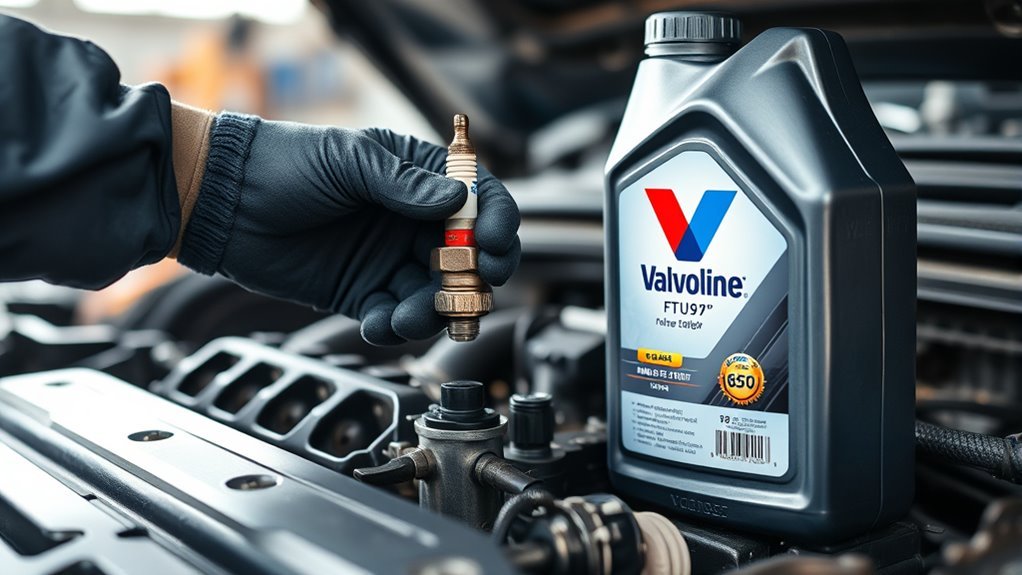
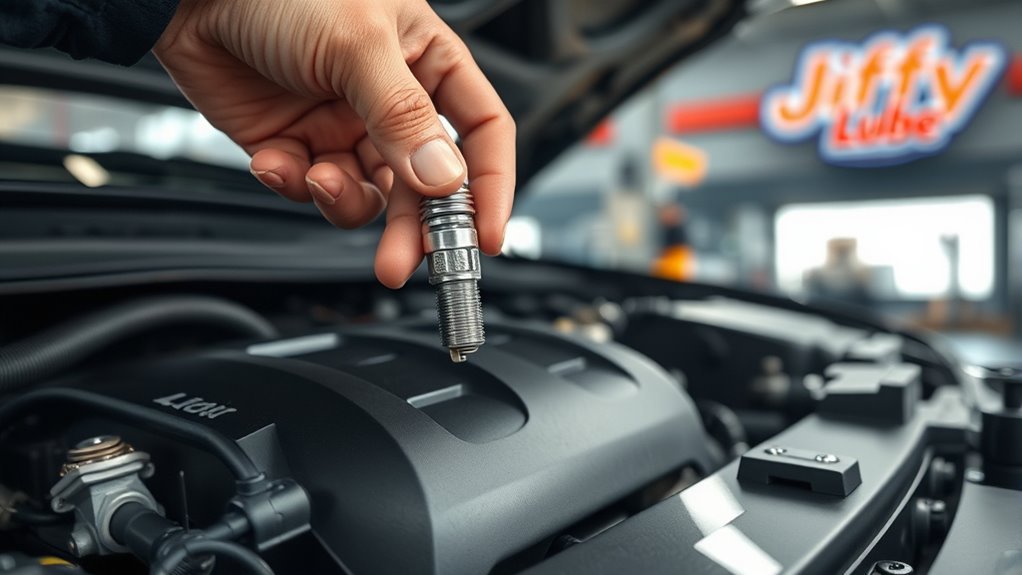
    Yes, Valvoline does change spark plugs at many of its service centers. Skilled technicians use quality spark plugs that meet OEM standards and ensure proper installation with the correct gap settings and torque.

    They assess the condition of your spark plugs based on manufacturer guidelines and replace them as needed to maintain engine performance and efficiency. While spark plug replacement is not always included in routine maintenance packages, it is available as a standalone service.

    Keep exploring to understand how this service fits your vehicle’s needs and the associated costs.

    Key Takeaways

    • Valvoline offers spark plug replacement services at many of its service centers. Trained technicians assess spark plug condition and replace them following manufacturer guidelines.
    • Spark plug replacement is typically not included in standard oil change packages but available as a standalone service or part of engine tune-ups.
    • Valvoline uses quality OEM-equivalent spark plugs, including copper, platinum, and iridium types.
    • Pricing for spark plug replacement usually ranges from $100 to $200, depending on vehicle and plug type.

    Does Valvoline Change Spark Plugs?

    Curious whether Valvoline changes spark plugs? Yes, Valvoline offers spark plug replacement services at many of their service centers.

    When you bring your vehicle in, technicians assess the current spark plug lifespan based on manufacturer recommendations and your vehicle’s specific needs.

    Typically, spark plugs require replacement every 30,000 to 100,000 miles, depending on the type and driving conditions, which informs the replacement frequency Valvoline follows.

    Spark plug replacement intervals vary from 30,000 to 100,000 miles based on type and driving conditions.

    Their trained mechanics use diagnostic tools to evaluate plug wear and performance issues before proceeding. This guarantees you receive precise maintenance tailored to your engine’s best function.

    If your spark plugs approach their end of life or exhibit signs of malfunction, Valvoline can efficiently replace them using quality parts that meet OEM specifications.

    Why Spark Plug Replacement Matters

    You need to replace spark plugs regularly to maintain peak engine performance and fuel efficiency.

    Worn spark plugs can cause misfires, reduced power, and increased emissions, leading to higher repair costs down the road.

    Engine Performance Impact

    Although spark plugs are small components, they play an essential role in your engine’s combustion process by igniting the air-fuel mixture. Neglecting their replacement can directly reduce engine efficiency and compromise performance longevity.

    When you replace spark plugs timely, you guarantee:

    1. Consistent ignition timing, which maintains peak combustion and fuel use.
    2. Reduced misfires and smoother engine operation, preventing power loss.
    3. Lower emissions and improved fuel economy, extending engine life.

    Maintenance Cost Benefits

    Because neglecting spark plug replacement leads to inefficient combustion and engine strain, it ultimately drives up maintenance costs over time.

    You need to adhere to the recommended maintenance frequency to prevent premature wear on ignition components and avoid costly repairs.

    Regularly replacing spark plugs guarantees peak engine function, reducing fuel consumption and minimizing emissions.

    By maintaining this schedule, you achieve significant cost savings by preventing issues like misfires, rough idling, or catalytic converter damage.

    Valvoline’s service emphasizes precise spark plug inspection and replacement, which helps you avoid unexpected breakdowns and extended engine diagnostics.

    Ultimately, investing in timely spark plug maintenance reduces your vehicle’s overall operating expenses and maximizes engine longevity, making it an essential aspect of your car’s upkeep strategy.

    Signs Your Car Needs a Spark Plug Replacement

    An engine’s performance often hinges on the condition of its spark plugs. Knowing the spark plug lifespan is essential to prevent engine issues and maintain efficiency.

    Understanding spark plug lifespan is key to keeping your engine running smoothly and efficiently.

    Here are three clear signs your car needs a spark plug replacement:

    1. Engine Misfire Signs: If your engine hesitates or stumbles during acceleration, it often indicates worn spark plugs failing to ignite the air-fuel mixture properly.
    2. Poor Fuel Economy: Deteriorated spark plugs cause incomplete combustion, increasing fuel consumption.
    3. Difficulty Starting the Engine: Hard starts or rough idling suggest your spark plugs are struggling to generate sufficient spark.

    Regularly monitoring these symptoms helps you replace spark plugs promptly, avoiding costly engine damage and ensuring peak performance.

    Are Spark Plugs Included in Valvoline Maintenance Packages?

    How does Valvoline handle spark plug replacements within their maintenance packages?

    Valvoline’s standard maintenance packages primarily focus on oil changes, fluid checks, and filter replacements.

    Spark plug services are typically not included as part of these routine packages because spark plug replacement intervals vary greatly based on your vehicle’s make, model, and driving conditions.

    However, Valvoline does offer spark plug services as standalone options or as part of more all-encompassing engine tune-up packages.

    If you suspect your spark plugs need replacement, you can request this service separately, ensuring the technician uses the appropriate spark plugs and follows manufacturer specifications.

    To conclude, while spark plug services aren’t automatically included in Valvoline’s basic maintenance packages, you can add them based on your vehicle’s maintenance requirements.

    What Types of Spark Plugs Does Valvoline Use?

    Valvoline uses a range of spark plug types tailored to meet the specifications of different vehicle makes and models.

    When you bring your car in, they select from trusted spark plug brands to guarantee peak engine performance and longevity.

    Here are the main spark plug types they commonly use:

    1. Copper Core Spark Plugs

    Ideal for older engines, offering reliable conductivity but shorter lifespan.

    2. Platinum Spark Plugs

    Provide improved durability and better performance in modern vehicles.

    3. Iridium Spark Plugs

    Known for superior longevity and enhanced ignition efficiency, perfect for high-performance engines.

    What to Expect During Valvoline Spark Plug Replacement

    Though spark plug replacement may seem straightforward, the process at Valvoline involves several precise steps to secure peak engine performance.

    First, a technician inspects your engine to determine the appropriate spark plug types based on your vehicle’s specifications.

    They then remove the old plugs carefully to avoid damaging the cylinder head.

    Next, they check and adjust the gap on the new spark plugs, as proper gap size is critical for efficient combustion.

    Finally, the new plugs are installed with the correct torque to guarantee ideal contact and prevent misfires.

    Valvoline also advises adhering to the recommended replacement frequency, typically between 30,000 to 100,000 miles depending on spark plug type and driving conditions, to maintain smooth engine operation and fuel efficiency.

    How to Schedule a Spark Plug Replacement at Valvoline

    When should you schedule your spark plug replacement to secure ideal engine performance? Timely scheduling guarantees your engine runs efficiently without misfires or reduced fuel economy.

    Follow these scheduling tips to optimize your service at Valvoline:

    1. Check your vehicle’s maintenance schedule: Refer to your owner’s manual for recommended intervals, typically every 30,000 to 100,000 miles depending on plug type.
    2. Use Valvoline’s online booking system: It allows real-time appointment flexibility, making it easy to find a convenient time slot.
    3. Call ahead to confirm services: Verify the availability of spark plug replacement at your chosen location to avoid delays.

    How Much Does Valvoline Charge for Spark Plug Replacement?

    You’ll typically find Valvoline’s spark plug replacement costs vary based on your vehicle’s make and model, as well as the type of spark plugs required.

    It’s important to take into account factors like labor time and any additional parts when evaluating the total price.

    Comparing these costs with other service providers can help guarantee you’re getting competitive pricing for quality work.

    Valvoline Spark Plug Pricing

    How much does Valvoline charge for spark plug replacement? Valvoline pricing reflects both the labor involved and the quality of spark plugs used. When you opt for their service, you’re paying for reliable parts and expert installation.

    Here’s what influences the cost:

    1. Spark Plug Quality – Valvoline uses OEM-grade or premium aftermarket plugs ensuring peak engine performance.
    2. Labor Charges – Professional technicians handle removal and installation, ensuring correct gap settings and torque.
    3. Service Package – Prices vary if you combine spark plug replacement with other maintenance like oil changes.

    Typically, you can expect a range between $100 to $200, balancing high spark plug quality with professional service.

    Valvoline’s pricing structure emphasizes durability and efficiency, giving you value beyond mere part replacement.

    Factors Affecting Replacement Cost

    Understanding the factors that influence Valvoline’s spark plug replacement cost helps you make informed decisions about your vehicle maintenance.

    Key cost factors include the type of spark plugs required. Iridium or platinum plugs cost more than standard copper ones, and the complexity of your vehicle’s engine design also plays a role.

    Labor time varies depending on engine accessibility, directly impacting the labor charge. Additionally, the replacement frequency affects total maintenance expenses. Spark plugs typically need changing every 30,000 to 100,000 miles, depending on your vehicle and plug type.

    Valvoline adjusts pricing based on these variables, so your total cost reflects both parts and labor tailored to your vehicle’s specifications.

    Knowing these cost factors guarantees you can budget appropriately for timely spark plug replacements, optimizing engine performance and longevity.

    Comparing Costs With Competitors

    When comparing spark plug replacement costs, Valvoline offers competitive pricing that balances quality parts and skilled labor. Understanding Valvoline pricing through competitor analysis helps you make an informed decision.

    Here’s what you should consider:

    1. Labor Rates Valvoline typically charges a standardized labor fee, often lower than independent shops, ensuring transparent service costs.
    2. Parts Quality Valvoline uses OEM or equivalent spark plugs, which may cost more than generic parts available at some competitors.
    3. Service Packages Valvoline sometimes bundles spark plug replacement with additional maintenance, offering better overall value compared to standalone services elsewhere.

    Valvoline vs Dealership Spark Plug Replacement Services

    Although both Valvoline and dealerships offer spark plug replacement services, their approaches and pricing differ considerably. You’ll find that Valvoline convenience centers on quick service and competitive rates, while dealership advantages include OEM parts and specialized technicians.

    Service Aspect Valvoline Dealership
    Pricing Affordable, transparent Higher, often includes fees
    Parts Quality Quality aftermarket parts OEM parts guaranteed
    Service Time Typically faster, no appointment Longer, appointment required
    Technical Expertise General certified mechanics Brand-specific specialists

    Choosing depends on your priority: Valvoline offers speed and cost-efficiency, dealerships provide precision and brand assurance.

    Other Options If Valvoline Doesn’t Offer Spark Plug Replacement Nearby

    If Valvoline doesn’t provide spark plug replacement services near you, several alternatives can guarantee your vehicle receives proper maintenance. You have options to keep your engine running efficiently without delay.

    1. Visit a local auto repair shop specializing in ignition systems; they offer professional spark plug replacement with precise gap settings and torque specifications.
    2. Schedule an appointment at a dealership service center; technicians use OEM parts assuring compatibility and longevity.
    3. Consider a DIY spark plug replacement if you have mechanical skills; follow your vehicle’s service manual carefully, use the correct tools, and verify spark plug gap and torque for peak performance.

    Exploring these options guarantees your spark plugs are replaced accurately, maintaining engine efficiency and preventing misfires or rough idling.

    Frequently Asked Questions

    How Do Spark Plugs Affect Fuel Efficiency?

    You’ll see better fuel efficiency when your spark plug performance is optimized because efficient spark plugs guarantee complete fuel combustion.

    Poor spark plug function causes misfires, wasting fuel and reducing your engine’s overall efficiency and power output.

    Can I Replace Spark Plugs Myself Safely?

    Like assembling a delicate watch, you can safely replace spark plugs yourself with proper DIY maintenance and safety tips: use the right tools, avoid overtightening, disconnect the battery, and work in a well-ventilated area for precision.

    How Often Should Spark Plugs Be Replaced Generally?

    You should replace spark plugs every 30,000 to 100,000 miles, depending on their lifespan. Watch for replacement signs like engine misfires, rough idling, or poor fuel economy to guarantee peak performance and avoid damage.

    What Are Common Spark Plug Problems in Cold Weather?

    In cold weather, you’ll face spark plug failures like fouling from incomplete combustion, misfires due to weak sparks, and carbon buildup. These issues reduce engine efficiency, so make certain your plugs are clean, properly gapped, and suited for low temperatures.

    Do Spark Plugs Impact Vehicle Emissions?

    Picture exhaust fumes swirling; faulty spark plugs increase spark plug emissions, causing incomplete combustion.

    You’ll see a direct environmental impact, as inefficient plugs raise pollutants, so maintaining them optimizes engine performance and reduces harmful emissions.

    Conclusion

    If you’re considering spark plug replacement, know that Valvoline offers this service at many locations, using high-quality plugs suited to your vehicle. Faulty spark plugs can reduce fuel efficiency by up to 30%, making timely replacement essential.

    Scheduling with Valvoline is straightforward, but if they’re unavailable nearby, dealerships or trusted mechanics are solid alternatives. Staying proactive guarantees your engine runs smoothly and saves you money in the long run.

    In conclusion, Valvoline change spark plugs service is a convenient and reliable option to keep your vehicle performing at its best.

  • Do Diesel Engines Have Spark Plugs

    Do Diesel Engines Have Spark Plugs

    Do diesel engines have spark plugs? The answer is no, because diesel engines ignite fuel through compression rather than electrical sparks.

    Diesel engines compress air to very high pressures and temperatures. This intense compression causes the injected fuel to ignite spontaneously without the need for spark plugs.

    Instead of spark plugs, diesel engines use fuel injectors to deliver fuel directly into the combustion chamber. They also sometimes use glow plugs, which preheat the combustion chamber to ensure smoother starts in cold conditions.

    This design improves efficiency and eliminates the need for spark-based ignition systems. Understanding these differences helps clarify how diesel engines operate and the key components involved.

    Key Takeaways

    • Diesel engines do not have spark plugs because they rely on compression ignition rather than electrical sparks.
    • High cylinder pressure and temperature from compressed air ignite diesel fuel without a spark plug.
    • Fuel injectors deliver fuel directly into the combustion chamber at peak compression for ignition.
    • Glow plugs are used in diesel engines to preheat the chamber, aiding cold starts but not igniting fuel.
    • The absence of spark plugs distinguishes diesel engines from gasoline engines in their ignition process.

    Do Diesel Engines Have Spark Plugs?

    Why don’t diesel engines have spark plugs like gasoline engines do?

    Unlike gasoline engines, diesel engines rely on a different ignition process called diesel ignition. Instead of spark plugs igniting the air-fuel mixture, diesel engines compress air to such high pressure and temperature that fuel injected into the combustion chamber ignites spontaneously.

    This method enhances engine efficiency by eliminating the need for a separate ignition system.

    You won’t find spark plugs in diesel engines because their design capitalizes on compression heat for ignition. Understanding this distinction is vital when comparing diesel and gasoline engines, as it directly affects performance characteristics and mechanical complexity.

    How Diesel Engines Ignite Fuel Without Spark Plugs

    Although diesel engines don’t use spark plugs, they ignite fuel through a process called compression ignition. This relies on the engine’s high compression ratio to generate the necessary heat for diesel ignition.

    Here’s how it works:

    1. Air is drawn into the cylinder during the intake stroke.
    2. The piston compresses this air, drastically increasing its temperature due to the high compression ratio.
    3. At peak compression, fuel is injected directly into the hot, compressed air.
    4. The fuel spontaneously ignites from the elevated temperature, powering the engine.

    You can see that instead of a spark, the engine uses intense heat generated by compressing air to ignite the fuel. This method enables diesel engines to operate efficiently without spark plugs, relying solely on compression ignition for combustion.

    What Glow Plugs Do in Diesel Engines

    You rely on glow plugs to preheat the combustion chamber, ensuring efficient ignition in cold conditions.

    These devices rapidly heat up when activated, raising the air temperature inside the cylinder.

    Understanding their operation helps explain how diesel engines overcome low-temperature starting challenges.

    Purpose of Glow Plugs

    Since diesel engines rely on compression to ignite fuel, glow plugs play a critical role in guaranteeing efficient starting, especially in cold conditions. When you turn the ignition, glow plugs heat the combustion chamber, aiding fuel ignition.

    Understanding their purpose helps you appreciate their importance:

    1. Preheat the combustion chamber to reach ignition temperature quickly.
    2. Improve cold start performance by compensating for low ambient temperatures.
    3. Stabilize engine operation immediately after startup to reduce emissions.
    4. Support consistent combustion, preventing misfires during warm-up.

    Various glow plug types exist, such as ceramic and metal, each suited for specific applications.

    Proper glow plug maintenance guarantees longevity and reliable function, preventing starting issues.

    Glow Plug Operation Process

    Glow plugs operate by rapidly heating the combustion chamber to guarantee fuel ignites under the high compression typical of diesel engines. When you turn the ignition, electrical current flows through the glow plug’s heating element, causing it to reach temperatures up to 1000°C within seconds.

    This preheats the air-fuel mixture, facilitating reliable combustion, especially in cold starts. Different glow plug types, such as ceramic and metal, offer varying heat-up times and durability.

    You need to monitor glow plug performance regularly, as faulty plugs lead to hard starts and increased emissions.

    Glow plug maintenance involves checking resistance values, inspecting wiring, and replacing worn plugs promptly. Proper upkeep facilitates your diesel engine runs efficiently, reducing wear and improving fuel combustion under diverse operating conditions.

    Components That Replace Spark Plugs in Diesel Engines

    Diesel engines rely on components such as fuel injectors and compression ignition systems to initiate combustion, rather than spark plugs used in gasoline engines.

    Diesel engines use fuel injectors and compression ignition instead of spark plugs to start combustion.

    Here’s what replaces spark plugs in diesel engines:

    1. Fuel Injector delivers precise fuel amounts directly into the combustion chamber at high pressure, ensuring efficient atomization and mixing with compressed air.
    2. Compression Ignition System relies on high cylinder pressure and temperature to ignite the fuel-air mixture without an external spark.
    3. Glow Plugs assist during cold starts by preheating the combustion chamber, facilitating ignition in low-temperature conditions.
    4. Combustion Chamber Design is engineered to maximize pressure and temperature, promoting spontaneous ignition of the injected fuel.

    These components work together to replace the function of spark plugs, enabling diesel engines to operate efficiently through fuel injection and compression ignition.

    Debunking Myths About Diesel Engines and Spark Plugs

    You might assume diesel engines use spark plugs like gasoline engines, but they don’t.

    This is due to their unique combustion process. Instead of sparks, diesel engines rely on high compression to ignite the fuel-air mixture.

    Understanding this difference clears up common misconceptions about how diesel engines operate.

    Spark Plug Absence Explained

    Although many people assume all internal combustion engines use spark plugs, diesel engines operate differently by relying on compression ignition rather than spark ignition. This fundamental difference explains why diesel engines lack spark plugs.

    Understanding spark plug functionality clarifies this distinction:

    1. Spark plugs generate an electrical spark to ignite the air-fuel mixture in gasoline engines.
    2. Diesel engine design compresses air to very high pressures, raising temperature sufficiently for fuel auto-ignition.
    3. The absence of spark plugs eliminates the need for an external ignition source in diesel combustion.
    4. Diesel engines use fuel injectors to deliver fuel precisely when compression heats the air enough to ignite it.

    Diesel Combustion Process

    Understanding why diesel engines don’t use spark plugs leads directly to how their combustion process works. Instead of relying on an electrical spark, diesel engines use high compression to heat the air inside the cylinder to a temperature sufficient for ignition.

    When fuel injection occurs, diesel fuel is precisely sprayed into this hot, compressed air, causing spontaneous combustion. This method maximizes combustion efficiency by ensuring ideal fuel-air mixing and timing.

    You’ll find that controlling the fuel injection timing and pressure is critical, as it directly influences power output and emissions.

    Unlike spark-ignition engines, the absence of spark plugs means diesel engines depend on compression ignition, which enhances durability and fuel economy.

    Understanding this process helps clarify why spark plugs are unnecessary in diesel technology.

    Differences Between Spark Plugs and Glow Plugs in Diesel Engines

    While both spark plugs and glow plugs play critical roles in engine ignition systems, their functions and designs differ greatly due to the distinct combustion processes in gasoline and diesel engines.

    Spark plug types vary widely, designed to create an electric spark that ignites the air-fuel mixture. In contrast, glow plugs don’t spark but heat the combustion chamber to aid diesel ignition under cold conditions.

    Consider these differences:

    1. Spark plugs generate sparks; glow plugs generate heat.
    2. Spark plugs ignite a premixed fuel-air mixture; glow plugs assist in auto-ignition of diesel fuel.
    3. Spark plugs operate continuously during combustion; glow plugs operate only during startup.
    4. Spark plugs vary by gap, material, and design; glow plugs are simpler heating elements.

    Understanding this helps you grasp why diesel engines rely on glow plugs instead of spark plugs.

    How Spark Plugs Work in Gasoline vs. Diesel Engines

    A spark plug in a gasoline engine creates a high-voltage electrical spark that ignites the air-fuel mixture inside the combustion chamber. You rely on specific spark plug types designed to withstand high temperatures and pressures, ensuring ideal combustion efficiency.

    In contrast, diesel engines don’t use spark plugs; instead, they depend on high compression to ignite the fuel-air mix. Glow plugs preheat the combustion chamber to aid cold starts but don’t initiate combustion.

    Understanding these differences, you see that spark plugs directly trigger ignition in gasoline engines, while diesel engines use compression and glow plugs for starting assistance.

    Spark plugs ignite gasoline engines; diesel engines rely on compression and glow plugs for starting.

    This distinction is vital for maintenance and performance enhancement, as selecting appropriate spark plug types improves combustion efficiency in gasoline engines but is irrelevant for diesel engines.

    Frequently Asked Questions

    Can Diesel Engines Run on Gasoline?

    You can’t run diesel engines on gasoline because diesel fuel properties differ considerably; diesel engines rely on compression ignition, and gasoline compatibility is low, causing poor combustion, engine knocking, and severe damage due to the fuel’s volatile nature.

    How Often Should Diesel Engine Glow Plugs Be Replaced?

    Think of glow plug maintenance as tending a flame; replacing glow plugs every 60,000 to 100,000 miles guarantees peak diesel engine performance. Regular checks prevent misfires and cold starts, keeping your engine running efficiently and reliably.

    What Are Common Symptoms of Faulty Glow Plugs?

    You’ll notice glow plug failure causes rough idling, hard starts, increased white smoke, and reduced diesel performance. These symptoms signal your engine’s combustion process isn’t heating properly, so addressing glow plug issues promptly is essential.

    Are Diesel Engines More Fuel-Efficient Than Gasoline Engines?

    Think of diesel efficiency as a well-tuned orchestra, delivering more power with less fuel. When you compare fuel, diesel engines outperform gasoline ones by burning fuel denser and slower,

    giving you better mileage and torque for heavy loads.

    Can Diesel Engines Use Regular Spark Plugs in Emergencies?

    You can’t use regular spark plugs in diesel engines, even in emergency situations. Diesel engines rely on compression ignition, so spark plug alternatives don’t exist or function.

    This makes spark plugs ineffective and incompatible with diesel combustion systems.

    Conclusion

    You might think diesel engines are magic machines that defy basic ignition rules, but they don’t use spark plugs like gasoline engines do. Instead, they rely on glow plugs and high compression to ignite fuel—no sparks flying around!

    Understanding this clears up myths and shows how diesel technology brilliantly replaces spark plugs with components designed for intense pressure and heat.

    So next time you see a diesel engine roar, remember: it’s precision, not sparks, that powers it. Do diesel engines have spark plugs? No, they use glow plugs and compression instead.

  • When to Replace Spark Plugs

    When to Replace Spark Plugs

    You should replace your spark plugs when you notice engine misfires, rough idling, reduced fuel efficiency, or sluggish acceleration. These symptoms indicate that the spark plugs might not be functioning optimally, affecting overall engine performance.

    Most copper plugs last 20,000 to 30,000 miles, while platinum and iridium plugs can last up to 60,000 or 100,000 miles, respectively. Driving habits and conditions also impact their lifespan, with stop-and-go traffic wearing them out faster.

    Regular inspection helps catch wear like carbon buildup or electrode erosion. Keep these factors in mind to maintain peak engine performance and efficiency.

    Key Takeaways

    • Replace spark plugs according to manufacturer intervals, typically every 20,000 to 100,000 miles depending on plug type.
    • Inspect plugs if experiencing engine misfires, rough idling, or difficulty starting.
    • Check for carbon buildup, electrode wear, or damage during routine maintenance.
    • Replace more frequently under urban driving, frequent idling, or aggressive driving conditions.
    • Follow vehicle manual recommendations and adjust replacement based on driving habits and spark plug condition.

    How to Tell When Spark Plugs Need Replacing

    Although spark plugs often last thousands of miles, you’ll need to replace them when you notice symptoms like engine misfires, reduced fuel efficiency, or difficulty starting your vehicle.

    To accurately assess spark plug lifespan, inspect them periodically as part of routine maintenance. Remove the plugs and examine the electrodes for wear, deposits, or erosion, which indicate diminished performance.

    Regularly inspect spark plugs for wear and deposits to ensure optimal engine performance.

    Your ignition system relies on properly functioning spark plugs to generate the spark needed for combustion. If you detect excessive gap widening or fouling, these signs point to decreased spark plug effectiveness, compromising ignition timing and engine operation.

    Following manufacturer recommendations for replacement intervals, typically between 30,000 to 100,000 miles depending on plug type, ensures your ignition system operates efficiently, preventing engine issues and maintaining fuel economy.

    What Are the Common Symptoms of Worn Spark Plugs?

    How can you identify worn spark plugs before they cause serious engine problems? Pay close attention to common symptoms that signal degradation beyond the typical spark plug lifespan.

    You may notice ignition issues such as engine misfires, rough idling, or difficulty starting your vehicle. Reduced fuel efficiency and sluggish acceleration are also telltale signs that your spark plugs aren’t firing efficiently.

    These symptoms occur because worn plugs can’t maintain a consistent spark, disrupting combustion. Additionally, increased exhaust emissions may indicate incomplete fuel burning caused by spark plug wear.

    Recognizing these symptoms early allows you to address ignition issues promptly, preventing further engine damage.

    Monitoring these signs helps facilitate timely spark plug replacement, maintaining engine performance and reliability.

    How to Inspect Spark Plugs for Wear and Damage

    You’ll want to start by visually inspecting the spark plugs for signs of wear such as carbon buildup, oil deposits, or electrode erosion.

    Pay close attention to the gap size and any discoloration that indicates overheating or fouling.

    Identifying these common issues helps determine if replacement is necessary for ideal engine performance.

    Visual Inspection Techniques

    Before deciding to replace your spark plugs, you need to perform a thorough visual inspection to identify signs of wear and damage.

    Begin by cleaning the spark plug surface to reveal accurate visual cues such as electrode erosion, deposits, or cracks.

    Use inspection tools like a magnifying glass or a spark plug gauge for precise assessment.

    Check the electrode gap with a feeler gauge to verify it matches manufacturer specifications.

    Look for discoloration indicating overheating or oil fouling, which signals combustion issues.

    Also, examine the insulator for chips or fractures.

    Document any abnormalities, as even minor damage can affect performance.

    A systematic visual inspection using proper tools helps you determine whether replacement is necessary, preventing engine misfires and maintaining peak efficiency.

    Common Spark Plug Issues

    Although spark plugs are designed for durability, they inevitably develop specific issues over time that impair engine performance. When inspecting your spark plugs, pay close attention to electrode wear and deposits.

    Different spark plug types, such as copper, platinum, and iridium, show wear distinctively. Copper plugs wear faster, while iridium types resist erosion longer. Look for signs like electrode rounding, gap widening, or heavy carbon buildup, which can cause misfires and reduced fuel efficiency.

    Cracks or melted electrodes indicate overheating, directly impacting combustion quality. By regularly examining these wear patterns and damages, you can assess the spark plug’s condition and its performance impact on your engine.

    Timely replacement based on these observations guarantees peak ignition and prevents further mechanical issues.

    How Often Should You Change Spark Plugs?

    You should follow your vehicle manufacturer’s specific interval for spark plug replacement, as it varies by engine design.

    Keep in mind that severe driving conditions, like frequent idling or stop-and-go traffic, can shorten spark plug life.

    Additionally, the type of spark plug material—copper, platinum, or iridium—affects how often you need to change them.

    Manufacturer Recommendations

    Since spark plug performance directly affects engine efficiency, manufacturers provide specific guidelines on replacement intervals based on vehicle make, model, and spark plug type.

    You should always consult your vehicle’s owner manual or manufacturer specifications to determine the recommended spark plug lifespan.

    These guidelines consider factors such as material composition, including copper, platinum, or iridium, and engine design.

    For example, copper plugs typically require replacement every 20,000 to 30,000 miles, while iridium plugs can last up to 100,000 miles.

    Adhering to these manufacturer specifications guarantees peak combustion, fuel economy, and emissions control.

    Ignoring these intervals can lead to misfires, reduced power, and increased emissions.

    Driving Conditions Impact

    While manufacturer guidelines provide a baseline, driving conditions greatly influence how often you should change spark plugs.

    For example, urban vs. rural environments impose different stresses on spark plugs. In urban settings, frequent idling and stop-and-go traffic cause incomplete combustion, leading to carbon buildup that degrades spark plug performance faster.

    Conversely, rural driving typically involves steady speeds, resulting in less fouling and extended spark plug life.

    Additionally, weather effects play a significant role. Extreme cold can cause misfires and increased wear due to harder starts, while hot, humid conditions may accelerate electrode corrosion.

    Considering these factors, if you often drive in harsh urban traffic or experience severe weather, you should inspect and replace spark plugs more frequently than the standard interval to maintain peak engine efficiency.

    Spark Plug Material Differences

    Different spark plug materials affect their durability and performance, which directly influences how often you need to replace them.

    Standard copper spark plugs, with their ceramic insulators, typically require replacement every 20,000 to 30,000 miles due to faster electrode wear.

    In contrast, spark plugs featuring platinum tips offer enhanced longevity, often lasting up to 60,000 miles because platinum resists erosion and maintains a stable spark gap.

    Iridium spark plugs, though not mentioned here, last even longer but are costlier.

    The ceramic insulators provide excellent heat resistance and electrical insulation across all types, but the electrode material primarily dictates lifespan.

    Understanding these differences helps you schedule replacements effectively, ensuring peak engine performance and preventing misfires or fuel inefficiency caused by worn spark plugs.

    Always consult your vehicle’s manual to match the recommended spark plug material with your engine’s requirements.

    How Driving Habits Affect Spark Plug Lifespan

    Although spark plugs are designed to last for a specific mileage, your driving habits greatly influence their actual lifespan. Urban driving, characterized by frequent stops and idling, causes more carbon deposits and electrode wear, reducing spark plug efficiency.

    Highway driving, with sustained speeds and stable engine temperatures, typically extends spark plug life by minimizing fouling. Understanding these differences helps you anticipate maintenance needs.

    Driving Style Engine Conditions Impact on Spark Plug Lifespan
    Urban Driving Frequent stops, idling Increased fouling, shorter lifespan
    Highway Driving Steady speed, ideal temperature Reduced fouling, longer lifespan
    Aggressive Driving High RPM, rapid acceleration Accelerated electrode wear

    Adjust maintenance intervals based on your driving patterns to guarantee ideal engine performance.

    Which Spark Plug Types Last the Longest?

    Some spark plug materials outperform others in durability and longevity, directly impacting how often you’ll need replacements.

    If you want plugs that last longer, consider these types:

    1. Copper plugs wear out fastest due to their softer material, typically lasting around 20,000 to 30,000 miles.
    2. Platinum plugs offer better durability, often lasting up to 60,000 miles thanks to a harder electrode that resists erosion.
    3. Double platinum plugs extend lifespan further by coating both center and ground electrodes, enhancing wear resistance.
    4. Iridium plugs deliver the longest lifespan, frequently exceeding 100,000 miles, due to iridium’s exceptional hardness and high melting point.

    How to Choose the Right Spark Plugs for Your Car

    When selecting spark plugs for your vehicle, you need to take into account factors such as engine type, manufacturer specifications, and driving conditions. Confirming spark plug compatibility is critical to maintain peak engine performance and prevent damage.

    Refer to your vehicle’s manual for recommended spark plug brands and specifications like heat range and electrode material. Consider iridium or platinum plugs for durability if your driving involves high temperatures or long distances.

    Factor Importance
    Engine Type Confirms proper fit and function
    Manufacturer Specs Assures compatibility
    Driving Conditions Affects durability choice
    Spark Plug Brands Quality and reliability

    Choosing the right spark plugs tailored to these factors confirms your engine runs efficiently and reliably.

    How Bad Spark Plugs Hurt Your Engine’s Performance

    Three main ways bad spark plugs can degrade your engine’s performance include misfiring, reduced fuel efficiency, and increased emissions.

    When spark plug performance deteriorates, it directly impacts engine efficiency. Here’s how:

    1. Misfiring: Faulty spark plugs cause inconsistent ignition timing, leading to engine misfires and rough idling.
    2. Power Loss: Poor spark plug performance reduces combustion effectiveness, decreasing overall engine power.
    3. Fuel Consumption: Inefficient combustion forces your engine to burn more fuel, lowering fuel economy.
    4. Emissions: Incomplete combustion from bad plugs increases harmful exhaust emissions, negatively affecting environmental compliance.

    Frequently Asked Questions

    Can Bad Spark Plugs Cause Your Car to Fail an Emissions Test?

    Yes, bad spark plugs can cause your car to fail emissions tests by disrupting combustion efficiency.

    If you don’t replace them within the recommended spark plug lifespan, your vehicle may struggle to meet emissions standards consistently.

    Do Spark Plugs Affect Fuel Efficiency Significantly?

    Yes, worn spark plugs reduce combustion efficiency, increasing fuel consumption. Maintaining ideal spark plug lifespan guarantees precise ignition timing, improving fuel efficiency and engine performance while preventing excessive fuel use and emissions.

    Is It Safe to Replace Spark Plugs Yourself?

    Yes, it’s safe if you follow DIY maintenance guidelines and use proper spark plug tools. Verify your engine is cool, disconnect the battery, and handle spark plugs carefully to avoid damage and guarantee precise installation.

    How Do Cold Weather Conditions Impact Spark Plug Performance?

    You’ll find that cold weather reduces spark plug efficiency by up to 20%, affecting ignition timing and causing harder starts. Prioritizing winter maintenance guarantees consistent spark, ideal combustion, and reliable engine performance in low temperatures.

    Can Using the Wrong Spark Plugs Damage Your Engine?

    Yes, using the wrong spark plug types can damage your engine by causing misfires or excessive wear. Always verify engine compatibility to maintain ideal combustion, prevent fouling, and avoid costly repairs or reduced performance.

    Conclusion

    Knowing when to replace your spark plugs can save you costly engine repairs. Studies show that worn spark plugs can reduce fuel efficiency by up to 30%, directly impacting your wallet and emissions.

    By regularly inspecting and understanding how driving habits affect their lifespan, you’ll keep your engine running smoothly. Choose the right type for your vehicle, and don’t wait for symptoms—routine maintenance guarantees peak performance and longevity.

    Stay proactive to avoid unexpected breakdowns. Remember, knowing when to replace spark plugs is essential for maintaining your vehicle’s health and efficiency.

  • Does Jiffy Lube Change Spark Plugs

    Does Jiffy Lube Change Spark Plugs

    Yes, Jiffy Lube does change spark plugs. Their technicians inspect wear, deposits, and electrode gaps, then replace plugs according to your vehicle’s specifications. This helps maintain fuel efficiency and engine performance.

    They handle copper, platinum, and iridium types, which last between 30,000 to 100,000 miles depending on type and use. If you want to understand costs, timing, and when a specialist might be better, keep exploring the options and maintenance tips available.

    Key Takeaways

    • Jiffy Lube offers spark plug replacement services for copper, platinum, and iridium spark plugs.
    • Technicians inspect spark plugs for wear, electrode gap, and damage before recommending replacements.
    • Spark plug replacement includes removal, installation, and gap adjustment to manufacturer specifications.
    • Jiffy Lube recommends spark plug replacement every 30,000 to 100,000 miles depending on type.
    • Their service helps maintain engine performance, fuel efficiency, and reduces emissions.

    Does Jiffy Lube Change Spark Plugs?

    Wondering if Jiffy Lube changes spark plugs? Yes, Jiffy Lube does offer spark plug replacement services, addressing various spark plug types like copper, platinum, and iridium.

    Each type affects engine performance differently. Copper plugs provide good conductivity but shorter lifespan, while iridium plugs offer enhanced durability and efficient combustion. Understanding these distinctions is essential because the correct spark plug type influences ignition timing, fuel efficiency, and emissions.

    Jiffy Lube technicians recognize the importance of matching your vehicle’s specifications with appropriate spark plugs to maintain peak engine performance.

    While they handle the replacement, they also consider the impact of spark plug wear on engine misfires and rough idling, ensuring your engine operates smoothly.

    This technical approach helps sustain your vehicle’s power output and fuel economy.

    How Jiffy Lube Inspects and Replaces Spark Plugs

    After choosing the right spark plug type for your vehicle, Jiffy Lube technicians begin the inspection by removing each plug to check for wear, deposits, and electrode erosion. This spark plug inspection is an essential part of spark plug maintenance, ensuring peak engine performance.

    Jiffy Lube technicians inspect each spark plug for wear and deposits to maintain optimal engine performance.

    During the process, they:

    1. Examine the electrode gap and adjust if necessary to meet manufacturer specifications.
    2. Inspect for carbon buildup, oil fouling, or physical damage that could impair ignition.
    3. Assess the spark plug’s heat range suitability and overall condition to determine if replacement is needed.

    If any issues are detected, they’ll recommend replacing the spark plugs promptly. This thorough approach helps maintain engine efficiency and prevents misfires, ensuring your vehicle runs smoothly.

    Spark Plug Replacement Costs and Timing at Jiffy Lube

    Jiffy Lube typically recommends replacing your vehicle’s spark plugs every 30,000 to 100,000 miles, depending on the spark plug type and manufacturer guidelines. This range reflects variations in spark plug longevity, with iridium and platinum plugs generally lasting longer than copper ones.

    When considering spark plug replacement costs at Jiffy Lube, expect pricing to vary by vehicle make, model, and spark plug type. While Jiffy Lube offers competitive rates, it’s crucial to perform a cost comparison with dealerships and specialized mechanics to guarantee you receive the best value.

    Their service includes inspection, removal, and installation, assuring proper gap settings.

    Staying within the recommended interval helps maintain engine efficiency and prevents misfires, supporting ideal vehicle performance and fuel economy.

    When to Choose a Specialist Instead of Jiffy Lube

    Although Jiffy Lube provides convenient spark plug services, you should opt for a specialist when your vehicle requires advanced diagnostics, custom spark plug types, or performance tuning.

    Specialists offer expertise tailored to complex engine configurations, guaranteeing superior service quality and engine performance.

    Consider choosing a specialist in these cases:

    1. Advanced Diagnostics: When your vehicle exhibits misfires or sensor-related issues, specialists have diagnostic tools and skills beyond standard maintenance.
    2. Custom Spark Plugs: If your engine demands non-standard spark plugs for enhanced efficiency or emissions compliance, specialists guarantee correct selection and installation.
    3. Performance Tuning: For high-performance or modified engines, specialists adjust spark timing and plug specifications to maximize power and longevity.

    Relying on specialist expertise assures precise, high-quality service that meets your vehicle’s specific needs, which Jiffy Lube’s generalized approach may not provide.

    Where Else Can You Get Spark Plugs Changed?

    You can get spark plugs changed at dealership service centers, which offer manufacturer-trained technicians and original parts.

    Independent auto shops provide a cost-effective alternative with skilled mechanics familiar with various vehicle models.

    If you’re comfortable with tools, DIY replacement is possible by following specific torque and gap specifications to guarantee proper engine performance.

    Dealership Service Centers

    Dealership service centers provide specialized maintenance tailored to your vehicle’s make and model, making them a reliable option for spark plug replacement. One of the key dealership benefits is access to OEM parts, ensuring compatibility and peak performance.

    While cost comparisons often show dealership prices are higher than quick lube shops, you pay for expert technicians familiar with your vehicle’s specific requirements.

    Here are essential points to evaluate:

    1. Technicians use manufacturer-recommended spark plugs and follow precise replacement procedures.
    2. Service records at dealerships can enhance your vehicle’s resale value by documenting proper maintenance.
    3. Warranty coverage often requires using dealership service centers to avoid voiding manufacturer warranties.

    Choosing a dealership balances cost with quality and long-term vehicle health.

    Independent Auto Shops

    When seeking alternatives for spark plug replacement, independent auto shops offer skilled technicians who can provide personalized service often at a lower cost than dealerships.

    Independent shops typically employ local mechanics with extensive experience diagnosing ignition system issues and replacing spark plugs using manufacturer-specified tools and torque settings.

    These local mechanics prioritize precision, guaranteeing spark plugs are gapped correctly and installed to optimize engine performance and fuel efficiency.

    Additionally, independent shops often provide flexible scheduling and quicker turnaround times compared to dealership service centers.

    By choosing independent shops, you benefit from tailored advice on spark plug types and maintenance intervals suited to your vehicle.

    This approach guarantees reliable ignition system function without the premium pricing that dealerships may charge for similar services.

    DIY Spark Plug Replacement

    Besides independent auto shops, many car owners opt to replace spark plugs themselves to save on labor costs and gain hands-on experience with their vehicle’s ignition system.

    Performing a DIY spark plug replacement requires specific spark plug tools like a socket wrench with an extension and a torque wrench to guarantee proper installation. Proper torque is essential to prevent damage and maintain peak engine performance.

    Here’s how to proceed:

    1. Disconnect the battery and remove ignition coils or wires to access the spark plugs safely.
    2. Use a spark plug socket and ratchet to carefully extract old plugs without damaging the cylinder head threads.
    3. Install new plugs, torquing them to manufacturer specifications to maintain engine performance and fuel efficiency.

    This method guarantees precise maintenance without relying on service centers.

    Tips for Maintaining Spark Plugs Between Changes

    You should regularly inspect your spark plugs for signs of wear or deposits to guarantee peak performance.

    Keeping your engine properly tuned helps prevent premature spark plug failure and maintains fuel efficiency.

    Additionally, using quality fuel additives can reduce carbon buildup and extend the life of your spark plugs between changes.

    Inspect Spark Plug Condition

    Regularly inspecting your spark plugs guarantees peak engine performance and prevents costly repairs.

    Different spark plug types, such as copper, platinum, or iridium, have varying lifespans, so knowing yours helps you schedule timely checks.

    To inspect spark plug condition effectively:

    1. Remove each spark plug using the correct socket to avoid damage.
    2. Examine the electrode and insulator for wear, deposits, or erosion, which indicate reduced spark plug lifespan.
    3. Check the gap using a feeler gauge, ensuring it matches manufacturer specifications for ideal combustion.

    Maintain Proper Engine Tune

    Although spark plugs require periodic replacement, maintaining proper engine tune between changes helps extend their lifespan and guarantees peak performance.

    You should routinely check ignition timing, fuel mixture, and idle speed, as these factors directly affect engine performance and spark plug lifespan.

    Misfires, rough idling, or poor acceleration often indicate tune issues that stress spark plugs.

    Regularly inspect and replace air filters to verify correct air-fuel ratios, preventing deposits that degrade plug efficiency.

    Additionally, confirm your vehicle’s onboard diagnostics are scanned periodically to detect engine misfires or sensor malfunctions early.

    Use Quality Fuel Additives

    Maintaining a proper engine tune minimizes stress on spark plugs, but incorporating quality fuel additives can further protect and enhance their performance between changes.

    These additives clean your fuel system, reduce deposit buildup, and optimize combustion, directly supporting consistent engine performance.

    To effectively use fuel additives, follow these steps:

    1. Choose additives formulated to clean fuel injectors and combustion chambers, preventing carbon deposits that impair spark plug function.
    2. Add the recommended dosage to your fuel tank every few thousand miles or as specified by the additive manufacturer.
    3. Use additives compatible with your vehicle’s fuel system materials to avoid corrosion or damage.

    How to Know When Your Spark Plugs Need Replacing

    How can you tell when your spark plugs are due for replacement? Typically, spark plugs have a lifespan of 30,000 to 100,000 miles, depending on the type and manufacturer specifications.

    You should monitor engine performance closely; signs of worn spark plugs include rough idling, reduced fuel efficiency, engine misfires, and difficulty starting. If you notice decreased acceleration or uneven engine power, it’s a clear indicator.

    Additionally, performing a visual inspection can help. Look for carbon deposits, worn electrodes, or corrosion on the plugs. Ignoring these signs can lead to poor combustion and increased emissions.

    Regularly inspect spark plugs for carbon buildup, worn electrodes, or corrosion to maintain efficient combustion and reduce emissions.

    Regularly consulting your vehicle’s maintenance schedule and addressing these symptoms promptly will guarantee peak engine performance and prevent costly repairs down the line.

    Frequently Asked Questions

    What Types of Spark Plugs Are Best for Fuel Efficiency?

    You’ll want iridium spark plugs for the best fuel efficiency since they offer superior conductivity and longevity. Platinum spark plugs also improve efficiency but iridium’s finer electrode reduces voltage demand more effectively.

    Can Faulty Spark Plugs Cause Engine Misfires?

    Think of faulty spark plugs as a flickering lighthouse; yes, they cause engine misfires. These spark plug symptoms disrupt combustion, leading to poor engine performance, reduced fuel efficiency, and rough idling, signaling it’s time for maintenance.

    How Do Spark Plugs Affect Vehicle Emissions?

    You’ll find worn spark plugs reduce combustion efficiency, increasing harmful emissions and risking failure to meet emission standards. Maintaining ideal spark plug lifespan guarantees cleaner exhaust and helps your vehicle comply with environmental regulations effectively.

    Are Spark Plug Gaps Adjustable by Car Owners?

    Think of your spark plug gap like the precise spacing between piano keys. Too wide or narrow, and the melody falters. You can adjust this gap with proper tools during spark plug maintenance by careful gap measurement.

    What Tools Are Needed for DIY Spark Plug Replacement?

    You’ll need a spark plug socket, ratchet wrench, torque wrench, gap gauge, and extension bar. Different spark plug types require proper sizing and gap adjustment tools to guarantee precise installation and ideal engine performance during replacement.

    Conclusion

    So, if you’re wondering whether Jiffy Lube changes spark plugs, they do offer inspection and replacement services. However, their expertise might not match that of a specialist.

    Think of it like using a pocket watch in a digital age—it works, but there are faster, more precise options available. Keep an eye on your spark plugs’ condition and follow recommended intervals.

    When deciding where to go, choose the service that best fits your vehicle’s needs for peak performance and longevity. In conclusion, Jiffy Lube does change spark plugs, but consider your options to ensure the best care for your car.

  • Are Rancho Shocks Good

    Are Rancho Shocks Good

    You’ll find Rancho shocks are good for delivering reliable, high-performance suspension that improves stability and ride comfort, especially off-road or under heavy towing. They use advanced valve technology and durable materials to reduce body roll and enhance traction.

    While pricier than budget options, Rancho shocks offer longer lifespan and better handling for trucks and SUVs. They fit many vehicle types and perform well in tough conditions.

    Keep exploring to understand their key features, common issues, and installation tips.

    Key Takeaways

    • Rancho shocks provide excellent vehicle stability and ride comfort, especially for off-road and heavy-duty applications.
    • They use advanced valve technology to adjust to varying forces, improving control and reducing body roll.
    • Built with rugged materials and corrosion-resistant finishes, they offer durability under demanding conditions.
    • Rancho shocks are cost-effective long-term, with better performance and longer lifespan than budget alternatives.
    • Proper installation and compatibility verification are essential to maximize their effectiveness and longevity.

    What Are Rancho Shocks?

    Rancho shocks are high-performance suspension components designed to enhance vehicle stability and ride comfort. They come in various shock absorber types, including twin-tube and monotube designs, each tailored for specific driving conditions and vehicle requirements.

    Rancho shocks boost vehicle stability and comfort with specialized twin-tube and monotube designs for diverse driving needs.

    When choosing Rancho shocks, you’ll want to take into account the intended use, such as off-road or daily driving, to select the right type.

    For installation tips, make sure you lift the vehicle safely and remove the old shocks completely before mounting the new ones.

    Tighten all bolts to manufacturer torque specifications to avoid premature wear or failure. Proper installation improves the effectiveness of Rancho shocks, allowing you to benefit from enhanced damping, reduced vibration, and improved control.

    Following these guidelines guarantees your suspension upgrade performs at its best.

    Are Rancho Shocks Good? A Quick Overview

    You’ll find Rancho shocks deliver solid performance and durability across various driving conditions.

    They fit a wide range of vehicles, but it’s important to verify compatibility with your specific model.

    When considering price versus quality, Rancho offers competitive options that balance cost and long-term value.

    Performance And Durability

    Shock absorbers play a critical role in vehicle handling and ride comfort, and their performance directly impacts your driving experience.

    Rancho shocks excel in shock absorption, providing consistent damping that improves control over uneven terrain. Their advanced valve technology adjusts to varying forces, enhancing off-road performance by maintaining stability during aggressive maneuvers.

    You’ll notice reduced body roll and better traction, which translates to safer, more confident driving.

    Durability-wise, Rancho shocks are built with rugged materials and corrosion-resistant finishes to withstand harsh environments. Their internal components resist wear, ensuring long-lasting functionality even under demanding conditions.

    Vehicle Compatibility

    The improved handling and durability provided by high-quality shocks depend largely on proper fitment with your vehicle. Rancho shocks are engineered to match a wide range of vehicle models, including trucks, SUVs, and off-road vehicles.

    When selecting Rancho shocks, you must consider compatibility factors such as suspension type, vehicle weight, and intended use. Each shock is designed to meet specific OEM specifications and performance requirements, guaranteeing peak response and longevity.

    Using shocks incompatible with your vehicle model can compromise ride quality and safety. As a result, always verify fitment through manufacturer guides or online tools, matching part numbers precisely.

    Price Versus Quality

    Although Rancho shocks often come with a higher upfront cost compared to budget alternatives, their performance and durability justify the investment for many users. Conducting a price analysis alongside a quality assessment reveals that Rancho balances cost with superior materials and engineering.

    You get shocks built to withstand rigorous conditions, reducing replacement frequency and maintenance expenses.

    Feature Budget Shocks Rancho Shocks
    Initial Price Low Moderate to High
    Durability Moderate High
    Performance Basic Advanced
    Maintenance Cost Higher over time Lower over time
    Warranty Limited Extended

    How Do Rancho Shocks Improve Performance and Durability?

    When you upgrade to Rancho shocks, you enhance your vehicle’s handling by improving its ability to absorb bumps and maintain tire contact with the road.

    Rancho employs advanced shock absorber types, including monotube and twin-tube designs, optimized for different driving conditions.

    These designs provide precise damping control, reducing chassis oscillations and improving ride stability.

    Precise damping control reduces chassis oscillations, enhancing overall ride stability for smoother handling.

    Additionally, Rancho shocks allow for effective suspension tuning, enabling you to fine-tune rebound and compression rates according to your driving needs.

    This customization not only boosts on-road comfort but also increases off-road durability by managing harsh impacts efficiently.

    The robust construction materials and sealed components further extend shock lifespan, minimizing wear under demanding conditions.

    What Makes Rancho Shocks Different? Key Features Explained

    Rancho shocks stand out due to their innovative valve designs and high-quality materials that deliver consistent damping performance across varied terrains.

    Their shock absorber technology features a monotube design, which enhances heat dissipation and prevents fade during extended off-road performance.

    You’ll appreciate the nitrogen gas charging system that reduces aeration and maintains stable pressure for smoother rides.

    Additionally, Rancho incorporates multi-stage valving that adjusts resistance dynamically, providing ideal control over bumps and impacts.

    The use of durable, corrosion-resistant components guarantees longevity even in harsh environments.

    When you choose Rancho, you get precise engineering tailored for rugged conditions, allowing your vehicle to maintain traction and stability.

    These key features collectively set Rancho shocks apart from standard options, making them a solid choice for serious off-road enthusiasts.

    What Common Problems Affect Rancho Shocks?

    While Rancho shocks generally deliver robust performance, you might encounter certain issues that affect their functionality over time.

    Rancho shocks perform well but may develop issues impacting their function over time.

    Common problems include leaking seals, which compromise hydraulic pressure and reduce damping efficiency.

    Noise issues such as clunking or rattling can indicate worn bushings or loose mounting hardware.

    Additionally, premature wear from harsh driving conditions may degrade shock absorption.

    Internal valve failures also affect responsiveness and ride quality.

    It’s essential to monitor these issues early to maintain ideal suspension performance.

    • Leaking seals causing fluid loss
    • Noise issues like clunking or rattling
    • Worn or damaged bushings
    • Premature wear under extreme conditions
    • Internal valve malfunction reducing damping control

    Understanding these problems helps you maintain your Rancho shocks effectively and extend their service life.

    How Do Rancho Shocks Compare to Other Suspension Brands?

    How do you determine the best suspension shocks for your vehicle? When comparing Rancho shocks to other brands, focus on shock absorber types and compatibility with your suspension system upgrades.

    Rancho offers a variety of monotube and twin-tube shocks designed for off-road and daily driving, providing solid damping control and durability.

    Compared to premium brands like Bilstein or Fox, Rancho tends to be more affordable but may lack some advanced features like high-pressure gas charging or adjustable valving.

    However, Rancho shocks maintain reliable performance for many standard suspension upgrades, especially in light trucks and SUVs.

    Your choice depends on your driving conditions and desired shock absorber types; if you prioritize cost-efficiency with decent performance, Rancho is competitive.

    For specialized suspension system upgrades, other brands might offer enhanced precision and adaptability.

    Which Vehicles and Driving Styles Benefit Most From Rancho Shocks?

    Which types of vehicles and driving conditions get the most from Rancho shocks?

    Rancho shocks excel in enhancing the performance of off-road vehicles and trucks used in demanding environments.

    If you’re a truck enthusiast tackling rough trails or uneven terrain, these shocks provide superior control and durability.

    Their advanced damping technology optimizes ride quality and stability under heavy loads and high-impact conditions.

    You’ll benefit most if your driving style includes:

    • Frequent off-road excursions on rocky or sandy surfaces
    • Heavy towing or hauling tasks requiring suspension reinforcement
    • High-speed desert or trail driving demanding responsive shock absorption
    • Vehicles with lifted suspensions needing enhanced travel and damping
    • Daily driving combined with occasional rugged terrain exposure

    Rancho shocks suit those prioritizing rugged performance and precise handling in challenging conditions.

    Are Rancho Shocks Worth the Cost? Pricing and Value Analysis

    When evaluating Rancho shocks, you might wonder if their performance justifies the investment. A thorough cost analysis reveals that Rancho shocks typically fall into a mid-to-high price range compared to competitors.

    However, their durability and enhanced ride quality often translate into long-term savings and improved vehicle handling.

    Feature Rancho Shocks
    Average Price $100 – $150 each
    Durability High (sealed design)
    Performance Boost Noticeable handling

    In a value comparison, Rancho shocks excel by balancing cost with extended lifespan and superior off-road performance. While not the cheapest option, their reliable build reduces maintenance expenses, making them a cost-effective choice for serious drivers.

    How to Choose and Install Rancho Shocks for Best Results

    Although selecting and installing Rancho shocks might seem straightforward, achieving peak performance requires careful consideration of vehicle specifications and intended use. You need to match shock types, such as monotube or twin-tube, to your driving conditions and suspension setup.

    Before installation, review these essential points:

    • Verify compatibility with your vehicle model and suspension
    • Choose between gas-charged or hydraulic shock absorbers based on terrain
    • Follow Rancho’s torque specifications to avoid damage
    • Replace shocks in pairs for balanced handling
    • Inspect mounting hardware and bushings for wear before installation

    Adhering to these installation tips guarantees ideal damping and extends shock life.

    Proper selection and precise installation will maximize your Rancho shocks’ effectiveness, improving ride comfort and off-road capability.

    Frequently Asked Questions

    Can Rancho Shocks Be Repaired or Rebuilt After Failure?

    Yes, you can repair or rebuild Rancho shocks after failure to restore shock performance. Regular shock maintenance, including seal and fluid replacement, guarantees peak function and extends the lifespan of your shocks effectively and economically.

    Do Rancho Shocks Affect Fuel Efficiency?

    Like the steady pulse of a metronome, Rancho shock absorbers maintain your vehicle’s balance, subtly optimizing fuel consumption.

    You won’t notice drastic changes, but well-functioning shocks help reduce drag, supporting more efficient fuel use over time.

    Are Rancho Shocks Compatible With Lift Kits?

    Yes, Rancho shocks offer lift kit compatibility across various shock absorber types, including monotube and twin-tube designs.

    You’ll find specific models engineered to match your lift height, ensuring ideal suspension performance and durability.

    How Long Is the Warranty on Rancho Shocks?

    While some shocks offer limited coverage, you’ll find Rancho shocks come with a lifetime warranty, reflecting confidence in their shock longevity. Check the warranty details carefully to guarantee you understand coverage specifics for your needs.

    Can Rancho Shocks Be Used in Extreme Off-Road Racing?

    Yes, you can use Rancho shocks in extreme off-road racing. They undergo rigorous performance testing to guarantee extreme durability, providing reliable shock absorption and control even in the most demanding, high-impact racing environments.

    Conclusion

    When you choose Rancho shocks, you’re equipping your ride with a suspension system that acts like a seasoned guide over rough terrain—steady, reliable, and tough. They enhance performance and durability, smoothing out bumps while maintaining control.

    Though not without occasional issues, their advanced features often outshine competitors, making them a solid investment for off-road enthusiasts and daily drivers alike.

    In the suspension world, Rancho shocks truly strike a balance between cost and capability. Overall, Rancho shocks are a good choice for those seeking dependable and effective suspension upgrades.