
You should replace your spark plugs when you notice engine misfires, rough idling, reduced fuel efficiency, or sluggish acceleration. These symptoms indicate that the spark plugs might not be functioning optimally, affecting overall engine performance.
Most copper plugs last 20,000 to 30,000 miles, while platinum and iridium plugs can last up to 60,000 or 100,000 miles, respectively. Driving habits and conditions also impact their lifespan, with stop-and-go traffic wearing them out faster.
Regular inspection helps catch wear like carbon buildup or electrode erosion. Keep these factors in mind to maintain peak engine performance and efficiency.
Key Takeaways
- Replace spark plugs according to manufacturer intervals, typically every 20,000 to 100,000 miles depending on plug type.
- Inspect plugs if experiencing engine misfires, rough idling, or difficulty starting.
- Check for carbon buildup, electrode wear, or damage during routine maintenance.
- Replace more frequently under urban driving, frequent idling, or aggressive driving conditions.
- Follow vehicle manual recommendations and adjust replacement based on driving habits and spark plug condition.
How to Tell When Spark Plugs Need Replacing
Although spark plugs often last thousands of miles, you’ll need to replace them when you notice symptoms like engine misfires, reduced fuel efficiency, or difficulty starting your vehicle.
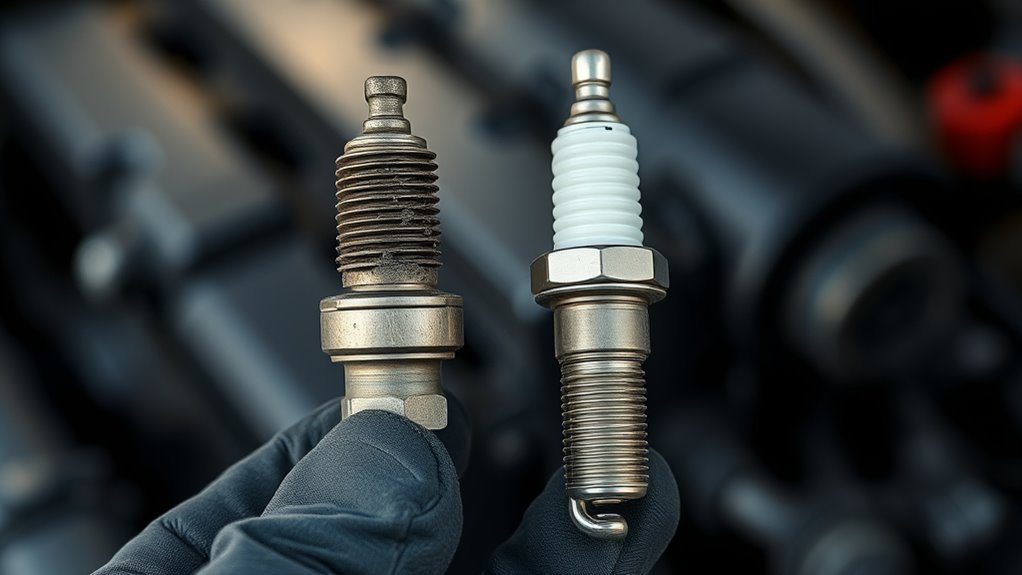
To accurately assess spark plug lifespan, inspect them periodically as part of routine maintenance. Remove the plugs and examine the electrodes for wear, deposits, or erosion, which indicate diminished performance.
Regularly inspect spark plugs for wear and deposits to ensure optimal engine performance.
Your ignition system relies on properly functioning spark plugs to generate the spark needed for combustion. If you detect excessive gap widening or fouling, these signs point to decreased spark plug effectiveness, compromising ignition timing and engine operation.
Following manufacturer recommendations for replacement intervals, typically between 30,000 to 100,000 miles depending on plug type, ensures your ignition system operates efficiently, preventing engine issues and maintaining fuel economy.
What Are the Common Symptoms of Worn Spark Plugs?
How can you identify worn spark plugs before they cause serious engine problems? Pay close attention to common symptoms that signal degradation beyond the typical spark plug lifespan.
You may notice ignition issues such as engine misfires, rough idling, or difficulty starting your vehicle. Reduced fuel efficiency and sluggish acceleration are also telltale signs that your spark plugs aren’t firing efficiently.
These symptoms occur because worn plugs can’t maintain a consistent spark, disrupting combustion. Additionally, increased exhaust emissions may indicate incomplete fuel burning caused by spark plug wear.
Recognizing these symptoms early allows you to address ignition issues promptly, preventing further engine damage.
Monitoring these signs helps facilitate timely spark plug replacement, maintaining engine performance and reliability.
How to Inspect Spark Plugs for Wear and Damage
You’ll want to start by visually inspecting the spark plugs for signs of wear such as carbon buildup, oil deposits, or electrode erosion.
Pay close attention to the gap size and any discoloration that indicates overheating or fouling.
Identifying these common issues helps determine if replacement is necessary for ideal engine performance.
Visual Inspection Techniques
Before deciding to replace your spark plugs, you need to perform a thorough visual inspection to identify signs of wear and damage.
Begin by cleaning the spark plug surface to reveal accurate visual cues such as electrode erosion, deposits, or cracks.
Use inspection tools like a magnifying glass or a spark plug gauge for precise assessment.
Check the electrode gap with a feeler gauge to verify it matches manufacturer specifications.
Look for discoloration indicating overheating or oil fouling, which signals combustion issues.
Also, examine the insulator for chips or fractures.
Document any abnormalities, as even minor damage can affect performance.
A systematic visual inspection using proper tools helps you determine whether replacement is necessary, preventing engine misfires and maintaining peak efficiency.
Common Spark Plug Issues
Although spark plugs are designed for durability, they inevitably develop specific issues over time that impair engine performance. When inspecting your spark plugs, pay close attention to electrode wear and deposits.
Different spark plug types, such as copper, platinum, and iridium, show wear distinctively. Copper plugs wear faster, while iridium types resist erosion longer. Look for signs like electrode rounding, gap widening, or heavy carbon buildup, which can cause misfires and reduced fuel efficiency.
Cracks or melted electrodes indicate overheating, directly impacting combustion quality. By regularly examining these wear patterns and damages, you can assess the spark plug’s condition and its performance impact on your engine.
Timely replacement based on these observations guarantees peak ignition and prevents further mechanical issues.
How Often Should You Change Spark Plugs?
You should follow your vehicle manufacturer’s specific interval for spark plug replacement, as it varies by engine design.
Keep in mind that severe driving conditions, like frequent idling or stop-and-go traffic, can shorten spark plug life.
Additionally, the type of spark plug material—copper, platinum, or iridium—affects how often you need to change them.
Manufacturer Recommendations
Since spark plug performance directly affects engine efficiency, manufacturers provide specific guidelines on replacement intervals based on vehicle make, model, and spark plug type.
You should always consult your vehicle’s owner manual or manufacturer specifications to determine the recommended spark plug lifespan.
These guidelines consider factors such as material composition, including copper, platinum, or iridium, and engine design.
For example, copper plugs typically require replacement every 20,000 to 30,000 miles, while iridium plugs can last up to 100,000 miles.
Adhering to these manufacturer specifications guarantees peak combustion, fuel economy, and emissions control.
Ignoring these intervals can lead to misfires, reduced power, and increased emissions.
Driving Conditions Impact
While manufacturer guidelines provide a baseline, driving conditions greatly influence how often you should change spark plugs.
For example, urban vs. rural environments impose different stresses on spark plugs. In urban settings, frequent idling and stop-and-go traffic cause incomplete combustion, leading to carbon buildup that degrades spark plug performance faster.
Conversely, rural driving typically involves steady speeds, resulting in less fouling and extended spark plug life.
Additionally, weather effects play a significant role. Extreme cold can cause misfires and increased wear due to harder starts, while hot, humid conditions may accelerate electrode corrosion.
Considering these factors, if you often drive in harsh urban traffic or experience severe weather, you should inspect and replace spark plugs more frequently than the standard interval to maintain peak engine efficiency.
Spark Plug Material Differences
Different spark plug materials affect their durability and performance, which directly influences how often you need to replace them.
Standard copper spark plugs, with their ceramic insulators, typically require replacement every 20,000 to 30,000 miles due to faster electrode wear.
In contrast, spark plugs featuring platinum tips offer enhanced longevity, often lasting up to 60,000 miles because platinum resists erosion and maintains a stable spark gap.
Iridium spark plugs, though not mentioned here, last even longer but are costlier.
The ceramic insulators provide excellent heat resistance and electrical insulation across all types, but the electrode material primarily dictates lifespan.
Understanding these differences helps you schedule replacements effectively, ensuring peak engine performance and preventing misfires or fuel inefficiency caused by worn spark plugs.
Always consult your vehicle’s manual to match the recommended spark plug material with your engine’s requirements.
How Driving Habits Affect Spark Plug Lifespan
Although spark plugs are designed to last for a specific mileage, your driving habits greatly influence their actual lifespan. Urban driving, characterized by frequent stops and idling, causes more carbon deposits and electrode wear, reducing spark plug efficiency.
Highway driving, with sustained speeds and stable engine temperatures, typically extends spark plug life by minimizing fouling. Understanding these differences helps you anticipate maintenance needs.
| Driving Style | Engine Conditions | Impact on Spark Plug Lifespan |
|---|---|---|
| Urban Driving | Frequent stops, idling | Increased fouling, shorter lifespan |
| Highway Driving | Steady speed, ideal temperature | Reduced fouling, longer lifespan |
| Aggressive Driving | High RPM, rapid acceleration | Accelerated electrode wear |
Adjust maintenance intervals based on your driving patterns to guarantee ideal engine performance.
Which Spark Plug Types Last the Longest?
Some spark plug materials outperform others in durability and longevity, directly impacting how often you’ll need replacements.
If you want plugs that last longer, consider these types:
- Copper plugs wear out fastest due to their softer material, typically lasting around 20,000 to 30,000 miles.
- Platinum plugs offer better durability, often lasting up to 60,000 miles thanks to a harder electrode that resists erosion.
- Double platinum plugs extend lifespan further by coating both center and ground electrodes, enhancing wear resistance.
- Iridium plugs deliver the longest lifespan, frequently exceeding 100,000 miles, due to iridium’s exceptional hardness and high melting point.
How to Choose the Right Spark Plugs for Your Car
When selecting spark plugs for your vehicle, you need to take into account factors such as engine type, manufacturer specifications, and driving conditions. Confirming spark plug compatibility is critical to maintain peak engine performance and prevent damage.
Refer to your vehicle’s manual for recommended spark plug brands and specifications like heat range and electrode material. Consider iridium or platinum plugs for durability if your driving involves high temperatures or long distances.
| Factor | Importance |
|---|---|
| Engine Type | Confirms proper fit and function |
| Manufacturer Specs | Assures compatibility |
| Driving Conditions | Affects durability choice |
| Spark Plug Brands | Quality and reliability |
Choosing the right spark plugs tailored to these factors confirms your engine runs efficiently and reliably.
How Bad Spark Plugs Hurt Your Engine’s Performance
Three main ways bad spark plugs can degrade your engine’s performance include misfiring, reduced fuel efficiency, and increased emissions.
When spark plug performance deteriorates, it directly impacts engine efficiency. Here’s how:
- Misfiring: Faulty spark plugs cause inconsistent ignition timing, leading to engine misfires and rough idling.
- Power Loss: Poor spark plug performance reduces combustion effectiveness, decreasing overall engine power.
- Fuel Consumption: Inefficient combustion forces your engine to burn more fuel, lowering fuel economy.
- Emissions: Incomplete combustion from bad plugs increases harmful exhaust emissions, negatively affecting environmental compliance.
Frequently Asked Questions
Can Bad Spark Plugs Cause Your Car to Fail an Emissions Test?
Yes, bad spark plugs can cause your car to fail emissions tests by disrupting combustion efficiency.
If you don’t replace them within the recommended spark plug lifespan, your vehicle may struggle to meet emissions standards consistently.
Do Spark Plugs Affect Fuel Efficiency Significantly?
Yes, worn spark plugs reduce combustion efficiency, increasing fuel consumption. Maintaining ideal spark plug lifespan guarantees precise ignition timing, improving fuel efficiency and engine performance while preventing excessive fuel use and emissions.
Is It Safe to Replace Spark Plugs Yourself?
Yes, it’s safe if you follow DIY maintenance guidelines and use proper spark plug tools. Verify your engine is cool, disconnect the battery, and handle spark plugs carefully to avoid damage and guarantee precise installation.
How Do Cold Weather Conditions Impact Spark Plug Performance?
You’ll find that cold weather reduces spark plug efficiency by up to 20%, affecting ignition timing and causing harder starts. Prioritizing winter maintenance guarantees consistent spark, ideal combustion, and reliable engine performance in low temperatures.
Can Using the Wrong Spark Plugs Damage Your Engine?
Yes, using the wrong spark plug types can damage your engine by causing misfires or excessive wear. Always verify engine compatibility to maintain ideal combustion, prevent fouling, and avoid costly repairs or reduced performance.
Conclusion
Knowing when to replace your spark plugs can save you costly engine repairs. Studies show that worn spark plugs can reduce fuel efficiency by up to 30%, directly impacting your wallet and emissions.
By regularly inspecting and understanding how driving habits affect their lifespan, you’ll keep your engine running smoothly. Choose the right type for your vehicle, and don’t wait for symptoms—routine maintenance guarantees peak performance and longevity.
Stay proactive to avoid unexpected breakdowns. Remember, knowing when to replace spark plugs is essential for maintaining your vehicle’s health and efficiency.