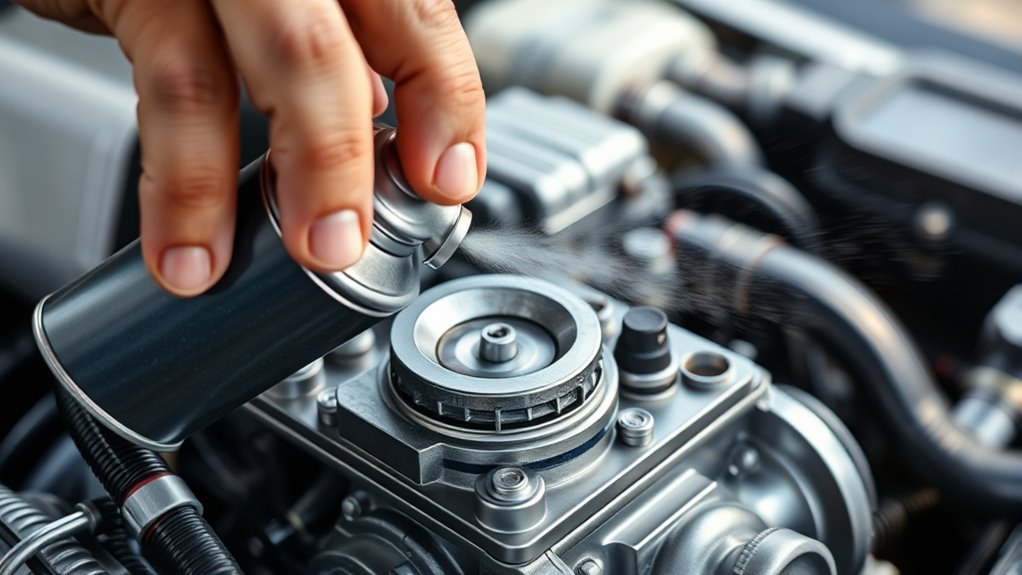

You should spray carburetor cleaner on key parts like the throttle body, choke plate, idle jets, float bowl, and needle valve to remove dirt and buildup.
Target the throttle plate edges and idle air passages for smooth operation. Apply cleaner carefully on choke linkages and jets, using compressed air if needed.
Clean the float bowl interior to prevent fuel issues. Following a precise, systematic approach guarantees peak performance.
Keep exploring to uncover detailed cleaning steps and safety tips.
Key Takeaways
- Spray carburetor cleaner on throttle plate edges and idle air passages to remove sticky residue and maintain airflow.
- Target the choke plate and linkage pivot points to dissolve grime and ensure smooth choke operation.
- Apply cleaner into jets and narrow passages, then use compressed air to clear clogs without damaging fine orifices.
- Direct cleaner inside the float bowl to eliminate varnish and sediment that affect fuel flow and regulation.
- Focus on the needle valve seat and tip with short bursts to prevent fuel overflow and ensure a tight seal.
Identify Main Carburetor Parts for Cleaning With Carburetor Cleaner
Before you spray carburetor cleaner, you need to identify the main parts that require attention. Focus on critical carburetor components such as the throttle body, choke plate, jets, and float bowl. These areas accumulate dirt, varnish, and carbon deposits that hinder performance.
Use targeted cleaning techniques to reach narrow passages and remove buildup effectively. Start by examining the throttle body for sticky residue impacting valve movement.
Next, inspect the choke plate for grime that can cause sticking. Jets require careful cleaning because clogged orifices disrupt fuel flow.
Finally, clean the float bowl thoroughly to prevent sediment from entering fuel lines. By precisely targeting these components, you guarantee peak carburetor function and prolong engine life.
Avoid indiscriminate spraying; instead, apply cleaner methodically to each part.
Safety Tips for Using Carburetor Cleaner
You need to work in a well-ventilated area to prevent inhaling harmful fumes from the carburetor cleaner.
Always wear protective gloves and safety goggles to shield your skin and eyes from chemical exposure.
Keep the cleaner away from any open flames or heat sources, as it’s highly flammable.
Proper Ventilation Importance
Although carburetor cleaner effectively removes deposits, it releases fumes that can pose serious health risks if inhaled in confined spaces. You must prioritize proper ventilation techniques to guarantee safe use. Establish continuous air circulation by opening windows and doors or using exhaust fans.
Avoid spraying in enclosed areas without airflow to minimize fume concentration.
| Ventilation Techniques | Air Circulation Methods |
|---|---|
| Open multiple windows | Use exhaust fans |
| Keep doors open | Position fans for crossflow |
| Use portable air movers | Guarantee fresh air intake |
| Avoid enclosed spaces | Maintain steady airflow |
Applying these measures reduces hazardous inhalation risks, maintaining a safe environment while using carburetor cleaner.
Protective Gear Recommendations
Three essential pieces of protective gear guarantee your safety when using carburetor cleaner: gloves, eye protection, and respiratory masks.
Always wear chemical-resistant protective gloves to prevent skin contact with the cleaner’s corrosive components. Select gloves rated for chemical resistance to withstand solvents found in carburetor cleaner.
Safety goggles are vital to shield your eyes from splashes and airborne particles. Use tight-fitting goggles that create a seal around your eyes, avoiding gaps that could allow exposure.
Additionally, a properly fitted respiratory mask protects you from inhaling harmful fumes. Confirm the mask has organic vapor cartridges suitable for solvent vapors.
Don’t skip any of these protective measures; each safeguards a critical point of exposure. Following this methodical approach minimizes health risks while you spray carburetor cleaner.
Avoiding Flame Sources
Because carburetor cleaner contains highly flammable solvents, you must keep it away from all flame sources and sparks during use. Ignition sources can easily trigger flame hazards, leading to fire or explosion. Identify and eliminate potential ignition sources before spraying.
Work in a well-ventilated area free from open flames, pilot lights, or electrical sparks. Use the table below to recognize common ignition sources and precautions:
| Ignition Source | Risk Level | Precaution |
|---|---|---|
| Open Flames | High | Extinguish before use |
| Electrical Sparks | Moderate High | Disconnect power, avoid switches |
| Hot Surfaces | Moderate | Cool engine parts prior |
| Static Electricity | Low Moderate | Ground yourself & equipment |
Spray Carburetor Cleaner on the Throttle Body
When you spray carburetor cleaner on the throttle body, focus on the throttle plate edges to remove built-up deposits.
Make certain to clean the idle air passages thoroughly to maintain proper airflow.
Avoid spraying any electrical components to prevent damage and ascertain safety.
Targeting Throttle Plate Edges
Focus your carburetor cleaner spray directly on the edges of the throttle plate within the throttle body. This area accumulates carbon deposits that hinder smooth throttle operation.
Use a precise cleaning technique to guarantee peak performance without damaging sensitive components.
When targeting the throttle plate edges, consider these steps:
Hold the throttle plate open manually to expose edges fully.
Apply short bursts of carburetor cleaner to dissolve varnish and buildup.
Use a soft brush or cloth to gently remove loosened debris without scratching.
This method prevents sticking and guarantees accurate air-fuel mixture regulation.
Avoid oversaturating to protect sensors and electrical parts.
Cleaning Idle Air Passages
To clean idle air passages effectively, start by spraying carburetor cleaner directly into the throttle body openings where these passages reside.
These small channels allow critical idle air flow, so any buildup can cause rough idling or stalling.
Use a straw attachment to precisely target the cleaner into the passages without overspray.
Allow the cleaner to dissolve carbon deposits and loosen grime inside the idle air circuits.
After saturating the passages, actuate the throttle slightly to help dislodge contaminants.
Wipe away loosened debris from accessible surfaces with a lint-free cloth.
Repeat the process if necessary until the idle air passages are visibly clear and free of residue.
Proper passage cleaning guarantees consistent idle air delivery, stabilizing engine performance at low RPMs.
Avoiding Electrical Components
Although cleaning the throttle body is essential, you must avoid spraying carburetor cleaner directly on electrical components. Prioritizing electrical safety and component protection guarantees you don’t damage sensitive parts during maintenance.
When applying cleaner, focus on the mechanical surfaces while keeping the following in mind:
- Shield connectors and wiring harnesses with plastic covers or tape to prevent accidental contact.
- Use controlled, short bursts of cleaner to minimize overspray near electrical parts.
- Disconnect the battery if possible to eliminate risks of short circuits or sparks.
How to Spray Cleaner on the Choke Plate and Linkages
When cleaning the choke plate and linkages, you’ll need to carefully target the moving parts to remove built-up grime without causing damage.
Begin by spraying a controlled amount of carburetor cleaner directly onto the choke plate, ensuring you reach the edges where residue tends to accumulate.
Next, focus on linkage cleaning by applying cleaner along the pivot points and joints to free any stuck movements. Use a small brush or a soft cloth to gently agitate stubborn deposits while avoiding excessive force that could misalign components.
Apply cleaner to pivot points and gently agitate with a soft brush to free stuck linkages without damage.
Allow the cleaner to penetrate for a few minutes before cycling the choke mechanism manually to dislodge loosened debris.
Finally, wipe away excess cleaner and grime to prevent recontamination, ensuring the choke plate and linkages operate smoothly and effectively.
Clean the Idle Jets and Passages Carefully
After guaranteeing the choke plate and linkages move freely, focus on cleaning the idle jets and passages, which regulate fuel flow at low engine speeds. Proper idle jet maintenance prevents rough idling and stalling. Use precise cleaning techniques to avoid damaging delicate components.
Start by removing deposits with carburetor cleaner sprayed directly into these narrow passages. Then, employ these steps:
Use compressed air to blow out loosened debris from the jets and passages. Inspect jets visually for clogging or corrosion. Repeat spraying and air-blowing cycles until all blockages clear.
Be methodical and patient; incomplete cleaning can cause poor engine performance. Avoid using excessive force to maintain the integrity of these fine orifices.
These targeted cleaning techniques guarantee ideal fuel atomization during idle conditions.
Spray Cleaner on the Float Bowl and Needle Valve
Two critical components to target next are the float bowl and needle valve, as they regulate fuel entry and level within the carburetor. For effective float bowl maintenance, spray carburetor cleaner directly into the bowl to dissolve varnish and debris.
During needle valve cleaning, focus on the valve seat and the needle tip to guarantee a tight seal, preventing fuel overflow or starvation. Use short bursts of cleaner and allow residues to drain for ideal results.
| Component | Cleaning Focus | Technique |
|---|---|---|
| Float Bowl | Interior surfaces | Spray and drain debris |
| Needle Valve | Valve tip & seat | Direct spray, short bursts |
| Fuel Inlet | Passageways | Flush with cleaner |
| Float Pin | Pivot points | Light spray, wipe clean |
| Bowl Gasket | Sealing surface | Inspect for damage |
Frequently Asked Questions
Can Carburetor Cleaner Damage Rubber or Plastic Engine Parts?
Yes, carburetor cleaner effects can damage rubber or plastic parts because of rubber sensitivity. You should avoid spraying these materials directly to prevent degradation, swelling, or cracking during cleaning or maintenance procedures.
How Often Should I Clean My Carburetor With Carburetor Cleaner?
Like clockwork, you should perform carburetor maintenance every 12,000 miles or annually, whichever comes first. This cleaning frequency prevents buildup and guarantees peak fuel flow, keeping your engine running smoothly and efficiently without damage.
Is It Safe to Spray Carburetor Cleaner on a Hot Engine?
You shouldn’t spray carburetor cleaner on a hot engine due to high engine temperature risks. Always let the engine cool first, following safety precautions to prevent fire hazards and chemical burns during cleaning.
Can Carburetor Cleaner Improve Fuel Efficiency?
Yes, using carburetor cleaner can improve your fuel system’s efficiency by removing deposits, resulting in performance enhancement. Regular cleaning guarantees ideal fuel atomization, reducing consumption and emissions, ultimately boosting your engine’s overall fuel economy and reliability.
What Should I Do if Carburetor Cleaner Causes Engine Stalling?
If your engine stalls after using carburetor cleaner, act like a detective: methodically revisit engine troubleshooting steps and refine your cleaning techniques. Ensure no residue blocks passages or sensors, restoring smooth operation and preventing future stalls.
Conclusion
By targeting key areas like the throttle body, choke plate, idle jets, and float bowl with carburetor cleaner, you guarantee peak engine performance. For example, a small engine mechanic once restored a stubborn lawnmower by meticulously spraying cleaner on the idle jets and needle valve, eliminating fuel flow issues.
Following these precise steps not only prevents damage but also maximizes cleaning efficiency. Always remember to work methodically and adhere to safety guidelines for the best results.
In conclusion, knowing where to spray carburetor cleaner is essential for maintaining optimal engine function and ensuring a thorough cleaning process.