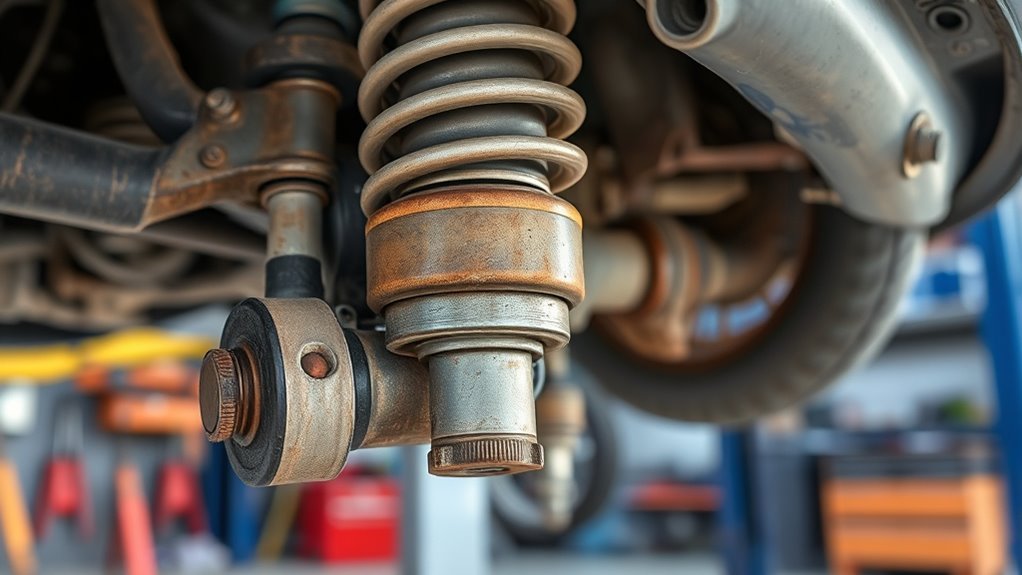

You should replace your shocks and struts every 50,000 to 100,000 miles or sooner if you notice signs like excessive bouncing, fluid leaks, or uneven tire wear. These shocks and struts control your suspension’s impact and rebound, affecting handling, braking, and ride comfort.
Ignoring wear can reduce stability and increase stopping distances. Regular inspections help detect issues early, preserving safety and performance.
Find out how conditions and driving habits influence replacement timing and what to expect during the process.
Key Takeaways
- Replace shocks and struts between 50,000 and 100,000 miles, or sooner if driving conditions are harsh.
- Inspect for fluid leaks, excessive bouncing, or uneven tire wear as signs to replace shocks and struts.
- Reduced steering control, increased braking distance, and poor ride comfort indicate the need for replacement.
- Perform a bounce test and road test regularly to detect loss of damping effectiveness.
- Follow vehicle manufacturer’s maintenance schedule and replace shocks and struts during routine suspension inspections.
How Shocks and Struts Affect Your Car’s Ride and Safety
Although shocks and struts may seem like simple components, they play a critical role in stabilizing your vehicle’s suspension system by controlling the impact and rebound of your springs and tires.
Shock absorber technology uses hydraulic fluid to dampen oscillations, ensuring your tires maintain consistent road contact. This precise control improves handling, braking efficiency, and ride comfort.
Meanwhile, strut assembly design integrates the shock absorber with structural support, bearing weight and aligning suspension geometry. This design enhances vehicle stability and steering responsiveness.
When these components function properly, you experience smoother rides and safer control, especially on uneven surfaces or during sudden maneuvers.
Understanding how shock absorber technology and strut assembly design work helps you appreciate their essential contribution to your car’s performance and safety.
Common Signs Your Shocks and Struts Are Worn Out
You’ll notice worn shocks and struts if you see visible fluid leaks around their bodies or if your car bounces excessively after hitting bumps.
These symptoms indicate the damping ability has deteriorated, compromising ride control and safety.
Recognizing these signs early helps you address suspension issues before they worsen.
Visible Fluid Leaks
When you notice fluid leaking from your shocks or struts, it’s a clear indication that the internal seals have failed. This failure compromises the damping capability, reducing ride quality and vehicle control.
Performing timely leak detection is vital; inspect the shocks and struts for oil stains or wetness around the casing. Fluid maintenance isn’t just about topping off; it involves replacing components when fluid loss occurs, as the hydraulic fluid inside controls shock absorption.
Ignoring visible leaks can accelerate wear, potentially damaging suspension components. Regular inspections help identify leaks early, preventing further deterioration.
If you spot fluid on the exterior of your shocks or struts, arrange for immediate replacement to restore proper suspension function and guarantee safe handling of your vehicle.
Excessive Bouncing
If your vehicle continues to bounce excessively after hitting a bump, it’s a strong indicator that your shocks or struts have lost their damping effectiveness. This symptom directly impacts ride comfort and vehicle control, signaling the need for immediate shock absorber maintenance.
Excessive bouncing occurs because worn shocks or struts fail to absorb and dissipate kinetic energy efficiently, causing prolonged oscillations. During a strut performance evaluation, technicians assess rebound and compression resistance to determine if replacement is necessary.
Ignoring this sign compromises braking efficiency and tire contact with the road, increasing safety risks. Regular inspections focusing on bounce tests help detect deteriorated components early, ensuring ideal suspension function.
Addressing excessive bouncing promptly maintains vehicle stability, enhances handling, and prolongs suspension system lifespan.
How Worn Shocks and Struts Affect Your Car’s Handling
When your shocks and struts wear out, you’ll notice reduced steering control that makes handling less predictable.
This wear also increases your braking distance, compromising safety during sudden stops.
Additionally, uneven tire wear occurs because the suspension can’t keep the tires firmly planted on the road.
Reduced Steering Control
As shocks and struts wear down, you’ll notice a significant decline in your vehicle’s steering responsiveness and overall handling precision.
Worn components reduce the suspension’s ability to absorb impacts, causing your wheels to lose contact with the road during maneuvers. This degradation directly impairs steering response, making your vehicle feel less stable and more difficult to control, especially on uneven surfaces or during sharp turns.
When steering feedback diminishes, your driving confidence naturally decreases, increasing the risk of overcorrection or understeering.
Maintaining properly functioning shocks and struts guarantees consistent tire contact, allowing precise steering inputs to translate effectively into vehicle movement.
To preserve ideal handling and maintain your driving confidence, it’s essential to replace worn shocks and struts promptly before reduced steering control compromises safety.
Increased Braking Distance
Anyone driving a vehicle with worn shocks and struts will notice a marked increase in braking distance. This decline in braking performance stems from the suspension’s inability to maintain tire contact with the road during deceleration, raising significant safety concerns.
The compromised system leads to instability, especially on uneven surfaces, prolonging stopping time and distance.
| Condition | Impact on Braking Distance |
|---|---|
| New Shocks and Struts | Ideal tire-road contact, shortest stopping distance |
| Moderately Worn | Reduced damping, increased stopping distance by 10-20% |
| Severely Worn | Poor control, increased stopping distance over 30% |
Your vehicle’s safety depends on timely replacement to restore effective braking and reduce hazards.
Uneven Tire Wear
Uneven tire wear often signals that your shocks and struts are no longer performing at their best. These components play an essential role in maintaining proper tire alignment by stabilizing your vehicle’s suspension health.
When shocks and struts wear out, they fail to control the up-and-down movement of the wheels, causing inconsistent contact with the road surface. This leads to irregular tread wear patterns such as cupping or scalloping, which directly impact handling and safety.
You might notice vibrations or pulling during driving, indicating compromised suspension performance. Addressing worn shocks and struts promptly helps restore correct tire alignment, improves suspension health, and prevents premature tire replacement.
Regular inspections guarantee your vehicle maintains ideal grip and control, enhancing overall driving stability.
Testing Your Shocks and Struts at Home
You can perform several simple tests at home to evaluate the condition of your shocks and struts. A DIY inspection helps you identify wear before it compromises safety.
Begin with these shock testing steps:
- Bounce Test: Push down firmly on each corner of the vehicle. If it bounces more than twice, shocks or struts may be worn.
- Visual Check: Inspect for fluid leaks or damaged mounts.
- Tire Wear Assessment: Look for uneven wear patterns, indicating suspension issues.
- Road Test: Drive over bumps and observe vehicle stability; excessive sway signals shock or strut failure.
These methods provide a preliminary assessment, guiding you on when professional evaluation is necessary.
Regular DIY inspection guarantees ideal suspension performance and safety.
When to Replace Shocks and Struts by Mileage
Most manufacturers recommend inspecting shocks and struts every 50,000 miles, but replacement intervals can vary based on driving conditions and vehicle type.
Inspect shocks and struts every 50,000 miles; replacement depends on driving conditions and vehicle type.
Mileage recommendations typically suggest replacing these components between 50,000 and 100,000 miles to maintain peak vehicle control and safety.
You should adhere to maintenance intervals outlined in your vehicle’s service manual, as neglecting timely replacement can lead to uneven tire wear, decreased braking efficiency, and compromised suspension performance.
If you’ve logged more than 75,000 miles without inspection, it’s prudent to evaluate the shocks and struts, even if no symptoms are apparent.
Regular checks aligned with mileage recommendations guarantee you catch wear early, preventing costly damage.
Staying on top of these maintenance intervals keeps your ride smooth and safe over time.
How Weather and Driving Habits Affect Shocks and Struts
Several environmental factors and driving behaviors directly impact the lifespan and effectiveness of your shocks and struts.
Understanding the climate impact and your driving style can help you anticipate wear and schedule timely replacements.
- Extreme Temperatures: Hot climates can degrade seals and fluid faster, while cold climates may cause stiffness, reducing shock absorber efficiency.
- Road Conditions: Frequent driving on rough or unpaved roads accelerates wear due to increased vibrations and impacts.
- Driving Style: Aggressive acceleration, hard braking, and sharp turns place additional stress on suspension components.
- Seasonal Exposure: Prolonged exposure to moisture, salt, or debris leads to corrosion and component deterioration.
Choosing Replacement Shocks and Struts
How do you determine the best replacement shocks and struts for your vehicle? Start by identifying the shock types compatible with your car. Standard twin-tube, monotube, or gas-charged shocks each offer distinct performance characteristics.
Next, consider the strut brands known for reliability and durability. OEM brands guarantee factory specifications, while aftermarket brands may provide performance enhancements or cost savings.
Match the shock and strut specifications to your driving conditions and vehicle load requirements to maintain handling and comfort. Consult manufacturer guidelines for exact fitment and damping rates.
What to Expect During Shock and Strut Replacement
Expect the shock and strut replacement process to take between one to two hours, depending on your vehicle’s make and model.
During the shock installation process, the mechanic will first elevate the vehicle and safely remove the wheel to access the suspension components. Then, they’ll detach the old shocks or struts, paying close attention to strut alignment considerations to maintain proper handling and tire wear.
Finally, they’ll install the new units and reassemble the suspension components.
Here’s what you can expect in detail:
- Vehicle lift and wheel removal
- Removal of old shocks/struts
- Installation of new shocks/struts with precise alignment
- Final torque checks and wheel reinstallation
This guarantees your suspension performs effectively post-replacement.
Frequently Asked Questions
Can I Replace Shocks and Struts Myself Without Professional Help?
You can replace shocks and struts yourself if you have the right tools and mechanical skills. DIY mechanics need spring compressors and wrenches.
Improper handling risks injury, so guarantee you follow precise, technical instructions carefully.
Do Shocks and Struts Come With a Warranty?
Yes, shocks and struts often come with warranty coverage, typically covering defects and premature failure.
Keep in mind, warranty length varies by brand and model, so check specifics relative to shock lifespan and expected performance.
How Do Aftermarket Shocks Compare to OEM Parts?
Aftermarket shocks often offer cost-effective benefits, but you may notice performance differences compared to OEM parts.
OEM shocks guarantee precise fit and reliability, while aftermarket options can vary in quality and may affect handling consistency.
Will Replacing Shocks Improve Fuel Efficiency?
Replacing shocks can slightly improve fuel efficiency by maintaining ideal tire contact and reducing rolling resistance.
Regular shock maintenance guarantees suspension performance, which in turn supports smoother rides and better fuel economy over time.
Can Shocks and Struts Be Repaired Instead of Replaced?
Like fixing a broken phonograph, you can’t truly repair shock absorber maintenance or strut repair techniques; these parts wear out and need replacement to guarantee safety and performance. Repairs only offer temporary fixes.
Conclusion
Don’t let worn shocks and struts turn your smooth ride into a bouncing nightmare or a safety hazard on wheels. Ignoring them is like driving on marshmallows—unstable, unpredictable, and downright dangerous. Replace them promptly to restore precise handling, superior comfort, and rock-solid safety.
Remember, your car’s suspension isn’t just a part; it’s the difference between controlled confidence and chaotic chaos. Keep it sharp, and you’ll feel every mile, not dread it.
When it comes to your vehicle’s performance and safety, timely replacement of shocks and struts is essential. Properly maintained shocks and struts ensure a stable ride and help prevent accidents, making them a critical component to monitor and replace as needed.