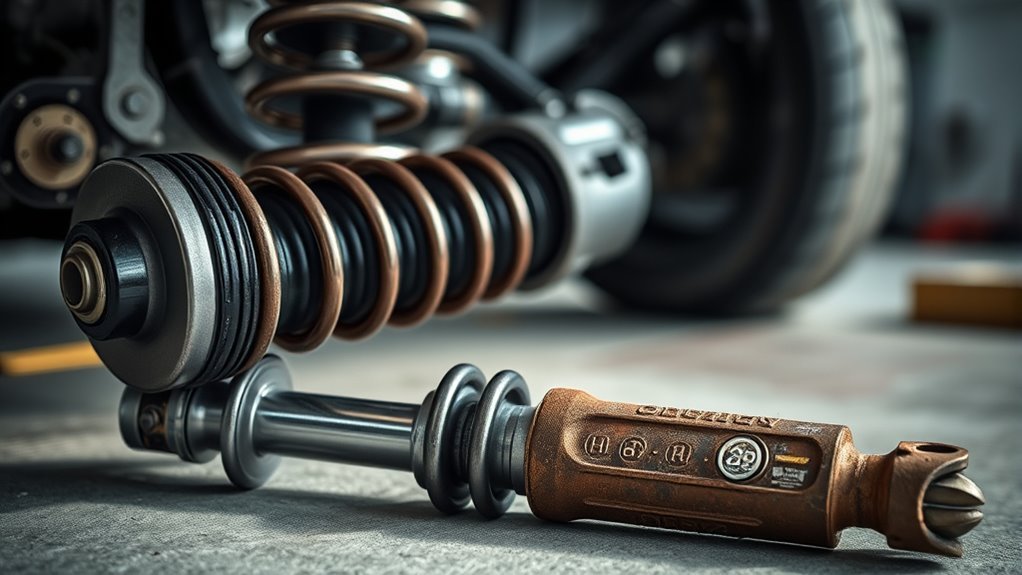

You can expect your shocks to last between 50,000 and 100,000 miles, though this varies with your vehicle type, driving style, and maintenance.
Rough terrain, heavy loads, and aggressive driving wear shocks faster, while regular inspections help catch issues early. Different vehicles, like trucks or luxury cars, affect shock longevity due to their design and usage.
If you want to understand how to spot wear signs, extend shock life, and select replacements, keep exploring these key insights.
Key Takeaways
- Shocks typically last between 50,000 to 100,000 miles depending on quality and usage conditions.
- Gas-charged shocks may offer slightly better durability compared to standard hydraulic shocks.
- Rough terrain, heavy loads, and aggressive driving significantly reduce shock lifespan.
- Regular inspections for leaks, uneven tire wear, and excessive bouncing help identify worn shocks early.
- Proper installation and maintenance extend shock life and improve vehicle stability and comfort.
How Long Do Shocks Typically Last?
While the lifespan of shocks can vary based on driving conditions and vehicle type, they typically last between 50,000 and 100,000 miles. You should understand that the shock lifespan depends on factors like shock design, materials, and manufacturing quality.
On average, the average durability of standard hydraulic shocks aligns with this range, providing consistent performance and ride comfort. Gas-charged shocks may offer improved durability but still fall within similar mileage parameters.
Monitoring shock lifespan involves regular inspections for leaks, diminished damping, and uneven tire wear. By adhering to manufacturer recommendations and maintenance schedules, you can maximize shock lifespan and guarantee ideal vehicle handling.
What Makes Shocks Wear Out Faster? (Includes Driving Habits)
Understanding the typical lifespan of shocks sets the stage for recognizing factors that accelerate their wear. Your driving conditions greatly impact shock durability; rough roads and frequent potholes cause faster deterioration.
Exceeding your vehicle’s recommended load capacity stresses shocks, leading to premature failure. Aggressive driving, such as rapid acceleration and hard braking, also contributes to quicker wear.
| Factor | Effect on Shock Wear |
|---|---|
| Rough terrain | Increases shock wear rate |
| Overloading | Exceeds load capacity, strains shocks |
| High-speed driving | Amplifies impact forces |
| Frequent stops/starts | Causes rapid shock cycling |
| Poor maintenance | Leads to corrosion and leaks |
How Does Vehicle Type Affect Shock Lifespan?
Because different vehicles face varying demands, the type of vehicle you drive directly influences how long your shocks will last.
For instance, SUVs prioritize durability to handle off-road conditions, which means their shocks are often built to endure heavier impacts but may still wear faster due to rough terrain exposure.
Trucks experience increased stress on shocks because of truck weight and frequent cargo loads, accelerating wear.
Sports cars emphasize performance and precise handling, so their shocks are tuned for responsiveness but may have shorter lifespans due to stiffer suspensions and aggressive driving.
Luxury vehicles focus on comfort, using shocks designed to absorb minor vibrations and maintain smooth rides, potentially extending shock lifespan under normal conditions.
Understanding your vehicle type helps you anticipate shock maintenance needs accurately.
Signs Your Shocks Need Replacing
If you notice uneven tire wear, it’s a clear sign your shocks aren’t distributing weight properly.
You might also feel excessive vehicle bouncing, indicating worn shock absorbers.
Additionally, longer braking distances can result from reduced shock performance, compromising your safety.
Uneven Tire Wear
When your shocks start to wear out, you’ll often notice uneven tire wear as an early warning sign. Worn shocks fail to maintain consistent tire contact with the road, causing irregular tread wear patterns.
This uneven wear can mimic tire alignment issues but stems from compromised shock absorption, leading to excessive bouncing and poor traction.
After shock installation, it’s essential to check and correct tire alignment to prevent accelerated tire degradation.
Ignoring uneven tire wear not only reduces tire lifespan but also impacts vehicle handling and safety.
Regularly inspect your tires for signs of cupping, scalloping, or patchy wear, which indicate your shocks may no longer be performing effectively.
Addressing shock wear promptly guarantees ideal tire performance and vehicle stability.
Excessive Vehicle Bouncing
One of the most noticeable signs that your shocks need replacing is excessive vehicle bouncing. When shocks wear out, they lose their ability to dampen the suspension’s oscillations, resulting in pronounced bouncing symptoms after hitting bumps or uneven surfaces.
You’ll feel your vehicle continue to oscillate vertically longer than usual, which directly affects ride comfort and stability. This excessive bouncing compromises your control, especially during cornering or abrupt maneuvers, increasing safety risks.
If you notice that your car’s body bounces multiple times after a single bump or that the ride feels unusually harsh or floaty, it’s a clear indicator that your shocks are no longer functioning properly.
Replacing worn shocks restores ideal damping, improving ride comfort and vehicle handling.
Longer Braking Distance
Although worn shocks might not seem directly related to braking, they greatly increase your vehicle’s stopping distance. When shocks degrade, they reduce tire contact with the road, impairing braking performance and raising significant safety concerns.
You might notice your car taking longer to stop, especially on wet or uneven surfaces.
| Shock Condition | Effect on Braking Distance |
|---|---|
| New | Ideal stopping distance |
| Moderately Worn | Increased by 10-15% |
| Severely Worn | Increased by 25% or more |
This table illustrates how braking distance worsens as shocks wear out. Maintaining your shocks in good condition guarantees better brake efficiency and reduces risks during emergency stops. Don’t ignore longer braking distances; it’s a clear sign your shocks need replacing.
How To Extend The Life Of Your Shocks
Regularly inspecting and maintaining your shocks can greatly extend their lifespan. Effective shock maintenance involves checking for leaks, worn mounts, and uneven tire wear.
Regular inspections and maintenance, like checking for leaks and worn mounts, significantly prolong shock lifespan.
Additionally, adopting proper driving techniques plays an essential role in preserving shock integrity.
To maximize shock longevity, focus on these key practices:
- Avoid aggressive driving behaviors such as rapid acceleration, hard braking, and sharp turns that stress shock absorbers.
- Regularly inspect suspension components for damage or wear and replace parts promptly.
- Maintain proper tire pressure to reduce unnecessary strain on shocks and suspension.
What To Expect When Replacing Shock Absorbers
You’ll notice signs like excessive bouncing or uneven tire wear indicating worn shocks.
The replacement process involves safely lifting the vehicle, removing the old shocks, and installing new ones with proper torque specifications.
After replacement, you’ll need to monitor alignment and suspension components to guarantee peak performance and longevity.
Signs Of Worn Shocks
Anyone driving with worn shocks will notice distinct changes in vehicle handling and comfort. Reduced shock performance leads to compromised stability, making your ride less controlled and more unpredictable.
Paying attention to these signs helps you prioritize shock maintenance before issues worsen.
Key indicators include:
- Excessive bouncing after bumps, revealing weakened damping capacity
- Unusual noises like clunking or rattling, indicating internal component wear
- Uneven tire wear from inconsistent road contact and suspension response
Recognizing these symptoms early guarantees you address shock absorber deterioration promptly, maintaining peak vehicle dynamics and safety.
Ignoring them can escalate damage, increasing repair costs and reducing ride quality.
Regular inspections focused on these signs are essential for sustaining shock performance and prolonging component life.
Replacement Process Overview
Identifying worn shocks is only the first step; understanding what happens during their replacement prepares you for the repair process ahead. When replacing shock absorbers, technicians first assess the specific shock absorber types installed, whether hydraulic, gas-charged, or coilover designs, as each requires distinct installation techniques.
The process begins by safely lifting the vehicle and removing the wheels to access the shocks. Next, mounting bolts and brackets are carefully detached, preventing any damage to suspension components.
The new shocks are then aligned precisely, following manufacturer torque specifications to guarantee maximum performance and longevity. After installation, all fasteners are double-checked for security.
Knowing these steps helps you anticipate the technical aspects involved and guarantees you receive a thorough, professional replacement tailored to your vehicle’s shock absorber configuration.
Post-Replacement Maintenance Tips
After replacing your shock absorbers, maintaining peak performance requires specific attention to several key factors.
Conduct a thorough post replacement inspection to verify correct installation and identify any immediate issues such as leaks or loose mounts.
Incorporate routine maintenance to extend shock lifespan and guarantee consistent vehicle handling.
Focus on these critical areas:
- Monitor shock absorber seals and bushings for wear or damage during regular inspections.
- Check tire condition and alignment, as improper settings can accelerate shock wear.
- Maintain correct vehicle load and avoid excessive weight that stresses shocks beyond design limits.
Tips For Choosing The Right Replacement Shocks
Although selecting the right replacement shocks can seem straightforward, understanding your vehicle’s specifications and driving conditions is essential for peak performance.
Begin by identifying the appropriate shock absorber types: monotube, twin-tube, or gas-charged. Each is designed for specific handling characteristics and load capacities.
Consult your owner’s manual or manufacturer guidelines to match shocks with your vehicle model. Consider your typical terrain and driving style; off-road or heavy-load conditions require more robust shocks.
Additionally, prioritize quality brands with proven durability.
When ready for installation, follow shock installation tips precisely: verify correct orientation, torque specifications, and secure mounting points to avoid premature wear or failure.
Proper selection combined with meticulous installation guarantees maximum ride comfort, vehicle stability, and shock longevity.
Frequently Asked Questions
Can Worn Shocks Affect My Vehicle’s Braking Distance?
Yes, worn shocks degrade your vehicle’s braking performance by reducing tire contact with the road.
Regular shock maintenance guarantees ideal stability and shorter braking distances, enhancing overall safety during sudden stops or emergency maneuvers.
Are Shock Absorbers Covered Under Vehicle Warranties?
Shock absorbers may be covered under your vehicle’s warranty, depending on the manufacturer and warranty terms. Check your warranty coverage details, as shock lifespan varies.
Some warranties exclude wear items like shocks after a certain mileage or time.
How Do Shocks Impact Fuel Efficiency?
Ever wonder how shock performance affects your ride’s fuel economy? Poor shocks increase rolling resistance and tire wear, forcing your engine to work harder.
Maintaining quality shocks guarantees smoother rides and peak fuel efficiency, saving you money.
Can I Replace Shocks Myself or Need a Mechanic?
You can tackle a DIY replacement if you have the right tools and knowledge, but shock maintenance demands precision. If you’re unsure about alignment or torque specs, it’s safer to hire a mechanic to avoid costly errors.
Do Shocks Affect Tire Wear Patterns?
Think of shocks as the guardians of your tire’s health; when worn, they disrupt tire alignment, causing uneven wear patterns. Keep an eye on wear indicators. They reveal if shocks need replacement to protect your tires effectively.
Conclusion
Now that you know how shocks wear down and what affects their lifespan, you might wonder—how soon will yours need replacing? Ignoring signs can lead to costly damage and compromised safety.
But don’t worry, with the right care and timely checks, you can extend their life considerably.
Ready to dive deeper into choosing the perfect shocks for your ride? Stay tuned, because understanding how long do shocks last could transform your driving experience.