Tag: shocks replacement

  • How Often to Replace Shocks

    How Often to Replace Shocks

    How Often to Replace Shocks is an important consideration for maintaining your vehicle’s performance and safety. You should replace your shocks every 50,000 miles or sooner if you notice signs like excessive bouncing, increased body roll, fluid leaks, or uneven tire wear.

    Driving on rough terrain or off-road speeds up wear, so inspect them regularly under harsh conditions. Keeping shocks in good shape guarantees vehicle stability and effective braking.

    If you want to understand how driving habits affect shock lifespan and how to spot issues early, keep exploring these key details.

    Key Takeaways

    • Inspect shocks every 50,000 miles or sooner if driving on rough terrain or experiencing performance issues.
    • Replace shocks promptly if you notice leaking fluid, excessive bouncing, or diminished handling.
    • Off-road and harsh driving conditions accelerate shock wear, requiring more frequent replacements.
    • Regular shock inspections during routine maintenance help detect wear before it affects safety and performance.
    • Delaying replacement worsens ride quality, braking distance, and can cause uneven tire wear and costly repairs.

    When to Replace Your Vehicle’s Shocks

    How do you know when your vehicle’s shocks need replacing? You monitor shock performance regularly through scheduled shock maintenance. Typically, shocks should be inspected every 50,000 miles or sooner if you drive on rough terrain.

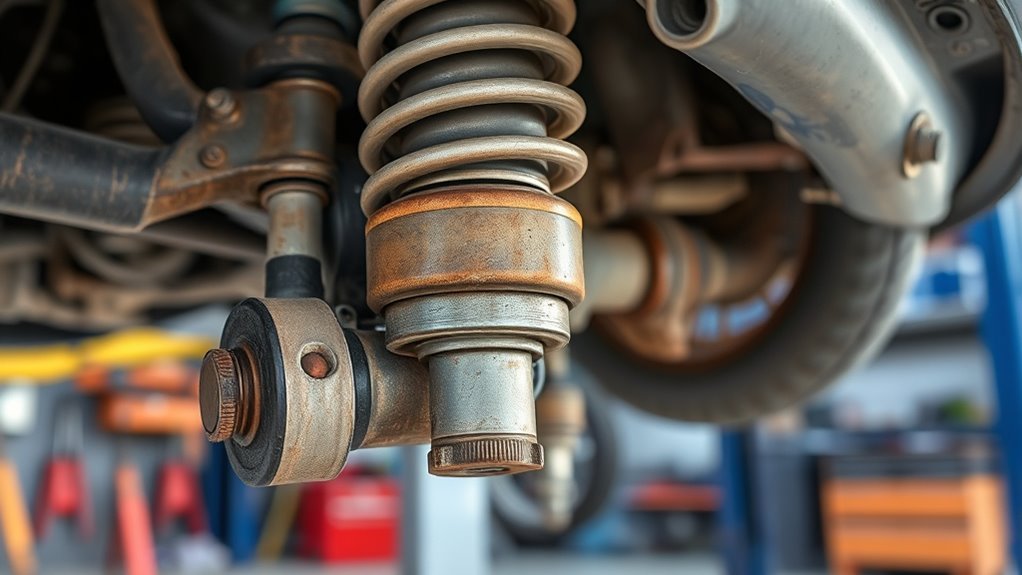
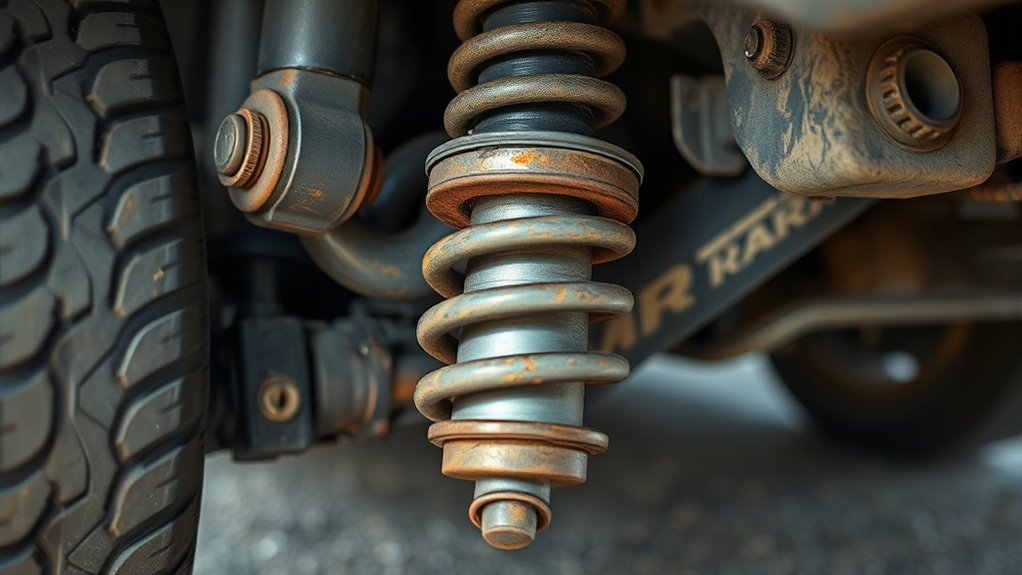
    During maintenance, assess for leaks, corrosion, and diminished damping efficiency, as these factors directly reduce shock performance. If the shocks fail to control suspension movement effectively, your vehicle’s stability and braking distance worsen, signaling replacement is necessary.

    Check for leaks, corrosion, and poor damping—if shocks can’t control suspension, stability and braking suffer.

    Additionally, shocks that no longer return smoothly or exhibit unusual noises during compression and rebound cycles compromise ride quality and safety.

    To maintain ideal shock performance, adhere to manufacturer guidelines and replace shocks promptly once they no longer meet performance standards.

    Proper shock maintenance guarantees stability, handling, and overall vehicle control.

    Signs Your Shocks Are Wearing Out

    Although shock absorbers are designed to last, you’ll notice specific signs when they start to wear out. Reduced shock absorber performance often leads to increased vehicle bouncing after bumps and poor absorption of road irregularities.

    You might also experience vehicle handling issues such as excessive body roll during turns, longer braking distances, or a loose steering feel. Uneven tire wear can indicate that shocks no longer maintain proper tire contact with the road.

    Additionally, visible fluid leaks around the shock housing signal internal seal failure, degrading performance. If you detect any of these symptoms, it’s essential to inspect or replace your shocks promptly to maintain safe handling and ride quality.

    Ignoring worn shocks compromises both comfort and control, increasing risk during driving.

    How Driving Conditions Affect Shock Replacement

    Since driving conditions vary widely, they greatly influence when you’ll need to replace your shocks. If you frequently encounter off-road impact, your shocks endure more stress, accelerating wear and compromising performance sooner.

    Rough terrains cause repeated jarring forces, which degrade shock absorbers faster than smooth surfaces do. Conversely, urban driving typically involves stop-and-go traffic and occasional potholes, which also strain your shocks but less intensely than off-road conditions.

    Rough terrain rapidly wears shocks, while urban driving causes milder but still noticeable strain.

    However, constant braking and acceleration can still reduce shock lifespan. To maintain ideal suspension function, assess your driving environment carefully. Regularly inspect shocks if you face harsh conditions.

    Understanding how your routes affect shock wear helps you schedule timely replacements, ensuring safety and ride quality without unnecessary expense.

    Tips to Extend the Life of Your Shocks

    To maximize the lifespan of your shocks, you should regularly perform maintenance that reduces unnecessary stress on the suspension system.

    Begin with routine inspections to identify leaks, dents, or corrosion, as these issues accelerate wear.

    Follow shock maintenance tips like keeping your tires properly inflated and aligned, which decreases uneven forces on your shock absorbers.

    Avoid aggressive driving over rough terrain when possible, as repeated impacts degrade shock absorber seals and internal components.

    Additionally, clean the shocks and surrounding areas to prevent dirt buildup that can compromise performance.

    Prioritize timely replacement of other suspension parts, like bushings and mounts, to guarantee your shocks operate under ideal conditions.

    Consistent shock absorber care preserves ride quality, handling, and safety, ultimately extending shock service life effectively.

    What Happens If You Delay Shock Replacement

    When you delay replacing worn shocks, your vehicle’s handling and braking performance deteriorate considerably. Reduced shock performance means your tires lose consistent contact with the road, increasing stopping distances and compromising safety.

    Additionally, your ride quality suffers as worn shocks fail to absorb road impacts effectively, leading to a harsher, less controlled driving experience. Prolonged neglect can cause uneven tire wear and strain suspension components, escalating repair costs.

    You may also experience increased body roll and instability during cornering, making your vehicle harder to control. Addressing shock replacement promptly guarantees peak shock performance, maintains ride quality, and preserves vehicle safety.

    Don’t wait for symptoms to worsen; regular inspections and timely replacements keep your suspension functioning correctly and protect your investment.

    Frequently Asked Questions

    Can I Replace Shocks Myself or Should I Hire a Professional?

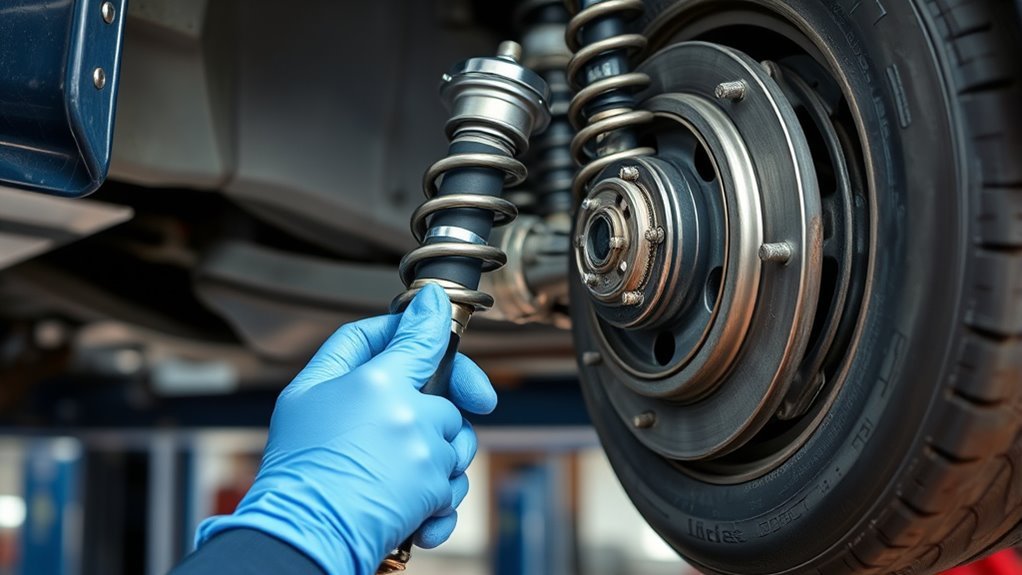
    You can replace shocks yourself if you’re comfortable using DIY tools and following shock installation tips precisely. Otherwise, hiring a professional guarantees safety and proper installation, especially if you lack mechanical experience or specialized equipment.

    Are Shock Absorbers the Same for All Vehicle Types?

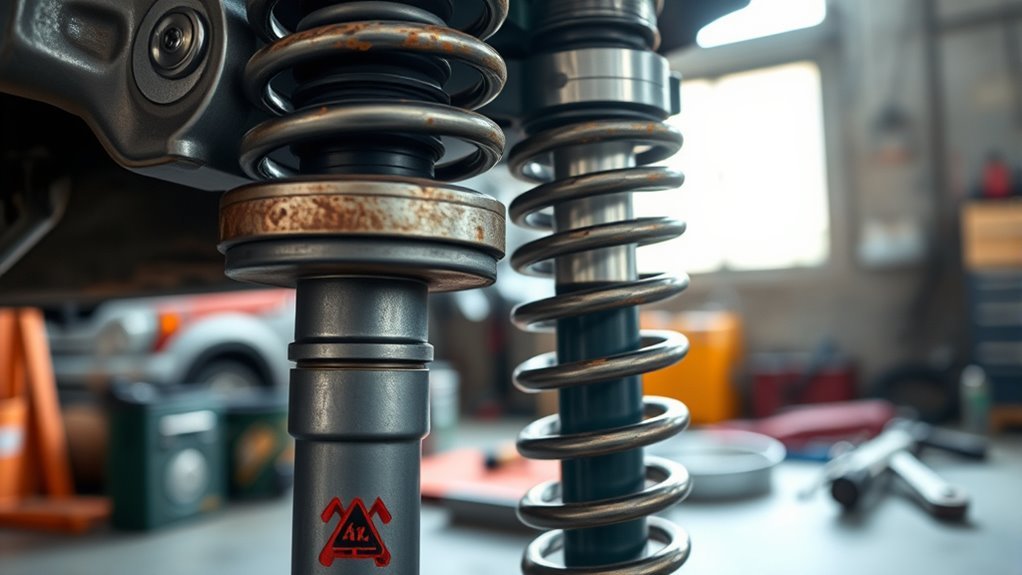
    Shock types vary considerably, so you can’t use the same shock absorbers for all vehicles. Always check vehicle compatibility, considering weight, suspension design, and intended use. This ensures peak performance and safety tailored to your specific vehicle.

    How Do Different Brands of Shocks Compare in Quality?

    Think of shock brands as musical instruments; quality comparison reveals some play smoother, lasting longer. You’ll find premium brands offer precise damping and durability, while budget options may compromise performance, affecting your vehicle’s ride comfort and safety.

    Do Shock Replacements Affect My Vehicle’s Warranty?

    Replacing shocks typically won’t void your warranty if you use quality parts and follow maintenance tips. Always check your vehicle’s warranty coverage details to guarantee authorized repairs and avoid potential disputes with the manufacturer.

    Can Worn Shocks Impact Fuel Efficiency?

    Think of worn shocks as a weary horse pulling your car; they increase fuel consumption by forcing the engine to work harder. You’ll notice reduced ride comfort and efficiency, so replacing them keeps your drive smooth and economical.

    Conclusion

    You should replace your shocks every 50,000 miles, but signs like excessive bouncing or uneven tire wear mean it’s time sooner. Studies show worn shocks can increase stopping distance by up to 20%, compromising safety.

    Driving on rough roads speeds up wear, so regular inspections matter. By staying proactive and maintaining proper tire pressure, you can extend shock life and avoid costly repairs.

    Don’t delay—your safety depends on it. Regular replacement is essential when considering how often to replace shocks.