
To adjust your carburetor idle, first warm your engine to normal operating temperature and verify no vacuum leaks exist. Proper carburetor idle adjustment is essential for smooth engine performance and fuel efficiency.
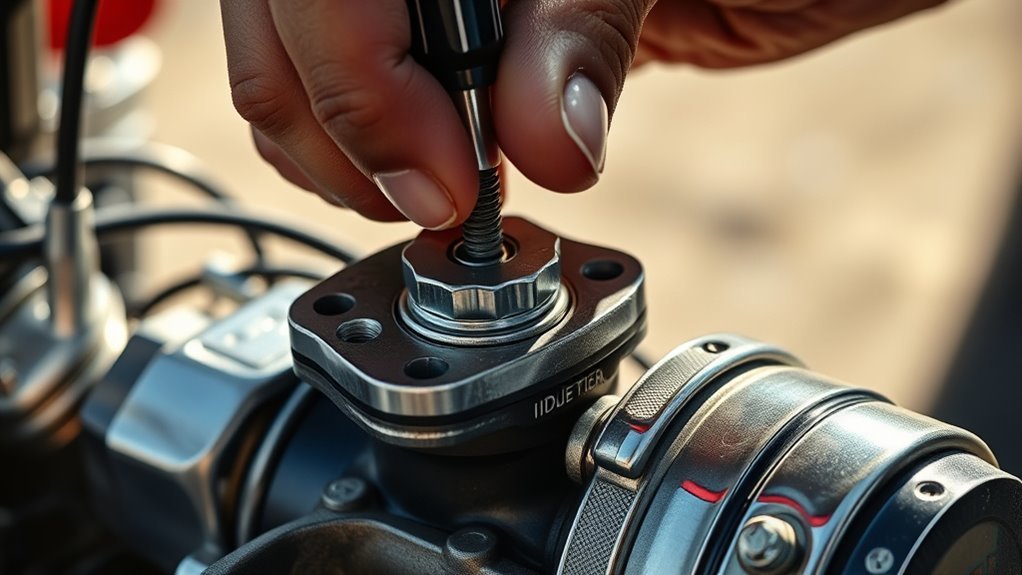
Locate the idle speed screw and turn it clockwise to raise RPM or counterclockwise to lower it until reaching the specified idle speed. Next, fine-tune the idle mixture screw by slowly turning it to find the highest stable RPM. After adjusting, recheck the idle speed to ensure stability.
Proper adjustment improves overall engine performance and efficiency. Continue exploring to uncover detailed steps and troubleshooting tips.
Key Takeaways
- Warm the engine to normal operating temperature before making any idle adjustments for accurate results.
- Locate and identify the idle speed screw and idle mixture screw on the carburetor using the service manual.
- Turn the idle speed screw clockwise to increase RPM or counterclockwise to decrease RPM until the desired idle speed is reached.
- Adjust the idle mixture screw slowly, turning clockwise until the engine falters, then counterclockwise to achieve the highest steady RPM.
- Check for vacuum leaks, clean throttle body passages, and ensure proper choke operation if idle issues persist after adjustments.
Essential Prep Before Adjusting Carburetor Idle
Before you begin adjusting the carburetor idle, make certain the engine is warmed up to its normal operating temperature. This guarantees accurate idle speed readings.
Ensure the engine reaches normal operating temperature before adjusting the carburetor idle for accurate results.
Start with a thorough preparation checklist: verify the air filter is clean, check for vacuum leaks, and confirm the throttle linkage moves freely.
Understanding carburetor basics is essential; recognize that the idle adjustment controls fuel-air mixture at low engine speeds.
Disconnect any electronic controls or emissions devices that might interfere. Use proper tools, such as a screwdriver or socket wrench, for precise screw turns.
Double-check that the choke is fully open to prevent a rich mixture during adjustment.
Completing this preparation checklist sets the stage for effective and safe carburetor idle tuning.
Find and Identify Carburetor Idle Screws
Once you have the engine prepared and running at operating temperature, locate the idle screws on your carburetor to begin fine-tuning.
Different carburetor types feature varying screw locations, so identifying the correct ones is essential. Typically, you’ll find an idle mixture screw controlling fuel-to-air ratio and an idle speed screw adjusting throttle plate position.
These screws are usually positioned near the throttle linkage or base plate. Screw heads may be flathead or Phillips depending on the model. Often, screws are marked or have spring tension to prevent movement.
Refer to your carburetor’s service manual to confirm exact screw locations for your specific carburetor type. Proper identification guarantees accurate adjustments, preventing engine stalling or rough idle.
Avoid confusing idle screws with choke or main jet screws, as improper adjustments can affect performance.
How to Adjust Carburetor Idle Speed Step-by-Step
Start by locating the idle speed screw on your carburetor, which controls the throttle plate position and consequently the engine’s idle RPM. Understanding carburetor basics helps you grasp why idle adjustment is essential: idle importance lies in maintaining engine stability at low speeds.
Follow these steps:
| Step | Action | Result |
|---|---|---|
| 1 | Warm engine to operating temp | Accurate idle setting |
| 2 | Turn screw clockwise | Increase idle RPM |
| 3 | Turn screw counterclockwise | Decrease idle RPM |
| 4 | Adjust until RPM matches spec | Stable idle achieved |
| 5 | Verify smooth engine operation | Confirm idle importance met |
Adjust gradually, allowing the engine to respond. Proper idle speed prevents stalling and guarantees smooth performance.
Fine-Tune Carburetor Idle Mixture for Smooth Performance
Fine-Tune Carburetor Idle Mixture for Smooth Performance
Although adjusting the idle speed sets the foundation, fine-tuning the idle mixture screw guarantees your engine runs smoothly and efficiently at low RPMs. Achieving the correct mixture balance is critical for performance enhancement and prevents stalling or rough idling.
To fine-tune:
- Warm up the engine to normal operating temperature.
- Locate the idle mixture screw on the carburetor.
- Slowly turn the screw clockwise until the engine starts to falter.
- Then, turn it counterclockwise until you reach the highest steady RPM.
- Adjust the idle speed screw afterward to maintain the desired RPM.
This precise adjustment guarantees ideal air-fuel ratio, improving combustion efficiency and maintaining steady idle performance.
Troubleshooting Common Carburetor Idle Issues
Carburetor idle issues can stem from various factors, and pinpointing the exact cause is crucial for effective troubleshooting.
Start by checking the idle adjustment screw; improper settings often degrade carburetor performance.
If the engine stalls or idles roughly, clean the throttle body and idle passages to remove deposits obstructing fuel flow.
Also, inspect vacuum lines for leaks, as they can cause erratic idle speeds.
Ascertain the choke operates correctly, as a sticking choke affects idle quality.
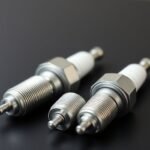
A dirty or worn spark plug may mimic carburetor idle problems, so examine ignition components.
Finally, verify the fuel filter isn’t clogged, restricting flow and disrupting carburetor performance.
When to Get Professional Help With Carburetor Idle
If you notice persistent rough idling or stalling despite adjustments, it’s time to consult a professional.
You shouldn’t risk safety when dealing with complex carburetor issues that affect engine performance.
Expert tuning guarantees precise calibration, which can prevent damage and improve fuel efficiency.
Signs of Complex Issues
When your engine exhibits persistent stalling, uneven idling, or unusually high fuel consumption despite basic adjustments, you should consider seeking professional help.
These idle symptoms often indicate deeper mechanical problems or carburetor malfunctions beyond typical tuning.
Key performance indicators signaling complex issues include:
- Irregular RPM fluctuations despite idle screw adjustments
- Black smoke from the exhaust suggesting fuel mixture problems
- Engine backfiring or hesitation during acceleration
- Difficulty maintaining a stable idle speed after warm-up
- Noticeable decrease in overall engine responsiveness
If you experience these signs, it’s likely the carburetor requires thorough inspection, cleaning, or component replacement by a specialist.
Attempting further DIY fixes might worsen the problem or mask underlying faults that affect engine reliability and efficiency.
When Safety Is Concerned
Because improper idle adjustments can lead to unsafe engine behavior, you should seek professional help immediately if you notice sudden loss of power, erratic engine response, or difficulty controlling the vehicle at low speeds.
These symptoms suggest underlying carburetor or engine issues beyond simple idle tuning.
When handling such scenarios, prioritize safety precautions. Avoid driving the vehicle until a qualified technician inspects it to prevent accidents.
Familiarize yourself with emergency procedures, such as safely shutting off the engine if it stalls unexpectedly.
Attempting further adjustments without proper expertise risks exacerbating the problem or causing engine damage.
Remember, precise carburetor idle settings are critical for stable engine performance and operational safety.
Don’t hesitate to consult professionals who can diagnose and correct complex faults effectively, ensuring safe and reliable vehicle operation.
Benefits of Expert Tuning
Although basic idle adjustments can be done by most vehicle owners, expert tuning guarantees ideal carburetor performance that balances fuel efficiency, emissions, and engine responsiveness.
When you seek expert advice, you tap into specialized knowledge that guarantees precise calibration beyond standard adjustments.
Professional tuning delivers measurable performance enhancement by optimizing air-fuel ratios and idle speed settings tailored to your engine’s specific needs.
Consider getting professional help if you encounter:
- Persistent rough idling despite manual tweaks
- Unexpected stalling during idle
- Excessive fuel consumption or emissions spikes
- Difficulty maintaining consistent idle speed
- Engine hesitation or lag on acceleration
Frequently Asked Questions
Can Carburetor Adjustments Affect Fuel Efficiency Significantly?
Yes, adjusting your carburetor’s fuel mixture and idle speed can greatly impact fuel efficiency. Proper tuning guarantees ideal combustion, reducing fuel waste and improving engine performance.
Don’t overlook precise idle adjustments for best results.
How Often Should I Check My Carburetor Idle Settings?
You should check your carburetor idle settings every 3,000 miles or during routine carburetor maintenance. Regular idle tuning guarantees peak engine performance, prevents stalling, and maintains fuel efficiency. This keeps your vehicle running smoothly and reliably.
What Tools Are Best for Cleaning a Carburetor Before Adjustment?
You’ll need carburetor cleaning essentials: a carb cleaner spray, small wire brushes, compressed air, and screwdrivers. These tools guarantee thorough cleaning, removing deposits and debris, which is essential before you adjust the carburetor idle settings.
Are There Differences in Adjusting Idle on Two-Stroke Vs Four-Stroke Engines?
You know what they say, “The devil’s in the details.” Two stroke differences lie in simpler idle adjustments; four stroke specifics require careful synchronization of valves and fuel mix to guarantee stable, precise idle control and ideal engine performance.
Can a Dirty Air Filter Cause Idle Problems Similar to Carburetor Issues?
Yes, a dirty air filter can cause idle symptoms similar to carburetor issues. Regular air filter maintenance guarantees proper airflow, preventing rough idling or stalling caused by fuel-air mixture imbalances affecting engine performance.
Conclusion
Now that you’ve mastered adjusting your carburetor idle, you’ll never have to guess why your engine stalls—unless, of course, you enjoy the mystery of random breakdowns.
Remember, a well-tuned idle isn’t just about smooth running; it’s about preventing costly repairs. So, unless you prefer spending time pushing your vehicle more than driving it, follow these steps carefully.
If it still misbehaves, don’t hesitate to call a pro—your carburetor isn’t psychic. Properly adjusting the carburetor idle is key to keeping your engine running smoothly and efficiently.