
You can change the oil filter without changing the oil only if the oil is still clean and within the manufacturer’s service limits. If the oil shows no signs of degradation—such as darkening, thinning, or contamination—replacing just the filter can help maintain oil cleanliness.
However, doing this regularly risks circulating contaminants and accelerating engine wear. Proper oil and filter assessment is key to protecting your engine.
Knowing when and how to change the oil filter without changing the oil will help extend your engine’s life. It’s important to follow manufacturer recommendations to ensure optimal engine performance.
Key Takeaways
- Changing only the oil filter is possible if the oil is still clean and within its recommended condition.
- Saturated filters reduce efficiency and can contaminate clean oil if not changed regularly.
- Oil condition must be assessed visually or via sensors before deciding to replace just the filter.
- Routine practice is to replace both oil and filter together for optimal engine protection.
- Manufacturer guidelines and engine health monitoring should guide whether to change oil, filter, or both.
Can You Change the Oil Filter Without Changing the Oil?
How often can you change the oil filter without changing the oil? The answer largely depends on your engine’s condition and the oil’s current state.
Filter longevity varies, but filters typically trap contaminants effectively until they reach capacity or degrade oil quality.
If the oil hasn’t undergone significant oil degradation, changing only the filter might seem feasible. However, as the filter captures particles, it can become saturated, reducing efficiency and potentially contaminating the oil further.
Consequently, routinely changing the filter without replacing the oil risks diminished lubrication performance and premature engine wear.
To maintain ideal engine health, you should monitor both filter longevity and oil degradation indicators closely before deciding to change just the filter.
When Can You Safely Change Only the Oil Filter?
You can safely change only the oil filter if your oil remains clean and within the manufacturer’s specified condition.
Regularly assess oil quality using visual checks or sensor data to determine contamination or degradation levels.
Always follow your vehicle’s maintenance guidelines to guarantee peak engine protection.
Oil Condition Assessment
Although changing only the oil filter might seem convenient, it’s crucial to assess the oil’s condition before proceeding. You need to verify that the oil lifespan hasn’t been exceeded, as degraded oil compromises engine protection regardless of filter status.
Check oil color, viscosity, and contamination level. Dark, gritty, or thin oil indicates it’s time for a full change. The filter lifespan typically aligns with the oil lifespan; replacing the filter alone is effective only if the oil remains within its functional parameters.
Use an oil analysis tool or dipstick inspection to confirm oil quality. If the oil shows signs of oxidation, sludge, or metal particles, changing the filter without replacing the oil won’t maintain engine health.
Proper oil condition assessment guarantees your decision supports engine longevity.
Manufacturer’s Maintenance Guidelines
Properly evaluating oil condition sets the foundation for following the manufacturer’s maintenance guidelines regarding oil filter changes.
You should always consult the manufacturer recommendations and maintenance schedules specific to your vehicle model.
These guidelines specify intervals for oil and oil filter replacement based on factors like mileage, time, and operating conditions.
In some cases, the manufacturer allows changing only the oil filter between full oil changes if the oil remains within acceptable condition parameters.
However, this practice is generally limited to specific scenarios outlined in the maintenance schedules, such as extended oil life or synthetic oil usage.
Ignoring these manufacturer recommendations can compromise engine protection.
Consequently, adhere strictly to the prescribed intervals and conditions to guarantee you safely change only the oil filter without risking engine damage.
How to Change the Oil Filter Without Draining the Oil
To change the oil filter without draining the oil, you’ll need specific tools like an oil filter wrench and a drain pan to catch any spills.
Follow a precise step-by-step process to remove the old filter and install the new one while minimizing oil loss.
Keep in mind essential precautions and tips to avoid contamination and guarantee a proper seal.
Tools Needed
Essential tools for changing your oil filter without draining the oil include a specialized oil filter wrench, a drain plug extractor, and a clean catch pan to handle any minor leaks. These essential tools guarantee a secure grip on the oil filter and prevent spillage during removal.
Additionally, have disposable gloves and rags ready for cleanliness.
| Tool | Purpose | Notes |
|---|---|---|
| Oil Filter Wrench | Loosen/tighten oil filter | Choose size based on filter |
| Drain Plug Extractor | Remove drain plug if needed | Use cautiously |
| Catch Pan | Collect drips or leaks | Must be clean and leak-proof |
Using these tools correctly minimizes risks and maintains oil integrity during the filter change process.
Step-by-Step Process
Changing an oil filter without draining the oil involves several precise steps to ascertain no contamination or spillage occurs.
First, warm up your engine briefly to reduce oil viscosity, then turn it off. Place absorbent pads beneath the filter to catch any drips.
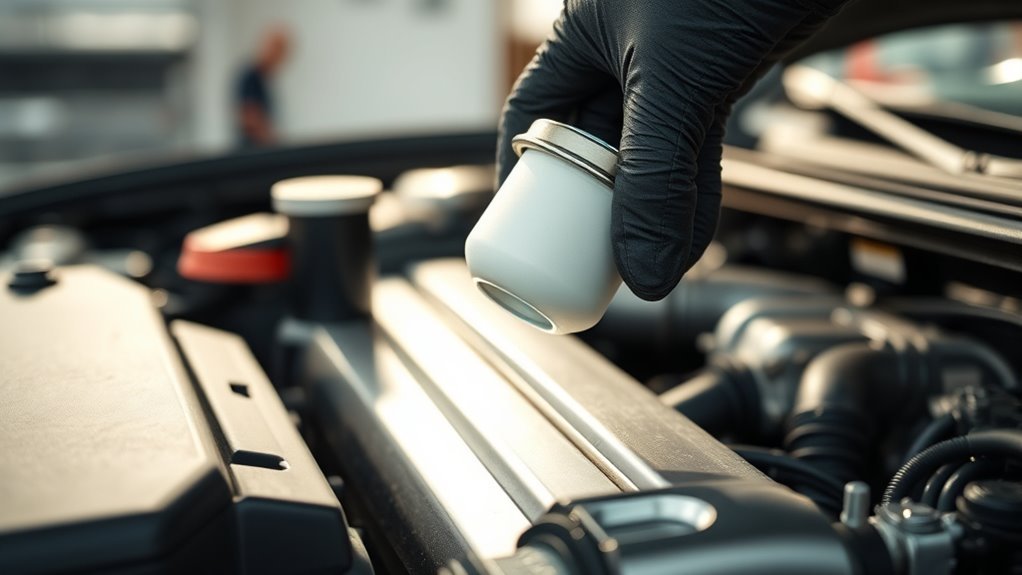
Use an oil filter wrench to carefully loosen and remove the old filter, ensuring you don’t tilt it excessively to avoid oil leakage.
Before installing the new filter, apply a thin layer of fresh oil to its rubber gasket to ensure a proper seal.
Screw the new filter on hand-tight, then give it a slight additional turn as specified by the manufacturer.
This careful oil filter maintenance helps sustain engine performance by preventing contaminants from entering the system while preserving the existing oil’s integrity.
Precautions and Tips
Anyone attempting to change the oil filter without draining the oil must prioritize preventing spills and contamination.
Begin by placing an oil catch pan beneath the filter to capture residual oil.
Use proper tools to avoid damaging the filter housing, which can compromise oil filter maintenance.
Verify the engine is cool; hot oil increases spill risk and injury potential.
Check oil change frequency guidelines. Changing the filter alone may not suffice if oil is overdue for replacement.
Inspect the new filter’s gasket and apply a thin oil layer for a secure seal.
Tighten the filter to manufacturer specifications to prevent leaks.
Finally, monitor oil levels and pressure after installation to detect any irregularities early.
These precautions maintain engine integrity and prolong oil system reliability.
What Risks and Engine Effects Come From Changing Only the Oil Filter?
Although replacing just the oil filter might seem like a quick maintenance shortcut, it can introduce several risks to your engine’s performance and longevity.
When you change only the filter, the oil remains contaminated with particles and sludge, which accelerates engine wear by circulating abrasive debris.
Additionally, installing a new filter while retaining old oil shortens the filter lifespan, as the fresh filter traps contaminants more rapidly, reducing its effectiveness. This mismatch can cause inconsistent oil flow and pressure, stressing engine components.
Over time, these factors degrade lubrication quality, increasing friction and heat, which compromises engine efficiency and durability.
To avoid these risks, consider the oil and filter as a system; changing one without the other undermines peak engine protection and can lead to premature mechanical failure.
How Often Should You Change Your Oil and Oil Filter Together?
Since oil and oil filters work together to maintain engine health, you should replace both simultaneously at regular intervals.
Typically, the recommended oil change frequency ranges from 3,000 to 7,500 miles, depending on your vehicle’s make, model, and driving conditions.
Your filter replacement schedule should align with this frequency to guarantee ideal filtration and oil cleanliness. Ignoring synchronized replacements can lead to contaminants bypassing the filter or degraded oil circulating, risking engine wear.
Always consult your owner’s manual or manufacturer guidelines to determine the precise interval tailored to your engine.
By adhering to the prescribed oil change frequency and filter replacement schedule, you maintain proper lubrication, reduce wear, and extend engine longevity effectively.
This coordinated maintenance is essential for sustaining peak engine performance.
Final Tips for Maintaining Your Oil and Oil Filter
Maintaining the integrity of your oil and oil filter goes beyond scheduled replacements. To maximize oil filter longevity and guarantee ideal engine performance, you need a proactive approach to regular maintenance.
Proactive maintenance ensures your oil filter lasts longer and your engine performs at its best.
Start by monitoring oil quality and level frequently, as degraded oil can reduce filter efficiency. Use high-quality oil and filters specified by your vehicle manufacturer to assure compatibility and protection.
Finally, inspect the filter for signs of damage or leaks during oil changes to prevent contamination.
- Check oil levels and condition monthly.
- Use OEM or high-grade aftermarket filters.
- Inspect filters for damage or leaks each service.
Frequently Asked Questions
What Are Signs My Oil Filter Is Clogged?
You’ll notice oil filter symptoms like reduced engine performance, unusual noises, or the oil pressure warning light flashing. These clogged filter indicators signal restricted flow, meaning your engine’s struggling to circulate clean oil efficiently and needs attention.
Can Using a Wrong Oil Filter Damage My Engine?
Yes, using the wrong oil filter can cause engine damage by restricting oil flow or failing to filter contaminants properly.
Always use a manufacturer-recommended oil filter to guarantee maximum engine protection and performance.
How Do Synthetic Oils Affect Oil Filter Lifespan?
Synthetic oil benefits include superior cleanliness and reduced contaminants, which can extend your oil filter’s lifespan. However, filter longevity factors like engine condition and driving habits still influence when you’ll need to replace the filter.
Is It Necessary to Oil the New Filter Gasket?
You’ll save a mountain of trouble by always oiling the new filter gasket. Gasket lubrication is essential for proper filter maintenance.
It guarantees a tight seal, preventing leaks and maintaining peak engine performance and longevity.
Can I Recycle Used Oil Filters Safely?
Yes, you can safely recycle used oil filters by properly draining residual oil for used oil disposal. Many recycling centers accept them, ensuring responsible filter recycling and preventing environmental contamination.
Always follow local regulations carefully.
Conclusion
Think of your engine like a garden—fresh oil is the nourishing soil, and the oil filter, the protective fence. Changing just the fence without revitalizing the soil won’t promote healthy growth.
While you can swap the oil filter alone in specific cases, it’s best to replace both together to maintain ideal engine health. Regularly tending to both guarantees your engine runs smoothly, avoiding costly wear and keeping performance in full bloom.
In conclusion, although it is possible to change the oil filter without changing oil, doing both simultaneously is the best practice for long-term engine care.