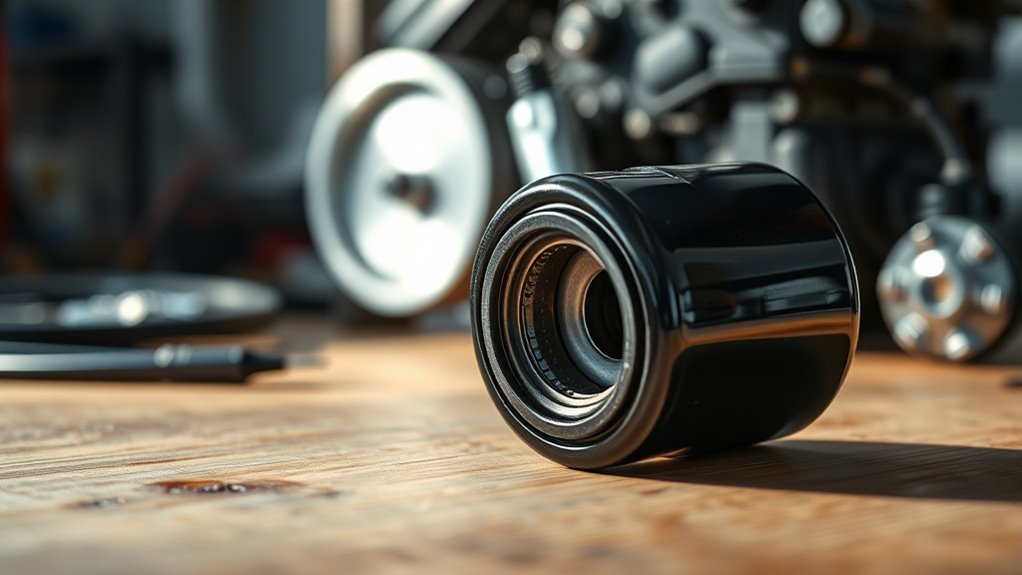
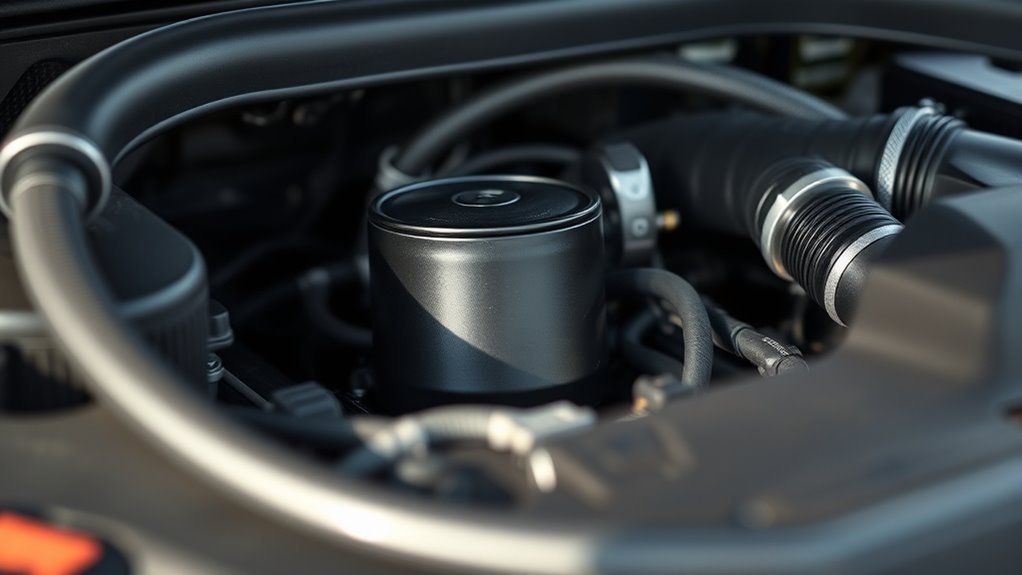
You shouldn’t reuse an oil filter because it’s designed to trap contaminants only once, ensuring clean oil circulation and engine protection. Used filters clog with debris, lose structural integrity, and reduce filtration efficiency, risking engine damage.
Although reusing may seem cost-effective and better for the environment, the potential harm outweighs benefits. Regular replacement follows maintenance schedules to keep your engine running smoothly.
Explore further to understand the risks, benefits, and best practices for oil filter care.
Key Takeaways
- Oil filters are designed for single-use and should not be reused to maintain optimal engine protection.
- Reusing oil filters risks clogging, reduced filtration efficiency, and potential engine damage.
- Cleaning and reinstalling used filters cannot restore their original contaminant-trapping performance.
- Regular replacement ensures proper filtration, prevents oil flow reduction, and prolongs engine life.
- While reusing filters reduces waste, the risk to engine health outweighs environmental benefits in most cases.
How Does an Oil Filter Work?
Although you mightn’t see it working, an oil filter plays a crucial role in maintaining your engine’s health by trapping contaminants and preventing them from circulating through the lubrication system.
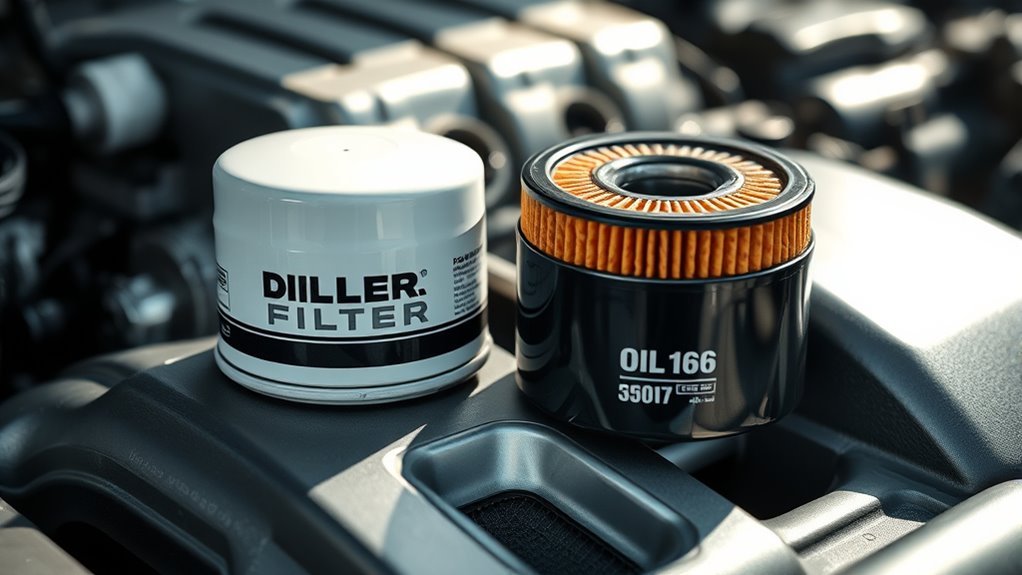
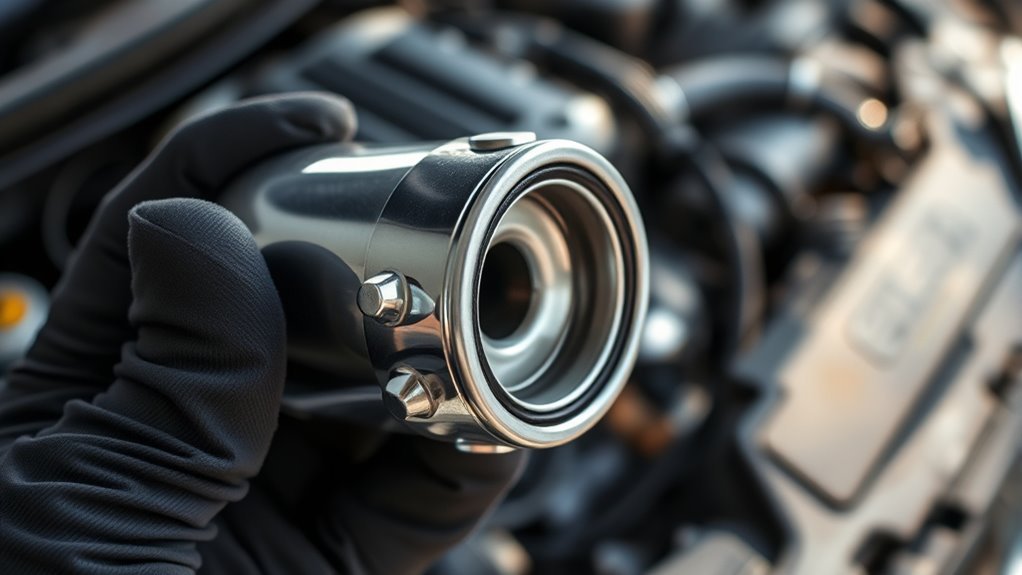
The filter construction typically includes a metal casing, a sealing gasket, and a filtration media made from specific filter materials. These materials often consist of cellulose, synthetic fibers, or a blend, designed to capture microscopic particles while allowing oil to flow freely.
Oil filters combine metal casings, sealing gaskets, and specialized media to trap tiny particles while maintaining oil flow.
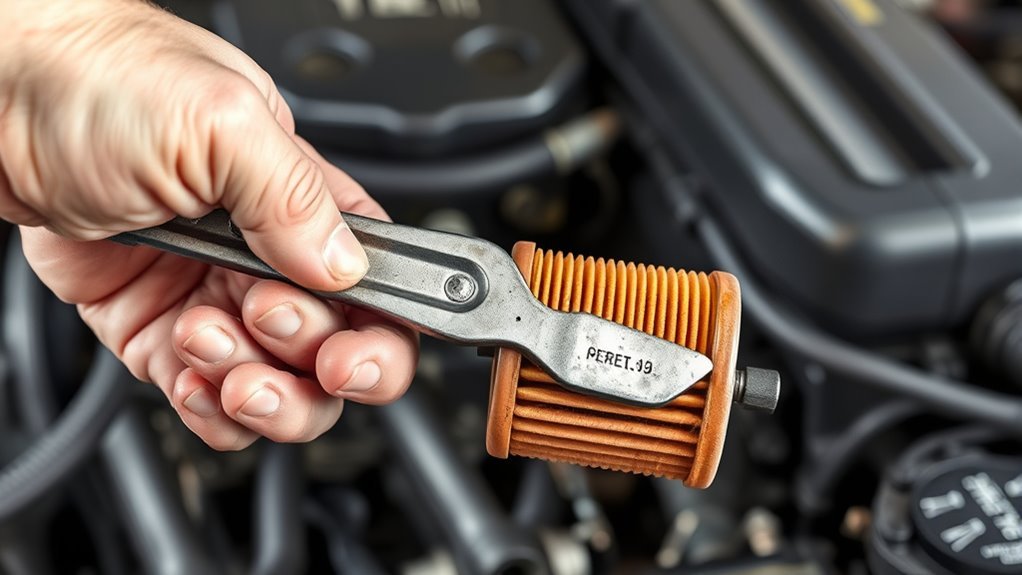
The pleated design of the filter media increases surface area, enhancing contaminant retention without restricting oil pressure. As oil passes through the filter, debris and sludge are trapped within the media, ensuring clean oil circulates through engine components.
Understanding this precise filter construction and the role of filter materials helps you appreciate why proper oil filter maintenance is essential.
Can You Really Reuse an Oil Filter?
How often can you reuse an oil filter without compromising engine performance?
Technically, oil filters are designed for single-use to guarantee peak oil filter longevity and effective contaminant removal.
Reusing an oil filter risks clogging and reduced filtration efficiency due to trapped debris and filter media degradation.
While some may consider rinsing and reinstalling, this process can’t restore the filter’s original performance or structural integrity.
Proper filter maintenance involves timely replacement rather than reuse, as used filters accumulate contaminants that impair flow and increase engine wear.
For maintaining engine health, it’s essential to replace the oil filter with every oil change.
Reusing a filter compromises its ability to protect the engine, negating the benefits of clean oil and potentially leading to costly damage.
Why Replace Your Oil Filter Regularly?
Replacing your oil filter regularly guarantees your engine maintains peak protection against contaminants that degrade performance. The oil filter lifespan is designed to trap dirt, metal particles, and sludge efficiently, but its capacity diminishes over time.
Adhering to the manufacturer’s maintenance schedule guarantees you replace the filter before it becomes saturated or clogged, preventing reduced oil flow or bypass valve activation. Neglecting timely replacement can lead to increased engine wear and compromised lubrication.
By following your vehicle’s recommended intervals, you maintain superior filtration and prolong engine life. Consistent oil filter changes also support oil quality by minimizing contamination.
Fundamentally, sticking to the maintenance schedule for oil filter replacement is critical for preserving engine efficiency and avoiding mechanical issues caused by contaminated oil circulating through the system.
Risks of Reusing an Oil Filter
If you consider reusing an oil filter, you should understand that it considerably compromises your engine’s protection.
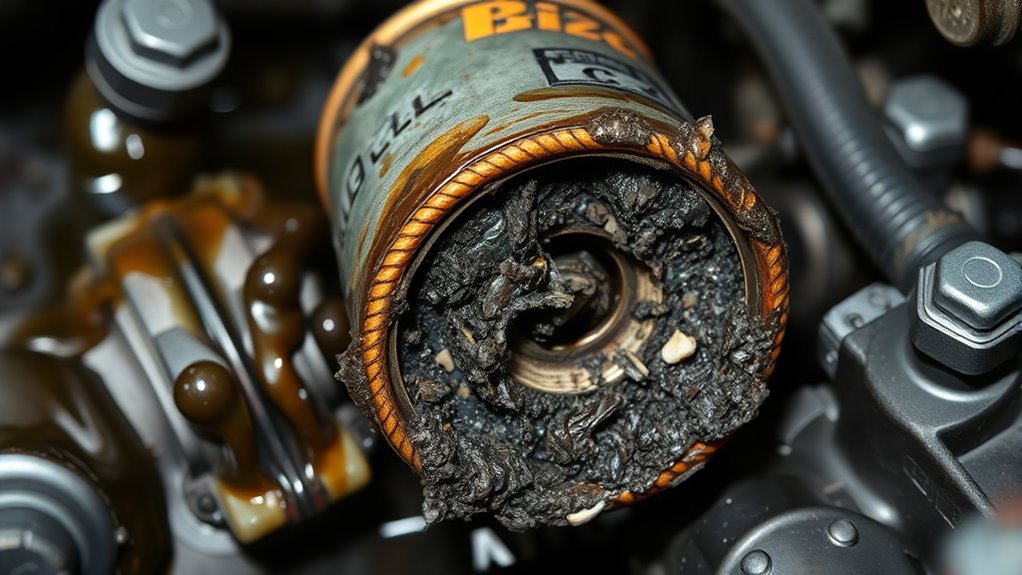
Used filters accumulate contaminants such as metal particles, sludge, and dirt, leading to filter contamination that’s difficult to remove entirely. This residual contamination clogs the filter media, reducing its ability to trap new debris effectively.
Used filters trap metal, sludge, and dirt, leaving residues that block the media and impair filtration.
As a result, you’ll experience performance degradation in oil filtration, increasing the risk of harmful particles circulating through the engine.
Additionally, the filter’s structural components, like the gasket and pleats, degrade after initial use, impairing the filter’s sealing and flow characteristics.
Reusing the filter compromises oil pressure regulation and may cause bypass valve malfunction.
In short, the risks of filter contamination and subsequent performance degradation from reusing an oil filter outweigh any cost savings.
What Happens If You Don’t Change Your Oil Filter?
Neglecting to change your oil filter allows contaminants to accumulate and restrict oil flow, which compromises engine lubrication. Over time, the oil filter lifespan diminishes, leading to clogged filters that reduce engine performance and increase wear.
Failing to replace the filter can cause sludge buildup, overheating, and potential engine damage.
| Consequence | Effect on Engine |
|---|---|
| Clogged Filter | Reduced oil circulation |
| Sludge Accumulation | Increased engine wear |
| Overheating | Potential engine failure |
How to Identify Reusable Oil Filters
You’ll want to start by recognizing the types of oil filters, such as spin-on and cartridge filters, since their design affects reusability.
Look for signs of reusability like a durable metal housing and a replaceable filter element.
Identifying these features helps guarantee you only reuse filters that maintain proper filtration and integrity.
Types Of Oil Filters
Although most oil filters are designed for single use, certain types can be reused after proper cleaning and inspection.
To identify reusable oil filters, focus on the following types:
1. Mechanical Filters
These use a metal mesh or screen that can be cleaned and reinstalled. Their robust construction allows multiple uses if maintained properly.
2. Cartridge Filters
Unlike spin-on filters, cartridge filters have replaceable filter elements inside a reusable housing, making them easier to service and reuse.
3. Magnetic Filters
These incorporate magnets to trap metallic particles and can be cleaned regularly without replacement.
Signs Of Reusability
How can you determine if an oil filter is reusable?
Begin by inspecting the filter’s construction for reusable materials, such as metal housings and washable filter media like stainless steel mesh. These components withstand cleaning processes and contribute to extended filter longevity.
Avoid filters with paper or cellulose elements, as they’re designed for single-use and degrade quickly.
Next, check the manufacturer’s specifications or markings indicating reusability.
Also, assess the filter’s physical condition—look for dents, corrosion, or clogged media that impair function.
A reusable filter should maintain structural integrity after cleaning without compromising its filtration efficiency.
Cost and Environmental Impact of Reusing vs. Replacing Oil Filters
You’ll save money by reusing oil filters instead of replacing them regularly, but it’s important to quantify those cost savings over time.
Consider how reusing filters reduces waste and lowers environmental impact compared to disposal and manufacturing of new filters.
Evaluating both immediate expenses and long-term effects helps you make an informed decision on maintenance practices.
Cost Savings Comparison
Three key factors determine the cost savings when reusing oil filters: the price of new filters, the labor involved in cleaning and reinstalling, and the environmental costs associated with disposal.
To evaluate cost efficiency accurately, consider:
- Filter Longevity: Reusing extends filter life, reducing purchase frequency.
- Labor Time: Cleaning requires additional time but can be offset by fewer replacements.
- Disposal Expenses: Minimizing waste lowers fees and environmental penalties.
You’ll find that while initial savings come from fewer filter purchases, you must balance this against the labor costs of cleaning and potential risks of reduced filtering performance over time.
Ideal cost efficiency emerges when filter longevity is maximized without compromising engine protection, and labor costs remain manageable. This technical balance is essential to justify reusing oil filters economically.
Environmental Benefits Analysis
Although reusing oil filters requires additional labor for cleaning, it greatly reduces environmental impact compared to frequent replacements. When you opt to reuse, you minimize waste generation and lower resource consumption associated with manufacturing new filters.
This aligns directly with sustainability practices by conserving raw materials and reducing landfill burden.
Additionally, reusing filters decreases the energy expenditure necessary for production and transportation, further cutting your carbon footprint.
While recycling programs offer a secondary option for end-of-life filters, they still consume energy and may involve contamination risks.
By prioritizing reuse, you enhance environmental stewardship through waste reduction and resource efficiency.
Consequently, integrating reuse into your maintenance routine complements broader sustainability goals more effectively than relying solely on replacement and recycling efforts.
Long-Term Expense Implications
While reusing oil filters demands an initial investment in cleaning supplies and labor, it considerably lowers long-term expenses by reducing the frequency of purchases.
You’ll realize significant long term savings by evaluating the financial implications of reusing versus replacing filters.
Consider these factors:
- Cost of Cleaning Supplies and Labor: Initial outlay is offset by fewer filter replacements.
- Filter Longevity: Properly cleaned filters maintain performance, extending service intervals.
- Waste Management Savings: Less disposal reduces fees and environmental compliance costs.
Best Practices for Changing Your Oil Filter and Oil
Changing your oil filter and oil requires careful attention to detail to assure peak engine performance and longevity. Proper oil filter maintenance and filter changing techniques guarantee contaminants are removed effectively, preventing engine wear.
Always drain the old oil completely, remove the filter carefully to avoid spills, and apply a light coat of new oil to the filter gasket before installation. Tighten the filter according to specifications to prevent leaks.
| Step | Best Practice |
|---|---|
| Drain Old Oil | Warm engine, fully drain oil |
| Remove Filter | Use proper tool, avoid damage |
| Prepare New Filter | Lubricate gasket, inspect seal |
| Install Filter & Oil | Tighten correctly, refill oil |
Following these steps optimizes oil filter maintenance and protects engine integrity.
Frequently Asked Questions
Can Oil Filters Be Recycled After Use?
Yes, you can recycle used oil filters through specialized oil filter recycling programs. Doing so reduces environmental impact by properly handling residual oil and metal.
This process promotes resource recovery and prevents contamination in landfills or waterways.
What Tools Do I Need to Change an Oil Filter?
You’ll need an oil filter wrench or oil filter pliers to loosen and remove the filter efficiently.
Additionally, gather a drain pan, socket set, and gloves to guarantee a clean, safe oil filter change process.
How Often Should I Check My Oil Filter?
A stitch in time saves nine. You should check your oil filter every 3,000 to 5,000 miles to guarantee ideal oil filter maintenance and adhere to the recommended filter replacement frequency for your vehicle’s longevity.
Are Synthetic Oils Compatible With All Filters?
Synthetic oil compatibility varies; not all filters perform equally with synthetic oils. You’ll notice filter performance differences due to synthetic oil’s unique additives and flow characteristics.
Always check manufacturer recommendations for ideal filtration and engine protection.
Can a Clogged Oil Filter Cause Engine Overheating?
Yes, a clogged filter can reduce oil flow, impairing engine performance and causing overheating. Studies show 30% of overheating cases link to oil flow issues, stressing the importance of timely filter replacement to maintain ideal engine temperature.
Conclusion
Reusing an oil filter might seem like a quick fix, but it’s like patching a leaky dam—it only delays inevitable failure.
To keep your engine running smoothly, you need to replace your oil filter regularly. Doing so guarantees contaminants don’t clog your system or cause damage.
Prioritize new filters to maintain peak performance, reduce risks, and protect your investment. Remember, consistent maintenance is the key to a healthy engine lifespan.
In conclusion, reusing an oil filter is not advisable if you want to ensure your engine’s longevity and efficiency. Always opt for a new oil filter during each oil change.