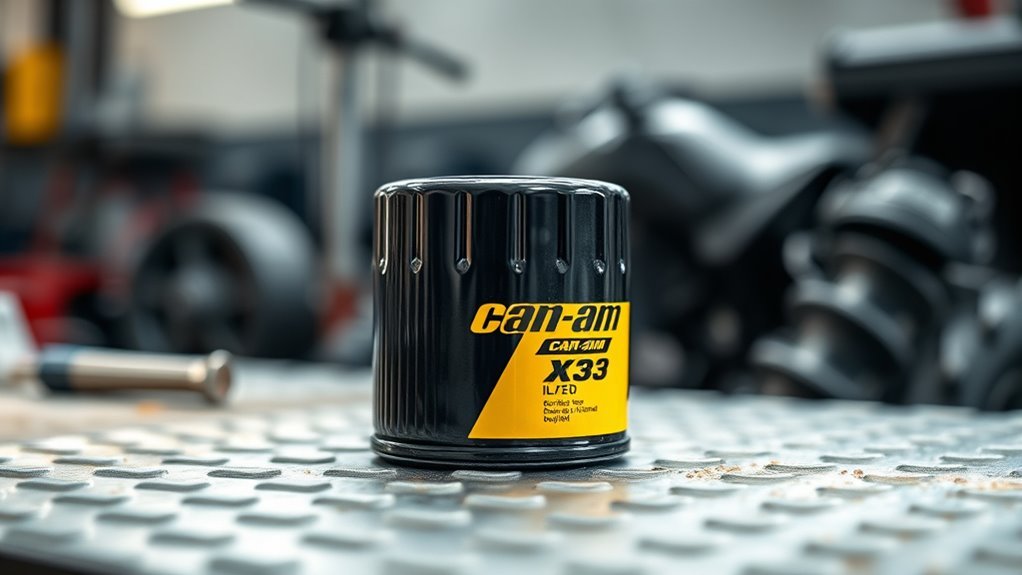
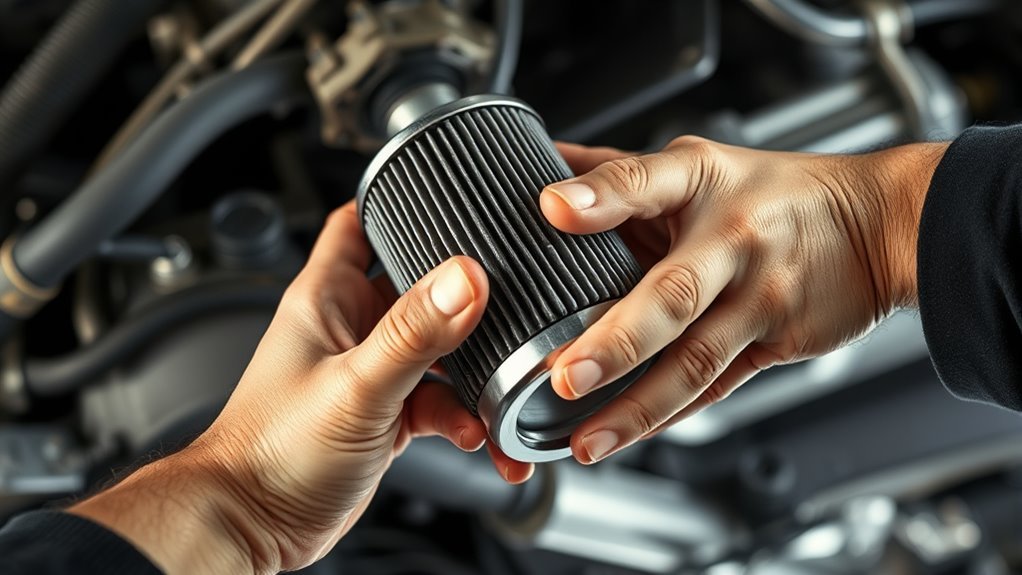
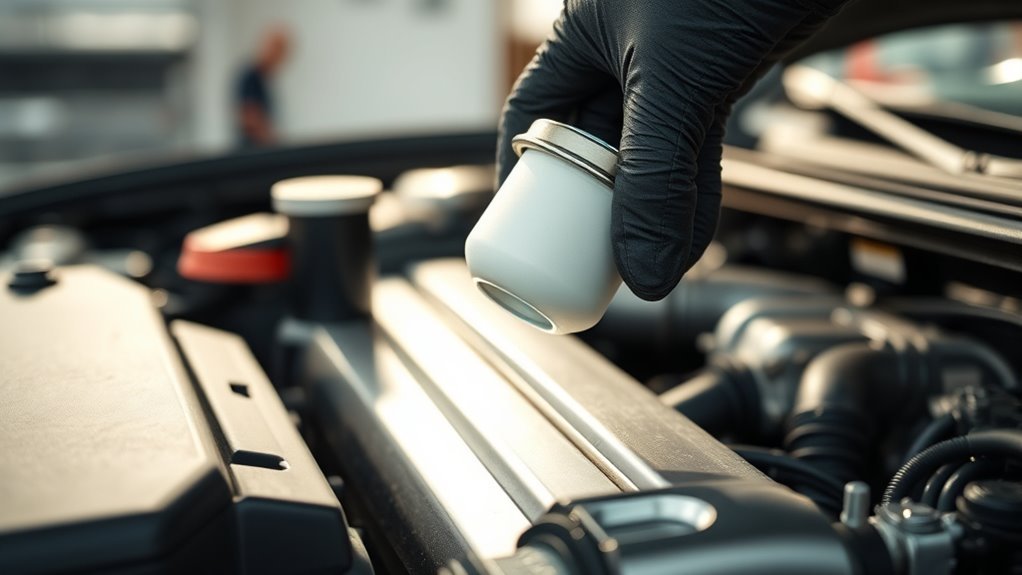
To remove your oil filter, first park your vehicle on a level surface with the engine cool. Engage the parking brake for safety before starting the process.
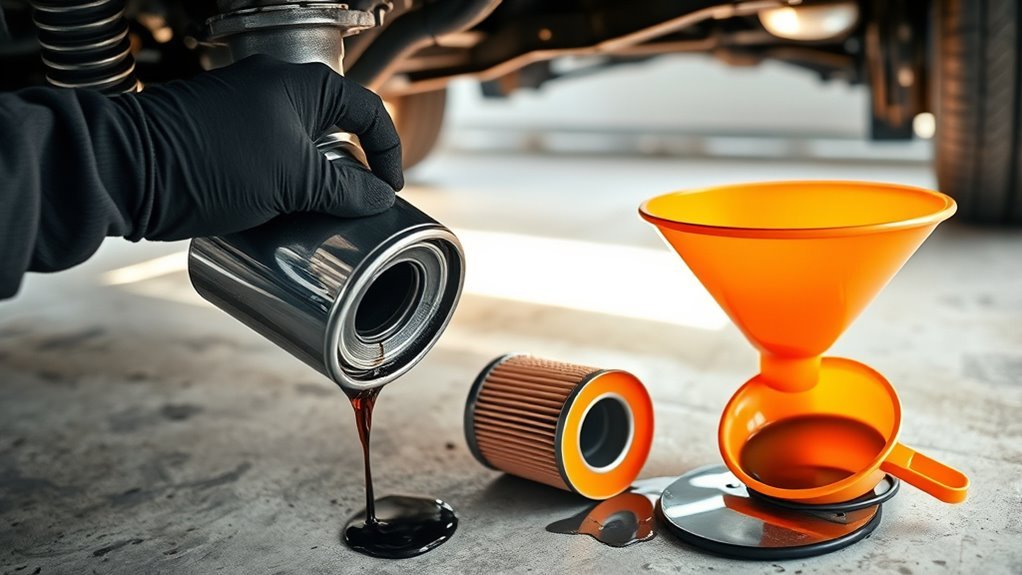
Use an oil filter wrench to loosen the filter by turning it counterclockwise. Be sure to catch any oil dripping with a drain pan to avoid spills.
If the filter is stuck, apply penetrating oil and try using a strap wrench for extra leverage. Remove the filter by hand once it’s loosened.
Clean the mounting surface thoroughly and inspect the gasket to ensure it’s in good condition. Follow these steps carefully to avoid damage.
There’s more to learn about handling common challenges and proper disposal of your oil filter.
Key Takeaways
- Park the vehicle on a level surface, engage the parking brake, and ensure the engine is cool before starting.
- Locate the oil filter on the engine block and prepare an oil catch pan underneath.
- Use an oil filter wrench to turn the filter counterclockwise to loosen it.
- Remove the filter carefully by hand to avoid oil spills, checking the gasket isn’t stuck to the engine.
- Wipe the mounting surface clean before installing a new filter or finishing the removal.
How To Prepare Your Vehicle For Oil Filter Removal
Before you begin removing the oil filter, make sure your vehicle is securely parked on a level surface and the engine is cool to prevent burns. Engage the parking brake to enhance vehicle stability during the procedure.
Position wheel chocks behind the tires if necessary to prevent any movement.
Locate the oil drain plug and place a suitable container beneath it to catch the old oil during the oil drain process. Slowly loosen the drain plug to allow oil to flow out completely, ensuring minimal spills.
This step reduces pressure in the system, making filter removal easier and safer.
Verifying stability and proper drainage setup minimizes risks and prepares your vehicle for efficient oil filter removal.
Essential Tools For Removing An Oil Filter Safely
You’ll need specific tools like an oil filter wrench or strap wrench to loosen the filter without damaging it.
Don’t forget safety equipment such as gloves and eye protection to prevent injury from hot oil or debris.
Preparing these tools guarantees you remove the filter efficiently and safely.
Common Removal Tools
Several essential tools make removing an oil filter safer and more efficient. First, filter wrenches are indispensable; they provide the grip and leverage needed to loosen stubborn filters without damaging the housing. Different types, such as strap, cap, or plier-style wrenches, suit various filter designs. Choose one that matches your filter’s size and shape.
Next, an oil catchment container is vital to collect draining oil, preventing spills and environmental contamination. Position it directly under the filter before removal to capture residual oil effectively.
Additionally, having a sturdy ratchet or socket set can assist if the filter wrench requires additional torque. Using these tools correctly guarantees a smooth removal process, minimizes mess, and prepares you for a safe, efficient oil filter change.
Safety Equipment Needed
Personal protective equipment (PPE) plays an essential role in guaranteeing your safety during oil filter removal. Proper PPE minimizes exposure to hot oil, sharp edges, and debris.
Prioritize gloves usage to protect your hands from burns and chemical irritation. Equally important is eye protection to prevent oil splashes from causing injury.
Before starting, equip yourself with the following:
- Nitrile or latex gloves for chemical and heat resistance
- Safety goggles or glasses to shield your eyes from splashes
- Long-sleeve clothing to protect your arms from hot oil contact
- A mechanic’s creeper or mat to provide stable positioning and reduce strain
Using these safety tools guarantees a safer, more efficient oil filter removal process.
Step-By-Step Guide To Removing Your Oil Filter
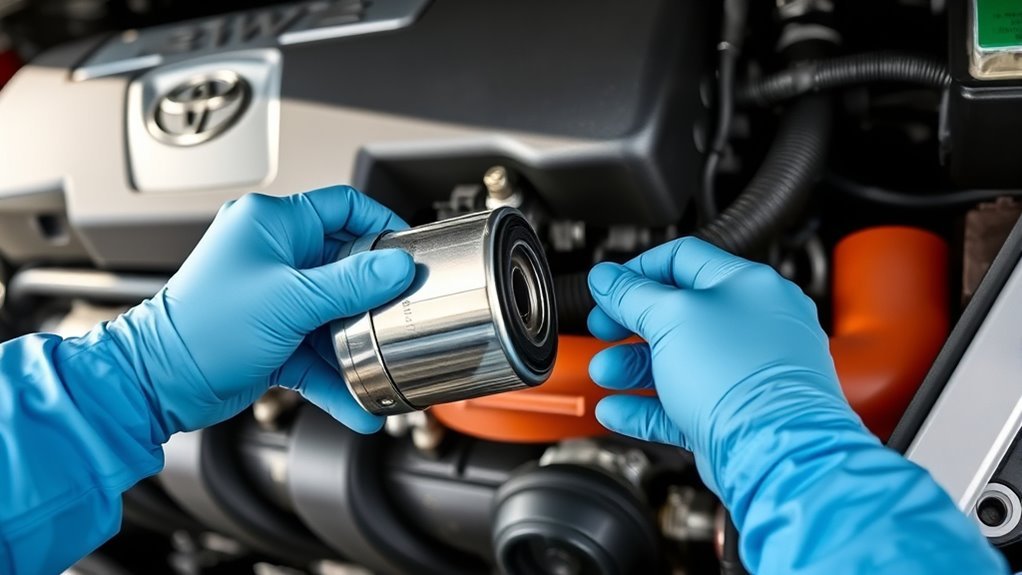
Begin by locating the oil filter, which is typically found on the engine block. Identify your oil filter type, spin-on or cartridge, as maintenance tips vary accordingly. Prepare your tools and a drain pan. Loosen the filter using an oil filter wrench, turning counterclockwise. Once loose, carefully remove it by hand, avoiding oil spills.
| Step | Action |
|---|---|
| 1. Locate | Find the oil filter on engine |
| 2. Identify | Check oil filter types |
| 3. Loosen | Use wrench to turn filter CCW |
| 4. Remove | Unscrew filter by hand |
After removal, inspect the rubber gasket to verify it’s not stuck to the engine. Proper removal prevents damage, verifying effective oil filter maintenance and prolonging engine life.
What To Do When Your Oil Filter Won’t Budge
If your oil filter won’t budge, it’s often due to corrosion, overtightening, or old gasket buildup.
You’ll need to use specific removal techniques like applying penetrating oil, using a strap wrench, or tapping the filter gently to break the seal.
Addressing these common causes methodically will help you safely free the stuck filter without damaging components.
Common Causes Of Stuck Filters
Although oil filters are designed for easy removal, several factors can cause them to become stuck, making the process challenging. Understanding these causes is vital for effective oil filter maintenance and proper filter installation.
- Over-tightening during installation: Applying excessive torque can deform the filter gasket, causing it to bind.
- Accumulated dirt and grime: Dirt buildup around the filter base can create resistance.
- Heat expansion: Engine heat can cause metal components to expand, seizing the filter.
- Corrosion or rust: Exposure to moisture leads to corrosion, fusing the filter to the mounting surface.
Addressing these issues during filter installation and regular oil filter maintenance helps prevent stuck filters and guarantees smoother removal next time.
Effective Removal Techniques
Three proven techniques can help you loosen a stubborn oil filter when it refuses to budge. First, use a strap wrench for standard canister filters; it grips without damage.
Second, for cartridge-type filters, apply pliers carefully to avoid deforming the housing. Third, apply penetrating oil around the filter base to break corrosion bonds, letting it soak before attempting removal.
| Technique | Suitable Oil Filter Types | Key Advantage |
|---|---|---|
| Strap Wrench | Canister | Non-damaging grip |
| Pliers | Cartridge | Precise application |
| Penetrating Oil | All Types | Loosens corrosion and grime |
Next Steps After Removing The Oil Filter
Once you’ve removed the oil filter, immediately inspect the mounting surface for any remaining gasket material or debris. This step is critical for a proper oil filter replacement and preventing leaks.
Follow these next steps precisely:
- Perform a thorough oil filter inspection on the mounting surface to guarantee it’s clean and smooth.
- Check the old oil filter to confirm its gasket came off with it; if not, remove the stuck gasket manually.
- Apply a thin layer of fresh engine oil to the new filter’s gasket to improve the seal during installation.
- Align and hand-tighten the new oil filter according to manufacturer torque specifications to avoid over-tightening or leaks.
These steps guarantee a successful oil filter replacement and maintain engine integrity.
Common Oil Filter Removal Mistakes To Avoid
After properly inspecting the mounting surface and preparing the new oil filter, you need to be aware of common mistakes that can compromise the removal process.
One frequent oil filter mistake is using excessive force, which can damage the filter housing or cause leaks. Avoid applying uneven pressure or twisting at odd angles.
Using too much force risks damaging the filter housing and causing leaks; apply even pressure carefully.
Another misconception is neglecting to drain the oil before removal; this leads to spills and messes.
Don’t reuse old gaskets or fail to check for a stuck gasket on the mounting surface, as this causes sealing issues.
Also, avoid using the wrong size tool—this can strip the filter casing.
How To Dispose Of Your Old Oil Filter Properly
Anyone handling an old oil filter must dispose of it according to local environmental regulations to prevent contamination.
Improper disposal risks hazardous waste leakage, harming the environment.
Follow these steps to dispose of your oil filter properly:
- Drain the oil filter thoroughly to remove residual oil, facilitating recycling oil processes.
- Store the drained filter in a sealed container to prevent leaks during transport.
- Locate a certified recycling or hazardous waste facility that accepts used oil filters.
- Deliver the oil filter to the facility, ensuring it undergoes proper recycling oil recovery or hazardous waste treatment.
Frequently Asked Questions
How Often Should I Replace My Oil Filter?
You should replace your oil filter every oil change frequency interval, typically every 3,000 to 7,500 miles. Monitor your vehicle’s manual for specific filter lifespan recommendations to guarantee peak engine performance and longevity.
Can I Use Any Oil Filter for My Car Model?
You can’t use any oil filter; always verify oil filter compatibility with your vehicle specifications. Check your owner’s manual or manufacturer guidelines to confirm the filter fits correctly and meets performance requirements for maximum engine protection.
What Are Signs of a Clogged Oil Filter?
If your oil pressure gauge drops like it’s on vacation and engine performance feels like a snail’s race, your oil filter’s probably clogged.
That’s your cue: clogged filters choke flow, harming pressure and performance. Time for a change.
Is It Necessary to Change the Oil Filter Every Oil Change?
Yes, you should change the oil filter every oil change to maintain peak engine performance. The oil filter lifespan aligns with your maintenance schedule, ensuring contaminants don’t reduce oil effectiveness or damage engine components.
Can a Dirty Oil Filter Cause Engine Damage?
Yes, a dirty oil filter can cause engine damage by restricting oil flow and contaminant removal. Proper oil filter maintenance guarantees peak engine performance, preventing wear and overheating caused by insufficient lubrication and debris accumulation.
Conclusion
Now that you’ve mastered oil filter removal, imagine avoiding a stuck filter like Jake, who used the right tools and technique to prevent damage and save time.
By preparing properly, following each step carefully, and disposing of your old filter responsibly, you’ll keep your vehicle running smoothly and protect the environment.
Remember, precision and patience are key—skip these, and you risk costly repairs or contamination. Stay diligent for a safe, efficient oil change every time.
In conclusion, mastering how to remove oil filter correctly ensures a hassle-free maintenance process and extends your vehicle’s life.