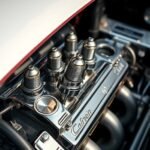
Yes, spark plugs can cause misfire by failing to ignite the air-fuel mixture efficiently. When the electrodes wear out, become fouled, or have improper gaps, the spark weakens or becomes inconsistent. This leads to hesitation, rough idle, or power loss.
Testing spark plugs includes visual inspection, spark testing, and using diagnostic tools to confirm issues. Replacing worn or damaged spark plugs often restores smooth engine performance. Understanding these factors helps you identify and fix misfires effectively.
More insights on related engine checks are available to assist further.
Key Takeaways
- Worn or fouled spark plugs can weaken spark intensity, causing engine misfires.
- Incorrect spark plug gap disrupts spark formation, leading to incomplete combustion and misfires.
- Overheated spark plugs may suffer electrode damage, resulting in inconsistent ignition and misfires.
- Visual and electrical testing of spark plugs helps diagnose misfire-related issues effectively.
- Regular spark plug maintenance and timely replacement prevent misfires and maintain engine performance.
How Spark Plugs Work and Cause Misfires
Although spark plugs are small components, they play a critical role in your engine’s combustion process by delivering the electrical spark needed to ignite the air-fuel mixture in each cylinder.
The spark plug design directly influences the efficiency of this ignition by ensuring a consistent spark gap and ideal electrode shape.
Spark plug design ensures efficient ignition through a consistent spark gap and optimal electrode shape.
Proper ignition timing is essential; the spark must occur precisely when the piston reaches the correct position to maximize power and minimize emissions.
If the spark plug fails to generate a strong, timely spark due to wear or improper design, combustion becomes incomplete or delayed, causing a misfire.
Understanding how spark plug design and ignition timing interact helps you maintain engine performance and prevents misfire-related issues.
Causes of Spark Plug Failure and Misfires
When spark plugs degrade or fail, they often cause engine misfires that reduce performance and increase emissions. Understanding the causes helps you perform accurate misfire diagnostics and select appropriate spark plug types for your engine.
| Cause | Description |
|---|---|
| Electrode Wear | Erodes spark plug tip, weakening spark intensity |
| Fouling | Deposits from oil or fuel impair spark formation |
| Improper Gap | Incorrect gap size disrupts spark efficiency |
| Overheating | Excessive temperature damages electrode and insulator |
Each cause affects ignition differently, so you must identify the failure mode precisely. Different spark plug types tolerate heat and deposits variably, influencing durability.
Regular inspection and precise gap adjustment guarantee reliable spark generation, minimizing misfire risk.
Symptoms of Spark Plug Misfires to Watch For
If your engine misfires due to spark plug issues, you’ll notice specific symptoms that can help pinpoint the problem early.
Recognizing these misfire symptoms allows you to address spark plug indicators before they escalate into costly repairs.
Here are four key signs to watch for:
- Engine Hesitation or Rough Idle: Uneven combustion caused by faulty spark plugs leads to engine stuttering or unstable idling.
- Reduced Fuel Efficiency: Misfires disrupt efficient fuel combustion, causing noticeable drops in mileage.
- Loss of Power: You might feel sluggish acceleration since misfires hinder engine performance.
- Check Engine Light Activation: The onboard diagnostics system detects ignition problems and triggers warning lights tied to spark plug misfires.
Monitoring these spark plug indicators guarantees timely maintenance and prevents further engine damage.
Testing Spark Plugs for Misfire Problems
How can you accurately determine whether your spark plugs are causing misfire problems?
Begin with spark plug testing by removing each plug and visually inspecting for fouling, wear, or damage. Use a spark plug tester to check for consistent spark output under engine conditions.
Additionally, leverage misfire diagnostics tools like an OBD-II scanner to identify cylinder-specific misfire codes (e.g., P0301 to P0308). Cross-reference these codes with your spark plug condition to pinpoint faulty plugs.
You can also perform a resistance test on the spark plug electrodes using a multimeter; abnormal resistance values often indicate internal damage.
Combining spark plug testing with thorough misfire diagnostics helps you isolate the root cause effectively, ensuring you target the right component for repair without guesswork.
Replacing Spark Plugs to Fix Engine Misfires
Since worn or damaged spark plugs directly contribute to engine misfires, replacing them promptly can restore ideal combustion performance.
When selecting new spark plugs, consider the spark plug types compatible with your vehicle, such as copper, platinum, or iridium, each offering different durability and conductivity levels.
Additionally, choose reputable spark plug brands to guarantee quality and performance reliability.
Follow these steps for replacement:
- Consult your vehicle’s manual for recommended spark plug specifications.
- Use a spark plug socket and ratchet to remove old plugs carefully.
- Inspect the gap on new spark plugs and adjust if necessary.
- Install the new spark plugs by hand initially, then torque to manufacturer specifications.
Proper replacement eliminates misfires caused by faulty ignition components efficiently.
Effects of Dirty or Worn Spark Plugs on Performance
Although spark plugs play a small role in your engine’s overall operation, dirty or worn plugs can greatly degrade performance. When deposits accumulate on the electrodes or gaps widen beyond specifications, the spark intensity weakens, leading to incomplete combustion.
This reduces power output, increases fuel consumption, and causes rough idling or hesitation during acceleration. Proper spark plug maintenance guarantees consistent ignition timing and energy delivery, essential for performance enhancement.
Reduced power and efficiency highlight why proper spark plug care is vital for smooth, responsive driving.
Neglecting this maintenance accelerates electrode erosion, further impairing spark quality and triggering misfires. By regularly inspecting and replacing spark plugs, you maintain ideal combustion efficiency, preserving engine responsiveness and fuel economy.
Consequently, addressing spark plug condition is critical to sustaining your vehicle’s performance and preventing issues linked to ignition failure.
Other Engine Parts to Check When Spark Plugs Cause Misfires
When spark plugs cause misfires, you should also inspect the ignition coils for faults that disrupt spark delivery.
Check fuel injectors to guarantee they’re delivering the correct amount of fuel without clogging or leaks.
Additionally, measuring engine compression levels can help identify mechanical issues affecting combustion stability.
Ignition Coil Issues
If your engine is misfiring despite replacing spark plugs, you should inspect the ignition coils next. Ignition coil failure can interrupt the high voltage supply needed to create a spark, causing misfires. Proper ignition coil testing helps identify faulty coils efficiently.
To diagnose ignition coil issues:
- Use a digital multimeter to measure coil resistance and compare it to manufacturer specifications.
- Perform a spark test to verify the coil’s ability to generate a strong spark.
- Inspect coil connectors and wiring for corrosion or damage that may disrupt signal transmission.
- Swap suspected faulty coils with known good ones to see if the misfire follows the coil.
Addressing ignition coil problems promptly guarantees stable engine performance and prevents further damage.
Fuel Injector Problems
Since faulty fuel injectors can disrupt the precise delivery of fuel to the combustion chamber, they often contribute to engine misfires even after replacing spark plugs. You should prioritize fuel injector maintenance to prevent clogging or leaks that cause uneven fuel spray patterns. Regular fuel injector cleaning restores peak spray atomization, enhancing combustion efficiency and reducing misfires.
| Symptom | Cause | Recommended Action |
|---|---|---|
| Engine hesitation | Clogged injector nozzle | Perform fuel injector cleaning |
| Rough idle | Leaking injector seals | Inspect and replace seals |
| Reduced fuel economy | Inconsistent fuel delivery | Conduct fuel injector maintenance |
Addressing these issues early helps maintain engine performance and prevents recurring misfires linked to fuel delivery faults.
Engine Compression Levels
Fuel injector issues can interrupt fuel delivery, but misfires may still occur even after addressing those concerns.
One critical area to check is your engine’s compression levels, which directly impact engine health.
Low or uneven compression can cause misfires by preventing proper combustion. To evaluate this, perform compression testing on each cylinder.
Here’s what you should focus on:
- Use a reliable compression gauge to measure each cylinder’s pressure.
- Compare readings to manufacturer specifications for uniformity.
- Identify cylinders with noticeably lower compression, indicating potential valve, piston ring, or head gasket problems.
- Address any discrepancies promptly to restore ideal engine performance and prevent further misfires.
Regular compression testing helps diagnose underlying issues beyond spark plugs, ensuring thorough engine health maintenance.
Maintaining Spark Plugs to Prevent Future Misfires
You should regularly inspect your spark plugs for wear and deposits to catch early signs of misfire.
Ensuring the spark plug gap is set correctly is essential for peak combustion efficiency.
Replace spark plugs at manufacturer-recommended intervals to maintain engine performance and prevent future misfires.
Regular Spark Plug Inspection
Although spark plugs are small components, their condition directly impacts engine performance and efficiency. To prevent misfires, regular inspection is crucial. Spark plug lifespan varies, but consistent checks help catch wear early.
Follow these steps for effective inspection:
- Remove each spark plug carefully to avoid damage.
- Examine the electrode and insulator for carbon buildup or erosion.
- Measure the gap to confirm it matches manufacturer specifications.
- Check for signs of overheating, oil fouling, or corrosion.
Incorporating regular maintenance into your routine extends spark plug lifespan and maintains peak combustion. Ignoring inspection can lead to incomplete ignition, causing misfires and reduced fuel efficiency.
Proper Spark Plug Gapping
Properly setting the spark plug gap is one of the most critical steps in preventing engine misfires. The gap, the distance between the center and ground electrodes, must match your vehicle manufacturer’s specifications.
If the gap is too wide or too narrow, the spark may be weak or inconsistent, leading to incomplete combustion. Different spark plug types and spark plug materials, such as copper, platinum, or iridium, influence the ideal gap size because these materials affect electrode wear and conductivity.
When adjusting the gap, use a precise feeler gauge to avoid damaging the electrodes. Remember, improper gapping can cause inefficient ignition, reduced fuel economy, and misfires.
Consistently verifying and setting the correct spark plug gap guarantees peak engine performance and longevity.
Timely Spark Plug Replacement
Maintaining the correct spark plug gap is only part of preventing engine misfires; regularly replacing worn spark plugs plays a significant role in sustaining peak engine function. Over time, carbon deposits and electrode erosion reduce spark plug efficiency, shortening the spark plug lifespan.
To guarantee effective maintenance, you should:
- Replace spark plugs according to the manufacturer’s recommended intervals, typically every 30,000 to 100,000 miles.
- Inspect plugs for wear signs like electrode damage or heavy deposits during routine maintenance.
- Use high-quality spark plugs compatible with your engine to optimize performance.
- Monitor engine performance and address misfire symptoms promptly to prevent further damage.
Timely replacement prevents misfires, improves fuel efficiency, and maintains engine reliability. Effective maintenance hinges on adhering to these practices consistently.
Frequently Asked Questions
Can Spark Plugs Affect Fuel Efficiency Significantly?
Yes, poor spark plug maintenance can considerably increase your fuel consumption by causing inefficient combustion. Regularly inspecting and replacing worn plugs guarantees ideal ignition, improving engine performance and maximizing fuel efficiency effectively.
How Often Should Spark Plugs Be Replaced in Cold Climates?
You should replace spark plugs every 30,000 to 50,000 miles in cold climates, as cold weather effects accelerate wear, reducing spark plug lifespan and causing potential misfires or inefficient combustion.
Regular checks guarantee peak performance.
Are There Different Spark Plugs for Diesel Engines?
You won’t find traditional spark plugs in diesel engines since they rely on compression ignition. Instead, glow plugs assist with cold starts. These diesel ignition components differ markedly from spark plug types used in gasoline engines.
Can Spark Plug Issues Trigger the Check Engine Light?
Yes, spark plug issues can trigger the check engine light. Poor spark plug maintenance disrupts the ignition system’s performance, causing misfires or inefficient combustion. Your vehicle’s diagnostic system detects these issues and signals them via the check engine light.
Do Spark Plugs Influence Vehicle Emissions and Pollution?
Back in the days of the Model T, you’d never guess spark plug maintenance impacts emission control today. Worn plugs cause incomplete combustion, raising pollutants.
Conclusion
Think of spark plugs as the heartbeat of your engine—when they falter, misfires ripple through your performance like a sudden hiccup in rhythm. Regular inspection, testing, and timely replacement of worn or dirty spark plugs keep your engine firing smoothly and efficiently.
Neglecting these small but crucial components can lead to bigger problems down the line. Stay proactive with maintenance to ensure your engine delivers the precision and power it was built for.
Remember, spark plugs can cause misfire issues, so keeping them in top shape is essential for optimal engine performance.