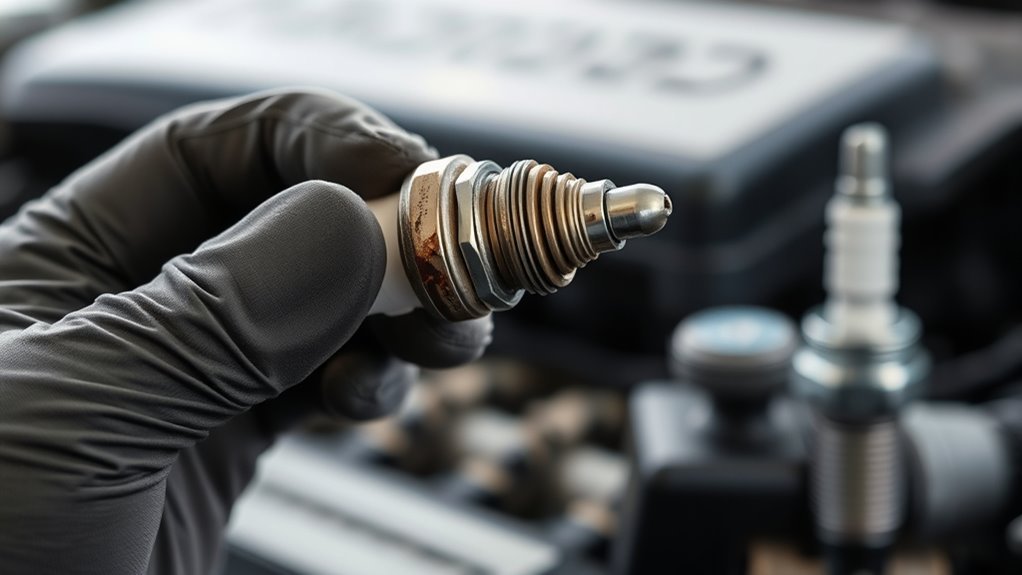

You’ll know it’s time to change your spark plugs if your engine idles roughly, struggles to start, or fuel efficiency drops noticeably. Knowing when to change spark plugs is crucial for maintaining optimal engine performance and avoiding costly repairs.
Inspect plugs by removing them with a socket wrench once the engine is cool; look for electrode wear, carbon buildup, or cracks. Check the gap with a feeler gauge against your vehicle’s specifications to ensure proper function.
Using the correct plugs and maintaining your ignition system also helps avoid premature wear. Uncover how to extend their life and choose the best type for your vehicle to keep your engine running smoothly.
Key Takeaways
- Replace spark plugs every 30,000 to 100,000 miles depending on type and driving conditions.
- Watch for rough idling, engine misfires, or difficulty starting as signs of worn spark plugs.
- Decreased fuel efficiency and engine power loss indicate spark plug degradation.
- Inspect spark plugs for electrode erosion, deposits, or cracks during regular maintenance.
- Follow vehicle manual recommendations and monitor performance symptoms to time replacements.
When and Why to Replace Spark Plugs
Although spark plugs can last tens of thousands of miles, you should replace them once you notice signs of wear or performance issues. The spark plug lifespan varies by type and driving conditions but typically ranges between 30,000 to 100,000 miles.
Over time, electrode erosion and carbon buildup degrade spark efficiency, directly impacting engine performance. Reduced combustion efficiency leads to misfires, poor fuel economy, and rough idling.
By adhering to manufacturer-recommended intervals or proactively replacing worn plugs, you maintain superior ignition timing and combustion quality. Neglecting timely replacement stresses ignition coils and catalytic converters, causing costly repairs.
Monitoring spark plug lifespan guarantees consistent engine power and reliability. Consequently, you preserve fuel efficiency and prevent power loss by methodically replacing spark plugs before performance deteriorates.
How to Tell When Your Spark Plugs Are Acting Up
Recognizing the early signs of spark plug issues allows you to address problems before they escalate. When your spark plugs act up, specific spark plug symptoms will manifest, impacting engine performance.
You’ll notice rough idling, difficulty starting, and decreased fuel efficiency. Monitoring these symptoms is essential for timely intervention.
| Spark Plug Symptom | Impact on Engine Performance |
|---|---|
| Misfiring | Engine runs unevenly, loss of power |
| Hard starts | Delayed ignition, increased wear |
| Poor fuel economy | Inefficient combustion, higher fuel consumption |
How to Inspect Your Spark Plugs Yourself
Before you start inspecting your spark plugs, make certain the engine is completely cool to prevent burns.
Begin your spark plug inspection by disconnecting the ignition coil or spark plug wire from each plug.
Use a spark plug socket and ratchet to carefully remove the plugs one at a time.
Examine the electrode and insulator for signs of wear, such as erosion, deposits, or cracks.
Note any carbon buildup, oil fouling, or blistered electrodes, which indicate potential engine issues.
Measure the electrode gap with a feeler gauge and compare it to your vehicle’s specifications.
If the gap is outside the recommended range or the plug shows significant wear, replacement is necessary.
Performing this DIY maintenance regularly guarantees peak engine performance and fuel efficiency.
How to Pick the Right Spark Plugs for Your Car
Choosing the right spark plugs for your car requires matching their specifications to your engine’s requirements and driving conditions. Start by consulting your vehicle’s manual to identify recommended spark plug types, considering factors like heat range, thread size, and electrode design.
Common spark plug types include copper, platinum, and iridium, each offering different durability and conductivity levels.
Next, evaluate performance ratings, which indicate efficiency and longevity under various operating conditions. High-performance plugs may enhance combustion but must align with your engine’s tolerance.
Avoid mismatched types that can cause misfires or damage. Finally, consider your driving style. Aggressive driving or towing may require plugs with higher thermal capacity.
How to Extend Spark Plug Life and Performance
Several key maintenance practices can greatly extend your spark plugs’ life and maintain peak performance.
First, stick to the manufacturer’s recommended spark plug maintenance schedule, including regular inspections and timely replacements. Use the correct spark plug type and gap specifications to guarantee ideal combustion.
Monitor your engine’s air-fuel mixture, as an improper ratio can cause spark plug fouling or overheating.
Additionally, adapt your driving habits to reduce stress on the ignition system; avoid frequent short trips and aggressive acceleration, which accelerate wear.
Keep your ignition system components, such as wires and coils, in good condition to prevent misfires that damage spark plugs.
Frequently Asked Questions
Can Bad Spark Plugs Cause a Car to Fail Emissions Tests?
Yes, bad spark plugs can cause your car to fail emissions tests by increasing unburned fuel and emissions.
Staying on top of spark plug maintenance guarantees compliance with emissions regulations and peak engine performance.
How Do Spark Plugs Affect Fuel Efficiency?
Think of your engine as a firework show; spark plugs ignite fuel combustion. When their lifespan fades, misfires occur, reducing efficiency.
You’ll notice decreased mileage; replacing worn plugs restores precise ignition, optimizing fuel economy methodically and reliably.
What Tools Do Professionals Use to Replace Spark Plugs?
You’ll need a spark plug socket, ratchet wrench, torque wrench, and gap gauge for precise spark plug maintenance.
Professionals choose tools matching spark plug types to guarantee proper installation, avoiding damage and maintaining peak engine performance.
Are Spark Plugs the Same for Gasoline and Diesel Engines?
Think of spark plug types as unique keys; you can’t use a gasoline key in a diesel lock. Diesel engines don’t use spark plugs, so always match spark plug types to engine compatibility for precise, reliable ignition performance.
Can Weather Conditions Impact Spark Plug Performance?
Yes, temperature effects directly impact spark plug longevity. Extreme cold can cause misfires, while excessive heat accelerates electrode wear.
You should monitor weather conditions to adjust maintenance schedules and guarantee peak spark plug performance.
Conclusion
Did you know that worn spark plugs can reduce your engine’s fuel efficiency by up to 30%? Keeping an eye on their condition is essential.
By regularly inspecting and replacing spark plugs based on wear, deposits, or misfires, you’ll maintain peak engine performance and avoid costly repairs. Choose the right type for your vehicle and follow proper maintenance techniques to extend their life.
Staying proactive guarantees your engine runs smoothly and efficiently. Knowing when to change spark plugs is key to ensuring your vehicle operates at its best.