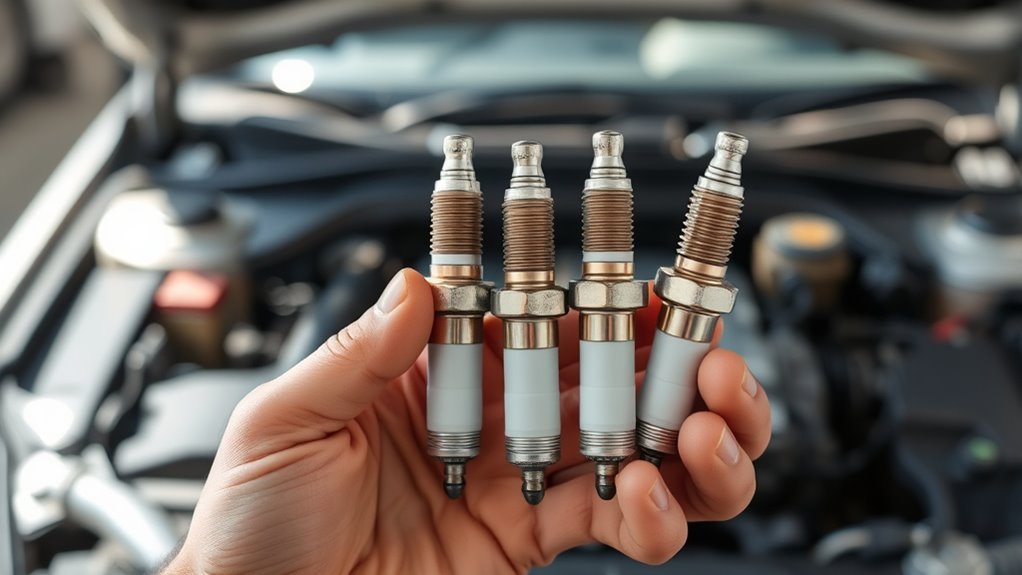

You need spark plugs that match your vehicle’s specifications exactly, including thread size, reach, and heat range, which you can find in your owner’s manual or through manufacturer charts. Knowing what spark plugs do I need is crucial for optimal engine performance and longevity.
Choose between copper, platinum, or iridium based on your engine’s needs and driving style—copper offers a strong spark but wears faster, while iridium lasts longer under high heat. Proper installation with the right tools is essential for performance and safety.
Understanding these details will help you select the best plug for your car. This ensures your engine runs smoothly and efficiently.
Key Takeaways
- Consult your vehicle’s owner manual for exact spark plug specifications including thread size, reach, and heat range.
- Choose reputable brands like NGK, Bosch, or Denso for reliable performance and compatibility.
- Select the appropriate spark plug type, such as copper, platinum, or iridium, based on your engine requirements and durability needs.
- Consider your driving habits (city, highway, performance) to determine the correct heat range and plug characteristics.
- Use online compatibility tools or manufacturer charts to filter spark plugs that match your vehicle’s make, model, and engine.
How to Identify the Right Spark Plugs for Your Car
How do you determine the correct spark plugs for your vehicle? Start by consulting your owner’s manual, which specifies the exact spark plug type compatible with your engine.
Next, consider reputable spark plug brands known for quality and performance, such as NGK, Bosch, or Denso. These manufacturers provide detailed compatibility charts to guarantee you select plugs that fit your vehicle’s make and model.
Pay attention to key specifications like thread size, reach, and heat range. Using spark plugs incompatible with your engine can cause misfires or damage.
Online tools on brand websites often allow you to input your vehicle details to filter compatible spark plugs quickly.
Copper, Platinum, or Iridium: Which Spark Plug Type Is Best?
Why choose between copper, platinum, or iridium spark plugs? Each type offers distinct benefits depending on your vehicle’s needs and spark plug compatibility:
- Copper advantages: Copper plugs have excellent conductivity, providing strong spark energy, but they wear out faster.
- Platinum longevity: Platinum plugs resist electrode erosion better, lasting longer than copper while maintaining stable performance.
- Iridium durability: Iridium plugs offer superior durability and heat resistance, extending service life and improving ignition reliability.
- Spark plug compatibility: Always match the plug type with your engine’s specifications to guarantee peak function and avoid damage.
Understanding these factors helps you select the best spark plug type, enhancing engine efficiency and maintenance intervals.
Why Spark Plug Heat Range Matters
You need to understand spark plug heat range because it directly affects combustion efficiency and engine performance.
Choosing the correct heat range guarantees ideal temperature management, preventing fouling or overheating.
Ignoring this can lead to misfires, reduced power, or engine damage.
Understanding Heat Range Basics
Although often overlooked, selecting the correct spark plug heat range plays a crucial role in engine performance and longevity. The heat range of a spark plug indicates its ability to dissipate heat from the combustion chamber. Choosing the right heat range guarantees maximum combustion and prevents engine damage.
Here’s what you need to know:
- A “hot” spark plug retains more heat, suitable for low-speed or low-load engines to prevent fouling.
- A “cold” spark plug dissipates heat quickly, ideal for high-performance or high-load engines to avoid overheating.
- The heat range is determined by the length of the insulator nose. Longer means hotter.
- Using an incorrect heat range can cause pre-ignition or fouled plugs, harming engine efficiency.
Understanding these basics helps you select the spark plug that matches your engine’s requirements precisely.
Effects on Engine Performance
When you select the correct spark plug heat range, your engine performs more efficiently by maintaining ideal combustion temperatures.
Using a plug with an inappropriate heat range can lead to incomplete combustion or pre-ignition, which disrupts ignition timing and reduces engine efficiency.
A heat range that’s too hot causes the spark plug to overheat, increasing the risk of knocking and engine damage.
Conversely, a colder plug may not reach peak temperature, leading to fouling and misfires.
By matching the spark plug heat range to your engine’s operating conditions, you guarantee proper ignition timing and stable combustion.
This alignment maximizes power output, improves fuel economy, and reduces emissions.
Selecting the right heat range is essential for maintaining consistent engine efficiency and reliable performance.
How Driving Habits Affect Spark Plug Choice
You need to match your spark plugs to your driving habits for peak performance and longevity.
City driving demands plugs that handle frequent stops and lower engine temps. Highway driving requires plugs that sustain higher, consistent heat.
For performance driving, choose plugs designed to withstand extreme conditions and rapid acceleration.
City Driving Spark Plug Needs
Since city driving involves frequent stops, idling, and lower average speeds, your spark plugs must withstand these conditions without fouling or premature wear.
City traffic and urban conditions create unique challenges that affect spark plug performance.
When selecting spark plugs for city driving, consider these factors:
- Choose plugs with a design that resists carbon buildup caused by frequent idling.
- Opt for spark plugs with a heat range suitable for lower operating temperatures.
- Select materials like iridium or platinum for enhanced durability and consistent ignition.
- Confirm the spark plugs maintain proper gap settings to prevent misfires in stop-and-go traffic.
Highway Driving Considerations
Although highway driving subjects your engine to sustained higher speeds and temperatures, it demands spark plugs that can endure prolonged heat without degrading.
At highway speeds, spark plugs with a heat range suited for continuous combustion are essential to prevent fouling and pre-ignition. You should opt for plugs designed to maintain ideal electrode temperature, ensuring consistent ignition timing and combustion efficiency.
This stability directly impacts fuel efficiency by promoting complete fuel burn and reducing misfires. In contrast to city driving, where cooler plugs may suffice, highway driving requires spark plugs with robust thermal characteristics.
Selecting the correct spark plug heat range tailored to your driving habits will extend plug life and maintain engine performance under extended load conditions typical of highway cruising.
Always consult your vehicle’s specifications for recommended spark plug types best suited for highway use.
Performance Driving Impact
When your driving style involves aggressive acceleration and frequent high-rev engine use, selecting spark plugs that handle increased thermal and electrical demands becomes critical.
Your choice directly impacts performance enhancements and overall driving dynamics. Consider these factors:
- Heat Range: Opt for plugs with a heat range suited to dissipate extra heat generated by high RPMs, preventing pre-ignition and fouling.
- Electrode Material: Use iridium or platinum electrodes for durability and consistent spark under performance stresses.
- Gap Size: Verify the gap supports peak combustion efficiency at elevated engine loads.
- Resistance Rating: Choose low-resistance plugs to improve spark energy delivery and ignition reliability during rapid throttle changes.
Signs You Need to Replace or Upgrade Spark Plugs
How can you tell if your spark plugs are due for replacement or an upgrade? Key indicators include symptoms of misfire such as engine hesitation, rough idling, or reduced acceleration.
These often result from worn electrodes failing to generate a consistent spark. Additionally, signs of wear like carbon buildup, eroded electrodes, or damaged insulators signal diminished spark plug efficiency.
If you experience decreased fuel economy or difficulty starting your engine, it’s a strong indication your spark plugs aren’t performing at their best.
Upgrading may be necessary if you’ve modified your engine for higher performance, requiring spark plugs with different heat ranges or materials.
Regular inspection helps you identify these issues early, ensuring reliable ignition and protecting your engine from further damage.
Essential Tips for Safe and Correct Spark Plug Installation
Proper spark plug installation demands careful attention to torque specifications and cleanliness to guarantee peak engine performance.
Careful torque and cleanliness during spark plug installation ensure optimal engine performance and longevity
To confirm installation safety and accuracy, use the right spark plug tools designed for your engine model. Here’s what you need to do:
- Clean the spark plug hole thoroughly to prevent debris from entering the combustion chamber.
- Hand-thread the spark plug initially to avoid cross-threading.
- Use a torque wrench to tighten the spark plug to your vehicle manufacturer’s specified torque setting.
- Inspect the spark plug gap with a feeler gauge and adjust as necessary before installation.
Following these steps helps maintain ideal engine function and prevents damage.
Always wear protective gloves and eyewear to uphold installation safety.
Frequently Asked Questions
Can Spark Plugs Affect Fuel Efficiency?
Yes, spark plug types directly impact fuel combustion efficiency. Using the right spark plugs guarantees ideal ignition, improving fuel combustion, which boosts fuel efficiency and reduces emissions.
Choosing appropriate plugs keeps your engine running smoothly and economically.
How Often Should Spark Plugs Be Cleaned?
You should perform spark plug maintenance, including cleaning, every 30,000 to 50,000 miles. The cleaning frequency depends on your vehicle’s usage and conditions, ensuring ideal performance and fuel efficiency by preventing fouling and deposits.
Do Spark Plugs Influence Engine Noise?
Yes, spark plugs directly affect engine noise; worn or incorrect spark plug types can cause misfires, increasing noise and reducing engine performance.
Properly matched plugs guarantee smooth combustion, minimizing noise and optimizing your engine’s efficiency.
Can Bad Spark Plugs Damage the Catalytic Converter?
Yes, bad spark plugs can damage the catalytic converter by causing incomplete combustion, which leads to unburned fuel overheating the converter.
Monitoring spark plug lifespan helps maintain catalytic converter function and prevents costly repairs.
Are Aftermarket Spark Plugs Reliable Compared to OEM?
Aftermarket quality can compete closely with OEM, but consistency varies by spark plug brands. You should scrutinize specifications, material composition, and customer reviews to guarantee reliability, performance, and compatibility before choosing aftermarket alternatives.
Conclusion
Choosing the right spark plugs guarantees your engine runs efficiently and reliably. Remember, “a stitch in time saves nine”—replacing or upgrading plugs at the right interval prevents costly damage.
Consider your car’s specifications, driving habits, and the heat range to select between copper, platinum, or iridium types. Follow proper installation techniques to avoid issues.
By staying proactive, you’ll maintain peak performance and extend your engine’s lifespan with confidence. Knowing what spark plugs do I need is key to achieving optimal engine health.