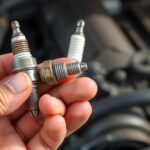
Do all cars have spark plugs? The answer is no, because only gasoline engines use spark plugs to ignite the air-fuel mixture inside the engine cylinders.
Diesel engines, on the other hand, rely on compression ignition and do not require spark plugs. Instead, they use glow plugs to help start the engine in cold conditions.
Electric vehicles operate differently, using electric motors powered by batteries rather than combustion engines. Therefore, they do not have or need spark plugs.
If you drive a gasoline car, spark plugs are essential for optimal engine performance. Understanding their role can help you identify potential issues before they become serious problems.
Key Takeaways
- Only gasoline and hybrid cars with gasoline engines have spark plugs for ignition.
- Diesel engines do not use spark plugs; they rely on compression ignition and may have glow plugs instead.
- Electric vehicles have no spark plugs because they use electric motors without combustion.
- Missing or faulty spark plugs cause engine misfires, rough idling, and starting difficulties in gasoline engines.
- Spark plug type and material vary based on engine design, affecting longevity and performance.
What Do Spark Plugs Actually Do?
Spark plugs play an essential role in gasoline engines by igniting the air-fuel mixture inside the combustion chamber.
You rely on the ignition system to generate a high-voltage spark that jumps across the spark plug’s electrodes, initiating combustion.
Without this precise spark timing, the engine won’t run effectively or may fail to start. To keep your engine performing at its best, prioritize spark plug maintenance.
Worn or fouled plugs can cause misfires, reduced fuel efficiency, and increased emissions.
Regular inspection and replacement guarantee the ignition system functions correctly, maintaining consistent combustion and engine power.
Which Engines Need Spark Plugs?
You need spark plugs in gasoline engines because they ignite the air-fuel mixture for combustion.
Diesel engines don’t use spark plugs since they rely on compression ignition instead.
Hybrid engines vary. Some have spark plugs if they include a gasoline motor, while others don’t if they run solely on electric power.
Gasoline Engines Requirement
Most gasoline engines rely on spark plugs to ignite the air-fuel mixture within the combustion chamber. You’ll find that these components are integral to the ignition system, ensuring efficient combustion and engine performance.
The spark plug materials, often platinum or iridium, enhance durability and conductivity, vital for reliable sparks under high pressure and temperature.
When you inspect a gasoline engine, visualize these aspects:
- Spark plug electrode generating the ignition spark
- Insulator isolating electrical current
- Threads securing the plug in the cylinder head
- Connection to the ignition coil
- Combustion chamber where ignition occurs
Understanding these elements helps you appreciate why spark plugs are essential in gasoline engines, as they initiate the combustion process that powers your vehicle.
Diesel Engines Exception
Although diesel engines operate differently from gasoline engines, they generally don’t require spark plugs to ignite the fuel-air mixture. Instead, diesel combustion relies on compressing air to a high temperature and pressure, causing the injected diesel fuel to auto-ignite without an external spark.
This process improves engine efficiency by enabling a higher compression ratio than gasoline engines, resulting in more complete fuel combustion and better thermal efficiency.
You won’t find spark plugs in diesel engines because the ignition mechanism is fundamentally different; glow plugs may be present, but their role is to aid cold starts by heating the combustion chamber, not to ignite the fuel.
Understanding this distinction clarifies why diesel engines are an exception when considering which engines need spark plugs.
Hybrid Engine Variations
While diesel engines forego spark plugs due to their unique ignition process, hybrid engines combine multiple power sources, which affects their spark plug requirements.
In hybrid vehicles, the internal combustion engine (ICE) still relies on spark plugs for ignition, ensuring peak engine efficiency during operation.
The electric motor supplements power, reducing fuel consumption and emissions, but doesn’t eliminate the need for spark plugs entirely.
You’ll find that:
- Gasoline engines in hybrids use spark plugs for combustion.
- Electric motors operate silently without spark plugs.
- Engine efficiency improves through seamless switching between power sources.
- Spark plugs require regular maintenance despite hybrid complexity.
- Some hybrids feature advanced ignition systems enhancing spark plug performance.
Understanding this interplay helps you appreciate why spark plugs remain essential in hybrid engine designs.
Why Diesel Engines Don’t Use Spark Plugs
Because diesel engines rely on compression ignition rather than spark ignition, they don’t require spark plugs.
In diesel combustion, air is compressed to extremely high pressures and temperatures, causing the injected diesel fuel to ignite spontaneously. This process eliminates the need for an external ignition source like a spark plug.
You’ll find that ignition timing in diesel engines is controlled by the precise moment fuel is injected, not by an electric spark.
The high compression ratio guarantees that the combustion occurs at the ideal point in the engine cycle, maximizing efficiency and power output.
Understanding this fundamental difference helps you appreciate why diesel engines operate without spark plugs, relying instead on compression-induced ignition to drive their combustion process.
How Electric Cars Run Without Spark Plugs
Since electric cars don’t rely on internal combustion engines, they don’t need spark plugs to ignite fuel. Instead, electric cars operate using electric motors powered by rechargeable energy sources like lithium-ion batteries. These motors convert electrical energy directly into mechanical energy, eliminating the need for combustion and ignition.
Electric cars use electric motors powered by batteries, eliminating the need for spark plugs and combustion.
You’ll find that electric vehicles use advanced power electronics and control systems to manage energy flow efficiently.
Visualize the process:
- A high-voltage battery pack storing electrical energy
- Inverter converting DC electricity to AC for the motor
- Electric motor generating torque without combustion
- Regenerative braking systems recapturing energy
- Power control units optimizing energy distribution
This system fundamentally differs from combustion engines, rendering spark plugs obsolete in electric vehicles.
Signs Your Car’s Spark Plugs Are Failing
If your car’s engine misfires or hesitates during acceleration, your spark plugs could be failing.
You might also notice a drop in fuel efficiency or difficulty starting the engine.
These symptoms indicate that the spark plugs aren’t igniting the fuel-air mixture properly, affecting overall performance.
Engine Misfires And Hesitation
When your engine misfires or hesitates during acceleration, it’s often a clear indicator that your spark plugs are failing.
Spark plugs play a critical role in ignition, so any degradation directly impacts engine performance and combustion efficiency.
You might notice:
- Sudden jerks when you press the gas pedal
- Rough idling or engine vibrations
- Delayed throttle response during acceleration
- Uneven engine sound or backfiring
- Difficulty maintaining consistent speed
These symptoms occur because worn or fouled spark plugs struggle to generate a strong spark, disrupting combustion timing.
Reduced combustion efficiency leads to incomplete fuel burning, causing the engine to misfire.
If you experience these signs, inspecting and possibly replacing your spark plugs can restore smooth acceleration and peak engine operation.
Poor Fuel Efficiency
Poor fuel efficiency is one of the most common signs that your car’s spark plugs are failing. When spark plugs wear out or become fouled, they cause incomplete combustion, leading to increased fuel consumption.
You’ll notice your engine performance drops, as the spark plugs fail to ignite the air-fuel mixture effectively. This inefficiency forces the engine to burn more fuel to maintain power output, directly impacting your vehicle’s miles per gallon (MPG).
Additionally, faulty spark plugs can cause unburned fuel to enter the exhaust system, further reducing efficiency and potentially damaging emission components. Monitoring your fuel consumption and addressing spark plug issues promptly guarantees peak engine performance and prevents costly repairs down the line.
Regular maintenance keeps your spark plugs functioning at maximum efficiency, maintaining fuel economy and engine health.
Difficulty Starting Engine
Although spark plugs play an essential role in igniting your engine’s air-fuel mixture, worn or fouled plugs can greatly hinder the starting process.
When you turn the key, the engine cranking may feel sluggish or fail to produce ignition effectively.
Ignition issues often stem from spark plugs that no longer generate a strong spark, causing misfires during startup.
You might notice:
- Prolonged engine cranking without ignition
- Engine hesitation or sputtering on startup
- Increased fuel consumption during cold starts
- Rough idling immediately after ignition
- Difficulty maintaining consistent engine RPMs
These signs indicate your spark plugs need inspection or replacement.
Addressing spark plug problems promptly guarantees reliable ignition, smoother starts, and prevents further engine wear caused by incomplete combustion.
Common Spark Plug Types and How They Differ
Spark plugs come in several common types, each designed to optimize engine performance under specific conditions. You’ll find variations mainly distinguished by their construction materials, such as ceramic insulators and copper cores, which impact heat dissipation and durability.
Copper plugs, with excellent thermal conductivity, suit older engines but wear faster. Platinum plugs provide longer life and better resistance to fouling, while iridium plugs offer superior ignition and longevity due to their fine electrodes.
| Type | Core Material | Key Feature |
|---|---|---|
| Copper | Copper core | Excellent thermal transfer |
| Platinum | Platinum tip | Longer lifespan |
| Iridium | Iridium tip | High durability, precise spark |
Choosing the right type hinges on your engine’s design and performance needs.
How to Tell If Your Car Has Spark Plugs
How can you quickly determine if your car uses spark plugs? Start by locating the spark plug location under the hood.
Spark plugs are typically screwed into the engine’s cylinder head, connected to ignition wires or coils. If you have a gasoline engine, you’ll find them; diesel engines don’t use spark plugs but glow plugs instead.
Spark plugs screw into the cylinder head and connect to ignition wires in gasoline engines; diesel engines use glow plugs.
Check for these signs:
- Ignition wires or coil packs leading to the engine block
- Cylindrical metal components screwed into the cylinder head
- Spark plug boots covering the top of each plug
- Engine type specified in your owner’s manual (gasoline vs. diesel)
- Presence of spark plug maintenance records or intervals in your service booklet
Identifying spark plugs accurately helps facilitate proper spark plug maintenance and engine function.
What Happens If Spark Plugs Fail or Are Missing
If spark plugs fail or are missing, your engine won’t ignite the air-fuel mixture properly, leading to misfires and reduced performance. Spark plug failure can cause rough idling, poor acceleration, and increased fuel consumption.
Missing spark plugs halt combustion in affected cylinders, causing severe power loss and potential engine damage.
| Symptom | Cause |
|---|---|
| Engine Misfires | Spark plug failure |
| Hard Starting | Missing spark plugs |
| Reduced Fuel Economy | Incomplete combustion |
| Rough Idle | Worn or fouled plugs |
| Engine Stalling | Spark plug malfunction |
Addressing spark plug issues promptly prevents costly repairs and maintains ideal engine efficiency.
Modern Spark Plug Technology and Its Benefits
Advancements in ignition components have considerably enhanced engine performance and reliability.
Thanks to modern spark plug technology, you benefit from improved ignition efficiency and longer service life.
Modern spark plug technology delivers enhanced ignition efficiency and extends the lifespan of your engine components.
These spark plug advancements reduce misfires and optimize fuel combustion, leading to smoother engine operation and lower emissions.
When you choose updated spark plugs, you experience:
- Fine-wire electrodes for precise spark delivery
- Iridium or platinum tips that resist wear
- Enhanced thermal conductivity to manage heat
- Anti-fouling coatings minimizing deposits
- Designs tailored to specific engine types
Frequently Asked Questions
How Often Should Spark Plugs Be Replaced in a Typical Car?
You should replace spark plugs every 30,000 to 100,000 miles, depending on their spark plug lifespan. Check your vehicle’s manual for specific replacement intervals to maintain ideal engine performance and fuel efficiency.
Can Bad Spark Plugs Affect Fuel Efficiency?
Coincidentally, poor spark plug maintenance directly raises fuel consumption. When your spark plugs misfire or degrade, combustion efficiency drops, forcing your engine to burn more fuel. This negatively impacts overall fuel economy and vehicle performance.
Are Spark Plugs Universal or Car-Specific?
Spark plug types aren’t universal; you’ll need to select ones matching your vehicle’s specifications. Automotive compatibility depends on engine design, heat range, and thread size.
Always consult your manufacturer’s guidelines when choosing spark plugs.
What Tools Are Needed to Replace Spark Plugs?
You’ll need a spark plug socket, ratchet wrench, extension bar, and gap gauge for spark plug maintenance. Choose tools compatible with your spark plug types to guarantee precise installation and efficient replacement without damaging the components.
Can Spark Plugs Cause Engine Misfires?
Yes, faulty spark plugs cause about 30% of engine misfires by disrupting the ignition system. You’ll notice reduced engine performance, rough idling, and increased emissions when spark plugs fail to ignite fuel properly.
Conclusion
While not every car relies on spark plugs, understanding their role is essential for most gasoline engines. If you drive a diesel or electric vehicle, your ignition system plays by different rules, sparing you from spark plug maintenance.
However, for traditional engines, keeping spark plugs in top shape guarantees smooth performance and efficiency. Neglecting them can lead to subtle performance hiccups that quietly undermine your engine’s health over time.
In conclusion, not all cars have spark plugs, but for those that do, regular maintenance is key to ensuring optimal engine function and longevity.