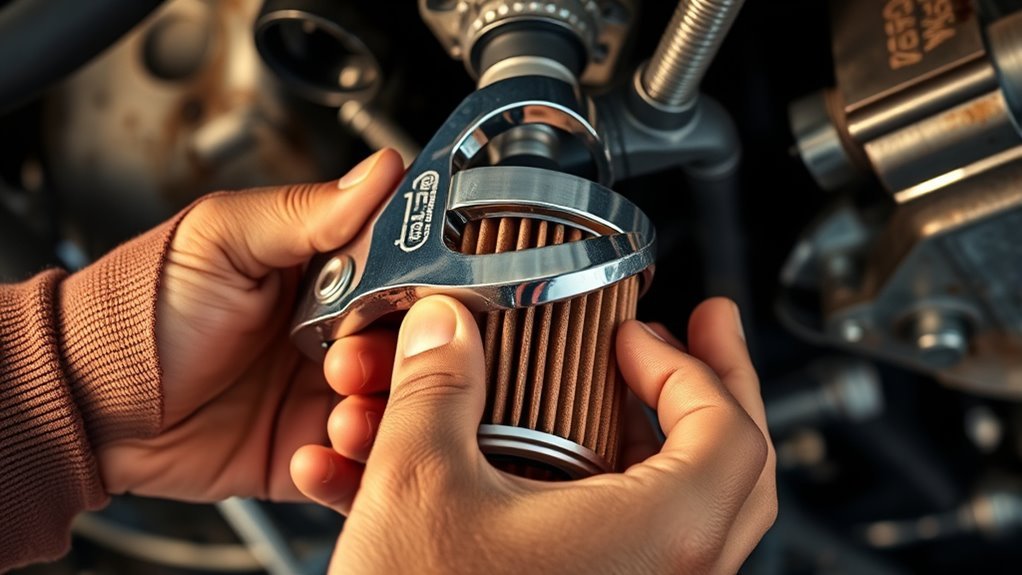

You need an oil filter wrench that matches your filter’s exact diameter to guarantee a secure grip and prevent damage. Choosing the right size oil filter wrench is essential for effective maintenance and avoiding tool slippage or filter damage.
Common sizes range from about 65mm for compact car filters to over 100mm for heavy-duty truck filters. Measure the filter’s widest point accurately before selecting a wrench.
Then, select a wrench type—band, cap, socket, or pliers-style—that is compatible with that size. Using the right fit helps optimize your maintenance process and ensures a smooth oil filter change.
Key Takeaways
- Measure the oil filter’s outer diameter accurately with calipers or a ruler to determine the correct wrench size needed.
- Common wrench sizes include 65-68mm for Fram filters and 74-76mm for Bosch filters, matching popular oil filter brands.
- Choose the wrench type (band, cap, socket, or pliers-style) based on the filter design and size for a secure grip.
- Avoid using undersized or oversized wrenches to prevent filter damage and ensure smooth removal.
- Consult your vehicle manual or online specifications to verify the correct oil filter wrench size for your car model.
Why Getting the Correct Oil Filter Wrench Size Matters
Although it might seem minor, using the correct oil filter wrench size is crucial for effective maintenance. When you select the right size, you guarantee a secure grip on the oil filter, preventing slippage that can damage the filter or surrounding components.
Proper wrench sizing directly impacts wrench durability, as an ill-fitting tool undergoes uneven stress, leading to premature wear or breakage.
An ill-fitting wrench causes uneven stress, reducing tool lifespan and increasing the risk of breakage.
Accurate sizing also facilitates efficient oil filter maintenance, reducing the risk of stripped filters or incomplete removal. This precision streamlines your workflow, saving time and effort during routine servicing.
Consequently, prioritizing the correct oil filter wrench size not only protects your equipment but also enhances operational reliability and safety.
Always match wrench dimensions precisely to your filter for ideal performance.
Measuring Your Oil Filter for the Right Wrench Size
Start by measuring the diameter of your oil filter to guarantee you select the correct wrench size.
Identify the filter cap style, as this affects the type of wrench you’ll need.
For precise measurements, use calipers to avoid sizing errors.
Measure Oil Filter Diameter
When you need the right oil filter wrench, measuring the oil filter diameter accurately is crucial. Use precise measurement techniques, such as calipers or a ruler, to determine the filter’s outer diameter. Measure across the widest point, guaranteeing your tool will fit snugly without slipping.
| Measurement Tool | Measurement Point | Notes |
|---|---|---|
| Caliper | Outer diameter (mm/in) | Most accurate, digital preferred |
| Ruler | Outer diameter (in) | Use for quick, approximate sizing |
| Tape Measure | Circumference (in/cm) | Convert circumference to diameter |
| Micrometer | Outer diameter (mm) | High precision, smaller filters |
| Visual Check | Match to wrench sizes | Confirm size compatibility |
Accurate diameter measurement guarantees you select a wrench that grips securely, preventing damage during removal or installation.
Identify Filter Cap Style
After measuring the oil filter’s diameter, you need to identify its cap style to select the correct wrench type.
Filter cap styles vary, so precise filter identification techniques are essential. Here’s how to proceed:
- Examine the filter’s end cap. Note whether it’s smooth, ribbed, or has hexagonal flats.
- Check for built-in wrench slots or notches common in cartridge-style filters.
- Identify if the cap is plastic or metal, as wrench compatibility differs.
- Match these observations with wrench types designed for specific cap styles.
Use Calipers For Accuracy
A pair of calipers delivers the precise measurements you need to select the right oil filter wrench size. For accurate caliper usage, position the jaws around the oil filter’s diameter where the wrench will grip.
Use digital or vernier calipers to measure the outer diameter, guaranteeing the device is perpendicular to the filter surface to avoid skewed readings. Apply consistent pressure to prevent deformation during measurement.
Note the measurement to the nearest millimeter or fraction of an inch. Employing proper measurement techniques eliminates guesswork and guarantees you choose a wrench that fits snugly, enhancing grip and reducing the risk of slippage.
Accurate sizing extends tool life and simplifies oil filter removal, making caliper usage an essential step in your maintenance routine.
Common Oil Filter Wrench Sizes and Compatible Filters
Several common oil filter wrench sizes cover most standard filters, simplifying your selection process.
Knowing these sizes helps you match the wrench to popular oil filter brands for efficient filter installation.
- 65mm – 68mm: Fits many Fram and Mobil 1 filters, ideal for compact cars.
- 74mm – 76mm: Compatible with most Bosch and Purolator filters, common in mid-sized vehicles.
- 90mm – 95mm: Works with larger filters like those from K&N and Wix, suited for trucks.
- 100mm and above: Designed for heavy-duty applications, including some Motorcraft filters.
Identifying Your Oil Filter Type for the Right Wrench
When you need to select the correct oil filter wrench, identifying your oil filter type is essential to confirm a proper fit and avoid damage.
Oil filters come in various designs: canister, cartridge, spin-on, or remote mount, each requiring specific wrench compatibility.
You’ll want to examine your vehicle’s manual or the filter itself to determine its type, size, and mounting style. Note the filter’s diameter and whether it features hex flats or ridges. This information confirms you pick a wrench that matches the oil filter’s contours and dimensions precisely.
Using an incompatible wrench can strip the filter casing or hinder removal.
Accurately identifying oil filter types streamlines wrench selection, improving efficiency and preventing costly errors during maintenance.
Oil Filter Wrench Types and Size Compatibility
Although oil filters vary widely in size and shape, selecting the right wrench type is crucial for effective removal and installation. Different oil filter types demand specific wrench designs and materials to guarantee compatibility and durability.
Consider these wrench types for your oil filter:
- Band wrenches: Flexible, ideal for oddly sized filters, often made with strong rubber or steel bands.
- Cap wrenches: Fit over the end of the filter, best for standard sizes, typically crafted from hardened steel.
- Socket wrenches: Use standard sockets matching filter diameters; steel construction guarantees strength.
- Pliers-style wrenches: Adjustable grips for various filter sizes, usually built from durable alloy steel.
Choose wrench materials that resist corrosion and provide sufficient grip based on your oil filter type’s shape and size.
Why Adjustable Oil Filter Wrenches Work for Multiple Sizes
You’ll find adjustable oil filter wrenches fit a range of filter sizes by automatically adapting their grip.
Their mechanism tightens or loosens to match the filter diameter, ensuring a secure hold without slipping.
This versatility eliminates the need for multiple wrench sizes, simplifying your tool kit.
Versatility In Grip Sizes
Since oil filters come in various sizes, adjustable oil filter wrenches provide a practical solution by accommodating multiple grip sizes.
Their adjustable grips guarantee multi size compatibility, eliminating the need for several wrenches.
Here’s why they’re versatile:
- Adjustable grips conform to different filter diameters.
- They maintain firm contact, preventing slippage on varied surfaces.
- The design supports a range of filter heights and shapes.
- You save space and cost by using one tool for many filters.
Mechanism Adjusts Automatically
When you use an adjustable oil filter wrench, its mechanism automatically adapts to the filter’s size, ensuring a secure grip without manual adjustments. This automatic adjustment relies on a ratcheting or spring-loaded design that tightens around the filter as you apply torque.
You don’t need to select or change wrench sizes, which enhances user convenience and reduces downtime. The wrench’s components shift responsively, accommodating various diameters within a specified range. This adaptability prevents slippage and damage to the filter housing.
By relying on mechanical principles rather than fixed dimensions, the wrench maintains consistent pressure for efficient removal or installation.
In short, the automatic adjustment feature streamlines your maintenance process by allowing one tool to fit multiple filter sizes seamlessly.
Avoiding Damage: Using the Right Oil Filter Wrench Size
Although choosing the right oil filter wrench size may seem straightforward, using an incorrect size can easily damage the filter or housing. To avoid this, make certain your wrench matches the filter’s dimensions and material.
Here’s what you need to do:
- Verify filter compatibility by checking the manufacturer’s specifications.
- Select a wrench material that provides a secure grip without deforming the filter. Steel or reinforced plastic works well.
- Avoid wrenches that are too large, which can slip and round off the filter edges.
- Avoid wrenches that are too small, which may cause excessive pressure and crush the filter housing.
Using the precise wrench size aligned with your filter’s design prevents costly damage and makes certain a smooth removal process every time.
Where to Buy Oil Filter Wrenches and Size Options
Finding the right oil filter wrench involves knowing where to look and what size options are available. You can purchase wrenches at automotive stores, online retailers, and specialty tool suppliers. Each vendor offers various purchasing options, including individual wrenches and multi-size sets to accommodate different oil filter types.
When selecting, confirm the wrench compatibility with your oil filter’s diameter and design, such as spin-on or cartridge types. Online platforms often provide detailed size charts and customer reviews, assisting you in matching the correct wrench size. Additionally, some stores allow in-person fitting to verify precision.
Choosing the Best Oil Filter Wrench Size for Your Vehicle
How do you determine the best oil filter wrench size for your vehicle? Start by identifying the oil filter type, spin-on or cartridge, since size varies accordingly.
Next, measure the filter diameter precisely to match the wrench size. Consider the wrench materials; steel wrenches offer durability for tight filters, while plastic or aluminum suits lighter tasks.
Follow these steps:
- Verify your vehicle’s oil filter type via manual or online specs.
- Measure the oil filter’s outer diameter with a caliper or ruler.
- Select a wrench size matching the filter’s diameter for a secure grip.
- Choose wrench materials based on durability needs and frequency of use.
This approach guarantees you pick an oil filter wrench size that fits perfectly and lasts.
Frequently Asked Questions
How Often Should I Replace My Oil Filter Wrench?
You should replace your oil filter wrench based on its replacement frequency, typically every 2-3 years or when signs of wear appear. Monitor wrench lifespan closely to guarantee reliable performance and avoid damage during oil filter changes.
Can I Use an Oil Filter Wrench on Other Car Parts?
Can you use an oil filter wrench on other car parts? Generally, no. Compatibility concerns arise due to design differences.
It’s best to choose alternative tools tailored for specific components to guarantee proper fit and avoid damage.
What Materials Are Oil Filter Wrenches Typically Made From?
Oil filter wrenches typically use steel or aluminum to guarantee wrench durability and resist wear. Some feature rubber or silicone components for grip.
Understanding oil filter materials helps you choose a wrench that matches toughness and precision needs.
How Do I Clean and Maintain My Oil Filter Wrench?
Like a chef sharpening knives, you should clean your oil filter wrench after each use, removing grime and oil. Follow maintenance tips: lubricate moving parts, check for wear, then guarantee proper wrench storage to prevent rust and damage.
Are There Any Safety Tips When Using an Oil Filter Wrench?
You should wear gloves and eye protection for oil filter safety. Always grip the wrench firmly, avoid excessive force, and guarantee proper wrench handling to prevent slippage or damage to the filter or surrounding components.
Conclusion
Choosing the right oil filter wrench size guarantees a smooth, hassle-free maintenance experience. Using an ill-fitting tool can subtly undermine your efforts, causing unnecessary wear or frustration. By measuring accurately and selecting a compatible wrench type, you preserve both your filter and tool integrity.
Embrace adjustable wrenches for versatility, but never underestimate the value of precision. Investing in the correct size not only safeguards your vehicle’s health but also elevates your mechanical confidence.
In conclusion, knowing what size oil filter wrench you need is essential for effective and efficient oil filter changes.