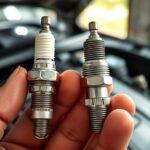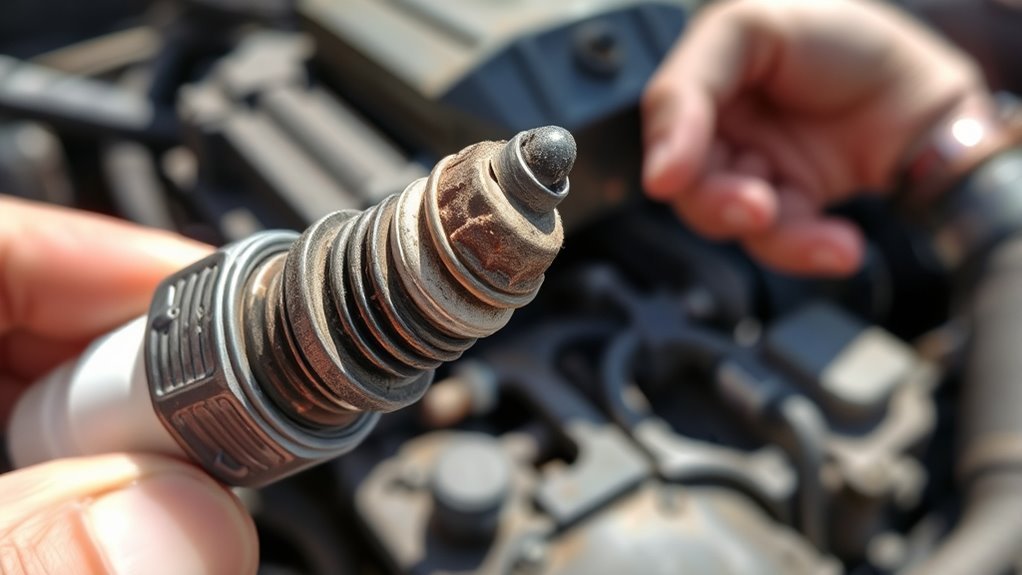

If you don’t change your spark plugs, expect engine misfires, rough idling, and hesitation during acceleration due to poor ignition. This reduces fuel efficiency and increases emissions from incomplete combustion.
Ignition coils and catalytic converters may suffer damage from excess fuel and electrical strain, leading to costly repairs. Over time, neglect accelerates engine wear and performance loss.
Understanding the specific effects and proper maintenance intervals can help you avoid these issues and protect your engine’s health.
Key Takeaways
- Worn spark plugs cause engine misfires, leading to rough idling and hesitation during acceleration.
- Ignoring replacement lowers fuel efficiency and increases fuel consumption due to incomplete combustion.
- Failing spark plugs raise emissions and can cause the check engine light to activate.
- Prolonged neglect damages ignition coils and catalytic converters, resulting in costly repairs.
- Delayed maintenance accelerates engine wear, increasing the risk of long-term engine damage.
How Spark Plugs Work and Why to Replace Them
Although spark plugs are small components, they play an essential role in your engine’s ignition system by generating the electrical spark needed to ignite the air-fuel mixture in the combustion chamber.
This spark initiates combustion, powering your engine.
Over time, spark plugs experience electrode wear and deposits, reducing spark efficiency.
Proper spark plug maintenance guarantees consistent ignition timing and peak engine performance.
Maintaining spark plugs ensures reliable ignition timing and optimal engine performance.
By replacing spark plugs at recommended intervals, you maintain the ignition system’s ability to deliver strong, reliable sparks.
Neglecting replacement leads to misfires, decreased fuel efficiency, and increased emissions.
Understanding how spark plugs function within the ignition system clarifies why timely replacement is critical.
Keeping your spark plugs in good condition supports smooth engine operation and prolongs engine life.
Signs Your Spark Plugs Are Worn or Failing
You’ll notice engine misfires and rough idling when your spark plugs begin to wear out.
Reduced fuel efficiency often follows as the combustion process becomes less effective.
Recognizing these symptoms early helps you address spark plug issues before they escalate.
Engine Misfires Symptoms
Engine misfires occur when your spark plugs fail to ignite the air-fuel mixture properly, causing incomplete combustion in one or more cylinders.
You’ll notice symptoms like engine stalling, rough idling, and hesitation during acceleration.
These issues arise because faulty spark plugs disrupt consistent ignition, leading to uneven power delivery. Ignition problems may also trigger the check engine light or cause your vehicle to run unevenly.
If left unaddressed, misfires can increase emissions and damage engine components.
By monitoring these symptoms closely, you can identify worn or failing spark plugs early and prevent further mechanical complications.
Regular inspection and timely replacement of your spark plugs guarantee smooth ignition and peak engine performance, helping you avoid costly repairs associated with persistent misfire conditions.
Poor Fuel Efficiency
Several signs can indicate your spark plugs are worn or failing, with poor fuel efficiency being one of the most noticeable.
When spark plugs degrade, they disrupt the precise ignition timing necessary for ideal combustion. This inefficiency forces your fuel system to compensate, consuming more fuel than usual.
You might observe:
- Increased fuel consumption during regular driving conditions.
- Decreased miles per gallon (MPG) compared to your vehicle’s baseline.
- Noticeable hesitation or lag when accelerating, indicating incomplete combustion.
- A rise in unburned fuel emissions as a result of misfires caused by weak spark.
Addressing worn spark plugs promptly maintains efficient ignition timing, ensuring your fuel system operates effectively and helps you avoid costly fuel waste.
Rough Idle Issues
When spark plugs wear out, they fail to deliver consistent sparks, causing your engine to run unevenly at idle. This results in a rough idle, where you can feel noticeable engine vibrations that shouldn’t be there. These vibrations indicate misfires or incomplete combustion, which strain your engine and reduce performance.
| Symptom | Effect on Engine |
|---|---|
| Rough idle | Uneven engine speed at rest |
| Engine vibrations | Increased noise and shaking |
| Misfires | Loss of power and efficiency |
| Hesitation | Delayed throttle response |
| Increased emissions | Poor combustion quality |
If you ignore rough idle issues, engine damage can escalate. Replace spark plugs promptly to restore smooth operation and prevent further complications.
How Worn Spark Plugs Affect Engine Performance
When your spark plugs wear out, your engine’s combustion process becomes less efficient, leading to reduced fuel economy.
You’ll likely experience engine misfires, which cause rough idling and decreased power output.
These issues not only affect performance but can also increase emissions and strain other engine components.
Reduced Fuel Efficiency
Although spark plugs may seem like minor components, their condition directly influences your engine’s fuel efficiency. When spark plugs exceed their recommended spark plug lifespan, their ability to ignite the air-fuel mixture diminishes, leading to incomplete combustion. This inefficiency increases your vehicle’s fuel consumption.
Specifically:
- Worn electrodes create weaker sparks, reducing combustion quality.
- Carbon deposits disrupt spark formation, causing energy loss.
- Erratic firing timing leads to unburned fuel passing through cylinders.
- Increased misfires force the engine to work harder, consuming more fuel.
Engine Misfire Issues
Poor spark plug condition not only reduces fuel efficiency but also directly impacts engine performance through misfires. When your spark plugs wear out, their ability to generate a consistent spark diminishes, disrupting proper ignition timing.
This mistiming causes incomplete combustion, leading to engine misfires that reduce engine stability. You may notice rough idling, hesitation during acceleration, or increased emissions as a result.
Misfires stress engine components and can trigger the check engine light, signaling a loss of peak performance. Maintaining precise ignition timing is vital for smooth engine operation, and worn spark plugs compromise this balance.
To preserve engine stability and avoid costly repairs, replacing spark plugs at recommended intervals guarantees reliable ignition and peak combustion.
Impact on Fuel Efficiency and Emissions
If you neglect to replace worn spark plugs, your engine’s combustion process will become less efficient, directly affecting fuel economy.
This inefficiency leads to increased fuel consumption and elevated emission levels. Here’s how it impacts your vehicle:
- Incomplete combustion causes unburned fuel to enter the exhaust, raising emission levels.
- The engine compensates for poor ignition by injecting more fuel, increasing fuel consumption.
- Reduced ignition efficiency disrupts the air-fuel mixture, decreasing overall engine performance.
- Higher emission levels can cause your vehicle to fail environmental compliance tests.
Damage to Ignition Coils and Catalytic Converters
When spark plugs wear out, they force the ignition coils to work harder to generate the necessary spark, which can lead to coil overheating and premature failure.
This ignition coil damage results from increased electrical load and heat stress, reducing coil lifespan and causing misfires.
Misfires also contribute to catalytic converter issues because unburned fuel enters the exhaust system, overheating and damaging the converter’s internal components.
Over time, this degradation impairs the catalytic converter’s ability to reduce harmful emissions effectively.
If you don’t replace worn spark plugs promptly, you risk costly repairs due to both ignition coil damage and catalytic converter failure.
Maintaining spark plugs within their service interval prevents these problems, ensuring ideal ignition performance and protecting critical emission control components.
Long-Term Engine Damage From Ignoring Spark Plugs
Neglecting to replace spark plugs over an extended period causes incomplete combustion, which gradually leads to carbon buildup on engine components. Ignoring the spark plug lifespan compromises the ignition system importance, resulting in inefficient engine operation and potential long-term damage.
Here’s what happens:
- Carbon deposits accumulate on valves and pistons, reducing engine efficiency.
- Misfires increase, stressing the ignition system and causing rough idling.
- Excessive heat from poor combustion accelerates wear on cylinder walls.
- Fuel economy declines, and engine power drops due to impaired combustion dynamics.
Why Delaying Spark Plug Replacement Costs More
Ignoring spark plug maintenance doesn’t just degrade engine performance. It also increases repair expenses. When you delay spark plug replacement beyond recommended intervals, you face higher cost implications.
Worn plugs cause incomplete combustion, forcing your engine to work harder and reducing fuel efficiency. This strain can damage ignition coils and catalytic converters, resulting in costly repairs.
By adhering to proper replacement intervals, you minimize these risks and maintain peak engine function, saving money in the long term.
| Issue | Cause | Cost Implication |
|---|---|---|
| Reduced fuel efficiency | Worn spark plugs | Increased fuel expenses |
| Ignition coil damage | Excessive engine strain | Expensive coil replacement |
| Catalytic converter wear | Unburned fuel | High repair costs |
| Engine misfires | Poor spark generation | Diagnostic and repair fees |
| Accelerated component wear | Delayed maintenance | Overall increased expenses |
When Should You Replace Your Spark Plugs?
Although spark plugs can last tens of thousands of miles, you should replace them according to your vehicle manufacturer’s recommended interval to guarantee peak engine performance.
Spark plug lifespan varies by type and engine design, so adhering to replacement intervals is essential.
Here’s when you should replace them:
- When your vehicle reaches the specified mileage in the owner’s manual, typically between 30,000 to 100,000 miles.
- If you experience engine misfires, rough idling, or decreased fuel efficiency.
- During scheduled maintenance checks, even if symptoms are absent.
- When spark plugs show visible wear, such as electrode erosion or deposits, upon inspection.
Following these guidelines guarantees ideal combustion, prevents engine damage, and maintains your vehicle’s reliability.
How to Choose the Right Spark Plugs
Choosing the right spark plugs starts with understanding the different types and materials, such as copper, platinum, and iridium, each offering distinct performance and durability.
You need to match the spark plug specifications with your engine’s requirements to guarantee ideal combustion and efficiency.
Paying attention to compatibility will prevent misfires and maintain your engine’s health.
Spark Plug Types Overview
Selecting the right spark plugs directly impacts your engine’s performance, fuel efficiency, and longevity. You’ll encounter several types, each suited for specific applications:
- Copper spark plugs offer excellent conductivity but wear out faster.
- Platinum spark plugs provide durability and improved ignition over copper.
- Iridium spark plugs deliver superior longevity and performance due to a harder, finer electrode.
- Double platinum/iridium plugs enhance durability further by having precious metal on both electrodes.
Choosing between these depends on your engine requirements and driving conditions.
Iridium spark plugs tend to be the best choice for high-performance and modern vehicles, while platinum plugs balance cost and durability effectively.
Avoid selecting plugs that don’t meet your manufacturer’s specifications, as this can degrade performance and increase wear.
Material Differences Explained
Understanding the differences in spark plug materials helps you match the right plug to your vehicle’s needs and operating conditions. Common material compositions include copper, platinum, and iridium.
Copper plugs offer excellent conductivity but have shorter spark plug longevity, typically requiring replacement sooner. Platinum plugs improve durability by resisting electrode wear, extending service intervals.
Iridium plugs provide the highest spark plug longevity, thanks to their superior hardness and melting point, making them ideal for high-performance engines. Each material affects ignition efficiency and heat dissipation differently, so selecting the proper composition maximizes combustion and engine performance.
Compatibility With Engines
Because engines vary widely in design and operating conditions, you need to match spark plugs specifically to your engine’s requirements. Ensuring spark plug compatibility means adhering closely to your engine specifications to maintain peak performance and prevent damage.
Here’s how to choose the right spark plugs:
- Review the engine manufacturer’s recommended spark plug type and heat range.
- Match the spark plug thread size and reach to your engine’s cylinder head.
- Select the appropriate electrode material (copper, platinum, iridium) based on engine demands.
- Verify the spark plug gap setting aligns with engine ignition requirements.
Following these steps guarantees that your spark plugs function efficiently, supporting combustion and preventing misfires or premature wear.
Always consult your vehicle’s manual for precise engine specifications before purchasing.
Tips for Maintaining Spark Plugs for Better Performance
Although spark plugs are small components, their condition directly affects engine efficiency and performance. To guarantee peak function, prioritize regular spark plug maintenance.
Small spark plugs have a big impact on engine performance; regular maintenance ensures optimal efficiency.
Start by inspecting plugs every 30,000 miles or as recommended by your vehicle manufacturer.
Look for signs of wear, such as erosion of the electrode or deposits that can hinder spark delivery. Use a gap gauge to verify and adjust the electrode gap to manufacturer specifications, as incorrect gaps reduce combustion efficiency.
Clean spark plugs carefully with a wire brush if contaminated, but replace them if damage or excessive wear is evident. Proper torque during installation prevents damage and guarantees reliable contact.
Frequently Asked Questions
Can Bad Spark Plugs Cause My Car Not to Start?
Yes, bad spark plugs can cause your car not to start by disrupting engine performance and causing ignition issues. They fail to ignite the fuel-air mixture properly, preventing your engine from firing up efficiently.
Are Spark Plugs the Same for All Car Models?
Don’t assume all spark plugs fit your car; spark plug compatibility hinges on vehicle specifications. Using the wrong type can cause misfires or damage, so always consult your manual or a professional to guarantee precise matching.
How Long Does It Take to Replace Spark Plugs?
Replacing spark plugs typically takes 30 to 60 minutes, depending on your vehicle. The replacement process involves removing old plugs, checking gaps, and installing new ones, ensuring ideal spark plug lifespan and engine performance.
Can I Clean Spark Plugs Instead of Replacing Them?
You can perform spark plug cleaning using wire brushes, carburetor cleaners, or ultrasonic methods, but it’s often less effective than replacing.
Cleaning methods may restore function temporarily but won’t fix worn electrodes or compromised gaps.
Do Spark Plugs Affect My Car’s Warranty?
In the age of steam engines, neglecting spark plug maintenance can void your warranty. Manufacturers expect proper care; failing this may cause warranty implications, especially if spark plug issues lead to engine damage or performance problems. Stay diligent.
Conclusion
If you don’t change your spark plugs, you’re fundamentally letting your engine’s heartbeat weaken, leading to misfires, reduced fuel efficiency, and increased emissions. Over time, worn plugs can damage ignition coils and catalytic converters, turning a small issue into costly repairs.
To keep your engine running smoothly and avoid expensive breakdowns, replace your spark plugs at recommended intervals. Think of timely replacement as tuning a fine instrument—essential for peak performance.
In conclusion, neglecting to change spark plugs can cause serious engine problems, so regular spark plug replacement is crucial for maintaining your vehicle’s health and efficiency.