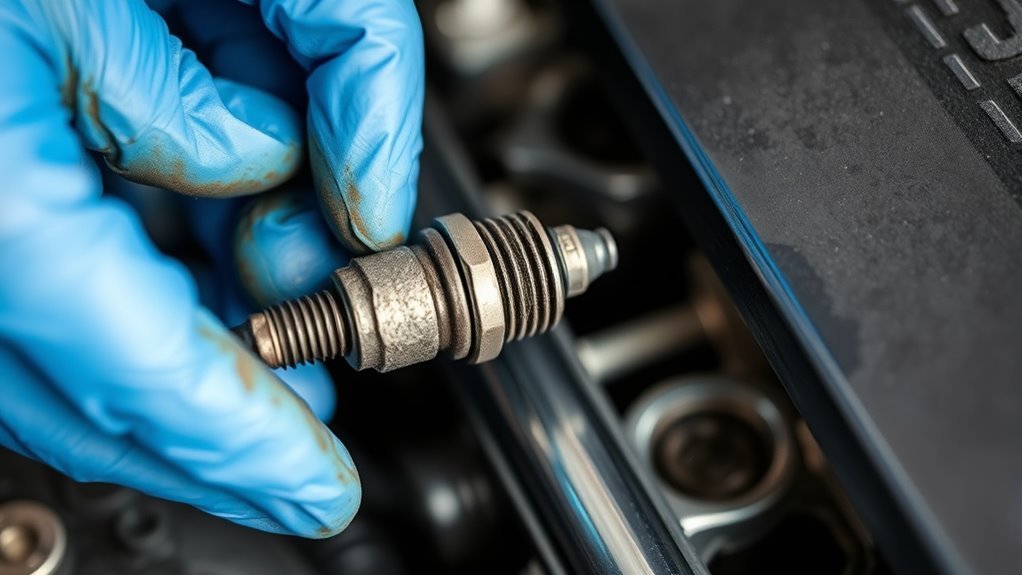

If your spark plugs are black, it usually means your engine’s running too rich or the ignition timing is off. Black spark plugs indicate carbon fouling, which can affect your engine’s performance and fuel efficiency.
Start by cleaning them with a soft brush and a non-corrosive solvent. After cleaning, check the spark plug gap to ensure it meets the manufacturer’s specifications.
If the fouling returns quickly or the plugs are worn or cracked, it’s best to replace them. Also, inspect your air filters and fuel injectors to address underlying issues and avoid future carbon buildup.
Following these steps will help fix black spark plugs and prevent recurring problems. You’ll find more detailed steps to fix and prevent this problem.
Key Takeaways
- Clean black spark plugs using a soft wire brush and non-corrosive solvent to remove carbon deposits safely.
- Check and correct the air-fuel mixture to prevent overly rich conditions causing carbon buildup.
- Inspect and adjust ignition timing and fuel injectors to ensure efficient combustion.
- Replace spark plugs if electrodes are worn, insulator is cracked, or fouling recurs quickly.
- Prevent future fouling by using quality fuel, maintaining air filters, and avoiding prolonged idling.
What Causes Black Fouling on Spark Plugs?
Black fouling on spark plugs results from an overly rich air-fuel mixture, causing excessive carbon deposits to accumulate on the electrode and insulator.
Black fouling on spark plugs indicates a rich air-fuel mixture causing carbon buildup on electrodes and insulators.
When your engine runs rich, unburned fuel combusts inefficiently, creating soot that coats the plugs.
Incorrect ignition timing can worsen this by delaying spark delivery, leading to incomplete combustion and increased carbon buildup.
Additionally, a malfunctioning fuel injector or faulty sensors may deliver excess fuel, further contributing to fouling.
You should also check for issues like a clogged air filter restricting airflow, which alters the fuel mixture balance.
Addressing the root cause requires precise adjustment of the fuel mixture and ignition timing to guarantee ideal combustion, preventing carbon accumulation and maintaining spark plug performance.
How to Diagnose Engine Issues From Black Spark Plugs
When you notice spark plugs covered in carbon deposits, you can use their condition as a diagnostic tool to identify underlying engine problems. Different spark plug types respond uniquely to engine issues, so selecting the correct type is essential for accurate diagnosis.
Black fouling typically indicates a rich air-fuel mixture, incomplete combustion, or weak ignition. Check if the deposits are dry or oily, as oily deposits suggest oil leakage into the combustion chamber. Excessive carbon buildup can reduce engine performance by causing misfires or poor fuel economy.
Additionally, inspect ignition timing and fuel injectors to pinpoint faults. By analyzing black spark plugs precisely, you can detect problems like clogged air filters, faulty sensors, or incorrect fuel pressure, enabling you to restore ideal engine performance efficiently.
How to Clean Black Spark Plugs Safely
After identifying carbon fouling on your spark plugs, the next step is to clean them properly to restore peak performance.
Begin by removing debris using a soft wire brush or specialized spark plug cleaning tool, avoiding abrasive materials that can damage the electrode.
Next, apply a non-corrosive solvent designed for spark plug cleaning to dissolve carbon deposits. Soak the spark plugs briefly, then use compressed air to blow away loosened residue.
Avoid harsh chemicals or sandblasting methods, as they can erode the electrode and ceramic insulator.
After cleaning, inspect the spark plug gap with a feeler gauge and adjust if necessary to manufacturer specifications.
Proper spark plug cleaning methods maintain electrode integrity and guarantee reliable ignition, improving engine efficiency and reducing emissions.
Always wear safety goggles and gloves to protect yourself during the process.
When to Replace Black Spark Plugs Instead of Cleaning
Although cleaning can restore spark plugs in many cases, you should replace them if the electrodes show severe wear, the ceramic insulator is cracked, or persistent fouling returns quickly.
These replacement indicators signal that the spark plug’s functionality has degraded beyond repair, compromising engine performance.
Additionally, if your spark plug has reached or exceeded the manufacturer’s recommended spark plug longevity interval, replacement is crucial to maintain peak combustion efficiency.
Relying solely on cleaning in these scenarios can lead to misfires, increased fuel consumption, and potential engine damage.
By recognizing these critical replacement indicators, you guarantee the ignition system operates reliably, preventing further complications.
Always consult your vehicle’s service manual to verify specific spark plug lifespan and replacement criteria for best results.
How to Prevent Carbon Buildup on Spark Plugs
Because carbon buildup can reduce spark plug efficiency and lead to engine issues, you should take proactive measures to minimize its formation.
Maintaining peak combustion ensures your engine runs smoothly and extends spark plug life.
Focus on these key practices:
- Use high-quality fuel to reduce contaminants that cause deposits.
- Follow the manufacturer’s recommended maintenance schedule rigorously.
- Regularly inspect and replace air filters to guarantee proper air-fuel mixture.
- Avoid prolonged idling and short trips that prevent complete combustion.
- Utilize fuel additives designed to clean the combustion chamber periodically.
Frequently Asked Questions
Can Black Spark Plugs Cause Engine Misfires?
Yes, black spark plugs can cause engine misfires by indicating spark plug failure or fouling. You’ll experience ignition issues because the deposits disrupt proper combustion.
This leads to inefficient engine performance and potential damage if unaddressed.
Are Black Spark Plugs Harmful to Fuel Efficiency?
Yes, black spark plugs reduce fuel economy, hinder combustion efficiency, and increase emissions. You should prioritize spark plug maintenance to prevent carbon buildup.
This will guarantee peak engine performance and maintain consistent fuel efficiency throughout your vehicle’s operation.
How Often Should Spark Plugs Be Inspected for Fouling?
You should perform spark plug maintenance by inspecting them every 30,000 miles or during routine tune-ups.
Adhering to this inspection frequency helps detect fouling early, ensuring peak engine performance and fuel efficiency.
Does Using Premium Fuel Prevent Black Spark Plugs?
Imagine your engine running cleaner after switching to premium fuel. Premium fuel advantages include higher octane and fewer impurities, which improve combustion efficiency.
This fuel quality impact can reduce black spark plugs, but it’s not a guaranteed fix.
Can Oil Leaks Cause Black Spark Plug Fouling?
Yes, oil leaks can increase oil consumption, leading to spark plug wear and fouling. Excess oil coats the plugs, causing black deposits that impair ignition.
This reduces engine efficiency and requires timely diagnosis to prevent further damage.
Conclusion
Black spark plugs can be like warning lights on your engine’s dashboard, signaling underlying issues such as rich fuel mixtures or poor combustion. These issues cause carbon buildup that coats the spark plugs, affecting their performance.
By accurately diagnosing the root cause, you can either clean or replace the black spark plugs to restore your engine’s maximum efficiency. Regular maintenance, including checking your fuel and air systems, will help prevent future carbon deposits.
Treat your spark plugs with care to ensure your engine runs smoothly and efficiently. Properly addressing the causes of black spark plugs is essential for maintaining optimal engine performance.