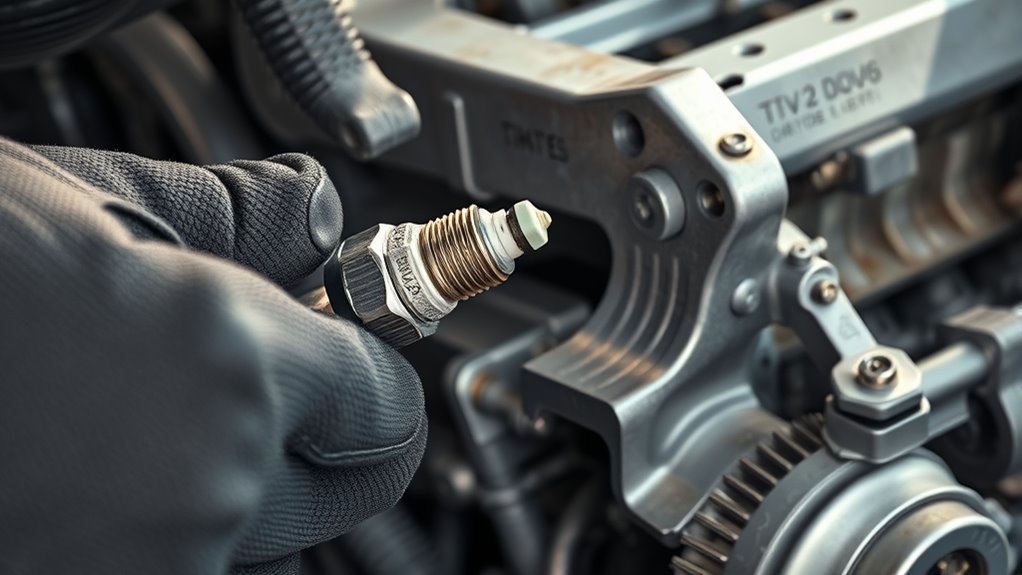

Yes, spark plugs need to be torqued precisely to guarantee they seat properly, create a tight seal, and maintain engine efficiency. Proper torque is essential to ensure the spark plugs function correctly and last longer.
Improper torque—whether too loose or too tight—can cause misfires, damage threads, or even crack the spark plug. Using a calibrated torque wrench and following your vehicle’s exact specifications helps avoid costly issues.
Correct torque guarantees reliable combustion and effective heat transfer. Continue reading for detailed steps, recommended tools, and signs to get this right every time.
Key Takeaways
- Yes, spark plugs must be torqued to ensure a secure fit and proper sealing in the cylinder head.
- Proper torque prevents damage to threads, spark plugs, and ensures efficient combustion and engine performance.
- Insufficient torque can cause misfires, poor sealing, and reduced fuel efficiency.
- Over-torquing risks stripping threads, cracking insulators, and complicating spark plug removal.
- Always use a calibrated torque wrench and follow the vehicle manufacturer’s torque specifications.
Do Spark Plugs Need to Be Torqued?
Why is torquing spark plugs essential? When you install spark plugs, applying the correct torque guarantees a secure fit without damaging the threads or the plug itself.
Different spark plug types, such as copper, platinum, or iridium, require precise torque to maintain peak engine performance.
Copper, platinum, and iridium spark plugs each need precise torque for optimal engine performance.
Over-tightening can strip the threads or crack the ceramic insulator, while under-tightening may cause poor heat dissipation and misfires. Proper torque ensures a stable seal between the plug and cylinder head, facilitating efficient combustion and preventing gas leakage.
By methodically following manufacturer torque specifications for your spark plug type, you maintain consistent engine performance, fuel efficiency, and longevity.
Why Proper Torque Matters for Spark Plugs
Although it might seem like a minor detail, applying the correct torque to spark plugs directly affects your engine’s reliability and efficiency.
Proper torque guarantees ideal contact between the spark plug materials and the engine head, which is crucial for consistent ignition.
Here’s why it matters:
- Guarantees correct sealing to prevent combustion gas leaks.
- Maintains proper heat transfer from spark plug to cylinder head.
- Avoids damage to spark plug materials caused by over-tightening.
- Supports stable engine performance by preserving the spark plug’s structural integrity.
What Happens If Spark Plugs Aren’t Torqued Right?
If you don’t torque spark plugs correctly, you risk compromising engine performance and component longevity. Insufficient torque prevents proper spark plug seating, leading to poor combustion sealing and potential misfires. This can cause decreased fuel efficiency and rough idling.
Conversely, over-torquing exceeds torque specifications, risking damage to the spark plug threads or cylinder head, which may result in costly repairs. Additionally, incorrect torque can cause the spark plug to loosen over time, impairing ignition reliability.
Proper adherence to torque specifications guarantees the spark plug seats firmly, maintains ideal compression, and avoids thermal stress.
How to Find the Right Torque Specification for Your Spark Plugs
Guaranteeing correct torque on your spark plugs hinges on obtaining the precise specification for your engine model.
You’ll need to take into account spark plug materials, as different metals and ceramics affect expansion rates and torque tolerances.
Here’s how to find the right torque specifications:
- Consult your vehicle’s service manual. Manufacturers specify exact torque values based on engine design and spark plug materials.
- Check the spark plug packaging or manufacturer’s website for recommended torque ranges specific to the plug model.
- Use online automotive databases or forums for your vehicle make and model to verify torque specs.
- When in doubt, contact the spark plug manufacturer’s technical support for authoritative guidance on torque specifications.
Following these steps guarantees ideal spark plug performance and prevents damage due to incorrect torque.
Tools You Need to Torque Spark Plugs Accurately
Accurate torque application requires specific tools designed for precision and control. To torque spark plugs correctly, you need a calibrated torque wrench suited to the torque specifications for your spark plug types. Additionally, using the correct spark plug socket guarantees secure engagement without damaging the plug.
| Tool | Purpose | Recommended Use |
|---|---|---|
| Torque Wrench | Applies precise torque | Match torque specs per plug type |
| Spark Plug Socket | Fits spark plug hex size | Prevents plug damage |
| Extension Bar | Reaches deep spark plugs | Maintains tool alignment |
| Torque Adapter | Converts wrench sizes | Adapts to various torque wrenches |
Using these tools methodically guarantees you meet OEM torque specs, avoiding over- or under-tightening that compromises engine performance.
Hand Tightening vs. Torque Wrench for Spark Plugs
You might think hand tightening spark plugs is sufficient, but it often lacks the precise control needed for proper installation.
Using a torque wrench guarantees you apply the exact torque specified by the manufacturer, reducing the risk of over- or under-tightening.
Improper tightening can lead to engine damage or poor performance, making accurate torque application essential.
Accuracy Of Hand Tightening
Although hand tightening spark plugs might seem sufficient, it often lacks the precision required for ideal engine performance.
When you rely solely on hand torque, you risk under-tightening or over-tightening the spark plug, which can cause misfires, thread damage, or poor sealing.
Consider these points regarding accuracy:
- Hand torque varies considerably based on your strength and experience.
- Precise torque guarantees proper spark plug seating and heat transfer.
- Over-tightening can strip threads or break the spark plug.
- Under-tightening may lead to combustion gas leaks or vibration loosening.
To maintain engine integrity, you need consistent and accurate torque application.
Hand tightening alone doesn’t promise this, so understanding its limitations is vital for ideal spark plug installation.
Benefits Of Torque Wrench
Anyone installing spark plugs benefits considerably from using a torque wrench instead of relying solely on hand tightening. A torque wrench provides precise control over the tightening force, guaranteeing spark plugs are neither under- nor over-tightened.
This tool delivers consistent, accurate measurements, critical for maintaining the integrity of the spark plug and cylinder head interface. By using a torque wrench, you reduce variability caused by subjective hand pressure, achieving the manufacturer’s specified torque values reliably.
The torque wrench benefits extend to preventing potential damage and optimizing engine performance. When you apply a calibrated torque, you maintain uniform clamping force, which is essential for proper heat dissipation and sealing.
Risks Of Improper Tightening
When spark plugs aren’t tightened to the correct torque, engine performance and component longevity can suffer considerably.
Hand tightening often leads to inconsistent pressure, risking damage or poor sealing. Using a torque wrench guarantees precise application, protecting your engine and maximizing spark plug lifespan.
Risks of improper tightening include:
- Over-tightening: Strips threads, damages cylinder head, shortens spark plug lifespan.
- Under-tightening: Causes poor seal, misfires, and reduced engine performance.
- Heat dissipation issues: Incorrect torque affects heat transfer, leading to overheating.
- Vibration loosening: Insufficient torque can allow plugs to loosen, causing erratic engine behavior.
How to Torque Spark Plugs Step-by-Step
Follow these five essential steps to torque spark plugs correctly, guaranteeing ideal engine performance and longevity.
First, consult your vehicle’s service manual to find the exact torque specifications for your spark plugs.
Second, hand-tighten the spark plug until it seats firmly to avoid cross-threading.
Third, set your torque wrench to the specified spark plug torque value.
Fourth, use the torque wrench to tighten the spark plug slowly and steadily until it clicks or indicates the set torque has been reached.
Finally, double-check each spark plug for consistent torque application to prevent uneven pressure on the cylinder head.
Following these steps precisely guarantees proper spark plug seating, prevents damage, and maintains optimal engine efficiency.
Top Mistakes When Torquing Spark Plugs
When torquing spark plugs, you need to avoid over-tightening, which can damage the threads or the plug itself.
Under-tightening poses risks like poor engine performance and potential detachment during operation.
Also, using incorrect torque tools can lead to inaccurate readings, compromising the installation’s reliability.
Over-Tightening Consequences
Although it may seem like tightening spark plugs as much as possible guarantees a secure fit, over-tightening actually risks damaging the threads and the spark plug itself. The over tightening effects can compromise engine performance and lead to costly repairs.
When you over-tighten spark plugs, you may encounter:
- Stripped threads in the cylinder head, reducing thread engagement and sealing capability.
- Cracked or broken spark plug insulators, causing misfires and spark plug damage.
- Difficulty removing spark plugs during maintenance, increasing labor time and risk of further damage.
- Warped or damaged spark plug seats, leading to improper sealing and potential compression loss.
To avoid these issues, always follow manufacturer torque specifications carefully and use a calibrated torque wrench for precise installation.
Under-Tightening Risks
If you don’t apply enough torque when installing spark plugs, you risk poor sealing and compromised engine performance.
Under-tightening can cause gaps between the spark plug and cylinder head, allowing combustion gases to escape. This leakage reduces engine efficiency and may lead to misfires.
Additionally, insufficient torque prevents proper heat transfer from the spark plug to the cylinder head, reducing the spark plug lifespan by increasing the risk of overheating.
Vibration can also loosen under-tightened plugs, resulting in erratic ignition and potential engine damage.
To maintain peak engine performance and prolong spark plug lifespan, always follow manufacturer-specified torque values.
Using a calibrated torque wrench guarantees you apply the correct force, preventing under-tightening risks and safeguarding your vehicle’s reliability and efficiency.
Incorrect Torque Tools
Using incorrect torque tools can lead to inaccurate tightening of spark plugs, compromising engine performance and safety.
When you use tools that don’t provide consistent torque readings, you risk torque variations that affect spark plug seating and sealing.
Avoiding incorrect torque requires selecting the right equipment and maintaining it properly. Keep these points in mind:
- Use a calibrated torque wrench designed for spark plugs to guarantee precise torque application.
- Avoid using adjustable wrenches or pliers that can’t measure torque accurately.
- Regularly calibrate your torque tools to prevent torque variations over time.
- Follow manufacturer torque specifications strictly to avoid under- or over-tightening.
Signs Your Spark Plugs Are Too Tight or Too Loose
Incorrectly torqued spark plugs can cause several performance issues in your engine. If your spark plugs are too tight, you may notice thread damage or difficulty removing them later, indicating excessive stress.
Over-tightening can also lead to cracked insulators, resulting in misfires and reduced spark plug performance.
Over-tightened spark plugs risk cracked insulators, causing misfires and diminished engine performance.
Conversely, spark plugs that are too loose may cause poor sealing, leading to compression loss and increased spark plug wear from combustion gases leaking past the threads. This can manifest as engine misfires, rough idling, or decreased fuel efficiency.
To accurately assess, inspect for signs like stripped threads, unusual engine noises, or inconsistent ignition.
Maintaining proper torque guarantees ideal spark plug wear and maximizes spark plug performance, preserving engine reliability and efficiency.
When to Replace Spark Plugs Instead of Retightening
When you notice persistent engine misfires or visible damage to the spark plug threads, replacing the spark plugs is necessary rather than simply retightening them. Retightening won’t fix issues caused by worn electrodes or compromised spark plug lifespan.
For effective ignition system maintenance, consider replacement under these conditions:
- Spark plugs have exceeded their recommended mileage interval.
- Electrodes are eroded or damaged, impairing spark quality.
- Threads show stripping or cross-threading, preventing proper torque.
- Signs of fouling from oil, carbon, or fuel deposits persist after cleaning.
Replacing spark plugs guarantees peak combustion and prevents ignition failures.
Regularly monitoring spark plug lifespan during routine ignition system maintenance extends engine performance and reliability.
Frequently Asked Questions
Can Spark Plug Torque Affect Engine Fuel Efficiency?
Yes, improper spark plug torque can degrade spark plug performance, reducing engine efficiency. You should torque spark plugs precisely to guarantee ideal combustion, avoid misfires, and maintain consistent engine fuel efficiency over time.
How Often Should Spark Plugs Be Checked for Proper Torque?
Think of spark plug maintenance like tuning a piano; you should check proper torque every 30,000 miles or during routine service, strictly following torque specifications to guarantee peak engine performance and prevent damage.
Do Different Spark Plug Materials Require Different Torque Settings?
Yes, different spark plug materials demand varying torque specifications. You should always follow manufacturer guidelines because materials like iridium or platinum have distinct thermal expansion properties.
These differences impact how tightly you torque the plugs for peak performance.
Can Over-Torqued Spark Plugs Damage the Cylinder Head?
Yes, over-torquing spark plugs can reduce cylinder head integrity by causing cracks or warping.
Studies show 15% of engine failures stem from improper spark plug compression, highlighting the necessity of precise torque application for reliable operation.
Is It Necessary to Re-Torque Spark Plugs After Initial Installation?
You don’t usually need to re-torque spark plugs after initial installation if you torque them correctly the first time. Proper spark plug installation guarantees consistent torque, making re-torque importance minimal unless specified by the manufacturer.
Conclusion
So, do spark plugs really need to be torqued? Absolutely. Proper torque guarantees peak engine performance and prevents damage like stripped threads or poor seals.
Imagine tightening a spark plug too loosely—wouldn’t you risk misfires or engine inefficiency? Follow the right specs, use a torque wrench, and avoid common mistakes to keep your engine running smoothly.
When in doubt, replace rather than retighten to maintain reliability and safety. Remember, spark plugs need to be torqued correctly to ensure optimal function and longevity.