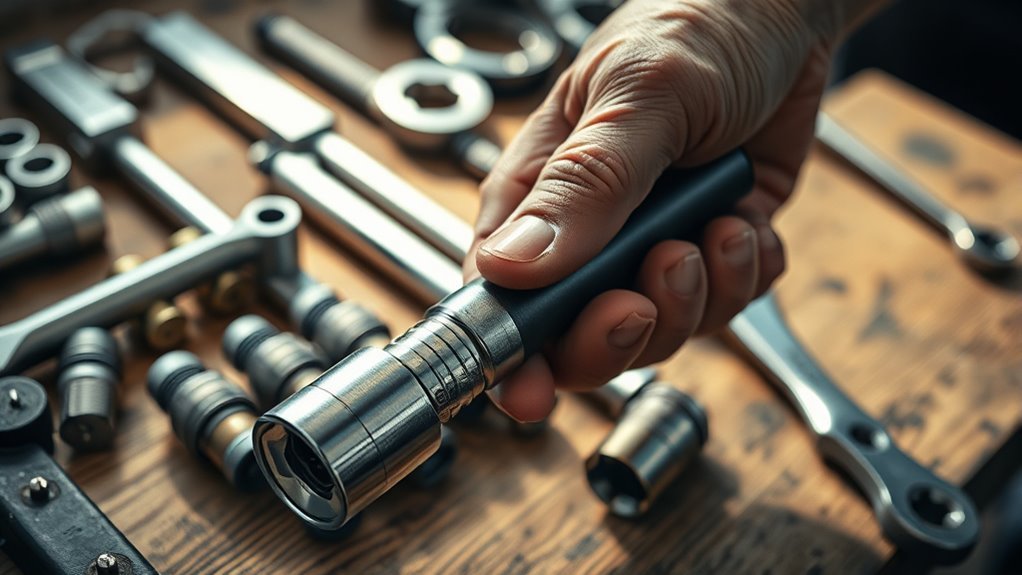

You’ll need a spark plug socket that matches your car’s plug size, a ratchet wrench with an extension for reaching tight spots, and a torque wrench to tighten plugs to the manufacturer’s specs without damaging them. These are essential tools to change spark plugs effectively.
A gap gauge helps you check and adjust the spark plug gap for peak performance. Adding dielectric grease can improve electrical insulation and prevent corrosion.
Following proper safety gear and techniques guarantees a smooth, safe spark plug change. Keep going to uncover detailed tips and best practices.
Key Takeaways
- A spark plug socket matching your vehicle’s plug size is essential for safe removal and installation.
- Use a ratchet wrench with an extension to reach spark plugs in tight engine spaces.
- A torque wrench ensures spark plugs are tightened to manufacturer specifications, preventing damage.
- A gap gauge helps verify and adjust the spark plug electrode gap for optimal performance.
- Safety gear like gloves and safety glasses protects you from heat, debris, and electrical hazards.
The Essential Tools You’ll Need to Change Your Spark Plugs
To change your spark plugs effectively, you’ll need a specific set of tools designed for precision and ease of use. First, identify the spark plug types your vehicle requires, as this influences tool selection.
Typically, you’ll need a spark plug socket matched to the plug size, a ratchet with an extension, and a torque wrench to guarantee proper tightening based on manufacturer specifications.
A spark plug socket, ratchet with extension, and torque wrench ensure precise and secure spark plug installation.
Since changing intervals vary depending on the spark plug type, iridium, platinum, or copper, you should consult your vehicle’s manual for recommended schedules.
Additionally, a gap gauge helps verify the electrode gap, critical for peak engine performance.
Using the right tools aligned with your spark plug types and changing intervals guarantees efficient replacement and prevents damage to the spark plugs or engine components.
Choosing the Right Spark Plug Socket for Your Car
You need to select a spark plug socket that matches your car’s specific plug size to guarantee a secure fit.
Opt for sockets made from durable materials like chrome vanadium steel to withstand torque and prevent wear.
Also, check if the socket is compatible with your ratchet extensions for easier access in tight engine spaces.
Socket Size Importance
Selecting the correct socket size guarantees a secure fit on your spark plug, preventing damage to the plug or surrounding components. Using the wrong size risks rounding off the plug’s hex, complicating removal and affecting engine performance.
Different spark plug types require specific socket sizes to guarantee proper torque application, which is essential for ideal engine function.
| Spark Plug Type | Common Socket Size (mm) |
|---|---|
| Standard Copper | 16 |
| Platinum | 16 or 21 |
| Iridium | 21 |
| Double Platinum | 16 |
Always verify your vehicle’s spark plug specifications before selecting a socket size. Proper socket fit maintains plug integrity, guaranteeing reliable ignition and maximized engine performance.
Material Durability Options
Durability plays a critical role when choosing the right spark plug socket for your car, as it directly affects tool longevity and performance under torque stress.
Spark plug materials commonly include chrome vanadium steel and chrome molybdenum steel, each offering distinct strength and wear resistance.
Chrome molybdenum typically provides superior impact resistance, making it ideal for frequent use.
Durability testing evaluates these materials by subjecting sockets to repeated torque cycles and stress conditions to simulate real-world automotive work.
When selecting your socket, prioritize those proven to withstand high torque without deformation or cracking.
This guarantees reliable removal and installation of spark plugs while minimizing tool failure risk.
Understanding spark plug materials and their durability testing results helps you invest in a socket that balances toughness and precision for long-term performance.
Compatibility With Extensions
Although choosing a high-quality spark plug socket is essential, verifying its compatibility with extensions is equally important for efficient spark plug removal and installation.
When selecting a socket, check its extension compatibility to avoid fit issues that could hinder access in tight engine spaces.
Most spark plug sockets come in standard drive sizes, commonly 3/8 inch or 1/2 inch, so choose one matching your ratchet and extension set.
Be aware that some sockets feature a rubber insert or magnetic core, which can affect extension compatibility due to altered internal dimensions.
Confirming socket compatibility with your existing extensions guarantees a secure connection, preventing slippage or damage during use.
Prioritize matched drive sizes and durable materials to optimize torque transfer and maintain tool integrity throughout the job.
Why a Ratchet Wrench and Extension Are Must-Haves for Spark Plug Replacement
When you replace spark plugs, a ratchet wrench combined with an extension gives you the control and reach necessary to access tight engine spaces efficiently. Choosing the right ratchet types and extension lengths is essential for precision and ease.
- Ratchet types: Select a 3/8-inch drive ratchet for ideal torque and maneuverability.
- Extension lengths: Use varying extensions (3″, 6″, or 10″) to navigate deep or obstructed spark plug wells.
- Torque control: The ratchet’s mechanism provides consistent torque application, preventing plug damage.
- Accessibility: Extensions allow you to reach plugs blocked by engine components without disassembly.
Together, these tools streamline spark plug replacement, minimizing risk of cross-threading and ensuring proper installation in confined engine bays.
How to Use a Gap Gauge to Check and Set Spark Plug Spacing
Since proper spark plug gap affects engine performance and fuel efficiency, you’ll need a gap gauge to measure and adjust the spacing accurately.
Start by identifying the correct spark plug spacing specified by your vehicle’s manufacturer.
Choose the appropriate gap gauge type, such as wire, coin, or tapered feeler gauge, based on your comfort and precision needs.
Insert the gauge between the center and ground electrode to measure the existing gap.
If the gap is too wide or narrow, gently bend the ground electrode using the gauge or a specialized tool to adjust it.
Recheck the spacing after adjustment to verify it meets specifications.
Precise spark plug spacing enables ideal ignition, improves combustion, and prevents misfires, making the gap gauge an essential tool for effective spark plug maintenance.
Extras That Make Spark Plug Changes Easier: Torque Wrenches and Dielectric Grease
You’ll want a torque wrench to guarantee each spark plug is tightened to the manufacturer’s exact specifications, preventing damage or poor performance.
Applying dielectric grease to the spark plug boots improves electrical insulation and eases future removal.
Let’s cover how to use these tools correctly for a reliable spark plug change.
Importance Of Torque Wrenches
Though changing spark plugs might seem straightforward, using a torque wrench guarantees you apply the exact amount of torque specified by the manufacturer.
Adhering to torque specifications prevents damage to the spark plug or engine components.
A properly calibrated wrench assures accuracy and repeatability during installation.
Here’s why you should always use one:
- Secures consistent tightening to manufacturer torque specifications.
- Prevents over-tightening, which can strip threads or crack the spark plug.
- Avoids under-tightening, reducing the risk of poor engine performance or misfires.
- Provides precise wrench calibration, essential for reliable and safe spark plug installation.
Incorporating a torque wrench elevates your spark plug replacement from guesswork to professional-grade precision.
Benefits Of Dielectric Grease
Dielectric grease plays an essential role in ensuring reliable spark plug performance by preventing moisture and contaminants from compromising electrical connections.
When you apply dielectric grease, it creates a non-conductive barrier that protects the spark plug boot and terminal from corrosion and electrical arcing.
This barrier not only improves the spark plug’s electrical insulation but also enhances spark plug longevity by reducing wear caused by environmental factors.
One of the key dielectric grease benefits is its ability to maintain consistent voltage delivery, which supports peak engine performance.
Additionally, it helps ease future removal of spark plugs by preventing seizing or sticking.
Using dielectric grease during spark plug changes is a simple step that greatly contributes to maintaining efficient ignition and extending the service life of your spark plugs.
Proper Application Techniques
When changing spark plugs, using a torque wrench guarantees you apply the correct tightness, preventing damage from over- or under-tightening. Proper installation is critical for engine performance and longevity.
Additionally, dielectric grease improves electrical insulation and prevents moisture intrusion.
Follow these maintenance tips for effective application:
- Set your torque wrench to the manufacturer’s specified torque value to confirm accurate tightening.
- Apply a small amount of dielectric grease to the spark plug boot interior to facilitate a secure and moisture-resistant connection.
- Hand-tighten the spark plug first to avoid cross-threading before using the torque wrench.
- Clean the spark plug threads and the cylinder head to remove debris, confirming proper seating and sealing.
These steps confirm proper installation and extend spark plug and ignition system life.
Safety Gear and Tips for Spark Plug Replacement
Wearing appropriate safety gear is essential before you start replacing spark plugs to prevent injuries and guarantee a smooth process.
Begin by donning personal protective equipment such as safety glasses to shield your eyes from debris and gloves to protect your hands from heat and sharp edges.
Make certain you work in a well-ventilated area to avoid inhaling fumes. Disconnect the battery to eliminate electrical hazards.
Adhere strictly to safety precautions by allowing the engine to cool completely before handling spark plugs, as hot components can cause burns.
Use insulated tools to reduce the risk of electric shock, and keep flammable materials away from the workspace.
Frequently Asked Questions
How Often Should I Replace My Spark Plugs?
You should replace spark plugs every 30,000 to 100,000 miles, depending on their spark plug lifespan. Follow your vehicle’s replacement schedule precisely to maintain engine efficiency and prevent misfires or decreased performance.
Can I Use Spark Plugs From a Different Brand?
You can use spark plugs from a different brand, but brand compatibility is essential. Studies show 25% of misfires result from mismatched plugs.
Ensuring compatibility maintains ideal spark plug performance and engine efficiency. Choose wisely.
What Symptoms Indicate Faulty Spark Plugs?
You’ll notice spark plug misfire symptoms like rough idling, hesitation during acceleration, and reduced fuel efficiency. These engine performance issues often signal faulty spark plugs needing inspection or replacement to restore ideal combustion and power delivery.
Is It Necessary to Replace All Spark Plugs at Once?
You don’t have to replace all spark plugs at once, but doing so guarantees consistent spark plug longevity and ideal engine performance. Mixing old and new plugs can cause uneven wear and reduce efficiency in your engine’s operation.
Can I Change Spark Plugs Myself Without Mechanical Experience?
Sure, starting spark plug swaps solo suits savvy self-starters! With basic DIY maintenance skills and beginner tips, you can confidently complete the task.
Follow precise procedures, use the correct tools, and consult your vehicle’s manual meticulously.
Conclusion
So, you’re ready to swap out those spark plugs—armed with a socket, ratchet, gap gauge, and maybe even some fancy dielectric grease. Who knew a tiny spark plug demands such a toolkit? But don’t worry, each tool plays a precise role to keep your engine running smoothly.
Skipping any could turn a quick job into a frustrating ordeal. Ironically, the right tools make this technical task surprisingly straightforward—if you use them correctly, of course.
In conclusion, having the right tools to change spark plugs is essential for a smooth and successful replacement process.