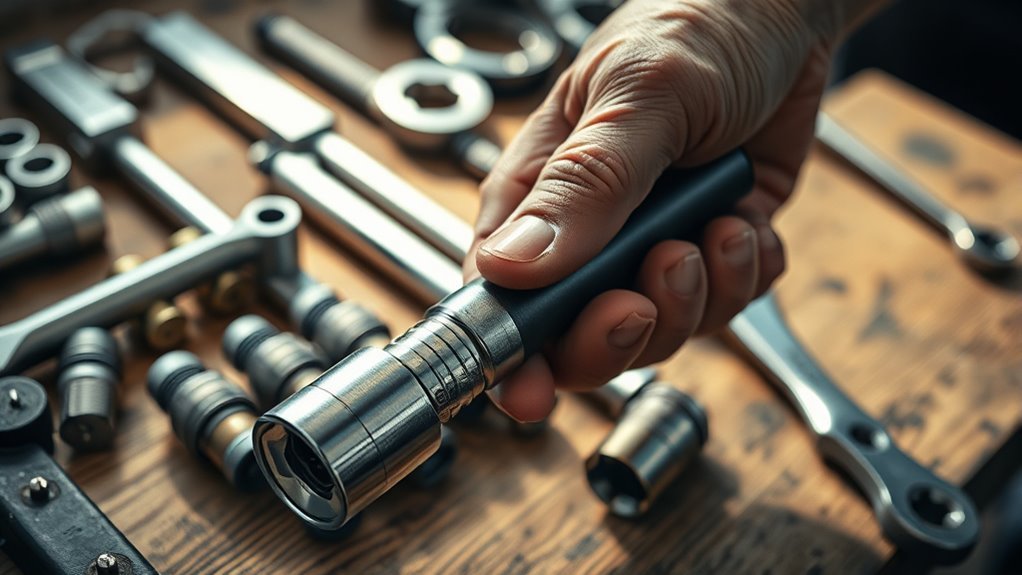
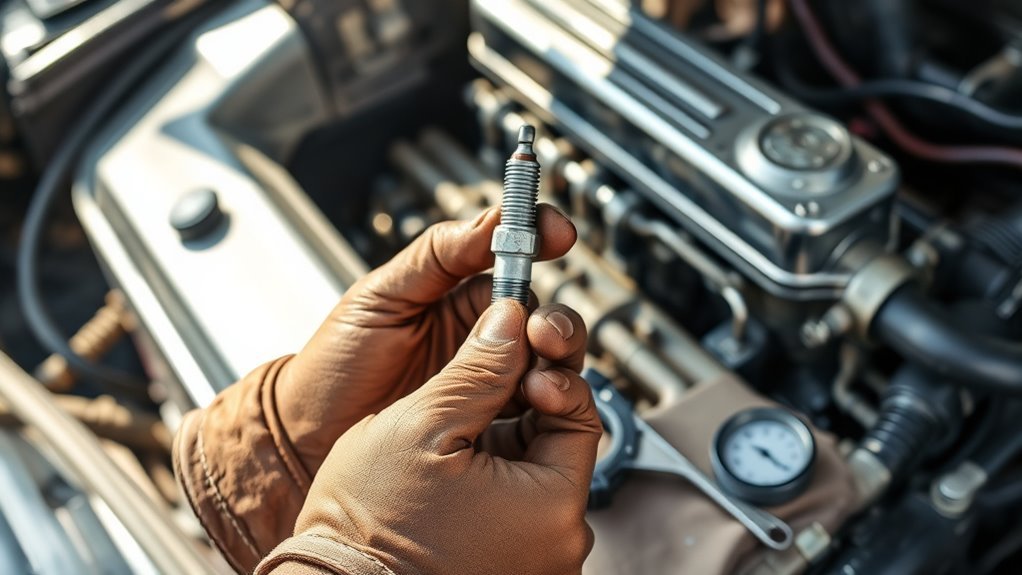
To change spark plugs, you’ll need a few essential tools to ensure the job is done correctly and safely. Start with a correctly sized spark plug socket—typically 5/8 or 13/16 inch—with a rubber insert or magnet for a secure grip.
You’ll also need a compatible ratchet wrench with an extension to reach deep into the engine bay. A torque wrench is important to guarantee precise tightening according to manufacturer specifications.
Additionally, use a spark plug gap tool to verify or adjust the electrode gaps for optimal performance. Applying dielectric grease to the boots helps provide proper insulation and prevents moisture intrusion.
Proper engine preparation and understanding the applications of different compounds will optimize your replacement process. Let’s explore the details to ensure a smooth spark plug change.
Key Takeaways
- Gather essential tools: spark plug socket, ratchet wrench with extension, torque wrench, spark plug gap tool, and dielectric grease applicator.
- Disconnect the battery and allow the engine to cool completely before starting to ensure safety.
- Consult the owner’s manual to identify the correct spark plug type, size, gap, and torque specifications.
- Use a spark plug socket with rubber inserts to remove old plugs gently and avoid damage.
- Apply anti-seize on threads and dielectric grease on boots, then install plugs using a torque wrench to the specified tightness.
What Tools Do You Need to Change Spark Plugs
To change spark plugs efficiently, you’ll need a specific set of tools designed for the task.
First, a spark plug socket matched to your spark plug types is vital; these sockets have rubber inserts to grip and protect the plug during removal and installation.
Use a ratchet wrench with an extension to reach deep-set plugs. A torque wrench is critical for applying the correct installation torque, preventing damage from over- or under-tightening.
Additionally, a spark plug gap tool helps you verify or adjust the electrode gap according to your vehicle’s specifications.
Finally, a dielectric grease applicator can improve electrical conductivity and seal connections.
Mastering these tools guarantees precise installation techniques, promoting ideal engine performance and longevity.
Why Check Your Owner’s Manual Before Changing Spark Plugs
Before you start changing spark plugs, check your owner’s manual to identify the exact spark plug type required for your engine.
The manual also specifies the recommended replacement intervals to maintain ideal performance.
Following these guidelines guarantees proper fit and prevents premature wear.
Locate Specific Spark Plug Type
How do you guarantee you select the correct spark plug for your vehicle? First, locate the specific spark plug type recommended in your owner’s manual. This guide provides exact specifications, confirming spark plug compatibility with your engine model.
Using the specified plug type maintains peak engine performance, as incorrect plugs can cause misfires or inefficient combustion. Note details like thread size, heat range, and electrode design.
If you’re sourcing plugs from a parts store, cross-reference these specs with the product to confirm a match. Avoid generic plugs, as they may compromise engine efficiency and longevity.
Follow Recommended Replacement Intervals
Although spark plugs might seem durable, they wear down over time and lose efficiency, so you need to follow the replacement intervals specified in your owner’s manual. Checking your manual guarantees you adhere to the recommended spark plug lifespan, which varies by engine type and plug material.
Ignoring these intervals can lead to misfires, reduced fuel economy, and diminished engine performance. By replacing spark plugs as directed, you maintain excellent combustion, resulting in noticeable performance improvement and smoother operation.
Your owner’s manual provides precise guidance tailored to your vehicle’s design, including mileage or time frames for replacement. Always consult it before changing spark plugs to avoid premature wear or unnecessary replacements.
Following these intervals protects your engine and sustains peak performance throughout your vehicle’s service life.
How to Pick the Right Spark Plugs for Your Car
Start by consulting your vehicle specifications guide to identify the correct spark plug size, heat range, and gap.
Choose the spark plug material, such as copper, platinum, or iridium, based on your car’s performance requirements and manufacturer recommendations.
Matching these factors guarantees ideal engine efficiency and longevity.
Vehicle Specifications Guide
When selecting spark plugs, you’ll need to consult your vehicle’s specifications to verify compatibility and peak performance. Checking the specifications overview guarantees you choose plugs that fit the engine design, heat range, and gap requirements. Incorrect plugs can cause misfires or damage.
Refer to your vehicle manual or manufacturer’s database for exact details. Below is a quick reference table illustrating key specification parameters:
| Specification | Description | Importance |
|---|---|---|
| Thread Size | Diameter and pitch | Ensures proper fit |
| Heat Range | Plug’s temperature rating | Prevents fouling or pre-ignition |
| Gap Size | Distance between electrodes | Affects ignition efficiency |
Confirming these specs verifies vehicle compatibility and ideal engine performance when replacing spark plugs.
Spark Plug Material Types
After confirming your vehicle’s spark plug specifications, the next step is selecting the appropriate material type.
Copper plugs offer excellent conductivity and are often recommended for older engines or those with lower voltage ignition systems. They provide reliable ignition but tend to wear out faster due to softer electrodes.
On the other hand, iridium plugs feature a harder, more durable tip that improves longevity and performance, especially under high-stress conditions. They maintain a consistent spark over time and resist erosion better than copper plugs.
When choosing between these, refer to your vehicle’s manual and consider your driving habits.
If you prioritize durability and efficiency, iridium plugs are ideal. For budget-friendly replacements in less demanding engines, copper plugs remain a solid choice.
Always match the spark plug material to your engine’s requirements.
How to Choose a Spark Plug Socket and Ratchet
Why does selecting the right spark plug socket and ratchet matter? Using the correct size guarantees a secure fit, preventing damage to the spark plug or engine components.
First, identify the spark plug sizes specified by your vehicle manufacturer, commonly 5/8 inch or 13/16 inch sockets.
Next, consider socket depth. A deep socket accommodates the spark plug’s insulator, allowing you to grip it firmly without slipping. Choose a socket with a rubber insert or magnet to hold the spark plug securely during removal and installation.
Pair the socket with a ratchet that offers sufficient torque and maneuverability in tight engine spaces. A 3/8-inch drive ratchet is typically ideal for most spark plug changes.
Proper tool selection minimizes the risk of stripping or breaking spark plugs, guaranteeing a smooth, efficient replacement process.
How to Prepare Your Engine Safely Before Changing Spark Plugs
Before you start changing spark plugs, make certain to disconnect the battery to prevent electrical shocks or short circuits.
Allow the engine to cool completely to avoid burns and guarantee accurate spark plug removal.
These steps protect both you and your vehicle during the maintenance process.
Disconnect Battery Power
One essential step to safely prepare your engine for changing spark plugs is to disconnect the battery power.
Begin by locating the negative terminal of your vehicle’s battery, typically marked with a minus (-) sign or black cable.
Using a wrench, loosen the nut securing the negative cable clamp and carefully remove the cable from the terminal. This step prevents accidental electrical shorts and safeguards you from potential shocks.
Prioritize battery safety by avoiding contact between metal tools and both battery terminals simultaneously. Keep the disconnected cable secured away from the terminal during the entire procedure.
Following these electrical precautions guarantees that no current flows through the ignition system, minimizing risk during spark plug removal and installation.
Reconnect the battery only after completing the spark plug replacement and verifying all components are properly reassembled.
Allow Engine To Cool
Although you’ve disconnected the battery, you should let the engine cool completely before touching any spark plugs. Proper engine cooling is essential for safe handling and to prevent burns or damage to engine components.
Follow these steps to guarantee safety:
- Wait at least 30 minutes after engine shutdown to allow temperature normalization.
- Avoid using water or other cooling agents to speed up the process, as thermal shock can damage parts.
- Use a temperature gauge or infrared thermometer to verify the engine temperature is safe to work on (below 100°F/38°C).
- Keep the workspace ventilated to dissipate residual heat effectively.
Adhering to these guidelines guarantees you handle the engine safely and avoid injuries or component damage during spark plug replacement.
How to Remove Old Spark Plugs Without Damaging Threads
Removing old spark plugs without damaging the threads requires careful technique and the right tools. First, ascertain the engine is cool to prevent metal expansion that can seize spark plug threads.
Use a quality spark plug socket with a rubber insert to grip the plug firmly. Apply steady, even pressure when turning the socket counterclockwise. Avoid sudden force or jerky movements, which can strip or cross-thread the spark plug threads.
If a plug is stubborn, apply a penetrating oil and let it sit for 10–15 minutes before retrying. Always back the plug out slowly and stop if you feel resistance, reassessing the angle to ascertain proper alignment.
These removal techniques protect the spark plug threads and prevent costly repairs.
How to Gap Spark Plugs Correctly for Your Engine
Properly gapping your spark plugs guarantees excellent combustion and engine performance. To gap them correctly, always refer to your vehicle’s spark plug specifications, which detail the exact gap measurement needed.
Accurate spark plug gapping ensures optimal combustion and peak engine efficiency tailored to your vehicle’s specifications.
Use precise gapping methods such as a feeler gauge or a specialized gap tool to measure and adjust the gap. Avoid relying on guesswork; the gap affects ignition timing and fuel efficiency.
Follow these steps to gap spark plugs accurately:
- Consult your engine’s manual for the recommended spark plug specifications.
- Select the correct gapping tool for measurement and adjustment.
- Measure the gap between the center and ground electrodes.
- Carefully bend the ground electrode to achieve the specified gap without damaging the plug.
These steps guarantee superior spark plug performance and longevity.
How Anti-Seize and Dielectric Grease Help When Changing Spark Plugs
When you change spark plugs, applying anti-seize compound on the threads prevents galling and makes future removal easier. Dielectric grease on the spark plug boots guarantees a secure, corrosion-resistant connection.
The anti-seize application reduces friction and protects against seizing in high-heat environments. Meanwhile, dielectric grease seals out moisture and assures electrical insulation.
| Substance | Purpose |
|---|---|
| Anti-Seize Compound | Prevents thread galling |
| Facilitates easy removal | |
| Dielectric Grease | Protects against corrosion |
| Enhances electrical insulation |
Using both compounds correctly guarantees longevity and reliability in spark plug performance.
How to Install Spark Plugs Using a Torque Wrench
Although installing spark plugs might seem straightforward, using a torque wrench guarantees you apply the exact amount of torque specified by the manufacturer. Proper tightening prevents damage to the spark plug and cylinder head, assuring peak engine performance.
To install spark plugs using a torque wrench, follow these steps:
- Confirm the torque specifications in your vehicle’s manual.
- Insert the spark plug carefully by hand to avoid cross-threading.
- Set your torque wrench to the recommended torque value.
- Tighten the spark plug until the wrench clicks, indicating proper tightening.
This method assures consistent torque application, preventing over-tightening or under-tightening.
Using a torque wrench protects the spark plug threads and maintains the correct compression seal, essential for engine efficiency and longevity.
How to Inspect and Test Spark Plugs After Installation
After installing spark plugs, you should inspect and test them to confirm they function correctly and maintain engine performance.
Begin spark plug inspection by visually examining the electrode and insulator for damage, carbon buildup, or unusual wear.
Start by visually checking the electrode and insulator for damage, carbon buildup, or abnormal wear.
Verify the spark plug gap matches manufacturer specifications using a feeler gauge.
Next, perform spark plug testing by reconnecting the ignition coil and cranking the engine while observing the spark.
A strong, blue spark indicates proper function; a weak or absent spark suggests issues like improper installation or faulty plugs. Use a spark tester if available for more accurate results.
Finally, double-check torque settings and wiring connections to prevent misfires.
Consistent spark plug inspection and testing confirm reliable ignition and maximum engine efficiency.
Frequently Asked Questions
How Often Should Spark Plugs Be Replaced?
You should replace spark plugs every 30,000 to 100,000 miles, depending on spark plug lifespan and manufacturer recommendations.
Follow specific replacement intervals for your vehicle to maintain ideal engine performance and fuel efficiency.
Can Bad Spark Plugs Cause Engine Misfires?
Yes, bad spark plugs can cause engine misfires, reducing engine performance. You should inspect the spark plug types, such as iridium or platinum, for wear.
Replace faulty plugs promptly to guarantee ideal combustion and prevent misfiring issues.
What Symptoms Indicate Failing Spark Plugs?
You know what they say: “A stitch in time saves nine.” If you notice spark plug wear, rough idling, poor engine performance, misfires, or decreased fuel efficiency, it’s time to inspect and replace your spark plugs promptly.
Are Iridium Spark Plugs Better Than Platinum?
Yes, iridium spark plugs offer superior iridium durability, lasting longer under high stress. However, platinum spark plugs provide consistent platinum performance at a lower cost.
Choose iridium for longevity, platinum for balanced efficiency and budget.
Can I Change Spark Plugs Myself or Need a Mechanic?
You can change spark plugs yourself with proper spark plug tools and knowledge. Make certain you follow DIY maintenance procedures precisely, including gap measurement and torque specs.
If unsure, consult a mechanic to avoid engine damage or misfires.
Conclusion
Now that you know the essential tools and steps to change your spark plugs safely and effectively, are you ready to boost your engine’s performance? Remember, following your owner’s manual, choosing the right plugs, and using proper techniques like gapping and torque application guarantee longevity and efficiency.
Taking these precise actions not only prevents damage but also maximizes your vehicle’s power. Don’t skip these critical steps—your engine will thank you.
When considering what do I need to change spark plugs, ensure you have all the correct tools and knowledge to perform the task correctly for the best results.