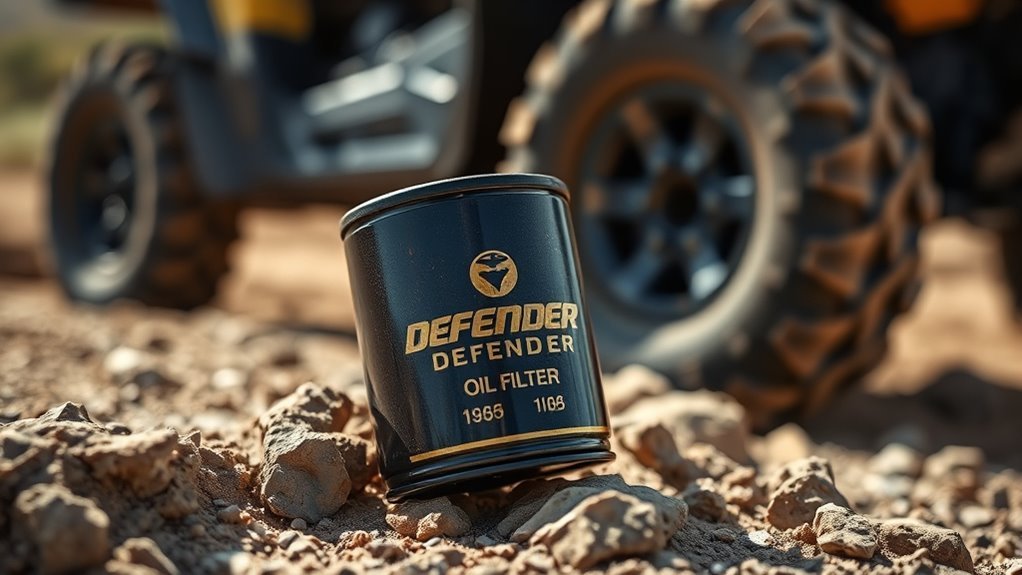

Your Can-Am Defender oil filter is essential for trapping contaminants and maintaining clean engine oil. This process protects internal parts from wear and ensures smooth performance.
You should replace the filter every 50 hours or annually. It’s important to choose one that matches OEM specs and uses high-quality filtration materials.
Regular replacement prevents engine damage and keeps your Defender running reliably. Understanding how to select and change your oil filter correctly will help maintain peak engine health and performance.
Key Takeaways
- The Can-Am Defender oil filter removes contaminants to protect the engine and maintain proper lubrication.
- Replace the oil filter every 50 hours or annually, more often in dusty or harsh conditions.
- Choose a filter compatible with the Can-Am Defender, matching OEM specifications and thread size.
- High-quality filters use synthetic fibers and advanced filtration to capture fine particles and prevent leaks.
- Signs to replace include reduced engine performance, oil contamination, unusual noises, and rough idling.
Why Your Can-Am Defender’s Oil Filter Is So Important
Understanding the critical role of your Can-Am Defender’s oil filter is essential for maintaining engine performance and longevity. The oil filter removes contaminants from engine oil, ensuring proper lubrication of moving parts.
Without effective filtration, abrasive particles can cause accelerated wear and potential engine failure. You’ll find various oil filter types, including spin-on and cartridge designs, each engineered for maximum filtration efficiency and compatibility with your Defender’s engine.
Recognizing the importance of lubrication, the oil filter maintains oil cleanliness, preserving viscosity and preventing sludge buildup. This filtration process protects the engine’s internal components, reduces friction, and supports consistent oil flow under varying conditions.
Common Signs Your Can-Am Defender Oil Filter Needs Replacing
You’ll notice reduced engine performance when your Can-Am Defender’s oil filter is clogged, restricting proper oil flow.
Visible oil contamination, such as dirt or metal particles, signals the filter isn’t effectively trapping debris.
Additionally, unusual engine noises can indicate insufficient lubrication caused by a failing oil filter.
Reduced Engine Performance
Although your Can-Am Defender may run, reduced engine performance often signals that its oil filter is clogged or failing.
When the oil filter performance declines, contaminants aren’t effectively removed, causing increased friction and wear within the engine. This buildup restricts oil flow, reducing lubrication and cooling efficiency, which directly impacts engine performance.
You might notice sluggish acceleration, rough idling, or decreased power output, all indicators that your oil filter isn’t functioning at its best. Ignoring these signs can lead to premature engine wear or damage.
To maintain peak engine performance, regularly inspect and replace the oil filter according to your Defender’s maintenance schedule. Doing so guarantees clean oil circulation, preserves engine components, and keeps your Can-Am running smoothly under demanding conditions.
Visible Oil Contamination
When contaminants accumulate beyond the oil filter’s capacity, you’ll often see visible signs of oil contamination.
During filter inspection, you may notice dark, gritty particles suspended in the oil or a milky appearance indicating coolant mixing with oil.
These visual cues suggest the filter’s inability to trap debris effectively, risking engine wear.
Conducting regular oil analysis can confirm contamination levels by detecting metal shavings or sludge, which signal filter degradation.
If you observe discoloration or sediment during inspection, it’s critical to replace the oil filter immediately to maintain proper lubrication and protect engine components.
Ignoring visible contamination compromises oil flow and filtration efficiency, accelerating engine damage.
Staying vigilant with oil analysis and filter inspection guarantees your Can-Am Defender runs smoothly and reliably.
Unusual Engine Noises
If your Can-Am Defender’s oil filter starts clogging, you might hear unusual engine noises signaling restricted oil flow. These sounds often include knocking, ticking, or rattling, indicating insufficient lubrication due to oil starvation.
During engine diagnostics, these noises serve as critical indicators that the oil filter is compromised and can’t effectively remove contaminants. To confirm this, perform noise troubleshooting by isolating the source and checking oil pressure levels.
A clogged filter reduces oil circulation, increasing friction and wear, which manifests as abnormal engine sounds. Ignoring these signs can lead to severe engine damage.
Consequently, promptly replacing the oil filter upon detecting unusual noises guarantees ideal engine performance and longevity.
Regular inspections and timely maintenance remain essential for preventing such issues in your Can-Am Defender.
How to Choose the Right Oil Filter for Your Can-Am Defender
You need to start by checking the filter compatibility guide to verify the oil filter matches your Can-Am Defender model and engine specifications.
Pay close attention to the filter’s material and filtration quality, as they directly affect engine protection and performance.
Choosing a filter with the right micron rating and durable construction will help maintain ideal oil flow and prevent contaminants.
Filter Compatibility Guide
Although selecting the right oil filter for your Can-Am Defender may seem straightforward, understanding compatibility is essential to guarantee peak engine performance and longevity.
You’ll want to verify that the filter matches your engine model and meets OEM specifications. Leading filter brands offer compatibility charts. Use these to cross-reference part numbers and confirm a perfect fit.
Pay close attention to thread size, gasket type, and filter dimensions to avoid leaks or installation issues. When installing, follow manufacturer installation tips carefully: lubricate the gasket, tighten to recommended torque, and check for proper seating.
Choosing a compatible filter prevents oil flow restrictions and protects your engine. Always consult your Defender’s manual and trusted filter brands to maintain ideal performance and durability.
Material And Filtration Quality
Selecting a compatible oil filter sets the foundation, but understanding the filter’s material and filtration quality determines how effectively it protects your Can-Am Defender’s engine. Focus on filter construction. High-quality synthetic fibers or cellulose blends guarantee durability and efficient particle capture.
Advanced filtration technology, like multi-layer media, traps contaminants while maintaining ideal oil flow. Evaluate micron rating and media type to match your vehicle’s demands.
| Feature | Material Type | Filtration Benefit |
|---|---|---|
| Media Construction | Synthetic / Cellulose | Enhanced dirt retention |
| Micron Rating | 10-20 microns | Fine particle filtration |
| Anti-Drain Back | Silicone / Nitrile | Prevents dry starts |
| End Cap Material | Metal / Resin | Structural integrity |
| Seal Type | Nitrile / Viton | Leak prevention under pressure |
Choose filters with superior construction and filtration technology for peak engine protection.
When and How Often to Replace Your Can-Am Defender Oil Filter
Regularly replacing your Can-Am Defender oil filter is essential to maintaining peak engine performance and longevity. You should follow the manufacturer’s oil change frequency recommendations, typically every 50 hours of operation or annually, whichever comes first.
Adhering to these filter maintenance guidelines guarantees contaminants are effectively removed, preventing engine wear. If you operate in dusty or harsh environments, consider more frequent replacements to safeguard engine integrity.
Ignoring timely filter changes can lead to clogging, reduced oil flow, and compromised lubrication. Always inspect the oil filter during routine maintenance checks and replace it if you notice damage or excessive dirt accumulation.
How to Change Your Can-Am Defender Oil Filter Step-by-Step
Changing your Can-Am Defender oil filter involves a series of precise steps to guarantee proper engine protection.
To maintain ideal oil filter maintenance and adhere to oil change frequency guidelines, follow these steps carefully:
Warm up the engine to circulate oil, then turn off and secure the vehicle.
Locate and remove the old oil filter using an appropriate wrench. Drain the old oil completely and clean the filter mounting surface.
Lubricate the new filter’s gasket with fresh oil, then install and tighten it by hand.
Performing these steps guarantees your Defender’s engine receives clean oil, reducing wear and prolonging longevity.
Always consult your owner’s manual for specific oil change frequency tailored to your riding conditions.
Regular oil filter maintenance is critical for consistent engine performance and reliability.
Tips for Maintaining Engine Health With the Right Oil Filter
Although maintaining your Can-Am Defender’s engine health depends on various factors, using the correct oil filter plays an essential role in protecting internal components from contaminants and wear.
Selecting the appropriate oil filter type, whether a spin-on or cartridge filter, ensures ideal filtration efficiency tailored to your engine’s specifications.
Adhering strictly to the recommended maintenance schedule is critical; replace the oil filter at intervals specified in your owner’s manual to prevent clogging and maintain oil flow.
Neglecting timely filter changes can cause abrasive particles to circulate, accelerating engine wear.
Additionally, always use filters that meet or exceed OEM standards to guarantee compatibility and durability.
Frequently Asked Questions
Can I Use Aftermarket Oil Filters on My Can-Am Defender?
You can use aftermarket options for your Can-Am Defender, but you’ll need to guarantee filter compatibility with OEM specifications. Always verify size, filtration efficiency, and material quality to maintain engine performance and avoid potential damage.
What Is the Best Oil Filter Brand for Extreme Off-Road Conditions?
For formidable filtration, you’ll favor Fram and K&N; their oil filter durability delivers dependable dirt defense and enhanced off-road performance. These brands maintain meticulous micron ratings, ensuring maximum engine protection amid extreme terrain and challenging conditions.
How Does Oil Filter Size Affect Engine Performance?
Oil filter size impacts oil flow and filtration efficiency; a properly sized filter guarantees ideal oil filter design, maintaining consistent oil pressure and contaminant removal. This directly supports engine longevity and reliable performance under varying conditions.
Are Oil Filter Magnets Beneficial for My Can-Am Defender?
Yes, oil filter magnets can enhance your Can-Am Defender’s oil filter maintenance by improving magnet efficiency in capturing metallic debris. This helps reduce engine wear and extend filter life. However, they should complement, not replace, regular filter changes.
Can a Clogged Oil Filter Cause Transmission Issues?
You might think a clogged filter only affects the engine, but it can cause transmission issues too.
Clogged filter symptoms include reduced transmission fluid flow, leading to overheating and shifting problems. Replace filters promptly to maintain performance.
Conclusion
Now that you know why your Can-Am Defender’s oil filter is essential, don’t wait for warning signs to act. Missing the right replacement timing or choosing the wrong filter can silently damage your engine’s performance.
The next time you gear up, ask yourself—have you confirmed your oil filter is up to the task? Proper maintenance isn’t just a task; it’s the key to releasing your Defender’s full potential and longevity.
Always ensure you use a quality Can Am Defender oil filter to keep your engine running smoothly and reliably.