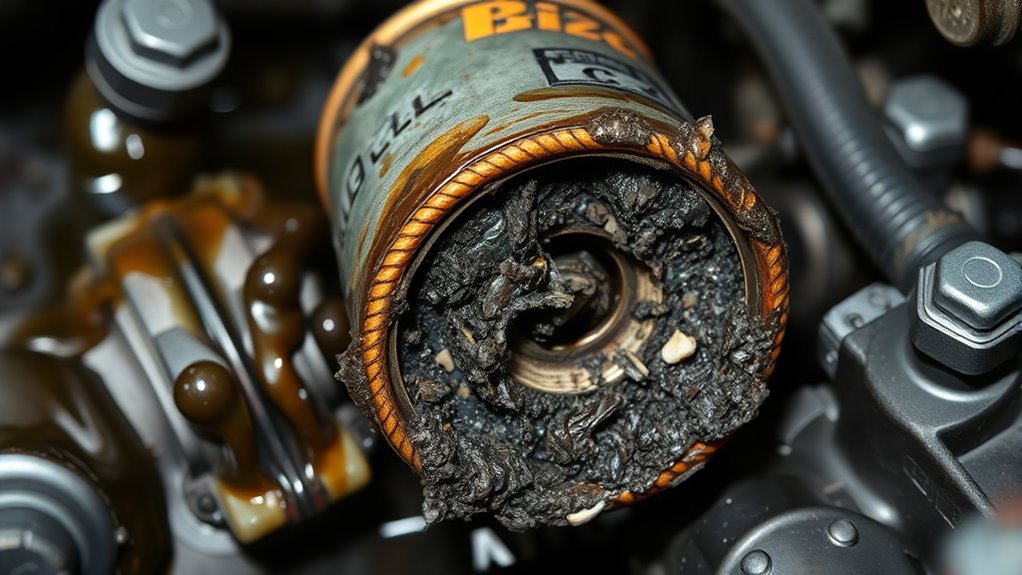

If you don’t change your oil filter, contaminants like dirt and metal particles build up, restricting oil flow and reducing lubrication efficiency. This causes increased friction, engine overheating, and wear on critical parts like bearings and pistons.
A clogged filter may trigger bypass valves, letting unfiltered oil circulate and accelerating engine damage. Your vehicle’s performance and gas mileage will suffer.
Understanding these risks helps you protect your engine’s health and know the best timing and choices for oil filter care.
Key Takeaways
- The oil filter becomes clogged, restricting oil flow and reducing lubrication to engine components.
- Contaminants accumulate, causing increased friction, overheating, and accelerated engine wear.
- Bypass valves may open, allowing unfiltered oil to circulate, leading to sludge buildup and corrosion.
- Engine performance declines with symptoms like reduced power, rough idling, and possible engine knock.
- Neglecting filter changes can cause premature engine failure and costly repairs.
How The Oil Filter Protects Your Engine
The oil filter plays an important role in safeguarding your engine by removing contaminants such as dirt, metal particles, and sludge from the engine oil. Its primary oil filter functions include trapping these impurities to maintain clean oil circulation, which is crucial for engine protection.
By filtering out harmful debris, the oil filter prevents abrasive wear on engine components like bearings, camshafts, and pistons. This guarantees ideal lubrication, reduces friction, and maintains engine efficiency.
Without this filtration, contaminants would accelerate engine wear, potentially causing overheating and premature failure.
Understanding these oil filter functions helps you appreciate why regular maintenance is essential to uphold engine protection and performance over time.
Keeping your oil filter in good condition directly supports your engine’s longevity and reliability.
Signs Your Oil Filter Needs Immediate Changing
You’ll notice engine performance issues like reduced power or rough idling when your oil filter is clogged.
Contaminated oil may appear darker or gritty, signaling the filter’s failure to trap debris effectively.
Recognizing these signs early helps prevent severe engine damage.
Engine Performance Issues
When your oil filter becomes clogged or degraded, your engine’s performance will noticeably decline. A compromised filter restricts oil flow, reducing lubrication efficiency and causing increased friction within engine components.
This leads to performance degradation, marked by decreased power output and sluggish acceleration. You might also experience engine knock, a distinct metallic rapping sound, resulting from insufficient oil pressure and poor lubrication of the combustion chamber.
Ignoring these symptoms can accelerate wear and damage critical parts like pistons and bearings. To maintain peak engine function, replace the oil filter promptly at recommended intervals.
Doing so guarantees clean oil circulation, preventing contaminants from causing mechanical stress that triggers engine knock and overall performance decline.
Addressing filter issues early helps preserve engine longevity and efficiency.
Oil Contamination Indicators
Although oil filters work silently in the background, certain signs reveal when they’ve become compromised by contamination. You should watch for oil contamination sources such as dirt, metal particles, and combustion byproducts accumulating in the filter, which indicate it’s no longer effectively trapping debris.
Oil degradation signs include darkening oil color, increased viscosity, and the presence of sludge or a gritty texture. These symptoms suggest that contaminants are circulating freely, reducing lubrication efficiency and increasing engine wear.
If you notice unusual engine noises, decreased fuel efficiency, or oil pressure fluctuations, these often correlate with compromised filtration.
Addressing these oil contamination indicators promptly by changing your oil filter helps maintain peak engine performance and prevents costly damage caused by unfiltered contaminants circulating within your engine system.
Main Risks Of Driving With A Clogged Oil Filter
If your oil filter becomes clogged, it restricts oil flow and reduces the engine’s ability to lubricate critical components. This restriction increases friction, causing accelerated wear on bearings, camshafts, and pistons.
Without proper lubrication, metal parts grind against each other, risking severe engine damage. Additionally, a clogged filter can trigger bypass valves, allowing unfiltered oil with contaminants to circulate, further compromising engine health.
Neglecting oil filter maintenance undermines engine longevity by promoting sludge buildup and corrosion. You might also experience decreased fuel efficiency and power loss due to compromised oil pressure.
To avoid these risks, regularly replacing your oil filter as part of routine oil filter maintenance is vital. This simple step guarantees consistent oil flow, protects engine components, and extends your vehicle’s operational lifespan.
How A Dirty Oil Filter Causes Engine Overheating
When your oil filter gets dirty, it restricts the flow of oil, reducing lubrication and causing friction.
This blockage prevents efficient heat dissipation from engine components, leading to a rise in operating temperature.
Without proper oil circulation, your engine is at serious risk of overheating and damage.
Oil Flow Blockage
Since a dirty oil filter restricts the flow of oil through your engine, it directly contributes to increased operating temperatures. When contaminants accumulate, oil pressure drops, reducing lubrication efficiency. This blockage stresses the filter, shortening its filter lifespan and causing engine components to overheat due to insufficient oil circulation.
You must monitor oil pressure regularly to detect early signs of flow blockage.
| Parameter | Normal Condition | Blocked Filter Condition |
|---|---|---|
| Oil Pressure | 40-60 psi | Below 20 psi |
| Filter Lifespan | 5,000-7,500 miles | Reduced by 30-50% |
| Oil Flow Rate | Ideal (measured in L/min) | Severely restricted |
Ignoring these signs accelerates wear and risks catastrophic engine damage. Replace your oil filter on schedule to maintain proper oil flow and temperature control.
Heat Dissipation Reduction
Although your engine relies on oil to carry away heat, a dirty oil filter impedes this process by restricting oil circulation and reducing heat transfer efficiency.
When contaminants clog the filter, oil flow decreases, causing a drop in oil pressure. This reduced pressure limits the volume of oil reaching critical engine components, increasing heat retention within the engine block.
As oil struggles to circulate effectively, it fails to absorb and dissipate heat efficiently, leading to localized overheating.
This heat buildup accelerates wear on engine parts and can cause thermal stress, reducing overall engine performance and longevity.
Maintaining a clean oil filter guarantees consistent oil pressure and ideal heat dissipation, preventing excessive heat retention and protecting your engine from overheating-related damage.
How A Neglected Oil Filter Hurts Your Gas Mileage
If you neglect to change your oil filter regularly, your engine’s efficiency will decline, directly impacting your gas mileage. A clogged oil filter restricts oil flow, forcing your engine to work harder, which reduces fuel efficiency.
Poor oil circulation increases internal friction, causing your engine to consume more fuel to maintain performance. Additionally, compromised oil quality can alter your driving habits, as you might experience reduced responsiveness or sluggish acceleration.
To maintain peak fuel efficiency, consider these impacts:
- Increased engine workload due to restricted oil flow.
- Higher fuel consumption from elevated mechanical friction.
- Altered driving habits to compensate for decreased engine responsiveness.
Regular oil filter changes guarantee proper lubrication, helping your engine run smoothly and efficiently, directly benefiting your gas mileage.
Can Skipping Oil Filter Changes Lead To Engine Damage?
Beyond affecting fuel efficiency, ignoring oil filter changes can severely compromise your engine’s health.
The oil filter lifespan is designed to trap contaminants that accumulate in engine oil over time.
The oil filter’s lifespan ensures it captures contaminants building up in engine oil over time.
When you skip changing the filter, trapped particles saturate it, reducing its effectiveness. This allows abrasive debris to circulate freely, accelerating engine wear by scratching and damaging critical components such as bearings and cylinders.
Over time, this contamination leads to reduced lubrication efficiency and increased friction, which can cause overheating and premature engine failure.
Maintaining the oil filter within its recommended lifespan guarantees ideal filtration, preserving engine integrity and performance.
Ultimately, neglecting oil filter changes directly increases the risk of severe engine damage, making timely replacements essential for long-term engine reliability.
How Often Should You Really Change Your Oil Filter?
You should change your oil filter every 3,000 to 7,500 miles, depending on your vehicle’s manufacturer recommendations and driving conditions.
Factors like frequent short trips, extreme temperatures, or dusty environments can require more frequent changes.
Staying within these intervals guarantees ideal filtration and engine performance.
Recommended Change Intervals
Most manufacturers recommend changing your oil filter every 3,000 to 7,500 miles, depending on your vehicle and driving conditions. Sticking to this maintenance schedule helps optimize engine performance and prolongs component life.
Your oil filter type, whether cartridge, spin-on, or magnetic, also influences change intervals due to varying filtration efficiencies and capacities.
To maintain your engine effectively, consider these guidelines:
- Replace oil filters at every oil change to guarantee contaminants are removed consistently.
- Consult your owner’s manual for manufacturer-specific recommendations based on oil filter types.
- Adjust intervals based on your driving habits but avoid exceeding the upper mileage limit.
Factors Affecting Frequency
Although oil filter replacement intervals provide a general framework, several factors influence how often you should actually change your oil filter. The oil filter lifespan depends greatly on your driving conditions.
Frequent short trips, stop-and-go traffic, or dusty environments accelerate filter clogging, reducing its effective lifespan. Conversely, highway driving under stable conditions allows the filter to perform closer to its maximum rated duration.
Additionally, the type of oil used affects contaminant accumulation; synthetic oils often extend oil filter lifespan compared to conventional oils. Your vehicle’s age and engine condition also play roles. Older engines produce more debris, demanding more frequent filter changes.
How To Choose The Right Oil Filter For Your Car
When selecting an oil filter for your car, understanding the specific requirements of your engine is essential to guarantee peak performance.
Choosing the right oil filter tailored to your engine’s needs ensures optimal performance and longevity.
You need to take into account various filter types, such as cartridge, spin-on, and magnetic filters, each offering different filtration efficiencies and durability.
Conducting brand comparisons helps identify filters that meet or exceed OEM standards, assuring compatibility and reliability.
Focus on these key factors:
- Filter media quality: Synthetic vs. cellulose materials affect particle capture.
- Bypass valve specifications: Prevent oil starvation under extreme conditions.
- Pressure resistance: Confirm the filter withstands your engine’s operating pressures.
Tips To Keep Your Oil Filter And Engine Running Smoothly
Keeping your oil filter and engine in excellent condition requires regular maintenance and adherence to manufacturer guidelines.
To enhance oil filter maintenance, replace the filter at intervals specified in your vehicle’s manual, as delayed changes can lead to clogged filters and reduced oil flow.
Use high-quality filters designed for your engine model to guarantee proper filtration and pressure stability.
Monitor oil quality and level frequently, since contaminated or low oil affects filter efficiency and overall engine health.
Additionally, avoid extended engine idling, which can increase oil contamination.
Consistent oil changes paired with timely filter replacements help prevent abrasive particles from damaging engine components, thereby improving engine longevity.
How To Check And Replace Your Oil Filter Yourself
Regularly checking and replacing your oil filter is essential for maintaining engine performance and longevity.
To perform this DIY maintenance effectively, first identify the correct oil filter type for your vehicle: spin-on or cartridge.
Begin your oil filter change by determining if your vehicle uses a spin-on or cartridge filter type.
Then, safely elevate your car and locate the filter. Use an oil filter wrench to remove the old filter, being cautious of hot oil.
Before installing the new filter, lubricate its rubber gasket with fresh oil to guarantee a proper seal.
Finally, screw on the new filter by hand, following manufacturer torque specifications.
Key steps for DIY oil filter replacement:
- Select the appropriate oil filter type based on your vehicle’s specifications
- Drain oil completely to avoid spills during filter removal
- Inspect and clean the filter mounting surface before installation
This guarantees ideal filtration and engine protection.
Frequently Asked Questions
Can Using Synthetic Oil Affect Oil Filter Lifespan?
Yes, synthetic oil’s benefits can extend your oil filter lifespan if you guarantee filter compatibility. Synthetic oils reduce contaminants, easing filter load, but using incompatible filters might cause premature clogging or damage, so always match filter specifications carefully.
Do Oil Filters Vary Between Gasoline and Diesel Engines?
When you compare gasoline engines and diesel engines, you’ll notice their oil filters differ due to distinct particle sizes and contamination levels.
Is a Magnetic Oil Filter More Effective?
You’ll find magnetic oil filters enhance filter efficiency by using magnetic technology to capture metallic particles, improving protection. However, they complement but don’t replace traditional filtration, so combining both guarantees ideal engine cleanliness and performance.
Can a Dirty Oil Filter Cause Emissions Test Failure?
Yes, a dirty oil filter can cause emissions test failure by disrupting engine performance and increasing pollutants.
You should prioritize regular oil filter maintenance to meet emissions standards and guarantee your vehicle runs efficiently and cleanly.
Are Oil Filter Warranties Common With Vehicle Purchases?
Sure, oil filter warranties are as common as a unicorn sighting in vehicle purchases. Typically, warranty coverage focuses on major parts, not filter maintenance.
Conclusion
If you don’t change your oil filter, you’re basically inviting your engine to choke on sludge and debris—think of it as a slow-motion disaster waiting to happen.
Clogged filters starve your engine of clean oil, causing overheating, reduced performance, and skyrocketing fuel consumption.
Don’t let neglect turn your car into a costly paperweight. Change that filter regularly, or risk watching your engine seize in protest, leaving you stranded and frustrated.
In conclusion, failing to change your oil filter can lead to serious engine problems, so always remember the importance of an oil filter change to keep your vehicle running smoothly.