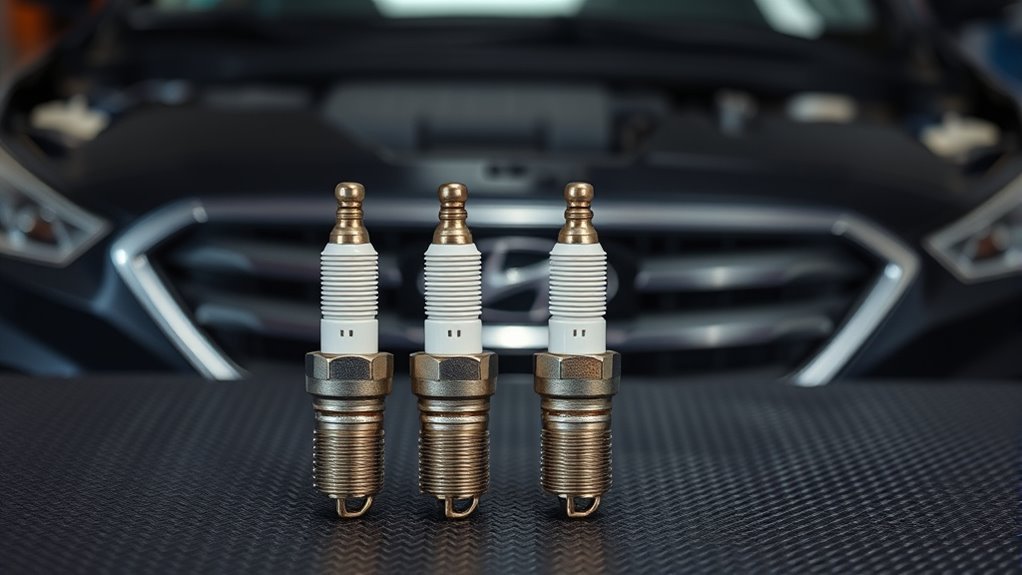

You need iridium spark plugs with a 0.044-inch gap and the correct heat range for your 2017 Hyundai Sonata SE to guarantee peak combustion efficiency and engine performance.
Iridium plugs offer durability and stable ignition compared to platinum. Using the proper heat range prevents fouling or overheating, protecting your engine.
Regular replacement every 30,000-45,000 miles keeps your car running smoothly. Understanding installation and maintenance details can help you maximize your Sonata’s efficiency and longevity.
Key Takeaways
- Use spark plugs with a heat range suitable for the 2017 Hyundai Sonata SE to prevent fouling and overheating.
- Recommended spark plug gap is 0.044 inches (1.1 mm) for optimal ignition and fuel efficiency.
- Iridium spark plugs are preferred for longer life and stable combustion in the Sonata SE’s engine.
- Replace spark plugs every 30,000 to 45,000 miles, checking for wear and deposits regularly.
- Always torque spark plugs to manufacturer specifications and ensure clean installation for peak performance.
Which Spark Plug Type Is Best for Your 2017 Hyundai Sonata SE?
When choosing the best spark plug type for your 2017 Hyundai Sonata SE, you need to evaluate factors like heat range, electrode material, and compatibility with your engine’s specifications.
Selecting a spark plug that matches these parameters guarantees peak combustion efficiency and engine performance.
Consider reputable spark plug brands that provide detailed heat range charts and material specifications for precise matching.
Maintenance tips recommend inspecting plugs regularly for wear and deposits, which can affect ignition quality.
Using the correct heat range prevents overheating or fouling, extending plug life and engine reliability.
You’ll also want plugs with durable electrode materials suited to your driving conditions and fuel type.
Iridium vs. Platinum Spark Plugs for 2017 Hyundai Sonata SE
Choosing the right electrode material plays a significant role in optimizing your 2017 Hyundai Sonata SE’s spark plugs.
Iridium spark plugs offer superior iridium longevity due to the metal’s high melting point and hardness, allowing electrodes to resist wear and maintain a stable spark over extended periods. This durability translates to consistent combustion efficiency and longer replacement intervals.
On the other hand, platinum spark plugs excel in platinum conductivity, providing reliable electrical transfer that guarantees efficient ignition and smooth engine performance.
While platinum plugs generally cost less, their electrodes wear faster compared to iridium.
For your Sonata SE, if you prioritize extended service life and stable performance, iridium plugs are preferable. However, platinum plugs still deliver dependable conductivity and cost-effectiveness for regular maintenance schedules.
Why Your Sonata Needs the Right Spark Plug Heat Range
Because spark plugs operate within a specific temperature range, selecting the correct heat range for your 2017 Hyundai Sonata SE is essential to prevent fouling or overheating.
If the heat range is too cold, deposits accumulate on the spark plug, reducing spark plug longevity and causing misfires. Conversely, a plug that runs too hot can lead to pre-ignition and engine knocking, compromising engine efficiency.
Choosing the proper heat range guarantees the spark plug maintains peak temperature, effectively burning off deposits while avoiding excessive wear. This balance supports consistent combustion, improves fuel economy, and extends the service life of your spark plugs.
Proper heat range ensures optimal spark plug temperature, promoting efficient combustion and longer plug life.
Thus, specifying the right heat range is critical to maintaining your Sonata’s performance and preventing costly engine damage over time.
What Is the Right Spark Plug Gap for a 2017 Sonata SE?
You’ll want to set the spark plug gap to the manufacturer’s specified measurement, typically around 0.044 inches for the 2017 Sonata SE.
Maintaining this precise gap guarantees peak engine performance and fuel efficiency.
Use a feeler gauge to measure and adjust the gap carefully before installation.
Manufacturer Recommended Gap
The manufacturer recommended gap for the spark plugs in a 2017 Hyundai Sonata SE is typically set at 0.044 inches (1.1 mm). Adhering to this specification assures peak combustion and engine efficiency.
When checking or adjusting your spark plugs, make certain to follow the exact spark plug specifications to avoid misfires or damage.
Key points to remember for proper installation include:
- Use a precise gap tool to measure and adjust the gap accurately.
- Verify the gap before installation, as pre-gapped plugs can vary slightly.
- Confirm the spark plug is torqued to the manufacturer’s recommended value for secure fitment.
Following these guidelines guarantees reliable ignition performance and maintains engine integrity.
Impact on Engine Performance
Maintaining the correct spark plug gap of 0.044 inches (1.1 mm) directly influences your 2017 Hyundai Sonata SE’s engine performance. A properly set gap guarantees maximum spark intensity, which promotes complete combustion within the cylinders.
This precision enhances engine efficiency by maximizing the energy extracted from the fuel-air mixture. If the gap is too wide, the spark may weaken, causing misfires, reduced power, and increased fuel consumption. Conversely, a gap that’s too narrow can result in incomplete combustion, lowering engine responsiveness and wasting fuel.
As a result, adhering to the manufacturer-recommended gap is critical to maintaining consistent ignition timing and combustion quality. By doing so, you improve fuel consumption and reduce emissions, making sure your Sonata SE runs smoothly and efficiently under varying driving conditions.
Measuring and Adjusting Gap
Although spark plug gaps come pre-set from the manufacturer, it’s vital to measure and adjust them to the exact specification for your 2017 Hyundai Sonata SE. Proper gap measurement guarantees peak spark efficiency, directly impacting combustion and engine performance.
For spark plug maintenance, use a feeler gauge to measure the gap, which should be precisely 0.044 inches (1.1 mm) for this model. If the gap deviates, gently adjust it without damaging the electrodes.
Key steps for accurate gap measurement and adjustment include:
Use a calibrated feeler gauge to check the gap size.
Carefully bend the ground electrode to widen or narrow the gap.
Re-check the gap after adjustment to confirm precision.
Maintaining the correct gap is essential for reliable ignition and fuel efficiency.
When Should You Replace Spark Plugs on Your 2017 Sonata SE?
If you want your 2017 Hyundai Sonata SE to perform at its finest, you should replace its spark plugs every 30,000 to 45,000 miles, depending on the type of spark plugs installed.
The spark plug lifespan varies between standard copper plugs and longer-lasting iridium or platinum variants.
Spark plug lifespan differs between standard copper and durable iridium or platinum types, affecting replacement intervals.
You should monitor for signs replacement is necessary, such as rough idling, engine misfires, decreased fuel efficiency, or difficulty starting.
These symptoms indicate that spark plugs are worn or fouled, impairing combustion efficiency.
Regular inspection guarantees timely replacement before performance degradation or potential engine damage occurs.
Adhering to the manufacturer’s recommended intervals and recognizing these signs replacement will help maintain ideal engine operation and extend the lifespan of your Sonata SE’s ignition system.
How to Install Spark Plugs on Your Sonata
Once you’ve identified the need to replace your spark plugs, installing new ones on your 2017 Hyundai Sonata SE requires careful attention to detail.
First, gather the right spark plug tools: a spark plug socket, ratchet, and torque wrench to guarantee proper installation torque.
Then, follow these installation tips to avoid damage and promote peak performance:
Disconnect the battery and remove the engine cover to access the spark plugs safely.
Clean the spark plug wells and use a spark plug gap tool to verify the gap matches manufacturer specifications.
Install each spark plug by hand initially, then tighten with a torque wrench to the specified torque to prevent over-tightening or cross-threading.
Following these steps guarantees a precise, efficient spark plug installation on your Sonata.
Frequently Asked Questions
Can I Use Spark Plugs From Other Hyundai Models in My 2017 Sonata SE?
You can use spark plugs from other Hyundai models if they match your Sonata’s specifications; however, due to Hyundai model differences, always check spark plug compatibility to guarantee proper fit, heat range, and performance for your 2017 SE.
Do Aftermarket Spark Plugs Affect My Sonata Se’s Warranty?
Think of your warranty as a safety net; using aftermarket spark plugs usually won’t void it unless they cause damage. Aftermarket benefits include cost savings and performance options but check warranty implications carefully before installation.
How Do Weather Conditions Affect Spark Plug Performance in My Sonata?
You’ll find weather impact affects spark plug longevity by causing temperature fluctuations and moisture exposure, which can lead to corrosion or fouling. Proper maintenance guarantees your Sonata’s spark plugs perform reliably despite varying conditions.
What Symptoms Indicate Spark Plug Problems in a 2017 Sonata SE?
If your Sonata suddenly sounds like a rattling spaceship, that’s symptom identification for spark plug failure. Expect rough idling, misfires, poor acceleration, and reduced fuel efficiency. These are clear technical signs your spark plugs need immediate attention.
Are Spark Plug Replacements Diy-Friendly for Beginners?
You can replace spark plugs yourself with basic spark plug tools. Follow installation tips like proper gap measurement and torque specs to avoid damage.
It’s a manageable task if you’re patient and precise throughout the process.
Conclusion
Choosing the right spark plugs for your 2017 Hyundai Sonata SE isn’t just a detail—it’s the heartbeat of your engine’s performance. Opt for iridium plugs with the correct heat range and gap to keep your car running smoothly and efficiently.
Remember, replacing them at the right interval prevents misfires and power loss. Follow proper installation steps carefully, and you’ll keep your Sonata firing on all cylinders like a well-oiled machine ready for the road ahead.
In conclusion, knowing what spark plugs need for Hyundai Sonata 2017 SE ensures your vehicle maintains optimal performance and reliability.