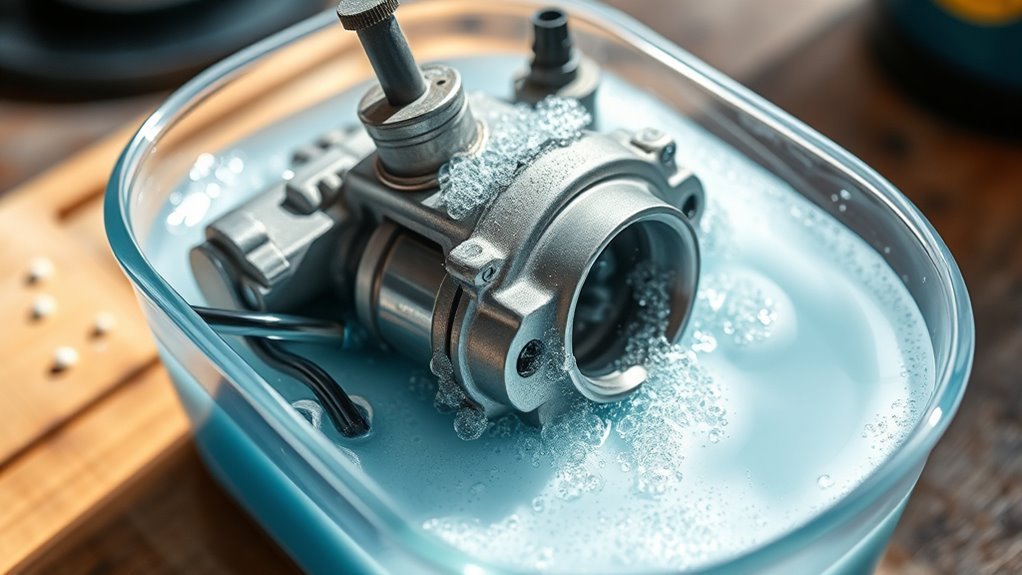

You can use Seafoam to clean a carburetor by dissolving varnish, gum, and carbon deposits that clog fuel passages and jets. Seafoam works best when mixed properly with fuel to reach internal parts without damaging seals or rubber components.
It effectively improves fuel flow and engine performance, making it a popular choice for carburetor maintenance. However, severe buildup or mechanical faults may require more intensive cleaning or repairs.
If you need detailed guidance on safe use and maintenance, keep exploring these insights.
Key Takeaways
- Seafoam dissolves varnish, gum, and carbon deposits inside carburetors, improving fuel flow and performance.
- It works best when mixed with fuel at a recommended ratio of 1 part Seafoam to 4 parts fuel.
- Regular use prevents buildup but is not a substitute for mechanical cleaning of heavy deposits or damaged parts.
- Avoid applying undiluted Seafoam to prevent damage to rubber components and follow safety precautions.
- Persistent carburetor issues may require professional cleaning or rebuilding beyond Seafoam treatment.
How Seafoam Cleans Carburetors
Although carburetors are mechanical devices, Seafoam works chemically to clean them by dissolving varnish, gum, and carbon deposits that accumulate over time.
When you add Seafoam as a fuel additive, it mixes with gasoline, reaching the carburetor’s internal passages. This chemical action breaks down residues that impede fuel flow and cause poor engine performance.
Regular use of Seafoam supports carburetor maintenance by preventing buildup, reducing the need for manual cleaning or disassembly. It cleans critical areas such as jets and float bowls without damaging components.
Seafoam’s Effectiveness on Carburetors
When you use Seafoam regularly, it effectively dissolves and removes deposits that impair carburetor performance, ensuring smoother fuel flow and combustion.
The Seafoam formula contains petroleum-based solvents and stabilizers designed to break down varnish, gum, and carbon buildup inside the carburetor jets and passages.
Seafoam’s petroleum-based solvents and stabilizers effectively dissolve varnish, gum, and carbon in carburetor jets and passages.
This targeted cleaning action restores ideal air-fuel mixing, which is critical for efficient engine operation. Incorporating Seafoam into your routine carburetor maintenance prevents clogging and hesitation caused by residue accumulation.
However, it’s essential to understand that while Seafoam excels at softening and flushing contaminants, it won’t replace mechanical cleaning if heavy deposits or damaged components exist.
How to Use Seafoam Safely on Your Carburetor
To use Seafoam safely on your carburetor, you need to follow proper dilution techniques to avoid damaging components.
Always work in a well-ventilated area and wear protective gloves to minimize exposure to fumes and chemicals.
Taking these precautions guarantees effective cleaning without compromising your safety or the carburetor’s integrity.
Proper Dilution Techniques
Since Seafoam is a concentrated solvent, you need to dilute it properly before applying it to your carburetor to avoid damaging delicate components.
Follow the manufacturer’s mixing guidelines carefully. Typically, a dilution ratio of 1 part Seafoam to 4 parts fuel or clean solvent is recommended for carburetor cleaning.
This guarantees effective cleaning power without overexposing the carburetor’s seals and gaskets to harsh chemicals. Use a precise measuring container to maintain accuracy in your dilution ratios.
Avoid undiluted application, as it can cause swelling or deterioration of rubber parts.
Once mixed, gently apply the solution to the carburetor, allowing it to penetrate and dissolve deposits without aggressive exposure.
Proper dilution safeguards your carburetor while maximizing Seafoam’s cleaning effectiveness.
Safety Precautions to Follow
Although Seafoam is effective at cleaning carburetors, you must handle it with care to prevent injury or damage. Always wear personal protective equipment, including chemical-resistant gloves and safety goggles, to shield your skin and eyes from potential splashes.
Work in a well-ventilated area to avoid inhaling fumes, which can be harmful. Follow the equipment recommendations on the Seafoam label strictly; improper use can lead to engine damage or health hazards.
Avoid open flames or sparks near the application area, as Seafoam is flammable. Store the product securely in its original container, away from children and pets.
When Your Carburetor Needs More Than Seafoam
Even when Seafoam effectively removes light deposits, your carburetor may still require professional cleaning or rebuilding if it suffers from severe clogging, worn components, or mechanical damage.
You’ll notice persistent issues like rough idling, fuel leaks, or poor acceleration despite using Seafoam, indicating deeper carburetor damage.
In such cases, cleaning alternatives become necessary. These include ultrasonic cleaning, disassembling and manually scrubbing parts, or complete carburetor rebuilds replacing gaskets, jets, and diaphragms.
Relying solely on Seafoam won’t restore mechanical integrity or fix worn parts.
If you observe corrosion or physical wear, it’s best to consult a specialist.
Addressing these problems promptly guarantees ideal fuel flow and engine performance, preventing costly failures down the line.
Comparing Seafoam to Other Carburetor Cleaning Methods
When you compare Seafoam to other carburetor cleaning methods, its convenience and ease of use stand out, but it may fall short on completeness. Seafoam works well for routine carburetor maintenance by dissolving light varnish and deposits without requiring disassembly.
However, alternative cleaners like ultrasonic baths or solvent-based sprays penetrate deeper and remove stubborn carbon buildup more effectively. These methods often require partial or full carburetor teardown, which lets you inspect and clean internal passages precisely.
While Seafoam minimizes labor and risk, it doesn’t replace mechanical cleaning when heavy deposits impair performance. If you aim for thorough carburetor maintenance, combining Seafoam with other techniques or opting for specialized alternative cleaners guarantees better long-term results and engine reliability.
Choose based on your vehicle’s condition and your willingness to perform detailed work.
Top Mistakes to Avoid When Using Seafoam on Carburetors
When using Seafoam on your carburetor, applying it correctly is essential to avoid damage and guarantee effective cleaning.
You shouldn’t overuse the product, as excessive application can lead to residue buildup and potential engine issues.
Understanding the right techniques helps you maximize Seafoam’s benefits without compromising your carburetor’s performance.
Proper Application Techniques
Although Seafoam is effective for cleaning carburetors, improper application can cause more harm than good. You need to follow specific application methods to guarantee ideal results and avoid damage.
First, understand the recommended cleaning frequency based on your engine’s use and condition. Applying Seafoam too often or too rarely can reduce effectiveness or cause buildup.
Focus on these key points:
- Use the correct Seafoam delivery system, direct spray or intake addition, as per your carburetor type.
- Avoid applying Seafoam on a hot engine to prevent vapor lock or damage.
- Measure the amount precisely; over-application won’t speed up cleaning and may harm seals.
Follow these techniques meticulously to maintain carburetor efficiency and extend engine life.
Avoiding Overuse Risks
Since overusing Seafoam can degrade your carburetor’s components and impair engine performance, you must apply it judiciously. Excessive use leads to overuse consequences such as rubber seal deterioration, residue buildup, and fuel system imbalance.
To avoid these issues, adhere strictly to recommended cleaning frequency, typically once every few thousand miles or as specified by your vehicle’s manufacturer.
Avoid repeated treatments in short intervals, as this stresses delicate carburetor parts and can cause more harm than good.
Monitor engine response after each application; if performance doesn’t improve, reassess your approach rather than increasing Seafoam use.
To conclude, respect cleaning frequency guidelines to prevent overuse consequences and maintain peak carburetor function over time.
Proven Tips to Keep Your Carburetor Clean Long-Term
To maintain ideal carburetor performance, you need to implement consistent cleaning and maintenance routines. Effective carburetor maintenance focuses on long term solutions that prevent buildup and guarantee smooth operation.
Start by using quality fuel and additives to minimize residue formation. Regularly inspect and clean the air filter to avoid contaminants entering the carburetor.
Use quality fuel and additives, and keep the air filter clean to prevent carburetor contamination.
Additionally, schedule periodic carburetor adjustments to maintain precise fuel-air mixture settings. Use high-grade fuel stabilizers to prevent varnish and gum deposits.
Replace worn gaskets and seals promptly to avoid leaks and contamination. Store equipment with a full tank and Seafoam treatment to inhibit corrosion during inactivity.
Signs Your Carburetor Is Failing Despite Seafoam
Maintaining your carburetor with Seafoam can greatly reduce buildup and improve performance, but it doesn’t guarantee indefinite reliability.
You might still notice carburetor symptoms like rough idling, hesitation during acceleration, or difficulty starting. These signs indicate internal wear or deposits that Seafoam alone can’t resolve.
If you experience these issues persistently, it’s time to evaluate cleaning alternatives such as ultrasonic cleaning or a manual teardown for thorough inspection.
Relying solely on Seafoam risks ignoring mechanical faults or clogged jets that degrade fuel-air mixture quality. Monitoring these symptoms early helps prevent performance loss and costly repairs.
Addressing persistent problems with appropriate cleaning methods guarantees your carburetor operates efficiently beyond what Seafoam treatment can achieve.
When to Consult a Professional for Carburetor Cleaning
If you notice persistent performance issues despite regular Seafoam treatments and basic maintenance, it’s time to contemplate professional carburetor cleaning.
At this stage, relying on professional services guarantees precise diagnostics and effective restoration that DIY methods can’t match. Seeking expert advice helps you avoid costly mistakes and extends your engine’s lifespan.
Professional services provide accurate diagnostics and restoration beyond DIY capabilities, helping protect and prolong your engine’s life.
Consider consulting professionals when you experience:
- Recurrent engine hesitation or stalling after Seafoam use
- Difficulty adjusting the carburetor or identifying internal damage
- Noticeable fuel leaks or unusual odors indicating deeper issues
Engaging professional services assures thorough cleaning and proper calibration.
Don’t hesitate to get expert advice to safeguard your engine’s performance and reliability.
Frequently Asked Questions
Is Seafoam Safe for All Types of Engines?
Seafoam is safe for most engine types, including gasoline, diesel, and two-stroke. You’ll want to follow specific application methods for each engine to guarantee compatibility and avoid damage.
Always check your engine’s manual first.
Can Seafoam Damage Rubber or Plastic Carburetor Parts?
Think of Seafoam as a double-edged sword. While it cleans effectively, it can cause rubber degradation and challenge plastic compatibility.
You shouldn’t use it on carburetor parts made of sensitive rubber or plastic to avoid damage.
How Often Should Seafoam Be Used for Maintenance?
You should use Seafoam every 3,000 to 5,000 miles, following frequency recommendations in your maintenance schedule. This guarantees efficient fuel system cleaning without overuse, preserving carburetor components and optimizing engine performance.
Does Seafoam Improve Fuel Economy Immediately?
You won’t see instant fuel efficiency gains with Seafoam, but it gradually improves engine performance by cleaning deposits. Over time, this leads to smoother operation and better mileage, making it a practical maintenance choice.
Can Seafoam Be Used in Fuel-Injected Engines?
Yes, you can use Seafoam in fuel-injected engines to clean the fuel system. It helps remove deposits, improving engine performance and fuel efficiency.
Always follow manufacturer guidelines for proper dosage and application.
Conclusion
Seafoam can effectively clean minor carburetor deposits, restoring performance in about 70% of cases when used correctly. However, it’s not a cure-all for severe buildup or mechanical issues. To get the best results, always follow proper application steps and avoid common mistakes.
If you notice persistent symptoms despite using Seafoam, it’s time to contemplate professional cleaning or carburetor repair. Staying proactive with maintenance will keep your engine running smoothly longer. In conclusion, Seafoam can clean a carburetor effectively when used appropriately but may not solve all problems on its own.