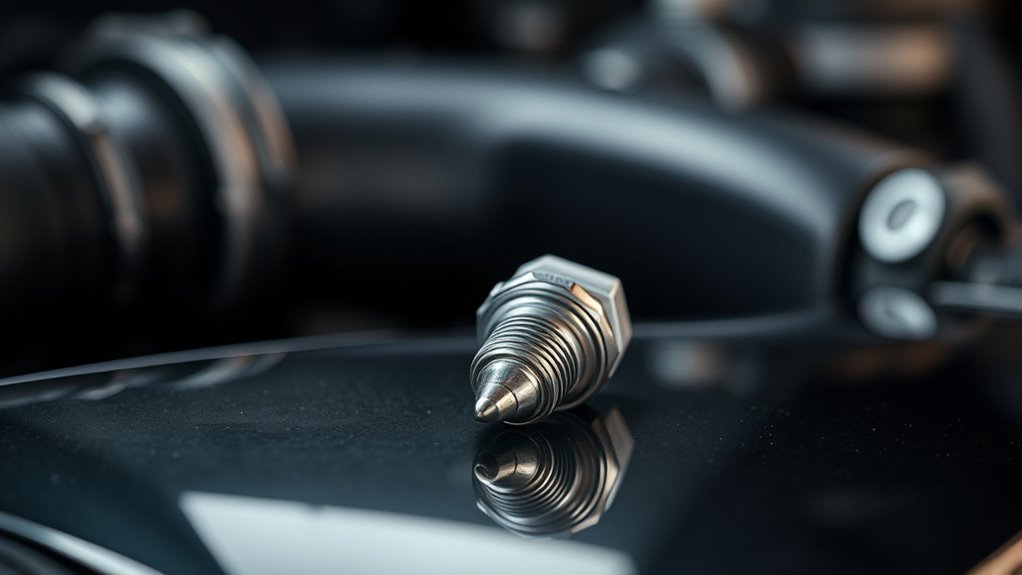

Spark plugs for car engines ignite the air-fuel mixture inside your vehicle by creating a controlled electric spark. This spark starts combustion, which powers your car. They are essential components for engine efficiency, fuel economy, and smooth performance.
If spark plugs wear out, you might experience rough idling, misfires, or poor acceleration. Choosing the right type and maintaining them according to your manufacturer’s specifications ensures peak function. Understanding their role and proper care will help keep your engine running reliably and efficiently.
Key Takeaways
- Spark plugs ignite the air-fuel mixture in the engine’s combustion chamber by producing a controlled electrical spark.
- They are crucial for proper engine ignition timing, ensuring efficient fuel combustion and optimal engine performance.
- Common spark plug types include copper, platinum, and iridium, each offering different durability and performance benefits.
- Worn or faulty spark plugs cause misfires, rough idling, poor fuel efficiency, and increased emissions.
- Regular inspection and timely replacement of spark plugs maintain engine reliability and fuel economy.
What Spark Plugs Are and How They Work
Spark plugs play a crucial role in your car’s engine by igniting the air-fuel mixture inside the combustion chamber. This ignition initiates combustion, producing the power needed to drive your vehicle.
You’ll find various spark plug types, including copper, platinum, and iridium, each distinguished by the spark plug materials used in their electrodes. Copper spark plugs offer excellent conductivity but wear out faster, while platinum and iridium plugs provide greater durability and sustained performance due to their high melting points and corrosion resistance.
Understanding these spark plug types helps you select the right plug for your engine’s specific requirements. Proper material choice guarantees efficient combustion, ideal engine performance, and longevity.
Fundamentally, spark plugs transform electrical energy into a controlled spark, a critical function in your engine’s operation.
Why Spark Plugs Matter for Your Engine
You rely on spark plugs to initiate the ignition system efficiently, ensuring your engine fires correctly every time.
Proper spark plugs optimize fuel combustion, which directly improves your vehicle’s fuel efficiency.
They also enhance overall engine performance by providing consistent and reliable sparks under various operating conditions.
Ignition System Role
Although often overlooked, the ignition system plays a critical role in your engine’s performance by delivering the precise spark needed to ignite the air-fuel mixture.
Your spark plugs depend on accurate ignition timing to guarantee the spark occurs exactly when the compressed mixture reaches ideal combustion conditions.
If the timing is off, combustion efficiency drops, leading to reduced power and increased emissions.
Additionally, sufficient spark energy must be generated to reliably ignite the mixture under varying engine loads and temperatures.
The ignition system’s coil and control module work together to produce this energy, which the spark plug then channels across its electrodes.
Fuel Efficiency Impact
When your spark plugs don’t function ideally, your engine burns fuel less efficiently, directly affecting your vehicle’s fuel economy. Worn or fouled spark plugs cause incomplete combustion, increasing fuel consumption and reducing engine efficiency.
Maintaining excellent spark plug condition guarantees each fuel-air mixture ignites precisely, maximizing fuel use and minimizing waste.
| Spark Plug Condition | Fuel Consumption Impact | Engine Efficiency | Combustion Quality | Maintenance Frequency |
|---|---|---|---|---|
| New | Low | High | Complete | Regular |
| Slightly Worn | Moderate | Moderate | Mostly Complete | Scheduled |
| Fouled | High | Low | Incomplete | Immediate |
| Damaged | Very High | Very Low | Poor | Urgent |
| Incorrect Gap | High | Reduced | Inconsistent | Adjust as Needed |
Proper spark plug upkeep directly enhances fuel consumption and engine efficiency.
Engine Performance Boost
Spark plugs play a vital role in maximizing engine performance by guaranteeing reliable ignition of the air-fuel mixture. When spark plugs function efficiently, they create consistent sparks at the right moment, enabling your engine to deliver maximum power output.
If you’re considering engine tuning or performance upgrades, upgrading to high-quality spark plugs can greatly enhance combustion efficiency and throttle response. Faulty or worn spark plugs cause misfires, reducing horsepower and acceleration.
By maintaining peak spark plug condition, you guarantee smoother engine operation and improved power delivery.
Precision in spark timing is essential for performance enthusiasts; therefore, selecting spark plugs tailored for your specific engine tuning can release your vehicle’s full potential, providing a measurable boost in overall engine performance.
How to Tell When Spark Plugs Need Replacing
How can you accurately determine if your spark plugs need replacing? First, consider the spark plug lifespan; most last between 30,000 and 100,000 miles, depending on type and driving conditions. If your vehicle approaches this mileage, it’s wise to inspect them.
Performance symptoms often signal deterioration. Noticeable misfires, rough idling, difficulty starting, or decreased fuel efficiency typically indicate worn electrodes or carbon buildup disrupting the spark.
Additionally, if acceleration feels sluggish or your engine hesitates, it may be time for replacement. Visual inspection can reveal fouling, corrosion, or electrode wear, confirming the need for new plugs.
Monitoring these technical indicators helps maintain peak engine performance and prevents further damage, ensuring your vehicle runs smoothly and efficiently.
How to Check & Replace Spark Plugs
You’ll start by inspecting the spark plugs for wear, deposits, or damage to determine if replacement is necessary.
Gather essential tools like a spark plug socket, ratchet, and gap gauge before proceeding.
Then, follow a step-by-step process to safely remove and install new spark plugs, ensuring proper torque and gap settings.
Inspect Spark Plug Condition
Regular inspection of your car’s spark plugs is crucial for maintaining engine performance and fuel efficiency.
To inspect spark plug condition, first remove the plugs carefully to avoid damage.
Examine the electrode and insulator for signs of spark plug wear, such as rounded or eroded electrodes, which reduce ignition efficiency.
Check for spark plug fouling, indicated by black, oily, or sooty deposits that suggest incomplete combustion or oil leakage.
Also, look for cracks or chips in the ceramic insulator, which can cause misfires.
Measuring the electrode gap with a feeler gauge guarantees it’s within manufacturer specifications; an incorrect gap affects spark strength.
Identifying these issues early helps you decide whether cleaning, regapping, or replacement is necessary to maintain peak engine function.
Tools Needed For Replacement
Several essential tools are required to check and replace spark plugs effectively, guaranteeing a secure fit and proper engine performance.
First, you’ll need a spark plug socket, specifically designed to grip the plug without damage, typically 5/8″ or 13/16″ size. Pair it with a ratchet wrench and an extension bar to reach deep-set plugs.
A torque wrench is critical to apply the manufacturer’s specified tightening torque, preventing overtightening or loosening. Additionally, a spark plug gap gauge helps you measure and adjust the electrode gap accurately.
Other replacement equipment includes dielectric grease to protect against moisture and corrosion, and a compressed air source to clean debris around the plug before removal.
Having these spark plug tools ready guarantees a precise, efficient replacement process.
Step-by-Step Replacement Process
Begin by confirming the engine is cool to prevent burns or damage during the spark plug replacement.
Identify the spark plug types specified for your vehicle, as different engines require specific plugs.
Use a spark plug socket and ratchet to carefully remove each plug, noting the removal order.
Inspect each spark plug for wear, fouling, or damage. If replacement is due, typically based on manufacturer-recommended replacement intervals, install new spark plugs with the correct gap.
Hand-tighten first to avoid cross-threading, then torque to the specified value using a torque wrench.
Reconnect the ignition wires or coils securely.
Finally, start the engine to verify smooth operation.
Regularly following this precise process guarantees peak engine performance and longevity.
Spark Plug Types and How to Choose
When selecting spark plugs for your car, understanding the different types is essential to guarantee peak engine performance and longevity.
Copper plugs offer excellent conductivity but wear faster, making them ideal for older engines.
Platinum plugs provide better durability and heat resistance, suitable for modern vehicles.
Iridium plugs, known for their superior longevity and consistent spark, excel in high-performance or turbocharged engines.
You’ll find OEM plugs designed to meet your vehicle manufacturer’s exact specifications, ensuring compatibility and reliability.
Aftermarket plugs offer a variety of options, including performance plugs that enhance power and efficiency but may require precise tuning.
When choosing, consider your engine type, driving conditions, and maintenance intervals to select plugs that balance durability, cost, and performance effectively.
What Happens If You Ignore Spark Plug Maintenance
Neglecting spark plug maintenance directly reduces engine efficiency and performance. Over time, worn spark plugs shorten the spark plug lifespan, causing misfires, reduced fuel economy, and difficulty starting. Ignoring the recommended maintenance frequency accelerates carbon buildup and electrode wear, leading to engine knocking and increased emissions.
| Symptom | Cause | Impact |
|---|---|---|
| Engine Misfire | Electrode wear | Rough idling, power loss |
| Poor Fuel Economy | Incomplete combustion | Higher fuel consumption |
| Hard Starts | Weak spark generation | Delayed ignition |
| Increased Emissions | Carbon deposits | Environmental regulation issues |
| Engine Knock | Incorrect spark timing | Potential engine damage |
Maintaining spark plugs as per the manufacturer’s schedule maximizes spark plug lifespan and guarantees peak engine operation.
Tips for Picking the Right Spark Plugs for Your Car
Choosing the right spark plugs for your car involves considering factors like heat range, material composition, and compatibility with your engine type.
To guarantee peak performance, focus on these key tips:
- Verify your car manufacturer’s recommended spark plug specifications.
- Choose spark plug materials such as copper, platinum, or iridium based on durability and conductivity needs.
- Compare reputable spark plug brands for quality assurance and warranty coverage.
- Match the heat range to your engine’s operating temperature to prevent fouling or pre-ignition.
- Confirm electrode design and gap size align with your ignition system.
Frequently Asked Questions
Can Spark Plugs Affect Car Emissions?
Yes, spark plug types directly impact your car’s emissions because efficient combustion reduces pollutants. Using the right plugs helps meet emissions standards by ensuring ideal ignition timing and fuel burn.
This improves overall engine performance and environmental compliance.
Do Spark Plugs Influence Fuel Economy?
Yes, you’ll improve fuel efficiency and optimize engine performance by choosing the right spark plug types.
Worn or incorrect plugs cause misfires, reducing combustion quality and hurting your car’s fuel economy considerably.
How Often Should Spark Plug Gaps Be Checked?
You should check spark plug gaps during every spark plug maintenance session, typically every 30,000 miles. Regular spark plug inspection guarantees peak engine performance and fuel efficiency by preventing misfires and maintaining precise ignition timing.
Can Bad Spark Plugs Cause Engine Misfires?
Yes, bad spark plugs can cause engine misfires by disrupting spark plug performance, leading to incomplete combustion. You’ll notice ignition system inefficiencies, reduced power, and poor fuel economy.
Maintaining spark plug health is essential for smooth engine operation.
Are Spark Plugs Different for Electric Cars?
Like a conductor in an orchestra, spark plugs ignite combustion in engines, but electric vehicles use different electric vehicle components without spark plugs. They rely on spark plug alternatives like electric motors and batteries to power the car efficiently.
Conclusion
You might overlook spark plugs as small, simple parts, but they’re the essential spark that ignites your engine’s power. Ignoring them can lead to rough idling, poor fuel efficiency, or costly repairs—while timely checks and replacements keep your car running smoothly and efficiently.
By understanding their role and maintenance, you protect your investment and avoid unexpected breakdowns. Don’t let a tiny spark cause big trouble; stay proactive and keep your engine firing strong.
Remember, Spark plugs for car engines are vital for optimal performance and longevity. Regular care ensures your vehicle runs at its best.