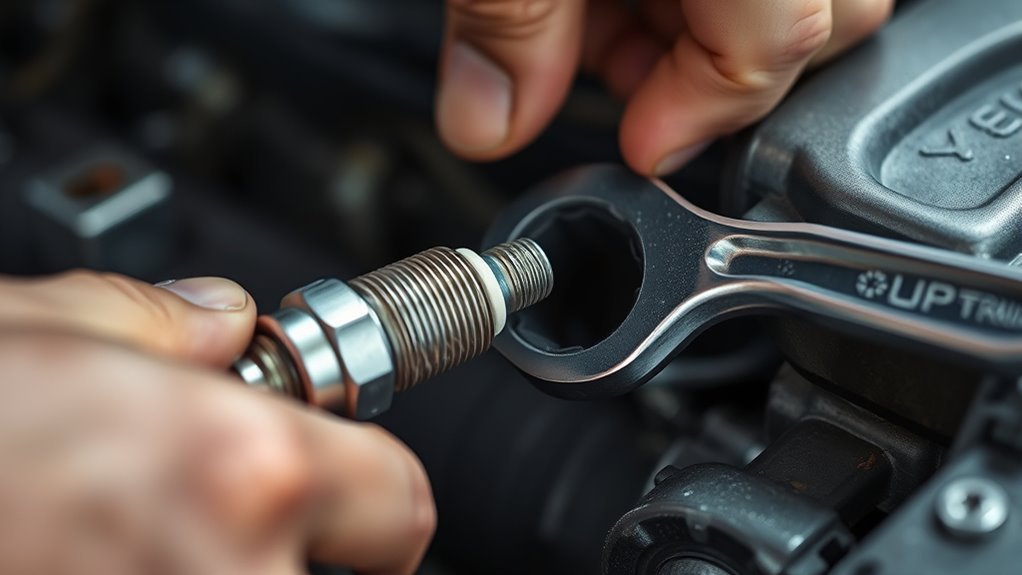

To fix spark plugs, first ensure your engine is cool to prevent burns or damage. Use a spark plug socket and ratchet to carefully remove each plug, being cautious not to damage the threads.
Inspect the spark plugs for electrode wear, gaps, or fouling. If the plugs are lightly dirty but still reusable, clean them gently. Replace any plugs that show heavy wear or damage with new ones that match the manufacturer’s specifications.
When installing new spark plugs, tighten them using a torque wrench to the recommended specification. Reconnect the wires or ignition coils securely to ensure proper function.
After completing the installation, start the engine and observe the idle and acceleration for smoothness. Follow these steps carefully, and stay tuned for detailed guidance and expert tips.
Key Takeaways
- Inspect spark plugs for wear, carbon buildup, or damage to identify issues causing misfires or rough idling.
- Use a spark plug socket and ratchet to carefully remove plugs from a cool engine without damaging threads.
- Clean spark plugs gently with a wire brush or specialized cleaner to remove deposits, avoiding abrasive tools.
- Check and adjust the electrode gap using a gap gauge to match manufacturer specifications before reinstalling.
- Install new or cleaned plugs using a torque wrench to the recommended tightness, then test engine performance for smooth running.
What Spark Plugs Do and Why They Matter
Spark plugs ignite the air-fuel mixture inside your engine’s cylinders, creating the combustion necessary for your vehicle to run.
You need to understand that different spark plug types, copper, platinum, and iridium, impact ignition efficiency and engine performance.
Each type offers distinct advantages in conductivity, durability, and heat dissipation. Choosing the right spark plug type guarantees peak combustion, reducing misfires and improving fuel economy.
When installed correctly, spark plugs maintain consistent ignition timing, which is critical for smooth engine operation.
Ignition efficiency directly affects power output and emissions, so maintaining the proper spark plug type and condition is crucial.
How to Spot Early Spark Plug Problems
You can identify early spark plug problems by recognizing common symptoms like engine misfires, rough idling, or decreased fuel efficiency.
Perform a visual inspection to check for worn electrodes, carbon buildup, or oil deposits on the plugs.
Catching these signs early helps prevent more serious engine issues and guarantees peak performance.
Common Spark Plug Symptoms
Engine misfires, rough idling, and difficulty starting are key indicators that your spark plugs may be failing. A spark plug misfire occurs when the spark fails to ignite the air-fuel mixture properly, causing inconsistent engine performance.
You might notice a decrease in fuel efficiency and sluggish acceleration, which often signals spark plug wear. Additionally, increased exhaust emissions can result from incomplete combustion due to faulty plugs.
Pay attention to engine hesitation during acceleration or an unusual vibration at idle, as these symptoms often correlate with deteriorating spark plugs.
Addressing these issues early prevents further engine damage and maintains peak performance.
Regularly monitoring these symptoms helps you determine when to replace your spark plugs, ensuring your vehicle runs smoothly and efficiently.
Visual Inspection Tips
Although symptoms can indicate problems, a thorough visual inspection often reveals early signs of spark plug wear before performance issues arise. Different spark plug types require specific inspection techniques to identify issues like electrode erosion, deposits, or damage. Use a magnifying glass and good lighting to inspect the plug’s tip and insulator closely.
| Condition | Indicator |
|---|---|
| Normal | Light tan or grayish insulator |
| Carbon Fouling | Black, dry soot on electrode |
| Oil Fouling | Wet, oily deposits on insulator |
| Overheating | White, blistered insulator |
| Electrode Wear | Rounded or eroded electrode tips |
Apply these inspection techniques routinely to catch problems early and maintain engine efficiency.
Tools You Need to Fix Spark Plugs at Home
To fix spark plugs at home, you’ll need a specific set of tools, including a spark plug socket, ratchet, and gap gauge.
Don’t forget essential safety equipment like gloves and safety glasses to protect yourself during the process.
Having the right tools and gear guarantees you can perform the job accurately and safely.
Essential Spark Plug Tools
You’ll need a few essential tools to fix spark plugs efficiently and safely at home. Start with a spark plug socket that fits the specific spark plug types you’re working on, commonly 5/8″ or 13/16″. A ratchet wrench provides the necessary torque for removal and installation. A gap gauge guarantees you set the correct spark plug gap, critical for peak performance and compatible with various spark plug brands.
| Tool | Purpose |
|---|---|
| Spark Plug Socket | Fits specific spark plug sizes |
| Ratchet Wrench | Provides torque for removal |
| Gap Gauge | Measures and adjusts spark plug gap |
Having these tools on hand will streamline the process and prevent damage to your spark plugs or engine components.
Safety Equipment Needed
Since spark plug maintenance involves handling electrical components and working in tight engine spaces, wearing proper safety equipment is essential to protect yourself from injury.
First, put on safety goggles to shield your eyes from debris, dust, and accidental sparks. Your eyes are vulnerable when you’re reaching into the engine bay, so clear, impact-resistant goggles provide vital protection.
Next, wear durable work gloves to safeguard your hands from sharp edges, hot surfaces, and chemical exposure. Choose gloves with good grip and flexibility to maintain dexterity while loosening or tightening spark plugs.
Avoid loose clothing and secure long hair to prevent entanglement.
Finally, make certain the engine is cool and the vehicle is off before starting work. Following these precautions minimizes risks and guarantees a safe spark plug replacement process.
How to Remove Old Spark Plugs
Begin by ensuring the engine is completely cool to prevent burns or damage. Locate the spark plugs, noting different spark plug types: iridium, platinum, or copper. Each type affects lifespan. Use a spark plug socket with a ratchet for removal. Turn counterclockwise gently to avoid thread damage.
| Step | Instruction |
|---|---|
| 1 | Identify plug location |
| 2 | Select appropriate socket size |
| 3 | Attach ratchet to socket |
| 4 | Loosen spark plug slowly |
| 5 | Remove spark plug completely |
Keep track of spark plug lifespan; replace plugs after recommended mileage. Avoid using excessive force to prevent stripping threads or damaging the cylinder head. Proper removal sets the stage for effective inspection and replacement.
How to Check Spark Plugs for Damage or Wear
After removing the spark plugs carefully, inspect each one thoroughly for signs of damage or wear.
Examine the electrode for erosion or rounded edges, which indicate reduced spark efficiency.
Check electrode erosion or rounded edges as signs of decreased spark efficiency and potential engine issues.
Check the insulator for cracks, chips, or discoloration that suggest overheating or combustion issues.
Different spark plug types, such as copper, platinum, or iridium, wear differently; copper plugs erode faster, while iridium plugs last longer but can still show deposits.
Look for heavy carbon buildup, oil fouling, or ash deposits, as these negatively affect engine performance.
Also, measure the gap between electrodes using a feeler gauge to verify it matches manufacturer specifications.
If you notice excessive wear, damage, or improper gap, replacing the spark plugs will restore peak engine performance and prevent misfires.
When and How to Clean Spark Plugs
You should clean spark plugs every 30,000 miles or whenever you observe performance issues like rough idling or misfires. Proper spark plug maintenance extends engine life and guarantees peak combustion.
Begin by removing the plugs carefully, then use recommended cleaning techniques: a wire brush or specialized spark plug cleaner to remove carbon deposits. Avoid abrasive tools that could damage electrodes.
After cleaning, inspect for wear or cracks before reinstallation.
Remember these key points:
- Use a wire brush gently to avoid electrode damage
- Soak plugs briefly in a cleaning solvent for stubborn deposits
- Dry plugs thoroughly before reinstalling
- Check gap settings post-cleaning
- Wear gloves to prevent oil contamination
Consistent cleaning prevents ignition problems and improves fuel efficiency.
Choosing and Installing the Right Replacement Spark Plugs
Although cleaning spark plugs can restore performance, replacing them with the correct type guarantees perfect engine function and longevity.
First, consult your vehicle’s manual to identify the recommended spark plug types based on heat range, thread size, and electrode material.
Choose from reliable spark plug brands known for quality and durability, such as NGK, Bosch, or Denso.
Avoid generic brands that may compromise engine efficiency.
When installing, confirm the new plugs match specifications exactly.
Use a torque wrench to tighten plugs to the manufacturer’s torque setting, preventing over-tightening or under-tightening.
Apply anti-seize compound sparingly on threads if recommended by the brand.
Finally, reconnect spark plug wires or ignition coils securely to confirm maximum electrical contact and combustion efficiency.
How to Test Your Engine After Spark Plug Repair
Once you’ve installed the correct spark plugs and confirmed proper torque and connections, it’s time to verify engine performance. Post repair testing guarantees your work restored peak combustion and prevents future issues.
Start by idling the engine; listen for smooth, consistent operation without misfires or unusual noises. Next, accelerate gently to detect hesitation or power loss. Use a diagnostic scanner to check for error codes related to ignition or fuel delivery.
Monitor the engine’s RPM stability and responsiveness, as irregularities signal unresolved problems. Finally, perform a short test drive under varied conditions to confirm the repair’s effectiveness.
- Feel the engine’s smooth purr, a sign of success
- Notice improved throttle response and power
- Enjoy confidence in your repair skills
- Avoid frustration from lingering faults
- Experience satisfaction in precise, reliable performance
Common Spark Plug Repair Mistakes to Avoid
When performing spark plug repairs, overlooking key details can lead to persistent engine issues or damage.
Avoid common installation errors like over-tightening, which can strip threads or crack the plug, and under-tightening, which causes poor grounding.
Don’t fall for spark plug myths such as reusing old plugs or neglecting proper gap measurement; both compromise performance and fuel efficiency.
Always check the gap with a feeler gauge before installation, and use a torque wrench to guarantee correct tightness.
Use a feeler gauge to check the gap and a torque wrench to ensure proper spark plug tightness.
Avoid contaminating plugs with oil or dirt during handling, as this affects ignition.
Finally, install plugs in the correct firing order and verify they’re compatible with your engine’s specifications to prevent misfires and premature wear.
Following these steps prevents costly repairs and optimizes engine function.
Frequently Asked Questions
Can Bad Spark Plugs Affect Fuel Efficiency?
Yes, bad spark plugs increase fuel consumption by causing incomplete combustion. You should prioritize spark plug maintenance to guarantee efficient ignition, which directly improves fuel efficiency and reduces unnecessary fuel waste in your engine’s operation.
How Often Should Spark Plugs Be Replaced on a New Car?
You should replace spark plugs every 60,000 to 100,000 miles, depending on your new car’s spark plug lifespan. Follow the maintenance schedule strictly to guarantee peak engine performance and prevent misfires or reduced fuel efficiency.
Are Iridium Spark Plugs Better Than Platinum Ones?
Iridium spark plugs offer better spark plug longevity and improved ignition efficiency compared to platinum ones.
You’ll notice enhanced performance, especially under high-stress conditions, making iridium plugs generally superior in a performance comparison.
Can Spark Plug Issues Cause Engine Misfires?
Think of spark plugs as the orchestra’s conductor; if they falter, engine misfires occur. You’ll notice spark plug symptoms like rough idling and poor engine performance, signaling you to inspect and replace them promptly for smooth operation.
Is It Safe to Drive With a Cracked Spark Plug?
You shouldn’t drive with a cracked spark plug because it can cause poor engine performance and misfires.
Prioritize spark plug maintenance by replacing damaged plugs promptly to guarantee ideal engine function and avoid further mechanical issues.
Conclusion
Fixing spark plugs might seem intimidating, but with the right tools and steps, you can master it yourself. Remember, your engine’s heartbeat depends on these small components—neglecting them risks bigger issues down the road.
By spotting problems early, cleaning or replacing plugs properly, and testing your engine afterward, you guarantee smooth performance. Regular maintenance can prevent stalling and improve fuel efficiency.
So, don’t let worn spark plugs stall your progress; take charge and keep your engine firing flawlessly by learning how to fix spark plugs effectively.