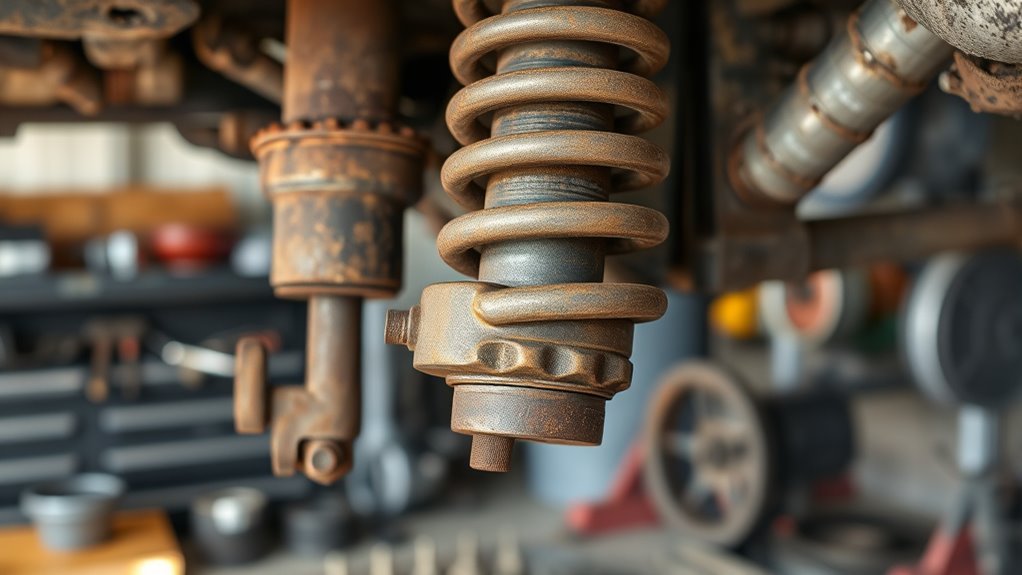

You can expect your shocks and struts to last between 50,000 and 100,000 miles, but this varies based on your driving habits and road conditions. Shocks and struts play a crucial role in your vehicle’s suspension system, affecting both safety and comfort.
Aggressive driving, heavy loads, and rough terrain can shorten their lifespan considerably. Regular inspections help catch wear signs like fluid leaks, bouncing, or uneven tire wear early.
Choosing quality components and understanding their role improves safety and comfort. Exploring these factors will help you maintain ideal suspension performance.
Key Takeaways
- Shocks and struts typically last between 50,000 and 100,000 miles depending on driving conditions and vehicle type.
- Rough terrain, heavy loads, and aggressive driving can significantly shorten their lifespan.
- Regular inspections help detect leaks, uneven tire wear, and damage indicating worn shocks or struts.
- Signs of wear include excessive bouncing, increased braking distance, vehicle swaying, and a harsh ride.
- Choosing quality, OEM-spec components with good warranties ensures longer-lasting shocks and struts.
How Long Do Shocks and Struts Last?
Although shocks and struts are designed to last tens of thousands of miles, their actual lifespan depends on various factors such as driving conditions, vehicle type, and maintenance.
Typically, you can expect shocks and struts to last between 50,000 and 100,000 miles.
Shocks and struts generally last from 50,000 to 100,000 miles under normal driving conditions.
However, if you encounter rough terrain or frequent heavy loads, this duration may decrease.
To maximize their longevity, follow maintenance tips like regular inspections for leaks, corrosion, and unusual wear.
When replacement becomes necessary, evaluate your options carefully. OEM parts generally offer better durability, while aftermarket components might provide cost savings.
Remember, timely replacement is essential to maintaining vehicle stability and safety.
What Driving Habits Affect Their Lifespan?
Your driving habits directly influence how quickly shocks and struts wear out.
Aggressive acceleration, hard braking, and sharp turns increase stress on these components.
Additionally, frequently driving on rough or uneven roads accelerates their deterioration.
Aggressive Driving Impact
Several aggressive driving habits can considerably shorten the lifespan of your shocks and struts. Rapid acceleration, hard braking, and frequent sharp turns increase stress on these components, accelerating wear.
If you drive a performance vehicle, the higher speeds and enhanced handling capabilities demand more from your suspension, causing shocks and struts to degrade faster.
Similarly, off road driving exposes your vehicle to uneven terrain and sudden jolts, which strain these parts beyond normal limits.
Consistently pushing your suspension through aggressive maneuvers reduces its ability to absorb impacts effectively, leading to premature failure.
To maximize lifespan, avoid harsh driving patterns and adapt your style to the demands of your vehicle and environment.
Properly maintaining your shocks and struts under aggressive use is essential for vehicle safety and performance.
Road Condition Effects
Beyond driving style, the conditions of the roads you frequent greatly influence how quickly shocks and struts wear out. Different road types and surface conditions impose varying stress levels on your vehicle’s suspension system. Rough or uneven surfaces accelerate the degradation of these components, reducing their effective lifespan.
Consider how these common road factors impact your shocks and struts:
- Gravel or unpaved roads cause constant vibrations and impacts.
- Potholes and cracks create sudden, jarring forces.
- Wet or icy surfaces increase slippage, affecting suspension response.
- Urban roads with frequent speed bumps lead to repetitive compression.
- Off-road trails expose shocks and struts to debris and uneven terrain.
How Do Road Conditions Impact Shocks and Struts?
Although shocks and struts are designed to absorb impacts and maintain vehicle stability, rough or uneven road conditions can accelerate their wear. When you frequently drive on poorly maintained roads, the increased vibrations and jolts place additional stress on these components.
Poor road maintenance, such as potholes or loose gravel, forces your shocks and struts to work harder to dampen forces, leading to premature fatigue and potential seal failures.
Conversely, well-maintained roads provide a smoother driving environment, reducing strain on suspension parts and extending their lifespan.
Understanding the specific driving environment you encounter helps you anticipate how quickly shocks and struts may degrade, allowing you to plan maintenance or replacements more effectively and avoid compromised vehicle handling or safety issues.
Why Are Regular Inspections Important for Shocks and Struts?
Since road conditions directly affect the wear on your shocks and struts, keeping a close eye on their condition becomes necessary.
Regular inspections guarantee peak shock maintenance and maintain strut performance, preventing premature failure.
When you inspect them routinely, you can detect:
- Fluid leaks indicating seal damage
- Uneven tire wear signaling suspension issues
- Corrosion or physical damage on components
- Diminished damping efficiency affecting ride comfort
- Loose or worn mounting hardware compromising stability
These checks help you address minor problems before they escalate, guaranteeing your vehicle handles safely and ride quality remains consistent.
Prioritizing inspections supports timely replacements and reduces costly repairs, enhancing overall suspension reliability and performance.
What Are the Signs Your Shocks and Struts Need Replacing?
How can you tell when your shocks and struts need replacing? Key shock symptoms include excessive bouncing after hitting a bump, increased braking distance, and uneven tire wear.
You may also notice your vehicle swaying or leaning during turns, indicating strut issues. Another sign is fluid leakage around the shock or strut body, which compromises their damping ability.
Additionally, if your ride feels harsh or unstable on rough roads, it signals worn components. Strut issues often cause noise such as clunking or rattling when driving over uneven surfaces.
Paying attention to these symptoms helps you identify failing shocks and struts early, ensuring your vehicle maintains proper handling, stability, and safety on the road.
Regular monitoring prevents further suspension damage and costly repairs.
How Can You Test If Shocks and Struts Are Worn Out?
You can start by performing a visual inspection for leaks, dents, or corrosion on your shocks and struts.
Next, try the bounce test by pressing down on each corner of your vehicle and observing how it responds.
Additionally, check your tires for uneven wear patterns, which often indicate worn suspension components.
Visual Inspection Indicators
Although shocks and struts don’t always show obvious signs of wear, performing a visual inspection can reveal critical indicators of their condition.
Using a detailed inspection checklist, you can identify visual signs that suggest deterioration or failure.
Pay attention to:
- Leaking hydraulic fluid on the shock or strut body
- Damaged or corroded mounting hardware
- Uneven tire wear patterns indicating poor dampening
- Cracked or worn rubber bushings and seals
- Visible dents, bends, or deformation on the shock or strut shaft
Bounce Test Method
When should you perform a bounce test to assess the condition of your shocks and struts? You should conduct this simple yet effective diagnostic method whenever you suspect compromised suspension health or after noticeable changes in ride quality.
To perform the bounce test, firmly press down on one corner of the vehicle and release quickly. Observe the number of oscillations: if the vehicle bounces more than once or twice before settling, it indicates worn shocks or struts.
This method gauges suspension damping efficiency, as healthy shocks and struts absorb energy and reduce oscillations effectively.
Keep in mind, the bounce test offers a quick preliminary check but should be complemented by a professional inspection for thorough suspension health assessment.
Uneven Tire Wear
Since worn shocks and struts affect suspension stability, they often cause uneven tire wear patterns that you can inspect visually.
Uneven wear signals compromised suspension health and may indicate issues with tire alignment linked to deteriorated shocks or struts.
To test if shocks and struts are worn out, look for these tire wear signs:
- Feathered edges indicating misalignment or suspension damage
- Cupping or scalloping caused by inconsistent damping
- Excessive wear on one side reflecting poor shock absorption
- Patchy tread wear patterns showing uneven load distribution
- Rapid wear compared to expected tire lifespan
If you notice these patterns, it’s essential to assess your vehicle’s suspension and tire alignment promptly.
Addressing worn shocks and struts restores suspension health and prevents further tire damage.
How Do You Choose Quality Shocks and Struts?
How can you guarantee that the shocks and struts you select will perform reliably and last as long as possible?
Start by researching reputable shock absorber brands known for rigorous quality control and durable materials.
Compare strut performance ratings to evaluate damping efficiency, heat resistance, and lifespan under varied driving conditions.
Prioritize components that meet or exceed OEM specifications to ascertain compatibility and ideal function.
Consider products incorporating advanced technologies like gas-charged or monotube designs, which enhance responsiveness and reduce wear.
Avoid choosing solely based on price; lower-cost options often sacrifice durability and performance.
Finally, verify warranty terms. Comprehensive coverage indicates manufacturer confidence.
How Does Replacing Shocks and Struts Improve Safety and Comfort?
Replacing worn shocks and struts directly enhances your vehicle’s handling and stability, greatly improving both safety and comfort.
By maintaining peak suspension performance, you guarantee better control, especially during sudden maneuvers.
This upgrade refines ride quality, minimizing vibrations and jolts transmitted to the cabin.
You’ll notice improved braking efficiency and reduced tire wear, which contributes to safer driving conditions.
Specifically, new shocks and struts provide:
- Enhanced traction on uneven surfaces
- Reduced body roll in corners
- More consistent tire contact with the road
- Improved absorption of road imperfections
- Increased driver confidence and comfort
Frequently Asked Questions
Can I Replace Shocks and Struts Myself or Should I Hire a Mechanic?
You can attempt a DIY replacement if you have technical skills and proper tools, but shocks and struts require precision. For safety and ideal performance, it’s best to seek professional assistance unless you’re fully confident in your abilities.
Are Aftermarket Shocks and Struts as Good as OEM Parts?
Aftermarket shocks and struts often match OEM performance, offering benefits like cost savings and wider options. However, OEM parts guarantee exact fit and reliability.
You should weigh aftermarket benefits against OEM comparison for your specific vehicle needs.
How Much Does It Typically Cost to Replace Shocks and Struts?
Replacement costs for shocks and struts typically range from $200 to $600, depending on shock types like twin-tube or monotube. Labor and parts quality influence pricing, so expect variations based on vehicle make and model.
Do Shocks and Struts Affect My Vehicle’s Fuel Efficiency?
Poor shocks and struts can reduce fuel economy impact by up to 15%. You’ll notice decreased ride comfort影响 and more energy wasted on suspension movement, so maintaining them improves both fuel efficiency and driving smoothness.
Can Worn Shocks and Struts Cause Uneven Tire Wear?
Yes, worn shocks and struts can cause uneven tire wear by compromising suspension health, leading to poor tire alignment. This misalignment increases irregular tire contact with the road, accelerating uneven tread wear and reducing tire lifespan.
Conclusion
You’ll want to monitor your shocks and struts regularly, test their performance consistently, and replace them promptly when signs of wear appear.
By maintaining proper driving habits, avoiding harsh road conditions, and choosing quality parts, you guarantee maximum vehicle control, enhanced safety, and improved ride comfort.
Remember, timely inspections and replacements protect your suspension system and preserve handling precision.
This approach will also extend the lifespan of your shocks and struts effectively, ensuring you know how long do shocks and struts last.