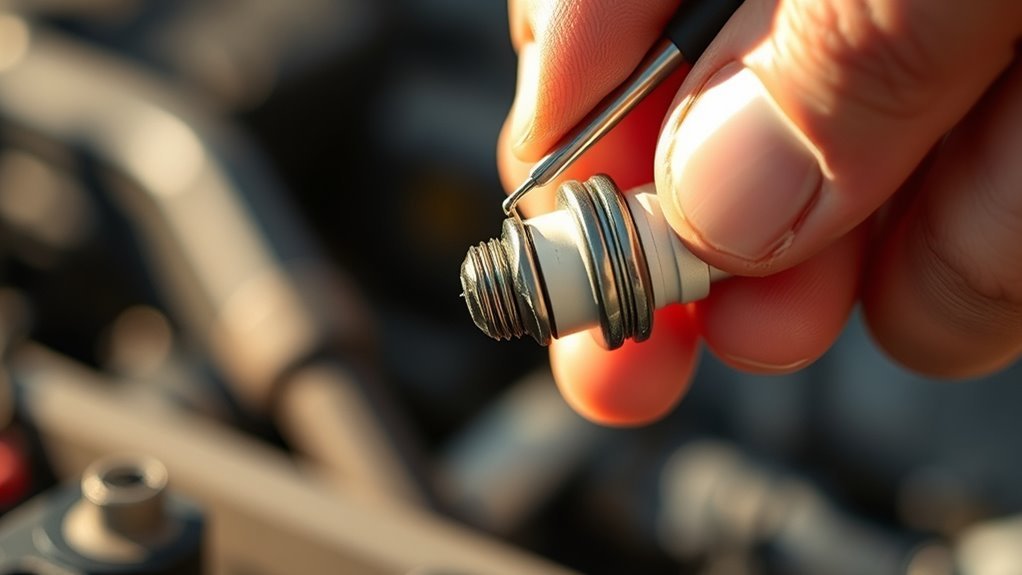

To gap spark plugs properly, first check your vehicle’s manual for the exact specification. Use a feeler or gap gauge to measure the distance between the center and ground electrode.
If the gap’s off, gently bend the ground electrode with a gapping tool until it matches the recommended width. Always measure carefully without forcing the gauge to avoid damage.
Re-measure to confirm accuracy before installing. Mastering these steps guarantees smooth engine performance and fuel efficiency, with further insights available ahead.
Key Takeaways
- Check the vehicle’s owner manual for the correct spark plug gap specification before starting.
- Use a spark plug gap gauge or feeler gauge to measure the existing gap accurately.
- Adjust the gap by gently bending the ground electrode with a proper spark plug gap tool.
- Re-measure the gap after adjustment to ensure it matches the manufacturer’s recommended size.
- Inspect the plug for electrode damage or deposits and replace if necessary for consistent spark performance.
Why Proper Spark Plug Gapping Matters
Although it may seem minor, proper spark plug gapping directly affects your engine’s performance and efficiency. When you set the correct gap, you guarantee the spark plug generates a strong, consistent spark, critical for maximum combustion.
If the gap is too wide, the spark may weaken or misfire, reducing spark plug performance and causing incomplete fuel burning. Conversely, a gap too narrow can limit the spark’s reach, leading to inefficient combustion and decreased engine efficiency.
Maintaining the precise gap allows the ignition system to operate within designed parameters, promoting better fuel economy and reduced emissions.
How to Find the Right Spark Plug Gap for Your Car
Establishing the correct spark plug gap starts with identifying the specification designed for your vehicle. Consult your owner’s manual or manufacturer’s service guide to find the recommended spark plug specifications, including the precise gap measurement.
This gap directly influences engine performance by affecting the spark’s strength and consistency during ignition. Using a gap that’s too wide or too narrow can cause misfires, poor fuel economy, and reduced power output.
Spark plug gap impacts ignition quality, affecting fuel efficiency, power, and preventing engine misfires.
If you’re installing new plugs, verify that the gap matches the stated value before installation. Remember, different engines and models require varying gap sizes, so never assume a universal measurement.
Adhering strictly to these specifications guarantees peak combustion, maximizing efficiency and prolonging engine life.
Accurate gap measurement is a foundational step in maintaining your vehicle’s performance and reliability.
Tools You’ll Need for Spark Plug Gapping at Home
To gap spark plugs accurately at home, you’ll need specific tools designed for precision.
Essential items include a spark plug gap gauge or feeler gauge to measure the electrode gap precisely.
Additionally, a spark plug gap tool or gauge adjustment tool will help you adjust the gap to your vehicle’s specifications without damaging the plug.
Essential Spark Plug Tools
Before you begin gapping your spark plugs, gather the essential tools that facilitate accuracy and efficiency. Different spark plug types require specific gapping techniques, so having the right equipment is vital for precise adjustments.
Here’s a concise list of tools you’ll need:
| Tool | Purpose | Notes |
|---|---|---|
| Feeler Gauge | Measures gap size | Use for precise gap settings |
| Spark Plug Gap Tool | Adjusts electrode gap | Suitable for various plug types |
| Wire Gauge | Alternative gap measurement | Flexible, easy to use |
| Gapper Tool | Fine-tunes gap | Ideal for delicate adjustments |
These tools guarantee you can methodically set the correct gap, optimizing engine performance and longevity. Proper use of each tool supports the specific gapping techniques required for your spark plug types.
Measuring Instruments Needed
Accurate measurement is critical when gapping spark plugs, and selecting the right instruments will make this task straightforward and reliable.
To guarantee precise gapping techniques, you’ll need high-quality spark plug gauges designed specifically for this purpose. These gauges come in several types, including wire, coin, and feeler gauges, each offering distinct advantages depending on your preference and the required gap specification.
A wire gauge provides quick measurement by sliding the wire between electrodes, while a feeler gauge offers exact thickness readings, allowing you to adjust the gap with confidence.
For best results, choose a spark plug gauge calibrated to standard thickness increments. Using these tools methodically guarantees consistent electrode spacing, essential for ideal engine performance and longevity during your spark plug maintenance.
How to Handle Spark Plugs Without Damaging Them
Although spark plugs may seem sturdy, handling them with care is essential to avoid damaging their delicate electrodes or insulating ceramic. Proper handling techniques are vital for effective spark plug care and ensuring accurate gap adjustments.
When working with spark plugs, follow these guidelines:
- Always hold the spark plug by the metal shell, avoiding direct contact with the electrode or ceramic insulator.
- Use a clean, soft cloth to handle and clean spark plugs, preventing contamination or scratching.
- Avoid dropping spark plugs, as impact can deform electrodes or crack the insulator.
- Store spark plugs in a secure container to protect them from dust, moisture, and mechanical damage.
Implementing these handling techniques preserves spark plug integrity and guarantees reliable performance during installation and use.
How to Measure and Adjust Your Spark Plug Gap
You’ll start by measuring the spark plug gap using a feeler gauge, ensuring it matches the manufacturer’s specifications.
If the gap is incorrect, gently adjust it by bending the ground electrode with a proper tool to avoid damage.
Accurate measurement and careful adjustment are critical for peak engine performance.
Measuring Spark Plug Gap
Measuring the spark plug gap requires a feeler gauge or a specialized gap tool to confirm the electrode spacing matches the manufacturer’s specifications.
First, identify your spark plug type, as gapping techniques vary slightly between conventional, platinum, and iridium plugs.
Next, select the correct tool: wire gauges for precision or a tapered gauge for quick checks. Insert the gauge between the center and ground electrodes, confirming a slight drag without forcing it. If the gap differs from the recommended value, note the measurement for adjustment.
Remember to:
- Verify the manufacturer’s gap specification for your engine.
- Use the appropriate gauge thickness corresponding to the desired gap.
- Measure at multiple points along the electrode to check for uniformity.
- Handle electrodes carefully to avoid bending or damaging them.
These steps confirm accurate measurement before adjustment.
Adjusting Spark Plug Gap
Once you’ve confirmed the current gap with your feeler or tapered gauge, it’s time to make precise adjustments to achieve the manufacturer’s specified spacing.
Begin by identifying your spark plug type, as different designs require distinct handling.
For standard or copper plugs, gently bend the ground electrode outward with a spark plug gap tool to increase spacing.
For iridium or platinum types, exercise extra caution to avoid damaging the delicate electrode tips.
Avoid excessive force; incremental adjustments facilitate accuracy. After each tweak, remeasure the gap measurement with your gauge until you hit the exact specification.
Remember, maintaining the correct gap optimizes ignition efficiency and engine performance.
Proper technique in adjusting spark plug gap guarantees your vehicle runs smoothly and reliably.
How to Double-Check Your Spark Plug Gap Before Installing
Before installing your spark plugs, confirm the gap with a reliable feeler gauge to guarantee peak engine performance.
Accurate spark plug inspection and gap verification are critical to avoid misfires and inefficient combustion. Follow these steps methodically:
Proper spark plug inspection and gap checking are essential to ensure efficient combustion and prevent engine misfires.
Clean the spark plug electrode to remove deposits that may affect measurement accuracy.
Select the feeler gauge corresponding to the manufacturer’s specified gap. Gently slide the gauge between the center and ground electrodes; it should fit snugly without forcing.
Repeat the measurement at multiple points to verify uniform gap width around the electrode.
If the gauge doesn’t fit properly, adjust the gap carefully with a gap tool, then recheck.
This precise verification process prevents installation errors and promotes maximum engine function.
Troubleshooting Common Spark Plug Gap Problems
Even with careful gap verification, you may encounter issues such as inconsistent measurements, difficulty adjusting the gap, or deviations from manufacturer specifications.
Common issues include worn or damaged electrodes causing gap irregularities and inaccurate readings.
To troubleshoot, start by inspecting the plug for electrode erosion or deposits; replace the plug if damaged.
Use a high-quality feeler gauge or gap tool to guarantee precise measurement.
If the gap is too tight or wide, carefully bend the ground electrode using the tool’s adjusting feature, avoiding excessive force that could deform the electrode.
Re-measure after adjustment to confirm compliance with specifications.
Consistently check multiple plugs to detect manufacturing variations.
Addressing these common issues methodically guarantees ideal spark plug performance and engine efficiency.
Frequently Asked Questions
Can Incorrect Spark Plug Gaps Cause Engine Misfires?
Yes, incorrect spark plug gaps disrupt spark plug performance, causing weak or inconsistent sparks. This leads to engine misfires.
You can detect these misfires through engine diagnostics tools, ensuring ideal ignition and combustion efficiency.
How Often Should Spark Plug Gaps Be Checked or Adjusted?
Wondering when to check your spark plug gaps? You should perform gap measurement during every spark plug maintenance, typically every 30,000 miles or per your vehicle’s manual, to guarantee peak engine performance and prevent misfires.
Are Gapped Spark Plugs Different for Gasoline and Diesel Engines?
You won’t find gapped spark plugs for diesel engines since they use glow plugs or compression ignition. Spark plug types and gap settings are specific to gasoline engines, directly impacting engine performance and combustion efficiency.
Can Spark Plug Gaps Affect Fuel Efficiency?
Oh sure, neglecting spark plug gaps magically improves your car’s mileage! In reality, improper gaps degrade spark plug performance, disrupt ideal fuel combustion, and reduce fuel efficiency.
You must maintain precise gaps for peak engine function.
Is It Necessary to Gap New Spark Plugs Before Installation?
Yes, you should always gap new spark plugs using spark plug tools to guarantee precise gap measurement. Proper gap measurement optimizes ignition performance and prevents misfires, so don’t skip this essential installation step.
Conclusion
By gapping your spark plugs correctly, you guarantee peak engine performance, improve fuel efficiency, and prevent misfires. You’ll need the right tools, a steady hand, and careful measurement to achieve precise gaps. Always handle plugs gently, adjust gaps methodically, and double-check your work before installation.
With attention to detail and consistent technique, you’ll maintain your vehicle’s reliability and extend spark plug life—keeping your engine running smoothly, efficiently, and reliably every time. Properly gapping spark plugs is essential to ensure your engine operates at its best and lasts longer.