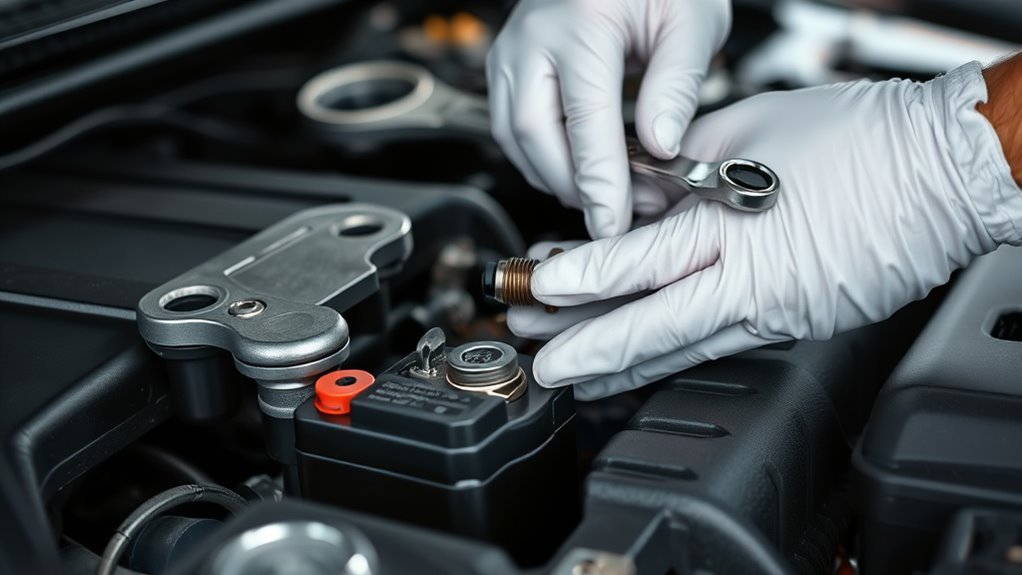

You should always disconnect your battery when changing spark plugs to avoid electrical shorts, sparks, or accidental engine starts. Disconnecting the negative terminal first guarantees your safety and protects your vehicle’s ignition system and sensitive electronics.
Using insulated tools minimizes risk further. Failing to disconnect the battery can cause wiring damage or sensor issues. Taking this precaution helps prevent injuries and costly repairs.
Understanding the proper steps and potential risks will help you handle spark plug maintenance confidently and safely.
Key Takeaways
- Always disconnect the negative battery terminal before replacing spark plugs to prevent electrical shorts and sparks.
- Disconnecting the battery protects ignition components and electronic systems from damage during maintenance.
- Battery disconnection eliminates risk of accidental engine cranking and electrical shock while working on spark plugs.
- Reconnect the battery terminals in correct order: positive first, then negative, to ensure safety and avoid voltage surges.
- Using insulated tools and verifying the vehicle is off enhances safety when disconnecting the battery for spark plug changes.
Do You Need to Disconnect the Battery When Changing Spark Plugs?
Why should you disconnect the battery when changing spark plugs? Disconnecting the battery guarantees battery safety by preventing accidental electrical shorts or sparks during the procedure.
When you remove or install a spark plug, the ignition system is active, and any contact between metal tools and live circuits can cause a short, damaging components or causing injury.
By disconnecting the negative battery terminal, you cut power to the ignition system, eliminating the risk of electrical shock or unintended engine cranking.
This step safeguards both you and your vehicle’s electronic systems.
Although some technicians may skip this, prioritizing battery safety by disconnecting the battery is a best practice that minimizes hazards and protects the integrity of the spark plug replacement process.
When Should You Disconnect the Battery Before Changing Spark Plugs?
Although you might be enthusiastic to start, you should always disconnect the negative battery terminal before removing or installing spark plugs. This step is essential during any spark plug maintenance to guarantee battery safety and prevent electrical shorts.
Disconnect the battery right after opening the hood and before touching any ignition components. Doing so eliminates the risk of accidental sparks or voltage surges that could damage the ignition coil or cause injury.
Additionally, disconnecting the battery helps protect sensitive electronic modules from electrical interference during the maintenance process. Following this timing guarantees a safer working environment and preserves the integrity of your vehicle’s electrical system.
Prioritize this step every time you perform spark plug maintenance to maintain both battery safety and component longevity.
How to Safely Disconnect and Reconnect Your Battery
After disconnecting the negative battery terminal as recommended, you’ll need to follow specific steps to safely remove and later reconnect the battery.
First, verify the vehicle is off and the key is removed. Use insulated tools to loosen the negative terminal clamp to prevent electrical hazards.
Once the negative terminal is safely disconnected, proceed to the positive terminal, following the same method.
When removing the battery, lift it carefully, avoiding contact with metal surfaces to maintain battery safety.
To reconnect, attach the positive terminal first, tightening securely, then connect the negative terminal last. This sequence minimizes the risk of short circuits.
Always inspect terminals for corrosion and clean if necessary before reassembly to guarantee proper electrical contact and maintain battery safety.
What Happens If You Don’t Disconnect the Battery First?
If you don’t disconnect the battery before changing spark plugs, you risk causing electrical shorts or damaging sensitive components in your vehicle’s ignition system. This oversight compromises battery safety and may lead to costly repairs. Spark plug maintenance requires a controlled environment to prevent accidental sparks or current flow.
| Potential Issue | Consequence |
|---|---|
| Electrical short circuit | Damage to wiring and fuses |
| Ignition system interference | Malfunction or sensor failure |
| Unexpected engine start | Personal injury risk |
Failing to guarantee battery safety disrupts the spark plug maintenance process. Unintended electrical flow can activate ignition coils, causing shocks or damage. Always disconnect the battery to protect your vehicle’s electronics and yourself.
Tips to Avoid Electrical Issues When Changing Spark Plugs
When changing spark plugs, you must take specific precautions to prevent electrical issues that can damage your vehicle or cause injury.
First, always disconnect the battery to eliminate the risk of short circuits during spark plug maintenance.
Use insulated tools to avoid accidental electrical contact and wear gloves rated for electrical safety.
Before removing spark plugs, verify the ignition system is off and cool to prevent shocks or burns.
Handle spark plug wires carefully; avoid pulling on the wires themselves to prevent damage to the ignition coils.
After installation, double-check all connections and verify no tools or debris remain in the engine bay.
Following these steps guarantees safe spark plug maintenance and protects your vehicle’s electrical system from unintended harm.
Frequently Asked Questions
What Tools Are Needed to Change Spark Plugs?
You’ll need a spark plug socket, a socket wrench, an extension bar, and a torque wrench. These tools help you remove and install spark plugs precisely, ensuring proper fit and preventing damage to the threads or spark plug itself.
How Often Should Spark Plugs Be Replaced?
You should replace spark plugs every 30,000 to 100,000 miles, depending on their type and your vehicle’s maintenance schedule. Monitoring spark plug lifespan guarantees peak engine performance and prevents misfires or fuel inefficiency.
Can I Change Spark Plugs Myself or Need a Mechanic?
Changing spark plugs yourself is like threading a needle in a storm; you can attempt DIY spark plugs if equipped with proper tools and knowledge, but seeking professional assistance guarantees precision, safety, and peak engine performance.
What Are the Signs of Worn-Out Spark Plugs?
You’ll notice spark plug symptoms like rough idling, decreased engine performance, misfires, and poor fuel efficiency. These signs indicate worn-out spark plugs that disrupt combustion, so replacing them promptly guarantees smoother engine operation and peak power.
How Do I Gap Spark Plugs Correctly?
You gap spark plugs correctly by using a feeler gauge to measure the gap measurement specified in your vehicle’s manual.
Adjust the electrode carefully without bending it, ensuring the gap matches the recommended size for ideal performance.
Conclusion
Think of disconnecting your battery like turning off the main water valve before fixing a leaky pipe—skipping this step can lead to unexpected sparks or electrical shorts. While some mechanics skip it without issues, studies show that disconnecting reduces the risk of damaging sensitive electronics by up to 40%.
To protect your vehicle’s systems and guarantee safety, always disconnect the battery before changing spark plugs. This small step prevents costly repairs and ensures a safer working environment when you change spark plugs.