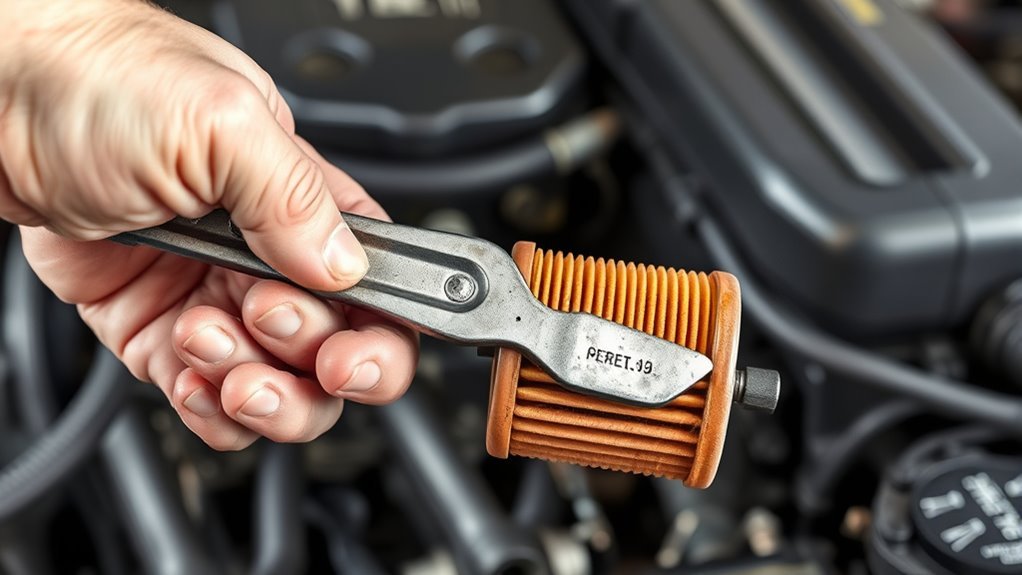

To use an oil filter wrench, first identify your filter type—spin-on or cartridge—and select the correct wrench style and size. Position the wrench firmly around the filter, ensuring proper alignment for a secure grip.
Turn counterclockwise with steady pressure to loosen the filter, avoiding slips or excessive force that could cause damage. If the filter is stubborn, apply penetrating oil and use appropriate techniques to ease removal.
Follow proper steps to remove and replace your filter smoothly, and you can explore more detailed tips and best practices.
Key Takeaways
- Secure the wrench firmly around the oil filter for a strong grip and proper leverage.
- Use band wrenches for smooth filters and cap wrenches for hexagonal filter ends.
- Apply steady counterclockwise pressure to loosen the oil filter without slipping.
- Align the wrench correctly to avoid damaging the filter or surrounding components.
- If the filter is stubborn, apply penetrating oil and let it sit before attempting removal again.
Get Your Car Ready for an Oil Change
Before you begin using the oil filter wrench, make sure your car is securely positioned on a flat surface and the engine is cool. This step is critical for safety and effective oil change preparation.
Engage the parking brake and use wheel chocks to prevent movement. Locate the oil drain plug and filter, confirming you have the correct tools and replacement parts on hand.
Gather engine maintenance essentials such as gloves, a drain pan, and rags. Verify you have the right oil type and quantity specified by your vehicle manufacturer.
Proper preparation minimizes the risk of spills and damage during the oil filter removal process. Taking these precautions guarantees your oil change proceeds smoothly, protecting both you and your vehicle’s engine components.
Choose the Right Oil Filter Wrench for Your Car
Selecting the right oil filter wrench depends on the type and size of your car’s oil filter. First, identify your oil filter type, spin-on or cartridge, as each requires a different wrench style. For spin-on filters, cup or band wrenches work well.
Cartridge filters often need a socket-style wrench matching the end cap.
Next, measure your oil filter diameter to determine the correct wrench size. Using a wrench too large or small can damage the filter or hinder removal. Adjustable wrenches offer versatility across wrench sizes but can slip if not secured properly.
Consult your vehicle’s manual or oil filter specifications to confirm filter dimensions. By matching wrench sizes precisely to your oil filter types, you guarantee a secure fit, reducing the risk of damage during maintenance.
How to Use an Oil Filter Wrench to Loosen the Filter
Once you’ve matched the wrench size to your oil filter, position the wrench securely around the filter to guarantee a firm grip. For different oil filter types, select the appropriate wrench technique: band wrenches for smooth filters, cap wrenches for hexagonal ends, and claw wrenches for stubborn filters.
Apply steady counterclockwise pressure to loosen the filter, ensuring you don’t slip and damage the filter or surrounding components.
| Oil Filter Type | Recommended Wrench Technique |
|---|---|
| Smooth Cylinder | Band Wrench |
| Hexagonal End | Cap Wrench |
| Tight/Corroded | Claw Wrench |
| Small Space Access | Strap Wrench |
Maintaining steady force and correct wrench alignment optimizes your leverage while minimizing filter damage.
Tips for Loosening Stubborn Oil Filters Without Damage
If your oil filter resists loosening despite using the correct wrench, employing specific techniques can prevent damage.
First, verify the oil filter type; some filters, especially cartridge types, require different approaches than spin-on filters.
Identify your oil filter type, as cartridge and spin-on filters need different removal methods.
Apply penetrating oil around the base of the filter and let it sit for 10-15 minutes to loosen corrosion or debris from poor filter installation.
Use a strap wrench or adjustable oil filter wrench that suits the filter’s size and design, ensuring even pressure distribution to avoid crushing.
Gently tap around the filter’s base with a rubber mallet to break the seal if necessary.
Avoid excessive force, which can damage the filter or housing, complicating removal.
These steps respect the filter installation integrity and help maintain system reliability.
How to Remove and Replace Your Oil Filter
Removing and replacing your oil filter involves a series of precise steps to guarantee a proper seal and avoid leaks.
First, position a drain pan beneath the filter to catch residual oil. Use the appropriate oil filter wrench for your oil filter type, whether cartridge, spin-on, or other designs, and turn counterclockwise to loosen it.
Once removed, clean the mounting surface thoroughly. Apply a thin layer of fresh oil to the new filter’s rubber gasket to enhance sealing.
Screw the new filter on by hand until the gasket contacts the base, then tighten it an additional 3/4 turn; avoid over-tightening.
Follow your vehicle’s recommended oil change frequency to maintain engine health.
Finally, refill oil and check for leaks after running the engine briefly.
Frequently Asked Questions
Can I Use an Oil Filter Wrench on a Motorcycle?
Yes, you can use an oil filter wrench on a motorcycle, but make sure it fits the specific filter type. Proper tool selection is essential for effective motorcycle maintenance and avoiding damage during filter removal or installation.
How Often Should I Replace My Oil Filter Wrench?
Think of your oil filter wrench like a trusty tool in a craftsman’s kit; replace it when you notice wear or slipping. Prioritize oil filter maintenance by checking wrench durability regularly to guarantee precise, effective filter changes.
Are Oil Filter Wrenches Compatible With All Oil Filter Brands?
Oil filter wrenches aren’t universally compatible with all oil filter types. You’ll need to match wrench compatibility to the filter’s size and design, ensuring a secure fit for effective removal without damaging the filter or vehicle components.
Can an Oil Filter Wrench Damage the Oil Pan?
Like a knight wielding a sword, you must handle the oil filter wrench carefully to avoid damage prevention failures. Improper use can dent or crack the oil pan, so apply steady, controlled force to protect it effectively.
What Safety Precautions Should I Take When Using an Oil Filter Wrench?
You should wear gloves for oil filter safety and guarantee proper wrench handling by applying steady pressure without over-tightening.
Always work on a cooled engine and position yourself to avoid slipping or injury during removal or installation.
Conclusion
Now that you know how to use an oil filter wrench, you’re equipped to tackle your oil change confidently. Think of the wrench as your key to releasing a smoother maintenance process—without the struggle or damage.
Remember, choosing the right tool and applying steady pressure are your best allies. With practice, loosening even the toughest filters becomes second nature.
This ensures your engine stays healthy and your hands stay clean. Using an oil filter wrench correctly is essential for an efficient and hassle-free oil change.