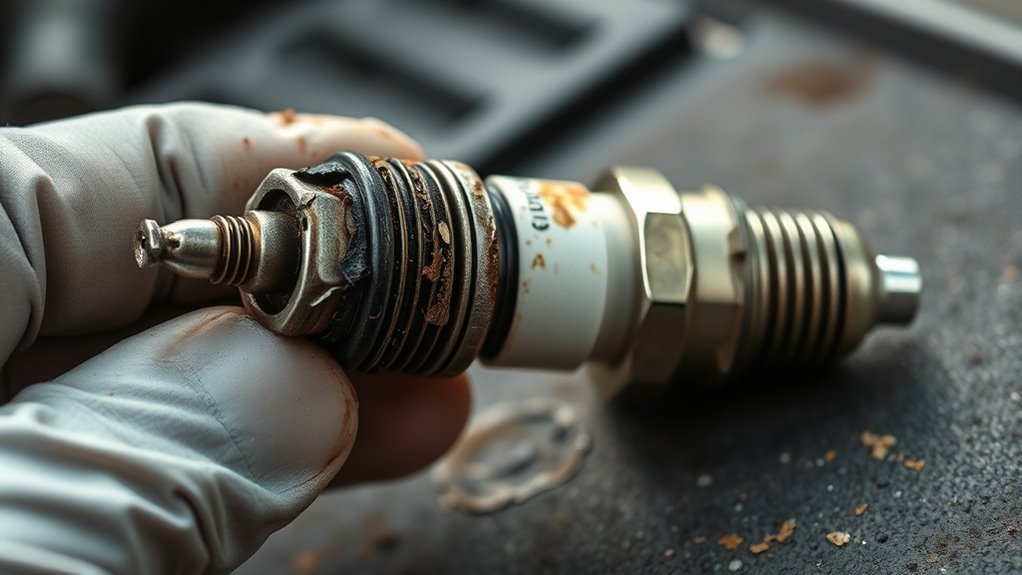

What Causes Spark Plugs to Go Bad? Several factors contribute to the deterioration of spark plugs, primarily heat stress, fouling deposits, and improper gap settings that weaken ignition performance.
Poor fuel quality can leave damaging carbon or chemical residues on the electrodes. Additionally, aggressive driving and frequent idling contribute to buildup and electrode wear.
Oil leaks also contaminate spark plugs, leading to misfires. Maintaining correct gaps and keeping plugs clean is essential for their longevity. Keep exploring to understand how specific conditions and driving habits impact spark plug health.
Key Takeaways
- Electrode wear and carbon buildup from prolonged use reduce spark plug efficiency and cause misfires.
- Overheating and incorrect ignition timing lead to electrode erosion and spark plug failure.
- Low-quality fuel and impurities cause fouling and accelerate spark plug degradation.
- Oil contamination from engine leaks coats electrodes, resulting in misfiring and poor ignition.
- Frequent short trips and excessive idling cause incomplete combustion and carbon residue buildup on plugs.
How Spark Plugs Work and Why They Wear Out
Although you mightn’t see them often, spark plugs play a critical role in your engine’s performance by igniting the air-fuel mixture inside the combustion chamber.
Different spark plug types, such as copper, platinum, and iridium, offer varying durability and conductivity. This impacts ignition efficiency within your ignition system.
Choosing between copper, platinum, and iridium spark plugs affects durability and ignition efficiency.
When your ignition system sends a high-voltage electrical pulse, the spark plug creates a spark that initiates combustion.
Over time, electrode wear, carbon buildup, and thermal stress degrade the spark plug’s ability to generate a strong spark. This wear alters the gap size, affecting ignition timing and combustion quality.
Understanding how spark plugs operate and why they wear out helps you maintain peak engine function and timely replacements, ensuring consistent ignition system performance.
Signs of Spark Plug Failure to Watch For
How can you tell when a spark plug is failing? Symptoms identification starts with noticing a clear performance decline. Your engine may misfire or hesitate during acceleration, signaling incomplete combustion.
You might experience rough idling or difficulty starting the vehicle, both common indicators of spark plug issues. Additionally, fuel efficiency often drops because the spark plugs no longer ignite the air-fuel mixture effectively.
Inspecting the spark plugs reveals fouling, wear, or carbon deposits, which correlate directly with these symptoms. If you detect any of these signs, it’s essential to address them promptly to prevent further engine damage.
Recognizing these symptoms early helps maintain peak engine performance and avoids costly repairs down the road. Stay vigilant for these failure signs to guarantee your vehicle runs smoothly.
Engine Conditions That Harm Spark Plugs
When your engine runs under extreme conditions, it accelerates the wear and deterioration of spark plugs. Factors like improper fuel combustion and incorrect ignition timing disrupt spark plug efficiency, causing misfires and electrode damage. Excessive heat, carbon buildup, and oil contamination further degrade the plugs, reducing their lifespan and engine performance.
| Engine Condition | Impact on Spark Plugs | Resulting Issue |
|---|---|---|
| Overheating | Electrode erosion | Pre-ignition, misfires |
| Incorrect ignition timing | Excessive electrode stress | Poor combustion, fouling |
| Rich fuel mixture | Carbon deposits buildup | Reduced spark efficiency |
| Oil leakage | Electrode contamination | Misfiring, rough idle |
| Frequent short trips | Incomplete combustion residue | Fouling, loss of power |
Understanding these conditions helps you maintain peak spark plug function.
How Poor Fuel Quality Affects Spark Plugs
Beyond engine conditions, the quality of fuel you use directly impacts spark plug performance and longevity. Low-quality fuel often contains impurities that leave deposits on spark plug electrodes, causing fouling and misfires.
When fuel additives are substandard or absent, combustion efficiency drops, increasing residue buildup and accelerating electrode wear.
Additionally, using fuel with an octane rating below your engine’s specification can lead to pre-ignition or knocking, which damages spark plugs by subjecting them to excessive heat and pressure.
This premature deterioration reduces spark plug lifespan and degrades engine performance.
To maintain peak spark plug function, choose fuel with proper octane rating and reliable additive packages designed to minimize deposits and protect against corrosion.
Consistently using high-quality fuel preserves spark plug integrity and guarantees efficient combustion cycles.
How Driving Habits Affect Spark Plug Life
Although spark plugs are designed to withstand rigorous conditions, your driving habits greatly influence their lifespan and effectiveness. Aggressive acceleration causes rapid temperature fluctuations and increased combustion chamber pressure, accelerating electrode wear and reducing spark plug efficiency.
Frequent idling, on the other hand, leads to incomplete combustion and carbon buildup on the spark plug electrodes, impairing the spark and causing misfires. Both behaviors increase the likelihood of fouling, which degrades ignition performance.
Maintaining steady acceleration and minimizing unnecessary idling helps preserve spark plug integrity by promoting ideal combustion conditions. By understanding how your driving style impacts spark plug wear, you can adjust habits to extend their service life and maintain engine performance.
Proper driving behavior complements routine maintenance, ensuring spark plugs function reliably over time.
Why Overheating Causes Spark Plug Damage
Because spark plugs operate under extreme thermal conditions, excessive heat can cause significant damage to their components. Overheating causes the electrode and insulator to degrade rapidly, leading to premature spark plug failures.
When the plug runs too hot, the electrode tip can melt or erode, altering the spark gap and reducing ignition efficiency. The ceramic insulator may crack or glaze, disrupting the electrical insulation and causing misfires.
Overheating typically results from incorrect heat range selection, insufficient cooling, or engine timing issues. By understanding how overheating causes spark plug failures, you can identify symptoms early, such as pre-ignition or detonation, and take corrective action.
Proper maintenance and selecting the right spark plug heat range are crucial to prevent thermal damage and guarantee peak engine performance.
How Oil Leaks and Deposits Hurt Spark Plugs
When oil leaks into the combustion chamber, it contaminates the spark plugs and disrupts their function. The presence of oil alters the normal combustion process, causing fouling on the electrode surface.
Oil viscosity plays a vital role here; thicker oil resists burning, leading to more persistent deposits. These deposits contribute to carbon buildup, which insulates the spark plug’s electrodes, reducing the spark energy needed for ignition.
As a result, misfires and poor engine performance occur. Additionally, oil deposits can cause the spark plug gap to widen or become irregular, further impairing ignition efficiency.
Over time, continuous exposure to oil contamination accelerates spark plug wear and may necessitate premature replacement to maintain peak engine operation.
Understanding this helps you diagnose and address oil leaks before they damage your spark plugs irreparably.
Spark Plug Maintenance Tips to Extend Their Life
You should regularly inspect your spark plugs to detect wear and prevent failure.
Make certain the gap is properly adjusted according to manufacturer specifications for peak performance.
Keep the plugs clean and free of debris to maintain reliable ignition and extend their lifespan.
Regular Inspection Importance
Although spark plugs are designed to last thousands of miles, neglecting regular inspections can lead to premature failure and decreased engine performance.
Performing a thorough spark plug inspection during routine maintenance helps you identify wear indicators such as electrode erosion, carbon buildup, or oil fouling early. These signs can signal combustion inefficiencies or engine issues that, if left unchecked, compromise ignition and fuel economy.
By scheduling spark plug inspection at recommended intervals, you guarantee consistent spark quality and prevent misfires.
Additionally, routine maintenance allows you to detect abnormalities caused by incorrect heat range or contamination, which can accelerate degradation.
Staying proactive with inspections not only extends plug life but also maintains peak engine performance, saving you costly repairs and improving overall vehicle reliability.
Proper Gap Adjustment
Maintaining the correct spark plug gap directly influences ignition efficiency and engine performance. You need to verify the gap measurement according to your vehicle’s specifications, as improper gaps can cause misfires or poor fuel economy.
Different spark plug types require distinct gap settings, so always consult the manufacturer’s guidelines before adjustment. Use a precise feeler gauge to measure and adjust the gap carefully.
Too narrow, and the spark weakens; too wide, and ignition may fail.
- Avoid the frustration of engine hesitation caused by incorrect gaps.
- Prevent costly repairs linked to inefficient combustion.
- Ascertain smooth starts and peak power delivery every time.
Cleanliness and Debris Removal
Anyone working to extend the life of their spark plugs should prioritize cleanliness and debris removal. Maintaining peak spark plug cleanliness prevents fouling and guarantees consistent ignition performance.
You should regularly inspect spark plugs for carbon deposits, oil residue, or dirt. Employ debris removal techniques such as using a soft wire brush or specialized spark plug cleaner to eliminate contaminants without damaging the electrode or ceramic insulator.
Avoid abrasive tools that can alter the spark plug’s critical dimensions. Additionally, compressed air can effectively dislodge loose particles.
Consistent application of these debris removal techniques reduces misfires, enhances fuel efficiency, and prolongs spark plug longevity.
Frequently Asked Questions
Can Spark Plugs Affect Fuel Efficiency?
Yes, poor spark plug maintenance can reduce fuel combustion efficiency, causing your engine to burn more fuel. Keeping spark plugs clean and properly gapped guarantees ideal combustion, improving fuel economy and overall engine performance.
How Often Should Spark Plugs Be Replaced?
You should replace spark plugs every 30,000 to 100,000 miles depending on their type. Monitoring spark plug lifespan and following manufacturer recommended replacement intervals guarantees peak engine performance and fuel efficiency.
Are Iridium Spark Plugs Better Than Platinum?
You’ll find iridium’s impressive ignition improves performance instantly. While platinum provides proven durability, iridium benefits include enhanced longevity and superior conductivity.
These features ensure crisper combustion and better fuel efficiency. Choose iridium for cutting-edge spark plug technology.
Can Bad Spark Plugs Cause Engine Misfires?
Yes, bad spark plugs can cause engine misfires by disrupting your ignition system’s efficiency, leading to poor engine performance.
Replacing worn plugs restores proper combustion timing, ensuring smooth power delivery and ideal fuel economy.
What Tools Are Needed to Replace Spark Plugs?
You’ll need a spark plug socket, ratchet wrench, extension bar, and a torque wrench for spark plug replacement tools. These guarantee secure removal and precise installation, preventing damage and guaranteeing proper engine performance during replacement.
Conclusion
Just like a finely tuned instrument needs care to stay in harmony, your spark plugs require proper attention to perform at their best. By understanding the factors that cause them to wear out—such as poor fuel quality, engine overheating, and oil deposits—you can prevent premature failure.
Regular maintenance and mindful driving habits will help you extend their life. This ensures your engine runs smoothly and efficiently without unexpected breakdowns or costly repairs.
In conclusion, knowing what causes spark plugs to go bad is key to maintaining your vehicle’s performance and avoiding unnecessary expenses.