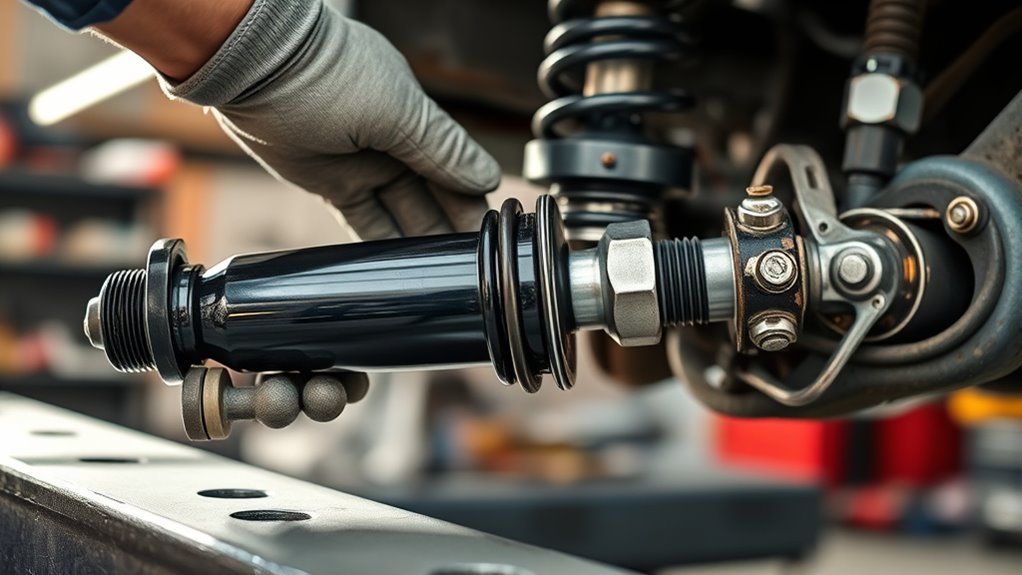

To install shocks and struts, first lift and securely support your vehicle using proper jack points and rated stands. This ensures safety and stability during the replacement process. Remove wheels and old components carefully, using a spring compressor for coil-over struts to handle the springs safely.
Clean mounting surfaces thoroughly and check compatibility of the new shocks or struts with your vehicle model. Position and secure the shocks or struts, tightening bolts to the manufacturer’s specifications while avoiding misalignment. This step is crucial to maintain proper suspension function and vehicle handling.
After installation, inspect all components for any loose parts or irregularities. Finally, test the ride quality with a cautious drive to confirm the new shocks and struts are functioning correctly. Following these steps guarantees a safe and effective replacement, with detailed guides available to help you tackle each step precisely.
Key Takeaways
- Safely lift and support the vehicle using manufacturer-recommended jack points and rated jack stands on a stable surface.
- Remove old shocks or struts by loosening mounting bolts, using penetrating oil, and compressing springs if necessary.
- Clean mounting surfaces and apply lubricants or anti-corrosion treatments before installing new shocks or struts.
- Position and secure shocks or struts, tightening all bolts to manufacturer torque specifications with appropriate tools.
- Test ride quality by inspecting for noises, vibrations, and vehicle stability, adjusting or troubleshooting as needed.
When to Replace Shocks and Struts
How do you know when it’s time to replace your shocks and struts? You’ll notice specific signs replacement is necessary: excessive bouncing after hitting bumps, uneven tire wear, and increased braking distance. These symptoms indicate diminished damping ability, directly affecting vehicle stability and control.
Additionally, fluid leaks from shocks or visible damage to struts signal immediate replacement need. Pay attention to steering wheel vibrations and nose-diving during braking, as these reflect performance impact on handling.
Regularly inspect components for corrosion or physical wear. Ignoring these signs compromises safety and ride quality.
Tools Needed for Installing Shocks and Struts
Before you start replacing shocks and struts, gather the essential hand tools like wrenches and sockets to guarantee a smooth process.
Don’t forget safety equipment such as gloves and eye protection to prevent injuries.
Additionally, some specialty tools, like spring compressors, are necessary for certain strut assemblies.
Essential Hand Tools
To install shocks and struts effectively, you’ll need a specific set of hand tools that guarantees safety and accuracy throughout the process.
Begin with a quality ratchet set and a variety of socket sizes to accommodate different shock absorber types and strut assembly components.
A torque wrench is essential for tightening bolts to manufacturer specifications, ensuring secure installation.
Use combination wrenches for hard-to-reach fasteners, and a spring compressor is necessary when working with coil-over struts to safely manage tension.
Additionally, needle-nose pliers help with retaining clips, and a breaker bar provides extra leverage for stubborn bolts.
Finally, a flathead screwdriver assists in prying components carefully without damage.
These tools collectively enable precise, reliable installation of shocks and struts.
Safety Equipment Needed
Along with the right hand tools, using proper safety equipment protects you from injury while installing shocks and struts.
Prioritize safety gear to guarantee accident prevention during every step of the process.
Here are three essential items you must have:
- Safety Glasses: Shield your eyes from flying debris, dust, and fluid splashes that can occur when removing or installing suspension components.
- Mechanic Gloves: Provide grip and protect your hands from cuts, abrasions, and contact with grease or sharp edges.
- Steel-Toe Boots: Guard your feet against heavy parts that might accidentally drop during disassembly or assembly.
Always inspect your safety gear before starting the job.
Proper use of these items minimizes risks and keeps your work environment safe and controlled.
Specialty Tools Required
Installing shocks and struts requires specific specialty tools that guarantee safe and efficient removal and installation of suspension components. Using the right tools minimizes the risk of damage and injury.
Here’s a concise list of essential specialty tools you’ll need, along with installation tips:
| Tool | Purpose |
|---|---|
| Spring Compressor | Safely compresses coil springs |
| Strut Nut Socket | Removes and installs strut retaining nuts |
| Torque Wrench | Assures bolts are tightened to spec |
| Pry Bar | Assists in separating suspension parts |
Remember to always use a spring compressor when handling coil springs; improper handling can cause serious injury. Use a torque wrench to adhere to manufacturer torque specifications, guaranteeing secure installation.
These specialty tools and installation tips will help you complete the job safely and correctly.
Lifting and Supporting Your Vehicle Safely
You’ll need to identify the manufacturer’s recommended jack points to avoid damaging your vehicle’s frame.
Always use high-quality jack stands rated for your vehicle’s weight to securely support it once lifted.
Make sure the ground surface is stable and level before raising your vehicle to prevent shifting or collapse.
Choosing Proper Jack Points
Selecting the correct jack points is essential for safely lifting and supporting your vehicle during shock and strut replacement. You must identify sturdy jack point locations directly connected to the vehicle frame to prevent damage or instability.
Follow these guidelines:
- Locate manufacturer-recommended jack points, usually marked in the owner’s manual or on the vehicle’s pinch welds near the wheels.
- Avoid lifting on suspension components or plastic parts; only use reinforced areas of the vehicle frame designed to bear weight.
- Verify the surface beneath the jack is level and solid to maintain stability once lifted.
Using Quality Jack Stands
When lifting your vehicle, always use high-quality jack stands rated for your vehicle’s weight to guarantee stability and safety. Select from common jack stand types: pyramid, tripod, or ratchet to match your vehicle’s lift height and weight requirements.
Before use, inspect each jack stand for structural integrity: check welds, locking mechanisms, and the base for cracks or corrosion.
Perform regular jack stand maintenance by cleaning moving parts and applying lubricant to ratchet or pawl components to ascertain smooth operation.
Avoid using damaged or rusted stands, as compromised equipment increases risk.
After positioning the jack stands under designated jack points, lower the vehicle slowly to transfer weight securely.
Proper use of quality jack stands minimizes hazards during shock and strut installation, ascertaining a stable and safe working environment.
Ensuring Stable Ground Surface
Although proper jack stands provide essential support, ensuring the ground surface beneath your vehicle is stable and level is equally important for safe lifting and maintenance.
You need to focus on leveling ground and avoiding hazards to prevent accidents. Follow these steps:
- Choose a flat, solid surface, preferably concrete or asphalt, to minimize shifting.
- Inspect the area for debris, oil spills, or loose gravel, which can compromise stability.
- Use leveling blocks or wooden planks to adjust uneven terrain, ensuring jack stands sit flush.
Removing Old Shocks and Struts
Start by securely lifting and supporting your vehicle to access the shocks and struts safely.
Begin removal by consulting the specific shock absorber types installed, such as twin-tube or monotube, as each demands distinct removal techniques.
First, remove any components obstructing access, like wheels or splash guards.
Then, carefully unfasten mounting bolts at both ends, using penetrating oil if bolts are seized.
For struts, compress the coil spring using a spring compressor to relieve tension before detaching the strut assembly.
Avoid forcing components to prevent damage.
Once bolts are removed, gently extract the shock or strut assembly.
Keep track of hardware for reinstallation.
Follow manufacturer torque specifications during removal to maintain component integrity and guarantee safety throughout the process.
Inspecting and Preparing New Shocks and Struts
Before installing your new shocks and struts, carefully inspect each component for damage or defects that could compromise performance.
Inspect all shock and strut components thoroughly to ensure they are free from damage before installation.
Begin by identifying wear on seals, mounts, and piston rods to verify they haven’t deteriorated during storage or transit.
Next, assess compatibility by verifying part numbers and specifications against your vehicle’s requirements to avoid installation issues or malfunction.
Finally, prepare the components by cleaning mounting surfaces and applying any manufacturer-recommended lubricants or anti-corrosion treatments.
Follow these steps to guarantee ideal function and longevity:
- Check for physical damage and signs of wear on all parts.
- Confirm compatibility with your vehicle’s model and suspension system.
- Clean and prep mounting areas to verify secure, contamination-free installation.
Installing Shocks and Struts Step-by-Step
Proper installation of shocks and struts requires meticulous attention to sequence and torque specifications to guarantee safety and peak suspension performance.
Begin by positioning the shock absorber or strut assembly correctly. Remember, shock absorber types vary, so confirm compatibility.
For shocks, mount the lower end first, then secure the upper mount, tightening bolts to the manufacturer’s torque specs.
When working with strut assembly differences, note that struts typically integrate the coil spring and require compression tools to safely install.
Compress the spring, align the strut in the mounting bracket, then fasten the top mount before releasing the compressor.
Always torque all fasteners to spec in sequence to avoid misalignment.
Finally, double-check that all connections are secure before reassembling any removed components.
Checking Your Installation and Testing Ride Quality
Once you’ve secured all mounts and fasteners, you’ll want to thoroughly inspect the installation for any loose components or misalignments.
Next, verify the ride height adjustment to guarantee the vehicle sits evenly and meets manufacturer specifications.
Then, proceed with a controlled test drive evaluation to assess suspension response and comfort.
During the test drive, pay close attention to the following:
- Notice any unusual noises or vibrations indicating improper installation.
- Evaluate the vehicle’s stability during turns and braking.
- Confirm that the ride quality matches expected performance, with no excessive bouncing or harshness.
Completing these steps guarantees your shocks and struts function correctly, providing safe and comfortable handling.
Troubleshooting Common Installation Problems
If you encounter issues like unusual noises, uneven ride height, or poor handling after installation, diagnosing common problems promptly can save time and prevent damage.
Start by verifying that all mounting bolts are torqued to manufacturer specifications; loose fasteners often cause clunking sounds.
Begin by ensuring all mounting bolts meet manufacturer torque specs to prevent clunking noises.
Check for proper alignment of the shocks or struts. Misalignment leads to uneven ride height and compromised handling.
Inspect rubber bushings for correct seating to avoid vibrations.
Common mistakes include neglecting to compress strut springs safely or reusing worn components.
Use troubleshooting tips such as performing a bounce test and scanning for diagnostic trouble codes if applicable.
Address each symptom systematically to isolate the root cause, ensuring your suspension functions effectively and prolonging component life.
Frequently Asked Questions
Can I Install Shocks and Struts Without Professional Help?
Yes, you can do a DIY installation if you have the right tools required, like a jack, wrenches, and spring compressors. Make certain you follow detailed instructions carefully to avoid safety risks and guarantee proper suspension performance.
How Do Shocks and Struts Differ in Function?
Did you know shocks improve ride comfort by enhancing shock absorption, while struts combine shock absorption with structural strut support?
You’ll see shocks mainly control motion; struts also support your vehicle’s suspension geometry.
What Are the Signs of Worn Shocks Versus Worn Struts?
You’ll notice worn shocks cause excessive bouncing after bumps, while worn struts lead to uneven tire wear and instability during turns. Both result in reduced ride comfort, but struts also affect steering precision noticeably.
How Long Do Shocks and Struts Typically Last?
Shocks and struts typically last 50,000 to 100,000 miles. You’ll see lifespan factors like road conditions and driving habits impact their durability.
Worn units reduce handling and braking performance, so monitor and replace promptly to maintain safety.
Are Aftermarket Shocks and Struts as Effective as OEM Parts?
You’re not necessarily missing out with aftermarket shocks and struts; they often offer benefits like cost savings and customization.
However, for a precise performance comparison, OEM parts usually guarantee exact fit and consistent reliability you can trust.
Conclusion
Congrats, you’ve just installed shocks and struts like a pro—well, almost. If your ride still feels like a bumpy roller coaster, don’t blame the car; double-check your work. Remember, skipping steps won’t make your vehicle dance any smoother.
Follow the instructions precisely, use the right tools, and lift safely—unless you enjoy roadside yoga. Now, go test that suspension and enjoy a smoother drive, or at least pretend you know what you’re doing.
With shocks and struts properly installed, your vehicle’s ride quality should improve significantly. Trust the process, and relish the smoother, safer drive that comes with correctly installed shocks and struts.