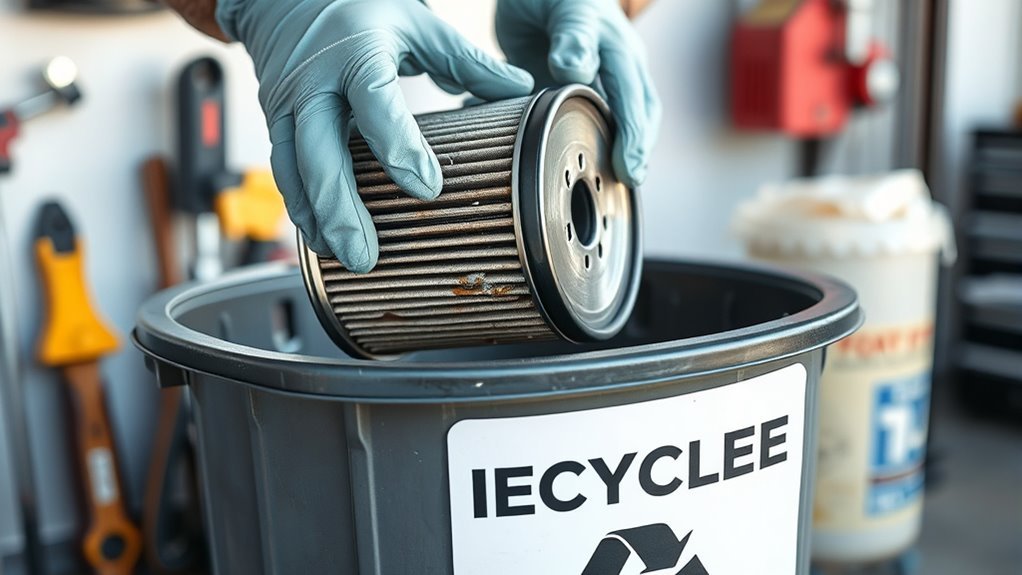

To dispose of an oil filter properly, start by draining it. Puncture the dome end and let the oil drain into a pan for at least 12 hours to remove any residual oil.
After draining, store the oil filter in a sealed, labeled container. Keep it in a cool, ventilated area to prevent any leaks or spills.
Next, take the drained filter to a local recycling center or a designated drop-off site. If no such facilities are available in your area, contact hazardous waste facilities for proper guidance.
Following these steps helps prevent environmental contamination and ensures compliance with regulations. Explore additional methods to reduce waste effectively.
Key Takeaways
- Drain oil filters completely by puncturing the dome end and allowing at least 12 hours of drainage to minimize hazardous waste.
- Store drained oil filters in sealed, labeled, leak-proof containers away from sunlight and heat until disposal.
- Take used oil filters to local recycling centers or automotive service drop-off points that accept them for proper processing.
- Avoid improper disposal like landfilling or trashing to prevent environmental contamination and comply with regulations.
- Consider switching to reusable or eco-friendly oil filters to reduce hazardous waste and support sustainable automotive practices.
Why Does Proper Oil Filter Disposal Matter?
Although oil filters may seem like simple car maintenance components, disposing of them properly is crucial because they contain hazardous waste that can contaminate the environment.
You must comply with oil filter regulations designed to prevent soil and water pollution from residual oil and heavy metals trapped inside.
Proper disposal guarantees these contaminants don’t enter ecosystems, protecting public health.
Proper disposal prevents contaminants from harming ecosystems and safeguards public health.
Additionally, you benefit from recycling by recovering valuable metals like steel and aluminum, reducing the demand for raw materials and conserving energy.
Following established procedures aligns with environmental laws and promotes sustainability.
How to Safely Drain Oil Filters for Disposal
You’ll need to puncture the oil filter’s dome end to allow complete drainage of residual oil.
Position the filter over a drip pan to capture all oil and prevent spills.
Always wear protective gloves and work in a well-ventilated area to minimize environmental hazards.
Proper Oil Draining Techniques
Several key steps guarantee you safely drain oil filters before disposal.
First, use approved oil extraction methods such as a suction pump or gravity draining. Attach the pump securely to the filter’s base, affirming no leaks.
Position the filter over a container to catch the oil. Let it drain for at least 12 hours to maximize oil removal. Avoid shaking or squeezing the filter, which can cause spills.
Once drained, use filter maintenance tips like puncturing the filter’s dome with a sharp tool to release trapped oil. Keep the workspace clean and wear gloves to prevent contamination.
Following these procedures guarantees you extract as much oil as possible, preparing the filter for proper recycling or disposal, and minimizing environmental hazards.
Environmental Safety Precautions
When draining oil filters for disposal, prioritize environmental safety by working in well-ventilated areas and using drip trays to capture any residual oil.
Begin by puncturing the filter’s base to allow complete drainage for at least 12 hours.
Follow local oil filter regulations to guarantee compliance with hazardous waste management protocols.
Avoid spilling oil onto surfaces; immediately clean any spills using absorbent materials.
Store drained filters in sealed, labeled containers to prevent contamination.
Coordinate with authorized waste management facilities for proper disposal or recycling.
Document your procedures to demonstrate adherence to environmental guidelines.
How to Store Oil Filters Before Disposal
Although oil filters contain residual oil, you can store them safely by draining all excess fluid before containment.
Begin by puncturing the filter’s dome end and allowing it to drain for at least 12 hours into a suitable container.
Start by puncturing the filter’s dome end and drain it for a minimum of 12 hours.
Once drained, place the filter in a sealable, leak-proof container designed for oil filter storage. Use containers labeled specifically for temporary containment to prevent leaks and contamination.
Store the container in a cool, well-ventilated area away from direct sunlight and ignition sources. Ascertain the storage area has secondary containment measures in case of spills.
Label the container clearly with contents and date. Regularly inspect the storage setup for leaks or damage.
Proper oil filter storage minimizes environmental risks and prepares filters for compliant disposal or recycling.
Where to Recycle or Drop Off Oil Filters
You can recycle or drop off used oil filters at local recycling centers equipped to handle automotive waste.
Many automotive service locations also accept oil filters for proper disposal as part of their environmental compliance programs.
Check with these facilities beforehand to confirm their acceptance policies and any preparation requirements.
Local Recycling Centers
Since oil filters contain residual oil and metal components, you must dispose of them at designated local recycling centers equipped to handle hazardous automotive waste.
To find appropriate local recycling filter locations, start by contacting your municipal waste management or using online databases specific to automotive parts.
When preparing to drop off your oil filter, follow these procedural steps:
- Drain the oil filter completely to minimize hazardous fluid leakage.
- Store filters in a sealed container to prevent contamination during transport.
- Confirm center hours and accepted materials beforehand to guarantee compliance.
Local recycling centers specialize in separating metal from hazardous oil residues, guaranteeing environmentally safe processing.
By adhering to these precise guidelines, you contribute to reducing hazardous waste risks and support resource recovery.
Always prioritize certified and authorized local recycling centers for disposal compliance.
Automotive Service Locations
When disposing of oil filters, automotive service locations often provide convenient drop-off points that comply with environmental regulations. You can bring your used oil filters to automotive shops or service centers where trained personnel handle proper recycling or disposal.
Before dropping off, make sure the filter is drained of excess oil to prevent leaks. Contact local automotive shops or service centers to confirm they accept used oil filters and inquire about any specific preparation requirements.
These facilities typically collect filters in designated containers to comply with hazardous waste protocols. Using automotive service locations for disposal guarantees that oil filters are processed responsibly, reducing environmental contamination risks.
Always follow the service center’s guidelines to maintain safety and regulatory compliance during drop-off.
What to Do If No Local Recycling Is Available
Although local recycling options may be unavailable, you can still manage oil filter disposal safely by following specific procedures designed to minimize environmental impact.
First, drain the oil filter thoroughly by puncturing and draining it for at least 12 hours to remove residual oil.
Then, explore alternative disposal methods such as contacting hazardous waste facilities or automotive shops that accept used filters.
If no direct options exist, consider oil filter alternatives like reusable filters or advanced synthetic filters with extended life spans, reducing disposal frequency.
Always store used filters in sealed, leak-proof containers to prevent contamination.
Key steps include:
- Fully drain residual oil to avoid leaks
- Use certified hazardous waste collection points
- Opt for oil filter alternatives to reduce waste volume
This approach guarantees compliance with environmental safety standards despite lacking local recycling.
Common Oil Filter Disposal Mistakes
Why do some oil filter disposals fail to meet environmental standards? Often, it’s due to improper handling of different oil filter types and neglecting recycling regulations. You must drain filters thoroughly and separate components per local rules to comply.
| Common Mistake | Consequence |
|---|---|
| Not draining oil filters | Oil contamination in waste |
| Mixing filter types | Difficult recycling process |
| Ignoring local recycling rules | Fines and environmental damage |
| Disposing in regular trash | Increased landfill pollution |
| Improper storage before disposal | Risk of leaks and spills |
Avoid these errors by understanding your oil filter type and following mandated procedures precisely to guarantee proper disposal and environmental safety.
How Reusable or Eco-Friendly Oil Filters Can Reduce Waste
Proper disposal of traditional oil filters presents challenges that reusable or eco-friendly alternatives can effectively address.
When you switch to reusable filters made from eco-friendly materials, you considerably reduce the volume of hazardous waste generated.
These filters allow for multiple uses after proper cleaning, minimizing landfill contributions. They also use biodegradable or recyclable components, facilitating safer disposal.
Additionally, they reduce demand for raw materials, lowering environmental impact.
Frequently Asked Questions
Can Oil Filters Be Disposed of With Regular Household Trash?
You shouldn’t dispose of oil filters with regular household trash because they contain hazardous waste.
Instead, you should participate in oil filter recycling programs to properly handle and recycle the residual oil and metal components safely.
How Long Does It Take for an Oil Filter to Decompose?
Like a slow-burning candle, oil filter decomposition takes up to 500 years, causing prolonged environmental impact.
You should handle disposal carefully to prevent toxic residue from contaminating soil and water, protecting ecosystems effectively.
Are There Any Health Risks From Handling Used Oil Filters?
Yes, handling used oil filters can expose you to health hazards like toxic oil residues. You should wear gloves and avoid skin contact to guarantee safe handling and reduce the risk of contamination or chemical exposure.
Can Used Oil From Filters Be Reused or Repurposed?
You can reuse oil from filters through oil recycling processes that remove contaminants. For filter repurposing, crushed filters are recycled as scrap metal, but oil extraction requires specialized facilities to guarantee safe recovery.
What Tools Are Needed to Remove an Oil Filter Safely?
Picture gripping the oil filter tightly; you’ll need an oil filter wrench, gloves, a drain pan, and rags. These tools guarantee safe oil filter removal techniques, preventing spills and protecting your hands throughout the precise process.
Conclusion
You might think tossing your oil filter in the trash is the easiest fix, but ironically, that’s the worst move you can make. Properly draining, storing, and recycling oil filters isn’t just a hassle—it’s essential to prevent environmental damage and comply with regulations.
So, follow the steps carefully, find a recycling center, or consider eco-friendly filters. It’s a small effort that makes a big difference, even if convenience tries to convince you otherwise.
When thinking about how to dispose of oil filter, remember that proper disposal protects the environment and ensures you are following the law. Taking the time to recycle your oil filter responsibly is worth every bit of effort.