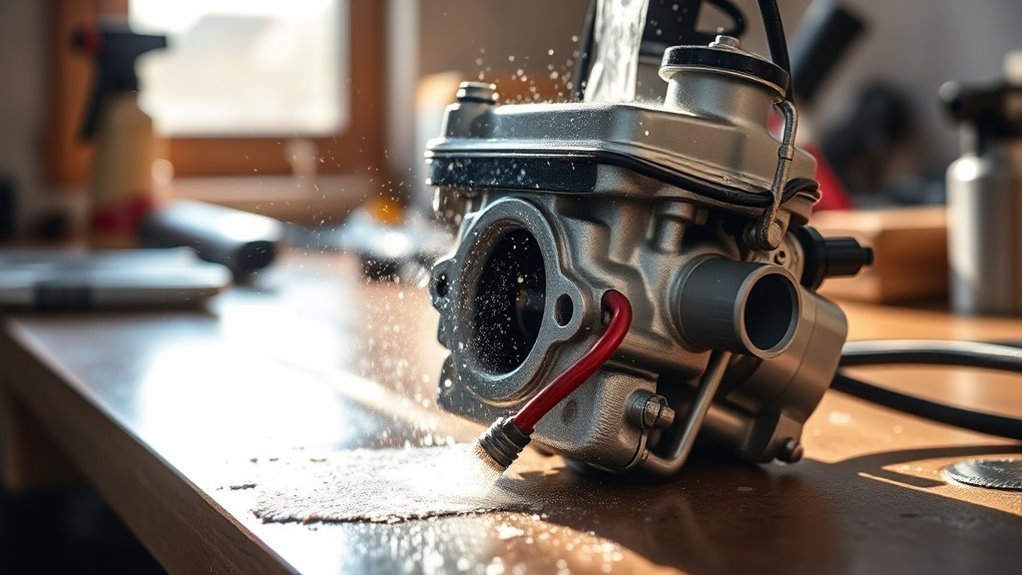

Carburetor cleaner is a specialized solvent designed to dissolve deposits, varnish, and grime that accumulate in your carburetor’s components. It effectively penetrates narrow fuel passages to restore proper fuel flow and maintain efficient combustion.
Using carburetor cleaner regularly helps prevent clogging, rough idling, and poor acceleration. This keeps your engine responsive and fuel-efficient.
Choosing the right cleaner and applying it safely ensures peak performance. Continue exploring for detailed guidance on usage and selection.
Key Takeaways
- Carburetor cleaner is a specialized solvent designed to dissolve deposits, varnish, and grime from carburetor components.
- It removes clogs in jets and passages to restore proper air-fuel mixture delivery and engine performance.
- The cleaner contains powerful detergents and solvents that penetrate narrow carburetor passages effectively.
- Regular use prevents buildup that causes rough idling, poor acceleration, and fuel inefficiency.
- It is formulated to clean without damaging delicate rubber, plastic, and metal carburetor parts.
What Is Carburetor Cleaner?
Carburetor cleaner is a specialized solvent designed to dissolve and remove deposits, varnish, and grime from carburetor components. Depending on the carburetor types, such as single-barrel, two-barrel, or four-barrel, cleaning needs may vary.
You should adjust the cleaning frequency based on usage and environmental conditions; for example, vehicles operated in dusty or humid areas require more frequent maintenance. Regular cleaning prevents clogging in jets and passages, ensuring ideal air-fuel mixture delivery and engine performance.
Using carburetor cleaner maintains precise throttle response and fuel efficiency by targeting buildup without damaging delicate parts.
By adhering to recommended cleaning intervals aligned with your carburetor type, you can extend the component’s lifespan and avoid costly repairs.
Accurate maintenance maximizes reliability and smooth operation.
How Carburetor Cleaner Works
Although fuel systems can accumulate stubborn deposits over time, using a specialized cleaner breaks down varnish, gum, and dirt effectively.
Carburetor cleaner contains powerful solvents and detergents that dissolve these contaminants without damaging metal or rubber components.
When you apply it, the solution penetrates narrow passages critical to carburetor function, such as jets and throttle plates, restoring proper fuel flow and atomization.
Regular cleaning frequency depends on usage and fuel quality, but adhering to manufacturer recommendations prevents buildup that impairs performance.
By targeting residues that disrupt air-fuel mixture delivery, carburetor cleaner guarantees efficient combustion.
You’ll notice smoother idling, better acceleration, and reduced emissions after treatment.
Understanding how the cleaner works helps you maintain your carburetor’s precision and extend its lifespan with timely, effective maintenance.
Why Carburetor Cleaner Matters for Your Engine
You need carburetor cleaner to maintain peak engine performance by removing deposits that hinder fuel flow.
It prevents common fuel system issues like clogged jets and rough idling.
Keeping your carburetor clean guarantees efficient combustion and reliable engine operation.
Engine Performance Improvement
When fuel delivery becomes inconsistent due to buildup or deposits, your engine won’t run at its best. Carburetor cleaner effectively removes varnish, gum, and carbon deposits that restrict fuel flow and air mixture.
By restoring clean fuel pathways, it improves fuel efficiency, ensuring your engine uses fuel precisely rather than wasting it. Additionally, cleaner carburetor components enhance throttle response, allowing your engine to react promptly to acceleration commands.
This means smoother shifts and more reliable power output. Regular use of carburetor cleaner maintains ideal combustion conditions, reducing engine hesitation and misfires.
Ultimately, applying carburetor cleaner helps you maintain consistent engine performance, maximizing both power delivery and fuel economy without requiring extensive mechanical intervention.
Preventing Fuel System Issues
Since fuel system blockages can lead to costly repairs and reduced engine reliability, using carburetor cleaner regularly helps prevent these issues by dissolving deposits before they cause damage.
Proper fuel system maintenance is essential for preventing contamination that impairs fuel flow and engine function.
When you use carburetor cleaner, you:
- Remove varnish and gum buildup inside fuel passages.
- Prevent clogging of jets and needles that disrupt fuel delivery.
- Maintain ideal air-fuel mixture for efficient combustion.
- Extend the lifespan of carburetor components by reducing corrosive residue.
Problems Carburetor Cleaner Can Solve
Several common issues can impair carburetor performance, and carburetor cleaner effectively addresses many of them. You’ll often encounter clogged jets, varnish buildup, and sticky throttle plates due to fuel residue and debris.
These problems disrupt fuel-air mixture delivery, causing rough idling, poor acceleration, and increased emissions. Regular carburetor maintenance, including timely use of cleaner, prevents such issues by dissolving deposits and restoring smooth operation.
Disrupted fuel-air mixtures cause rough idling and poor acceleration; regular cleaning restores smooth engine performance.
If you neglect cleaning frequency, deposits harden, making adjustments difficult and leading to engine inefficiency. Using carburetor cleaner helps you remove buildup without disassembling the entire unit, saving time and effort.
It also improves fuel atomization and combustion efficiency. By tackling these common carburetor problems, the cleaner extends component life and maintains peak engine performance.
When and How to Use Carburetor Cleaner Safely
You should use carburetor cleaner when you notice performance issues like rough idling or poor acceleration.
Follow a step-by-step process: remove the carburetor if possible, apply the cleaner to all jets and passages, and allow it to dissolve deposits.
Always wear gloves and work in a well-ventilated area to avoid inhaling fumes and prevent skin contact.
Appropriate Timing For Use
Knowing the appropriate timing for using carburetor cleaner guarantees effective maintenance and prevents damage. You should apply the cleaner only under ideal conditions to maximize efficiency and protect engine components.
Consider these guidelines:
- Use carburetor cleaner when you notice engine performance issues, such as rough idling or hesitation.
- Follow the manufacturer’s recommended usage frequency to avoid over-cleaning, which can harm seals and gaskets.
- Perform cleaning during routine maintenance intervals, especially after extended storage or fuel contamination.
- Avoid using the cleaner immediately after engine shutdown to prevent residue buildup; wait until the engine cools.
Step-By-Step Cleaning Process
Five essential steps will guide you through using carburetor cleaner safely and effectively. First, gather appropriate cleaning tools like brushes and gloves. Second, remove the carburetor for thorough access.
Third, apply the cleaner evenly, focusing on jets and passages. Fourth, scrub stubborn deposits carefully. Finally, reassemble and test functionality. Adjust your cleaning frequency based on engine performance and environmental conditions.
| Step Number | Action | Tool Needed |
|---|---|---|
| 1 | Gather cleaning tools | Brushes, gloves |
| 2 | Remove carburetor | Screwdriver, wrench |
| 3 | Apply cleaner | Carburetor cleaner |
This structured approach guarantees efficient cleaning and prolongs carburetor life without compromising engine performance.
Safety Precautions And Tips
Although carburetor cleaner is highly effective, handling it with caution is crucial to prevent injury and damage.
When you use this solvent, always prioritize safety by following these key steps:
- Wear personal protective equipment, including gloves, goggles, and long sleeves to avoid skin and eye contact.
- Verify you work in a well-ventilated area to meet ventilation requirements and minimize inhalation of toxic fumes.
- Avoid open flames or sparks nearby, since carburetor cleaner is highly flammable.
- Store the cleaner in a cool, dry place, tightly sealed, away from children and pets.
Tips for Choosing the Right Carburetor Cleaner
When selecting a carburetor cleaner, you should consider the specific materials and components involved, as well as the type of deposits you need to remove. Your cleaning frequency impacts the product choice. Frequent cleaning requires a milder cleaner to prevent damage, while heavy buildup needs stronger solvents.
Conduct a product comparison focusing on solvent strength, compatibility, and residue.
| Factor | Importance |
|---|---|
| Solvent Strength | Remove varnish and carbon deposits |
| Material Safety | Avoid damage to rubber, plastic |
| Residue | Guarantee no clogging after cleaning |
Choose a cleaner matching your carburetor’s material and contamination level. Check if the cleaner suits your maintenance schedule to optimize performance without causing wear or corrosion.
Frequently Asked Questions
Can Carburetor Cleaner Damage Rubber or Plastic Engine Parts?
Yes, carburetor cleaner can cause plastic degradation and harm rubber compatibility if it contains harsh solvents. You should always check the cleaner’s formulation to avoid damaging sensitive rubber or plastic engine parts during use.
Is Carburetor Cleaner Safe for Fuel-Injected Engines?
You shouldn’t use carburetor cleaner on fuel-injected engines due to limited fuel injection compatibility; it can harm sensitive components, potentially degrading engine performance. Instead, opt for cleaners designed specifically to maintain fuel injection systems safely.
How Often Should I Clean My Carburetor With Cleaner?
You should clean your carburetor every 12,000 to 15,000 miles to maintain carburetor maintenance frequency. This guarantees peak engine performance improvement by preventing clogging and maintaining proper fuel-air mixture balance.
Can Carburetor Cleaner Be Used on Motorcycles and Lawnmowers?
Yes, you can use carburetor cleaner for motorcycle maintenance and lawnmower care. It effectively removes deposits, improving performance.
Just verify compatibility with your engine’s materials and follow safety guidelines during application for best results.
Are There Eco-Friendly or Biodegradable Carburetor Cleaners Available?
You won’t find a greener clean anywhere! Biodegradable options and eco friendly alternatives for carburetor cleaners exist, using plant-based solvents and less toxic chemicals. These ensure effective performance while minimizing environmental impact.
Conclusion
Carburetor cleaner might seem like a simple spray, but it plays a vital role in keeping your engine running smoothly. While neglect lets deposits build up and choke performance, using the cleaner restores precision and efficiency.
You’re not just removing grime—you’re preventing costly repairs down the line. By understanding when and how to apply it safely, you guarantee your engine breathes freely.
Balancing mechanical complexity with straightforward maintenance is key. In conclusion, regular use of carburetor cleaner ensures your engine remains efficient and reliable.