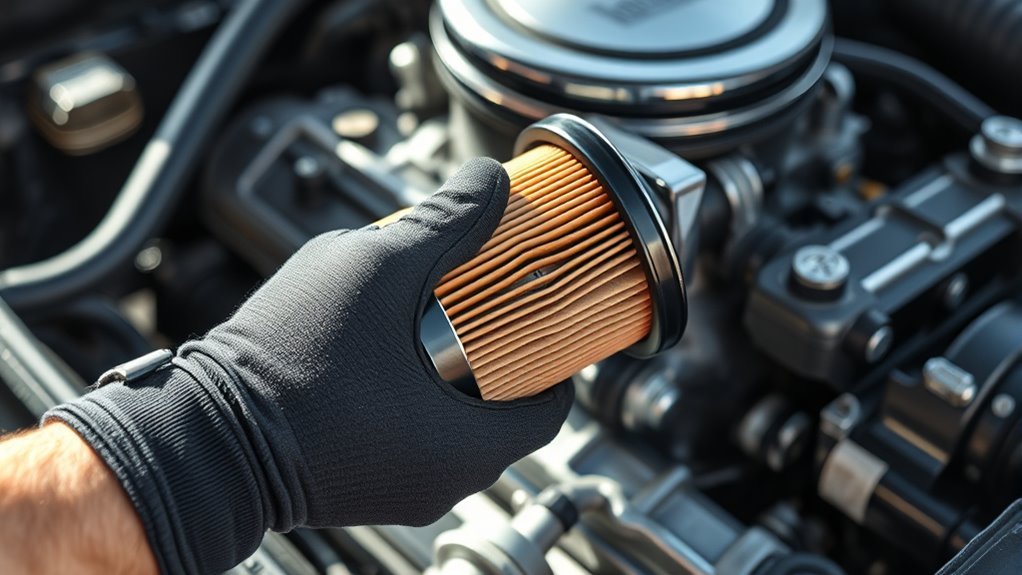

To tighten your oil filter correctly, start by cleaning the mounting surface thoroughly. Lubricate the gasket with fresh oil to ensure a good seal. This preparation is essential when you want to tighten an oil filter properly.
Hand-tighten the filter until the gasket contacts the base. Then, use a torque wrench to apply the manufacturer’s specified torque—usually about 3/4 to 1 turn past contact. Avoid over-tightening to prevent damage.
Never under-tighten the oil filter, as this risks leaks that can harm your engine. After installation, start the engine and inspect for any leaks around the filter base. Proper technique guarantees secure sealing and engine protection; keep exploring to master this process fully.
Key Takeaways
- Hand-tighten the oil filter until the gasket contacts the mounting surface to ensure proper alignment and avoid cross-threading.
- Apply a thin layer of fresh oil to the gasket before installation to improve sealing and prevent leaks.
- Use a torque wrench to tighten the oil filter according to the manufacturer’s specified torque to avoid over-tightening or under-tightening.
- Inspect the oil filter and mounting surface for cleanliness and remove debris before installation to ensure a proper seal.
- After starting the engine, check for leaks around the filter base and retighten if necessary to maintain engine oil pressure.
Why Tightening Your Oil Filter the Right Way Matters
Although it may seem simple, tightening your oil filter correctly is essential to maintaining engine performance and preventing leaks. When you tighten the oil filter to the manufacturer’s specified torque, you guarantee a proper seal that stops oil from escaping, which protects your engine from damage.
Over-tightening can damage the filter gasket or housing, reducing the oil filter lifespan and complicating future maintenance. Under-tightening risks leaks that lead to low oil pressure and potential engine failure.
Over-tightening harms the gasket; under-tightening causes leaks—both threaten engine health and filter longevity.
Recognizing the importance of maintenance, you must follow precise tightening procedures every time you replace or service the oil filter. Properly tightened filters maintain consistent oil flow and pressure, preserving engine efficiency and longevity.
Neglecting this step compromises the oil filter’s function and your vehicle’s health.
Tools You’ll Need to Tighten an Oil Filter
To tighten an oil filter correctly, you’ll need a few essential tools that guarantee proper torque and accessibility.
Start with identifying the right filter wrench type for your oil filter. Options include band wrenches, cap wrenches, and claw wrenches. Each offers different grip styles suited for varying filter sizes and spaces.
A torque wrench is critical to apply the correct force, preventing over-tightening or leaks. Additionally, have a clean rag to wipe the filter base and your hands.
Use proper tightening techniques: hand-tighten the filter until the gasket contacts the mounting surface, then use the wrench for an additional specified fraction of a turn.
Selecting the appropriate tools and applying precise tightening techniques assures a secure, leak-free installation every time.
How to Tighten Your Oil Filter in 4 Simple Steps
Before you start tightening, make certain the oil filter is properly prepared by lubricating its gasket with fresh oil to guarantee a secure seal.
You’ll then use the correct technique to tighten the filter by hand until the gasket contacts the mounting surface, followed by an additional quarter to half turn.
This method prevents leaks and avoids over-tightening, promoting ideal filter performance.
Preparing The Oil Filter
Start by confirming the oil filter mounting surface is clean and free of old gasket material or debris. This step is critical for a proper seal during filter installation.
Next, select the correct oil filter type specified for your engine to guarantee compatibility. Before mounting, apply a thin layer of fresh oil to the new filter’s rubber gasket; this lubrication aids in sealing and future removal.
Finally, align the filter threads carefully to avoid cross-threading, which can cause leaks or damage.
- Verify oil filter types compatible with your vehicle.
- Clean mounting surface thoroughly.
- Lubricate gasket with fresh engine oil.
- Hand-thread filter to guarantee proper alignment.
Following these precise steps prepares the oil filter for secure and efficient installation.
Proper Tightening Techniques
Although it’s tempting to overtighten the oil filter for security, applying the correct torque guarantees a proper seal without risking damage to the filter or mounting threads. Use these tightening techniques to secure peak performance: first, lubricate the gasket with clean oil; second, screw the filter by hand until the gasket contacts the base; third, tighten it according to manufacturer torque specs; finally, verify no leaks after startup.
| Step | Action | Notes |
|---|---|---|
| 1 | Lubricate gasket | Use clean engine oil |
| 2 | Hand-tighten filter | Until gasket contacts |
| 3 | Apply torque | Follow specifications |
| 4 | Inspect for leaks | After engine start |
Following these tightening techniques secures a safe, leak-free oil filter installation.
How Much Should You Tighten Your Oil Filter? (Torque Tips)
When tightening your oil filter, applying the correct torque is essential to guarantee a secure seal without damaging the filter or engine components.
Using the proper torque prevents leaks and avoids over-tightening, which can strip threads or crush the filter.
Generally, manufacturers recommend tightening the oil filter by hand until the gasket contacts the mounting surface, then turning it an additional 3/4 to 1 full turn. Some filters specify a torque value, often between 15-25 ft-lbs.
Keep these oil filter torque tips in mind:
- Hand-tighten until gasket contact is felt
- Apply an additional 3/4 to 1 turn by hand or wrench
- Use a torque wrench if a specific torque is provided
- Avoid excessive force that risks damage or leaks
Following these steps guarantees proper torque and ideal engine protection.
Common Mistakes When Tightening Oil Filters (And How to Avoid Them)
You’ll want to avoid overtightening your oil filter, as it can damage the gasket and cause leaks.
Always inspect the gasket for wear or debris before installation to guarantee a proper seal.
Use the correct tools to prevent stripping or uneven torque during tightening.
Overtightening Risks
Since applying too much torque can damage the oil filter or the mounting surface, you need to tighten it carefully. Overtightening consequences include filter damage, compromised sealing, and potential leaks.
To avoid these issues, follow these guidelines:
- Tighten the filter by hand until the gasket contacts the mounting surface.
- Then, apply an additional 3/4 to 1 turn only. Avoid using tools unless specified.
- Never force the filter beyond resistance; excessive torque risks cracking or deforming.
- Inspect the mounting surface for damage before installation to guarantee proper sealing.
Ignoring Gasket Condition
Although it might seem minor, neglecting the condition of the oil filter gasket can lead to improper sealing and oil leaks. Before installing the oil filter, always inspect the gasket for signs of deterioration such as cracks, hardening, or deformation.
A compromised gasket won’t maintain an effective oil seal, increasing the risk of leaks under pressure. If the gasket shows any damage, replace the entire oil filter rather than reusing it.
When fitting the new filter, lightly lubricate the gasket with fresh oil to verify it seats properly and prevents tearing. Proper attention to the gasket condition guarantees a reliable oil seal and prevents engine damage caused by oil loss.
Don’t skip this step. It’s essential for a secure, leak-free oil filter installation.
Using Incorrect Tools
Guaranteeing the oil filter gasket is in good condition sets the foundation for a proper seal, but using the wrong tools can still compromise the installation.
Incorrect tool selection often leads to uneven tightening or damage to the filter housing.
Avoid these pitfalls by following best practices:
- Use a proper oil filter wrench sized specifically for your filter.
- Avoid impact wrench misuse; excessive torque can crush the filter or strip threads.
- Choose hand tools over power tools for final tightening to control torque precisely.
- Inspect tools for wear or damage before use to guarantee accurate fit and force application.
How to Check Your Oil Filter for Leaks After Installation
After you install the oil filter, start the engine and let it run for a few minutes to build pressure. Perform a leak detection by visually inspecting the filter area for any signs of oil seepage. Use a clean rag to wipe around the filter base and fittings, then recheck after a few minutes. A systematic filter inspection guarantees safety and engine integrity.
| Step | Action | Purpose |
|---|---|---|
| 1 | Start engine, run 3-5 minutes | Build oil pressure |
| 2 | Inspect filter base & seals | Detect leaks |
| 3 | Wipe & re-inspect | Confirm no oil seepage |
If leaks appear, immediately shut off the engine and retighten the filter to manufacturer torque specs.
Quick Tips for Removing an Old Oil Filter Safely
Removing an old oil filter requires careful technique to prevent spills and damage. Proper oil filter removal techniques guarantee a clean process and protect engine components.
First, position a drain pan beneath the filter to catch residual oil. Then, use an appropriate oil filter wrench for a secure grip.
Follow these quick tips for safe removal:
- Loosen the oil filter slowly to control oil flow.
- Avoid using excessive force to prevent damaging the mounting surface.
- Keep rags handy to wipe any oil drips immediately.
- Inspect the old filter’s rubber gasket to verify it’s not stuck to the engine.
Frequently Asked Questions
Can I Reuse an Old Oil Filter Gasket?
You shouldn’t reuse an old oil filter gasket because it compromises gasket integrity and risks leaks. Always use a new gasket to guarantee proper filter compatibility.
This helps maintain a secure, reliable oil seal during installation.
How Often Should I Replace the Oil Filter?
You should replace the oil filter every 3,000 to 7,500 miles, depending on your vehicle’s oil filter lifespan and replacement schedule. Always follow manufacturer guidelines to maintain peak engine performance and prevent contamination buildup.
What Type of Oil Filter Is Best for My Car?
Like using a floppy disk, choosing oil filter types requires care. You should pick one ensuring filter compatibility with your car’s make and model, prioritizing synthetic media for superior filtration and longer service intervals.
Can Over-Tightening Damage the Oil Filter Housing?
Yes, over-tightening during oil filter installation can compromise the filter housing integrity, causing cracks or warping. You should tighten only to the manufacturer’s specified torque to guarantee a secure fit without damaging components.
Is It Safe to Tighten an Oil Filter by Hand Only?
Think of hand tightening an oil filter like securing a lid on a jar. It’s safe and effective when snug.
You should hand tighten the oil filter until it’s firmly seated, then give it a slight additional turn to seal properly.
Conclusion
Think of tightening your oil filter like securing a ship’s hatch before a storm—it must be snug enough to keep water out but never so tight that it damages the seal.
By using the right tools and torque, you guarantee your engine stays protected from leaks and damage. Follow the steps carefully, avoid common mistakes, and always double-check your work.
This precision keeps your vehicle running smoothly, just like a well-locked hatch keeps the ship safe at sea. Properly tightening your oil filter is essential to maintaining your engine’s health and preventing leaks.