Tag: window breakage

  • Can Spark Plugs Break Windows

    Can Spark Plugs Break Windows

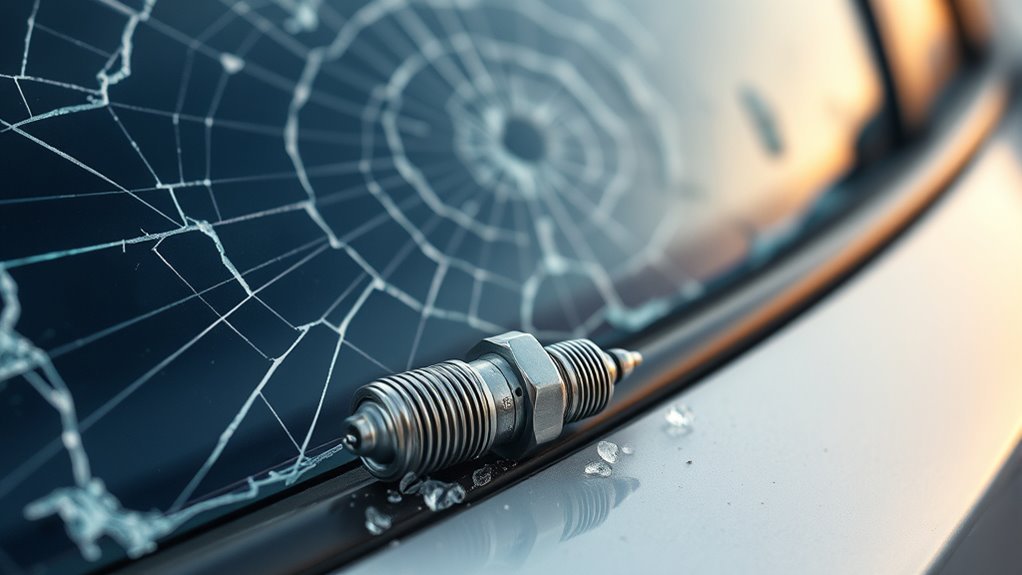
    Can Spark Plugs Break Windows? Generally, you can’t expect a spark plug to break a glass window unless it hits with high speed and strikes vulnerable glass, like standard annealed types, at a stress-point such as an edge or corner.

    Spark plugs are made of hard metals and brittle ceramics, but they rarely shatter tempered or laminated glass without significant force. The impact resistance of the spark plug and the type of glass largely determine the risk of damage.

    If you want to understand how materials, speed, and glass interact to affect window breakage, there’s more to explore ahead.

    Key Takeaways

    • Spark plugs rarely break windows without significant velocity and force behind the impact.
    • Thinner, untreated glass is more susceptible to cracking or chipping from spark plug impacts.
    • Tempered and laminated glass resist spark plug impacts due to their enhanced strength and energy absorption.
    • Spark plugs’ ceramic components are brittle, which can induce localized stress but usually not shatter glass.
    • Casual or accidental spark plug throws typically do not generate enough force to break automotive windows.

    Can a Spark Plug Break a Glass Window?

    How likely is it that a spark plug can break a glass window? When considering spark plug projectiles, the potential for glass shattering depends on impact energy and glass type.

    A spark plug’s mass and velocity determine its kinetic energy, which must exceed the glass’s fracture threshold to cause shattering. Standard automotive spark plugs weigh around 20 grams, so achieving sufficient velocity to break tempered or laminated glass requires significant force.

    A spark plug must reach high velocity to generate enough energy to break tough glass.

    In controlled tests, spark plugs rarely shatter toughened glass unless propelled at high speeds using mechanical means. However, they can crack or chip thinner, untreated glass due to concentrated impact stress.

    Consequently, while spark plug projectiles can cause localized damage, outright glass shattering is unlikely without considerable acceleration, making spontaneous breakage from a casually thrown spark plug improbable.

    Spark Plug Materials and Hardness

    You need to understand that spark plugs are typically made from materials like copper, iridium, and platinum, each with distinct hardness levels.

    Comparing these materials, iridium ranks highest in hardness, which affects the plug’s durability and potential impact resistance.

    This hardness influences whether a spark plug can withstand force without fracturing, a key factor in its ability to break a glass window.

    Common Spark Plug Materials

    Although spark plugs might seem simple, their performance hinges on the materials used in their construction. Understanding spark plug composition is essential, as it directly affects spark plug durability and efficiency.

    Most spark plugs use a combination of metals for ideal conductivity and wear resistance.

    Material Conductivity Durability
    Copper High Moderate
    Platinum Moderate High
    Iridium Moderate Very High

    Copper offers excellent conductivity but wears faster, impacting durability. Platinum improves lifespan by resisting erosion, while iridium, known for its hardness, provides superior durability and consistent performance.

    When selecting a spark plug, consider how these materials affect both longevity and ignition reliability.

    Hardness Comparison Among Materials

    The choice of materials in spark plugs not only influences conductivity and durability but also dictates their hardness, a key factor in wear resistance and performance stability.

    When you assess spark plug materials through hardness testing, you focus on their resistance to surface deformation under stress.

    Common electrode materials like copper exhibit moderate hardness, balancing conductivity with wear. In contrast, iridium and platinum alloys demonstrate considerably higher hardness values due to their superior material properties, enhancing longevity and consistent performance.

    Understanding these differences is essential because harder materials resist erosion and maintain electrode shape better over time.

    Impact Resistance of Spark Plugs

    Because impact resistance directly affects a spark plug’s durability under mechanical stress, understanding how different materials respond to sudden forces is essential.

    You’ll find that spark plugs typically combine ceramic insulators with metal electrodes; ceramics offer high compressive strength but low tensile and impact resistance, making them prone to cracking upon impact.

    Metals, on the other hand, provide better toughness but aren’t the primary contributors to spark plug breakage.

    When a spark plug strikes a glass surface, the ceramic’s brittleness can induce localized stress exceeding glass fracture thresholds, potentially causing the window to shatter.

    Consequently, the spark plug’s material composition critically influences both spark plug durability and its capacity to cause glass fracture.

    You must consider these factors when evaluating whether a spark plug can break a window.

    How Speed and Force Affect a Spark Plug’s Ability to Break Glass

    When you strike a spark plug against glass, its ability to break the surface depends heavily on the speed and force of the impact. The spark plug velocity directly influences the kinetic energy transferred during collision, calculated as ½mv², where m is mass and v is velocity. Higher velocity exponentially increases this energy, enhancing the chance of glass shatter.

    Additionally, the force applied concentrates at the spark plug’s tip, creating stress exceeding the glass’s tensile strength. Insufficient speed or force results in energy dissipation without fracture.

    Consequently, to cause a clean break, you must maximize impact velocity and apply force sharply, focusing energy on a small surface area.

    Understanding these dynamics clarifies why slow or weak strikes rarely break glass, while fast, forceful impacts with adequate spark plug velocity succeed in shattering it.

    How Different Types of Window Glass Respond to Impact

    You need to understand how tempered, laminated, and standard glass each react under impact to assess a spark plug’s potential to break them.

    Tempered glass resists shattering by dispersing force, while laminated glass holds together due to its interlayer.

    Standard glass, however, lacks these safety features and breaks more easily upon impact.

    Tempered Glass Impact Resistance

    Although all window glass types serve as barriers, their ability to withstand impact varies considerably.

    Tempered glass undergoes a specialized heat treatment process that increases its strength compared to regular annealed glass.

    During impact testing, tempered glass demonstrates superior resistance to sudden force due to its internal compressive stresses, which delay crack propagation.

    When struck by a spark plug or similar object, tempered glass can absorb and distribute energy more effectively, reducing the likelihood of penetration.

    However, once the impact force exceeds its threshold, tempered glass shatters into small, blunt granules, minimizing injury risk.

    Understanding this behavior is critical when evaluating whether a spark plug can break a window, as tempered glass’s design prioritizes both impact resistance and controlled failure modes, enhancing overall safety.

    Laminated Glass Safety Features

    Tempered glass offers enhanced impact resistance through its heat treatment and internal stresses, but laminated glass provides a different approach by combining layers to improve safety.

    When you encounter laminated glass, its safety features rely on a plastic interlayer bonded between glass sheets. This design alters how the glass responds to impact, preventing shattering and maintaining structural integrity.

    Specifically, laminated glass:

    • Absorbs and distributes impact energy, reducing the chance of penetration.
    • Holds fragments in place upon breakage, minimizing injury risks.
    • Offers sound dampening and UV protection as additional safety benefits.

    Understanding these laminated glass safety features helps you assess its superior performance under impact compared to standard or tempered glass.

    This layered construction is critical in applications where preventing glass from breaking into sharp pieces is paramount.

    Standard Glass Vulnerability Levels

    Glass types vary considerably in their resistance to impact, influencing their vulnerability to breakage. When evaluating if a spark plug can break a window, understanding glass strength and spark plug design is essential. Different glass types absorb and distribute impact forces differently, affecting their susceptibility.

    Glass Type Impact Resistance Typical Failure Mode
    Annealed Glass Low Shatters into large shards
    Tempered Glass High Breaks into small granules
    Laminated Glass Moderate Holds together with interlayer
    Insulated Glass Variable Dependent on layers and coatings

    You’ll find tempered glass offers superior resistance due to increased glass strength, while annealed glass remains vulnerable to sharp impacts from spark plug designs.

    Documented Cases of Spark Plugs Breaking Windows

    When a spark plug strikes a window, it can generate enough localized force to cause cracking or shattering, depending on the window’s material and condition. Documented spark plug incidents reveal that window damage primarily occurs under specific circumstances.

    You should consider factors such as:

    • Impact velocity: Higher speeds increase kinetic energy, making breakage more likely.
    • Glass type: Tempered or laminated glass resists damage better than standard annealed glass.
    • Point of contact: Direct hits on corners or edges amplify stress concentration, promoting fractures.

    Case studies confirm that while spark plugs aren’t common window breakers, they can cause damage when these conditions align.

    Understanding these documented cases helps you assess the risk and mechanics behind such incidents accurately.

    How Spark Plugs Compare to Other Common Window Breakers

    Several common objects pose a higher risk of breaking windows compared to spark plugs due to their greater mass, shape, or velocity upon impact. For example, stones and baseballs deliver concentrated force with irregular shapes, increasing the likelihood of glass fracture.

    Unlike these, spark plugs are compact and dense but have a limited aerodynamic profile, reducing impact energy transfer. Addressing spark plug myths, many assume their metallic composition makes them inherently destructive, yet testing shows their kinetic energy often falls short of the threshold needed to compromise window integrity.

    When evaluating window safety, you must consider impact dynamics, including object mass, shape, and velocity—all factors where spark plugs underperform relative to common window breakers.

    Consequently, while not impossible, spark plugs are statistically less likely to break windows compared to typical projectiles encountered in everyday scenarios.

    What to Do If a Spark Plug Breaks Your Window

    Although spark plugs rarely cause window damage, knowing how to respond if one does break your window guarantees you address the situation efficiently.

    First, secure the area to prevent injury from shattered glass. Then, document the damage thoroughly for insurance or liability purposes. Finally, arrange for professional glass repair to restore safety and function.

    Assess the extent of the damage to determine if temporary measures like taping the glass are necessary.

    Contact your insurance provider to report the spark plug accident and understand coverage options.

    Engage a certified glass repair specialist to ascertain proper replacement and compliance with safety standards.

    How to Prevent Spark Plugs From Breaking Windows

    To prevent spark plugs from breaking windows, you need to control their handling and placement meticulously.

    Prioritize spark plug safety by ensuring they’re never positioned near glass surfaces, especially in environments prone to vibrations or accidental impacts.

    Use dedicated compartments or cushioned trays to isolate spark plugs, reducing the risk of collision with fragile glass.

    Additionally, maintaining a clean workspace minimizes accidental drops or knocks that could send spark plugs flying toward windows.

    For effective glass protection, reinforce window areas with protective films or barriers if spark plug work occurs nearby.

    Implementing these measures systematically helps you mitigate the risk of breakage, preserving both equipment integrity and window safety without compromising operational efficiency.

    Safe Handling and Storage Tips for Spark Plugs

    When you handle and store spark plugs properly, you greatly reduce the risk of damage and guarantee their ideal performance. Proper handling minimizes the chance of electrode misalignment or ceramic cracking, which can compromise functionality.

    Proper handling and storage of spark plugs prevent damage and ensure optimal performance.

    For safe storage, maintain an environment free from moisture, dust, and temperature extremes to prevent corrosion and material degradation.

    Consider these essential safe storage and handling tips:

    • Store spark plugs in original packaging or cushioned containers to avoid impact damage.
    • Handle plugs by the metal shell, not the ceramic insulator, to prevent stress fractures.
    • Keep spark plugs organized and labeled to avoid confusion and assure correct application.

    Frequently Asked Questions

    Can Spark Plugs Cause Electrical Shocks During Handling?

    Yes, you can experience electrical shocks if you mishandle spark plugs without proper spark plug safety. Always be cautious of electrical hazards, especially when the ignition system is active to avoid unintended current discharge and injury.

    How Often Should Spark Plugs Be Replaced for Optimal Engine Performance?

    You might be surprised, but replacing spark plugs every 30,000 to 50,000 miles optimizes engine efficiency. Monitoring spark plug lifespan closely guarantees precise combustion, preventing power loss and maintaining peak performance throughout your vehicle’s operation.

    What Are Common Symptoms of a Failing Spark Plug?

    You’ll notice a spark plug misfire causing rough idling, reduced engine performance, and poor fuel economy. Your engine might hesitate during acceleration or emit unusual vibrations, signaling that the spark plugs need immediate inspection or replacement.

    Are Spark Plugs Recyclable or Environmentally Hazardous?

    You can’t judge a book by its cover: spark plugs are recyclable through a specialized recycling process that recovers metals, minimizing environmental impact. Proper disposal prevents hazardous waste, supporting sustainable automotive maintenance and reducing pollution risks effectively.

    Can Spark Plugs Be Used Safely in DIY Automotive Repairs?

    You can safely use spark plugs in DIY automotive repairs by mastering spark plug maintenance and precise installation techniques. This includes ensuring proper gap settings, torque application, and cleanliness. Following these steps helps avoid engine damage or misfires during operation.

    Conclusion

    While spark plugs aren’t designed as glass breakers, under the right conditions—like high velocity and focused impact—they can shatter windows, especially thinner or tempered glass.

    Think of a spark plug as a small hammer: its hardness and shape, combined with force, determine its breaking potential. By understanding these factors and handling spark plugs carefully, you can minimize risks.

    Always store and transport them securely to prevent unintended damage, keeping control firmly in your hands. In conclusion, knowing whether spark plugs can break windows helps you handle them responsibly and safely.